Come la lavorazione di precisione CNC supporta l'industria petrolifera ed energetica
n the oil, gas, and renewable energy industries, mechanical components often need to operate under extreme conditions, including high-pressure and high-temperature (HPHT) environments, highly corrosive media such as wet hydrogen sulfide (H₂S), and high-pressure subsea conditions. As a result, energy equipment requires extremely high standards for component strength, sealing performance, and dimensional tolerances.
CNC precision machining has become a key manufacturing technology for modern energy equipment. Through multi-axis CNC milling, precision turning, and machining processes for specialized materials, CNC machining provides precision components for downhole tools, valve bodies, pump components, and offshore equipment.
Sommario
Why Do the Oil & Gas and Energy Industries Need Precision CNC Machining?
Oil & Gas and Energy equipment often operates for extended periods under high pressure, high temperature, corrosive media, and other demanding conditions. This creates strict requirements for component dimensional accuracy, assembly precision, and production consistency.
Lavorazioni meccaniche di precisione a controllo numerico can produce components according to engineering drawings with stable and repeatable accuracy, making it suitable for valves, pumps, connectors, and other energy equipment components.
Higher Machining Accuracy for High-Pressure Applications
Valves, pumps, connectors, and fluid control components used in the oil and gas industry may be installed in high-pressure systems. For these components, sealing surfaces, threads, bore diameters, and mating dimensions need to meet the specified design requirements.
Precision CNC machining provides stable control of critical dimensions, helping meet the machining requirements for assembly and sealing in high-pressure equipment.
Appropriate Materials and Machining Processes for High-Temperature Environments
Some Oil & Gas and Energy equipment operates at elevated temperatures. Therefore, material selection and manufacturing processes need to be determined based on the actual operating conditions.
CNC machining allows manufacturers to develop appropriate machining processes according to the component structure and material. The operating temperature and material characteristics can also be considered when determining the manufacturing process.
Material and Surface Quality for Corrosive Media
Oil & Gas and Energy equipment may come into contact with crude oil, natural gas, seawater, and other media. Therefore, material selection and surface quality need to be considered according to the specific operating environment.
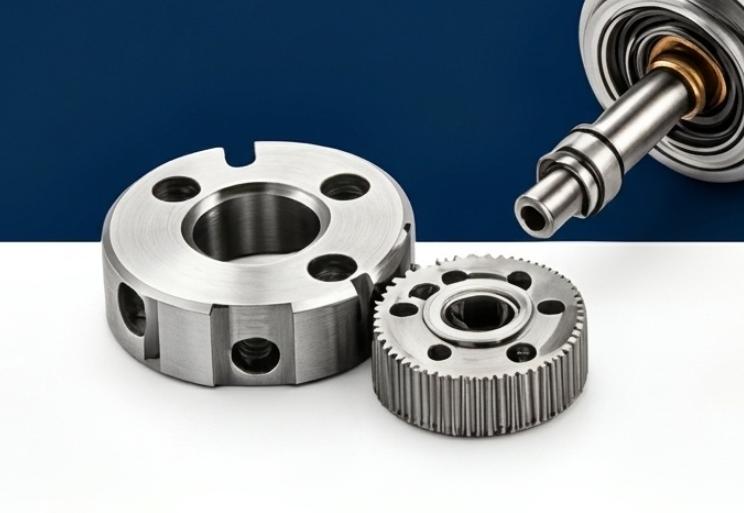
In CNC precision machining, manufacturers need to control not only dimensional accuracy but also machining surface quality. For specialized applications, suitable materials or surface treatment processes can also be selected according to project requirements.
Lavorazioni flessibili per strutture complesse
Some Oil & Gas and Energy components feature complex surfaces, multiple holes, or machining features in different directions. Multi-axis CNC machining can reduce repeated setups and repositioning for certain complex components, while helping maintain positional accuracy between different machining features.
Consistent Production for Batch Manufacturing
For OEM equipment manufacturers, the same component may need to be manufactured repeatedly. CNC machining uses digitally controlled programs to maintain consistent machining processes and parameters, helping achieve consistency between individual components and production batches.
What Components Can Be CNC Machined for the Oil & Gas and Energy Industries?
Oil & Energy CNC machining can be used to manufacture a wide range of precision mechanical components for oil and gas, energy, and industrial equipment. The actual machining scope depends on CNC machine capabilities, materials, component dimensions, structural complexity, and the supplier’s manufacturing capabilities.
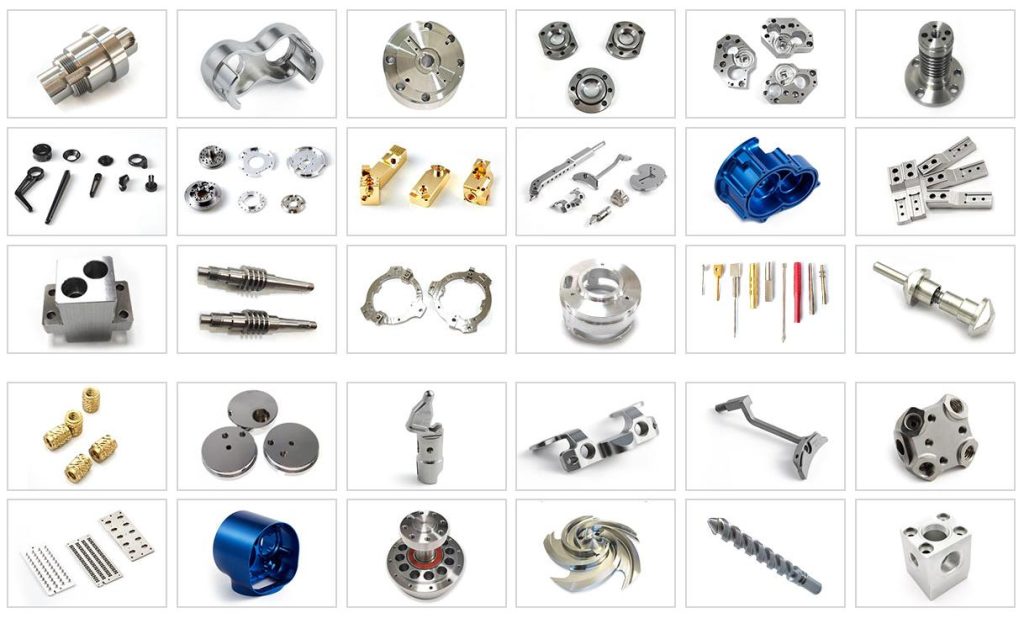
In practical applications, CNC machining can cover valve components, drilling equipment parts, pump and fluid handling components, pipe fittings, connectors, and other custom mechanical components used in energy equipment.
Oil & Gas Valve Components
Valves are important components in oil, gas, and fluid control systems. Their internal and external structures often contain multiple mechanical components that require precision machining.
Common CNC machined valve components include:
- Corpi valvola
- Steli delle valvole
- Sedi delle valvole
- Componenti della valvola
- Finiture
For valve components, machining accuracy, dimensional tolerances, and surface quality generally need to be determined based on the valve structure, sealing method, material, and specific design requirements. Therefore, the actual machining process should be confirmed based on engineering drawings, 3D models, or technical specifications.
Componenti per attrezzature di perforazione
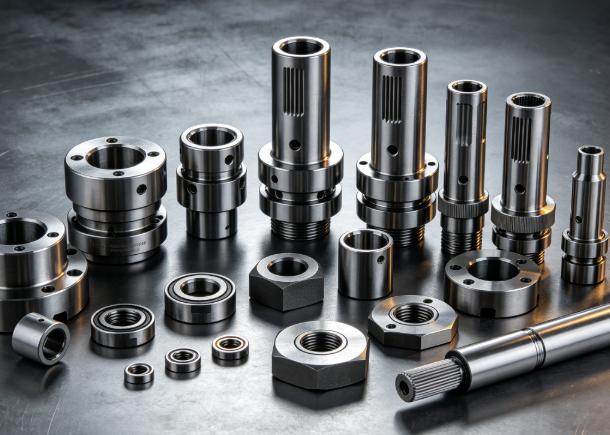
Drilling equipment contains numerous mechanical components used for connection, transmission, and structural support. CNC machining can be used to manufacture different types of shafts, sleeves, connectors, and other components according to equipment design and engineering drawings.
I componenti lavorati meccanicamente più comuni includono:
- Alberi
- Maniche
- Connettori
- boccole
- Componenti meccanici di precisione
These components may involve dimensional fits, concentricity, threads, and other connection features. Depending on the component geometry, manufacturers may use CNC turning, milling, drilling, or other machining processes.
Pump and Fluid Handling Components
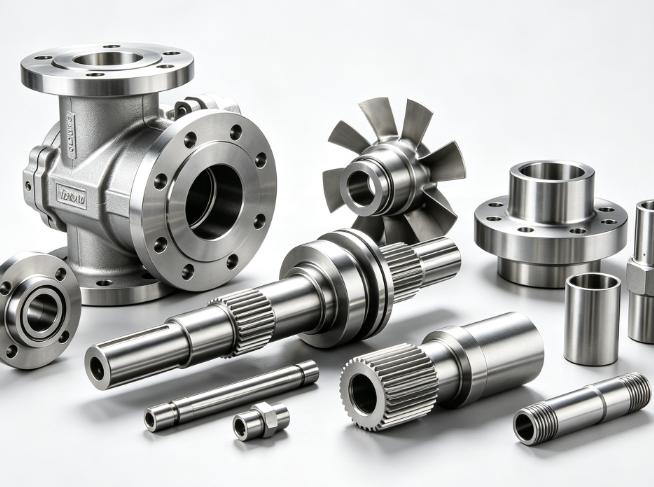
Pumps and fluid handling equipment also contain many precision mechanical components. CNC machining can be used to manufacture pump bodies and various internal and external components.
Common CNC machined pump parts include:
- Componenti della pompa
- Alberi
- boccole
- Corpi Standard
- Giranti
- Connettori
Different pump designs have different requirements for component dimensions, mating tolerances, and surface quality. Therefore, machining parameters and process routes should be determined according to the specific pump type, material, and component design.
Flanges and Pipe Fittings
In Oil & Gas and Energy piping systems, flanges, pipe fittings, and connectors are used to connect different equipment and pipelines.
CNC machining is particularly suitable for components with precise hole patterns, threads, internal bores, or complex connection structures, such as:
- Flange
- Raccordi per tubi
- Adattatori RF
- Componenti filettati
- Connettori personalizzati
Depending on the component structure, CNC turning, milling, drilling, and boring can be combined to achieve the required dimensions and structural features.
Energy Equipment Components
In addition to Oil & Gas, CNC precision machining is also used to manufacture mechanical components for other energy and industrial equipment.
Turbines, generators, power equipment, and other industrial machinery may contain precision components requiring turning, milling, or multi-axis machining.
Le applicazioni di lavorazione meccanica più comuni includono:
- Componenti della turbina
- Componenti del generatore
- Power equipment parts
- Componenti di macchine industriali
- Componenti meccanici personalizzati
For non-standard or custom components, actual machining capabilities need to be evaluated based on material, component dimensions, structural complexity, precision requirements, and production volume.
Common Machining Processes for Oil & Energy CNC Machining
Different Oil & Gas and Energy components have different structural, dimensional, and precision requirements. Therefore, suitable CNC machining processes need to be selected according to the component design.
For components with complex structures, multiple processes such as milling, turning, drilling, boring, and surface finishing may be combined to complete the machining process.
Fresatura CNC
fresatura CNC uses rotating cutting tools to remove material from a workpiece. It is suitable for machining flat surfaces, slots, holes, and complex three-dimensional structures.
In Oil & Gas and Energy equipment, CNC milling can be used for valve components, housings, connectors, and other mechanical parts with non-rotational geometries.
For components with multiple machining surfaces, angled features, or complex curved surfaces, multi-axis CNC milling can be selected according to the component structure to meet machining requirements from different directions.
tornitura CNC
CNC turning is primarily used for rotationally symmetrical components, such as shafts, sleeves, bushings, and other cylindrical mechanical parts.
In Oil & Gas and Energy equipment, shaft and sleeve components may involve requirements for outer diameters, inner diameters, lengths, threads, and dimensional fits. CNC turning is therefore a common machining process for these components.
Lavorazione CNC a 5 assi
For components with complex surfaces, multi-angle structures, or multiple machining faces, 5-axis CNC machining provides greater flexibility in tool access.
Compared with traditional 3-axis machining, 5-axis machining can approach the workpiece from more directions during a single setup, reducing certain repeated setups and repositioning operations. For complex energy equipment components, this can help machine geometric features that may be difficult to produce using conventional machining methods.
Foratura e alesatura CNC
CNC drilling is mainly used to create accurately positioned holes, while boring is generally used to further machine existing holes to achieve the required bore diameter, dimensional accuracy, and geometric accuracy.
For Oil & Energy components, these processes can be used for mounting holes, connection holes, precision bores, and internal passages. For components with strict requirements for hole diameter, depth, and positional accuracy, the specific drilling or boring process should be determined based on engineering drawings and machining requirements.
Rettifica e finitura superficiale
Some components may require grinding or other surface finishing processes after CNC machining to achieve tighter dimensional accuracy or specific surface quality requirements.
Whether additional finishing is required depends on the component’s dimensional requirements, surface finish requirements, material, and application. For components requiring precision fits or specialized surface characteristics, CNC machining can be combined with grinding and other surface finishing processes according to the project requirements.
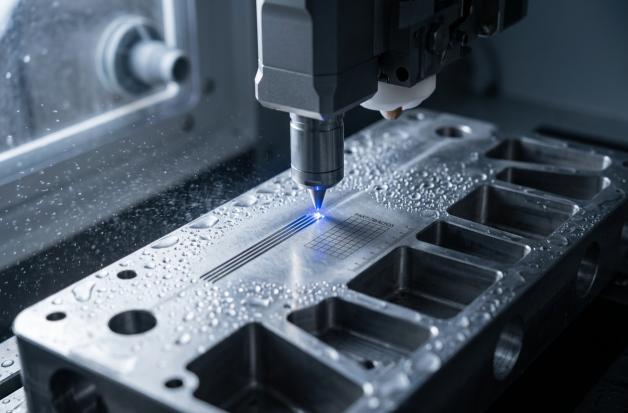
Common Materials for Oil & Energy CNC Precision Machining
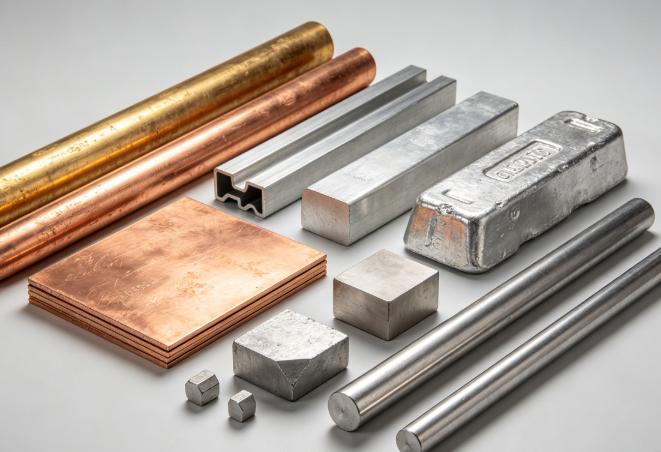
Material selection is an important part of Oil & Energy CNC precision machining. Different applications have different requirements for strength, corrosion resistance, temperature resistance, and weight. Therefore, Lavorazione CNC materiale selection should be based on the component design and actual operating environment.
Acciaio inossidabile
Stainless steel offers good corrosion resistance and mechanical properties. It is commonly used for valve components, connectors, fluid handling components, and other industrial mechanical parts.
Acciaio al carbonio
Carbon steel provides good strength and machinability and can be used for certain structural components and mechanical parts. The specific material grade should be selected according to the component’s load, operating environment, and design requirements.
Acciaio legato
Alloy steel can provide specific mechanical properties such as high strength and wear resistance. It can be used for certain shafts, transmission components, and other industrial parts subject to mechanical loads.
Alluminio
Aluminum alloys are lightweight and offer good machinability. They can be used for mechanical components where reducing equipment weight is an important consideration. Specific applications should be evaluated according to mechanical loads and operating conditions.
Ottone e leghe di rame
Brass and copper alloys offer good machinability as well as thermal and electrical conductivity. They can be used for certain industrial connectors, fluid control components, and mechanical parts.
Leghe a base di nichel
Nickel-based alloys are commonly selected for industrial environments requiring specific high-temperature or corrosion-resistant properties. They can be used for certain energy equipment components operating under demanding conditions.
Key Quality Requirements for Oil & Energy CNC Machining
For Oil & Gas CNC machining and Energy Industry CNC machining, manufacturing capability depends not only on equipment and machining processes but also on the ability to consistently control component dimensions, materials, and surface quality.
Precisione dimensionale
Dimensional accuracy directly affects whether a component can be assembled and used according to its design requirements. For shafts, sleeves, valve components, and precision connectors, critical dimensions need to be accurately controlled according to the engineering drawings.
Tolleranze strette
Not every component requires the same tolerance. A reasonable machining strategy should determine critical tolerances based on the component’s function, assembly relationship, and actual operating requirements, rather than simply applying extremely tight tolerances to every dimension.
Finitura di superficie
Surface finish can affect sealing, friction, wear, and assembly performance. For valves, pumps, and other fluid-related components, surface quality may also affect sealing or fluid-contact performance. Therefore, surface finish should be controlled according to the component drawings and technical requirements.
Tracciabilità dei materiali
For some Oil & Energy industrial projects, customers may require traceability of raw material sources, material batches, and related quality records. Material traceability helps ensure that material information can be linked to the corresponding components and project requirements, particularly for OEM and industrial projects requiring comprehensive quality documentation.
Ispezione di qualità
CNC machined parts may require different inspection methods depending on the component requirements, such as dimensional inspection, CMM inspection, hardness testing, surface inspection, or material verification.
The specific inspection methods should be determined according to the component’s dimensional accuracy, material, functional requirements, and customer quality standards to ensure that the finished parts meet the applicable engineering and project requirements.
How to Choose an Oil & Energy CNC Precision Machining Supplier?
If you are looking for a CNC machining supplier for oil and gas, it is important to evaluate more than just price. Machining capabilities, material capabilities, quality control, and relevant industry experience should also be considered.
Confirm CNC Machining Capabilities
First of all, ensure that the supplier has machining capabilities to manufacture your components such as CNC milling, CNC turning, multi-axis machining, drilling and boring. In case of complicated components, it becomes vital to ensure their multi-axis machining capabilities.
Confermare le capacità dei materiali
When requesting a quotation, provide the specific material grade rather than simply specifying “stainless steel” or “alloy steel.” Different materials have different machining characteristics, requiring appropriate cutting tools and machining parameters.
Confirm Drawings and Tolerance Requirements
It would be wise to offer 2D drawings, 3D CAD files, material specifications, dimensional tolerances, and surface finishes while making a request for quote. Full technical data will aid the manufacturer in assessing the costs associated with the machining process.
Confermare le capacità di controllo qualità
Understand what inspection services and quality documentation the supplier can provide in advance. If the project requires dimensional inspection, material certificates, or other quality documents, these requirements should be clarified before production begins.
Evaluate Relevant Industry Experience
A supplier with experience in Oil & Gas, Energy, Valve, Pump, or Power Generation machining may be more familiar with industry requirements related to materials, tolerances, and quality control.
The final evaluation should still be based on the supplier’s actual machining capabilities, relevant projects, and quality control processes.
Why Choose KENENG for Oil & Energy CNC Precision Machining?
Oil & Energy CNC Precision Machining requires a high level of precision, appropriate material selection, and consistent machining performance. KENENG operates a 3,000 m² CNC machining workshop with more than 60 professional employees and 16 CNC machining machines.
KENENG provides 3-, 4-, and 5-axis CNC milling, CNC turning, drilling, EDM, and other machining services, supporting the customized production of Oil & Energy components with different structures and requirements.
KENENG can manufacture a variety of materials such as stainless steel, alloy steel, aluminum, titanium, and Inconel depending on the type of application and the drawing provided by the engineers. The firm has the ability to provide machining accuracy of ±0.0005” (±0.0127 mm), prototyping, machining in small quantities, and inspection services.
All these are possible for Oil & Energy Equipment Manufacturers to get precision-manufactured CNC machined parts using their own design requirements.