
Como escolher as capacidades de usinagem CNC para o seu projeto
Ao escolher um fornecedor de usinagem CNC, saber simplesmente se uma fábrica possui máquinas CNC está longe de ser suficiente. Para engenheiros, profissionais de compras e equipes de desenvolvimento de produtos, é mais importante entender as capacidades reais de usinagem CNC do fornecedor e se essas capacidades atendem aos requisitos de dimensões das peças, materiais, tolerâncias, acabamentos superficiais e volumes de produção.
Aqui, forneceremos uma visão geral abrangente das capacidades de usinagem CNC, abordando processos de usinagem, materiais, tolerâncias, dimensões das peças, acabamento superficial, inspeção e seleção de fornecedores. Isso ajudará você a avaliar melhor se um fornecedor de usinagem CNC é adequado para o seu projeto.
Conteúdo
Quais são as capacidades de usinagem CNC?
As capacidades de usinagem CNC geralmente se referem à capacidade geral de um fabricante de produzir peças usando máquinas de controle numérico computadorizado.
Não se tratam simplesmente de quantas máquinas CNC uma fábrica possui. Em vez disso, abrangem múltiplos aspectos, incluindo:
- processos de usinagem CNC
- Equipamento CNC e número de eixos
- Materiais maquináveis
- Faixa de tamanho de usinagem
- Tolerâncias de usinagem
- Rigidez da superfície
- Recursos de acabamento de superfície
- Capacidades de inspeção de qualidade
- Capacidades de prototipagem e produção
- Capacidades de usinagem de peças complexas
Por exemplo, um fornecedor pode ter a capacidade de realizar a fresagem CNC convencional de 3 eixos. Mas se o projeto da sua peça for caracterizado por formas curvas complexas, furos angulares ou uma infinidade de superfícies que precisam ser fresadas simultaneamente, você precisará de uma usinagem CNC mais sofisticada de 4 ou 5 eixos.
Por isso, você não deve se guiar apenas pela quantidade de máquinas que um fornecedor de CNC possui. Você deve avaliar suas capacidades com base nas especificações do projeto da sua peça.
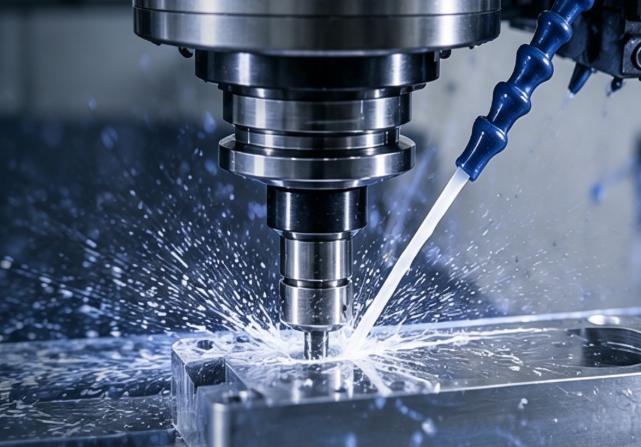
Quais são as principais capacidades de usinagem CNC?
Diferentes processos de usinagem CNC são adequados para diferentes tipos de peças. As capacidades comuns de usinagem CNC incluem fresamento CNC, torneamento CNC, usinagem de 3 eixos, 4 eixos e 5 eixos.
Fresagem CNC
A fresagem CNC está entre as operações de usinagem CNC mais comuns. Nesse processo, ferramentas rotativas são utilizadas para remover material da peça de trabalho, seguindo o percurso programado pela máquina.
As operações que podem ser realizadas com fresadoras CNC incluem a fresagem de superfícies planas, ranhuras, furos, cavidades, contornos e até curvas complexas. A fresagem CNC é aplicada principalmente na fabricação de peças mecânicas, suportes, carcaças, dispositivos de fixação e peças industriais personalizadas.
Torneamento CNC
A principal aplicação da operação de torneamento CNC é para peças rotativas. Nessa operação, a peça gira enquanto a ferramenta de corte segue direções específicas para remover o material.
As operações adequadas para torneamento CNC incluem a produção de eixos, buchas, pinos, mangas, conexões, peças roscadas e quaisquer outras peças cilíndricas.
Usinagem CNC de 3 eixos
A usinagem em uma máquina CNC de 3 eixos envolve o movimento de ferramentas de corte nos planos X, Y e Z. É ideal para a fabricação de componentes relativamente simples que possuem superfícies planas, furos, ranhuras, cavidades e perfis básicos.
Para componentes convencionais e a maioria das aplicações de fabricação, a usinagem de 3 eixos pode oferecer um bom equilíbrio entre capacidade de usinagem, eficiência e custo.
Usinagem CNC de 4 eixos
Esse tipo de usinagem envolve a adição de um eixo rotativo aos três eixos lineares, resultando na usinagem do componente a partir de vários ângulos.
Quando a usinagem de componentes precisa ser feita por vários lados, o uso da usinagem de 4 eixos pode ser ideal para economizar tempo de preparação e posicionamento.
Usinagem CNC de 5 eixos
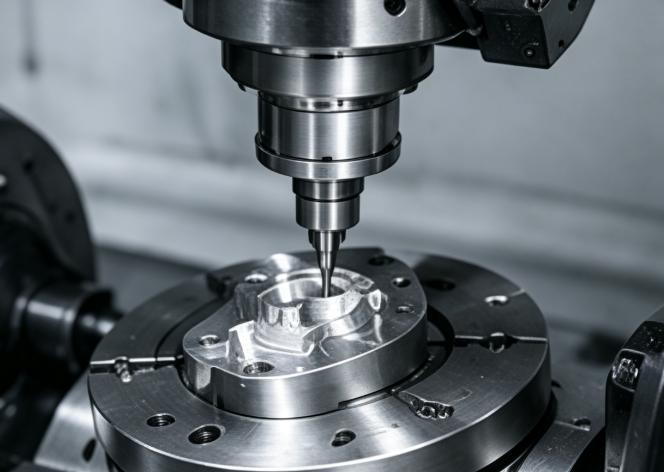
A usinagem CNC de 5 eixos é projetada para peças complexas e usinagem em múltiplas faces. Ao contrário das máquinas de 3 eixos, as máquinas de 5 eixos proporcionam à ferramenta de corte maior acesso à peça de trabalho a partir de vários ângulos, sendo, portanto, adequadas para usinar peças com formas complexas, superfícies inclinadas, cavidades profundas e furos intrincados.
No entanto, a usinagem de 5 eixos não só se mostra benéfica ao lidar com geometrias complexas, como também reduz o tempo de preparação, garante melhor acesso das ferramentas de corte e melhora a eficiência do processo de usinagem. Por esse motivo, a usinagem de 5 eixos é amplamente utilizada na produção de produtos aeroespaciais, dispositivos médicos e máquinas, entre outros itens complexos.
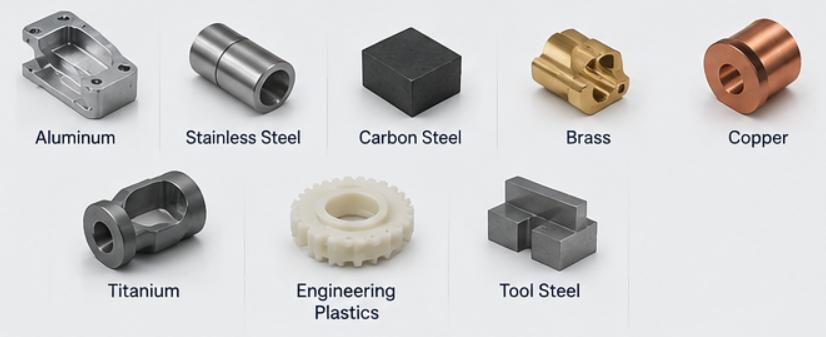
Que materiais podem ser processados por usinagem CNC?
Os materiais são outro componente importante que também deve ser levado em consideração ao determinar a capacidade de usinagem CNC.
Os materiais para usinagem CNC apresentam diferentes níveis de dureza, resistência, condutividade térmica e usinabilidade. Portanto, a máquina, as ferramentas, as condições de corte e a experiência em usinagem CNC podem afetar a capacidade da oficina de usinagem CNC de usinar diversos materiais.
Alumínio:
O alumínio é um dos materiais mais comumente usinados na fabricação CNC. Ele oferece baixo peso, boa usinabilidade e uma relação resistência/peso favorável.
As ligas mais comuns incluem alumínio 6061, 7075 e 5052.
As peças de alumínio usinadas por CNC são amplamente utilizadas em máquinas, aplicações automotivas, eletrônica, aeroespacial, equipamentos de automação e outras indústrias.
Aço inoxidável
O aço inoxidável oferece excelente resistência à corrosão, resistência mecânica e desempenho mecânico. Os tipos mais comuns incluem os aços inoxidáveis 303, 304, 316 e 17-4 PH.
A usinagem CNC de aço inoxidável é comumente utilizada em equipamentos industriais, dispositivos médicos, equipamentos para processamento de alimentos e componentes que exigem boa resistência à corrosão.
Aço carbono e aço liga
O aço carbono e o aço liga oferecem boa resistência, resistência ao desgaste e desempenho mecânico, tornando-os adequados para componentes industriais expostos a cargas significativas.
Os materiais comuns incluem os aços 1018, 4140 e 4340. Eles podem ser usados em eixos, componentes estruturais, engrenagens e outras peças de máquinas industriais.
Latão e cobre
O latão e o cobre oferecem excelente condutividade elétrica, condutividade térmica e usinabilidade, o que os torna amplamente utilizados em aplicações elétricas e industriais.
Componentes de latão e cobre usinados por CNC são comumente usados em conectores, acessórios, buchas, componentes elétricos e outras peças industriais.
Titânio
O titânio oferece uma elevada relação resistência/peso, baixa densidade e excelente resistência à corrosão. No entanto, o titânio é geralmente mais difícil de usinar do que o alumínio e os aços convencionais.
Para projetos que envolvam ligas de titânio, é importante confirmar se o fornecedor possui comprovada capacidade de usinagem CNC de titânio, bem como as ferramentas, equipamentos e experiência em usinagem adequados.
Plásticos de Engenharia
A usinagem CNC também pode processar uma ampla gama de plásticos de engenharia, incluindo POM, PEEK, Nylon, ABS e Policarbonato.
Esses materiais possuem diferentes características de resistência, resistência ao desgaste, resistência à temperatura e estabilidade dimensional. Portanto, o plástico apropriado deve ser selecionado de acordo com o ambiente operacional e os requisitos de desempenho da peça.
Quais tolerâncias podem ser alcançadas pela usinagem CNC?
A tolerância na usinagem CNC é um fator importante para engenheiros e equipes de compras. Refere-se ao desvio permitido entre as dimensões reais de uma peça usinada e as dimensões nominais especificadas no desenho técnico.
Para usinagem CNC convencional, as tolerâncias dimensionais típicas podem ser em torno de ±0.05 mm (±0.002 pol.) sob condições adequadas de equipamento, ferramentas, material e usinagem. Com usinagem de precisão e controle de processo eficaz, alguns processos de usinagem CNC podem atingir aproximadamente ±0.01–0.02 mm (±0.0004–0.0008 pol.) em dimensões críticas selecionadas.
No entanto, as tolerâncias efetivamente alcançáveis variam dependendo da geometria da peça, do material, do processo de usinagem, do tamanho dos detalhes e de outras condições de fabricação.
O que afeta a tolerância na usinagem CNC?
A tolerância alcançável não é determinada apenas pela precisão da máquina. Ela também pode ser afetada pelo material, pela precisão da máquina, pela geometria da peça, pelas ferramentas, pelas condições de corte, pela dimensão da característica e pelo processo de usinagem.
Por exemplo, superfícies planas simples e diâmetros externos são geralmente mais fáceis de controlar, enquanto cavidades profundas, paredes finas, pequenos orifícios e superfícies curvas complexas podem exigir um controle de processo mais cuidadoso.
Portanto, não se deve presumir que todas as peças usinadas por CNC possam atingir uma tolerância de ±0.01 mm. Para dimensões não críticas, tolerâncias mais amplas podem ser suficientes para a aplicação pretendida. Dimensões críticas, como furos de montagem, diâmetros de eixos e superfícies de contato, podem exigir tolerâncias mais rigorosas.
Como especificar a tolerância de usinagem CNC?
Se a dimensão de tolerância estiver incluída no seu projeto, é melhor incluir desenhos técnicos 2D ao enviar sua solicitação de orçamento, juntamente com outros dados dimensionais e GD&T.
Quando você precisa de peças usinadas por CNC com alta precisão, é importante verificar se o seu fornecedor possui capacidade de inspeção para garantir que as peças estejam em conformidade com os desenhos.
Quais acabamentos de superfície estão disponíveis para peças usinadas por CNC?
Após a usinagem CNC, muitos componentes precisam passar por algum tratamento de acabamento superficial para melhorar a aparência ou o desempenho da superfície do componente.
Anodização
A anodização é realizada principalmente em peças de alumínio usinadas por CNC. Esse processo forma uma camada de óxido na superfície, o que aumenta sua resistência à corrosão e ao desgaste.
O processo de anodização pode resultar em diferentes cores, como preto, prata e vermelho, sendo, portanto, uma boa opção quando as propriedades funcionais e estéticas são importantes.
Jateamento
A jateamento com microesferas consiste na utilização de pequenos abrasivos para melhorar a superfície de uma peça. Este processo ajuda a remover marcas de usinagem, uniformizar o aspecto da superfície e conferir à peça um acabamento liso e fosco. Geralmente, é realizado em peças de alumínio e aço inoxidável.
Powder Coating
A pintura eletrostática a pó é uma técnica de tratamento de superfície que proporciona um revestimento muito durável à peça.
Este tratamento de superfície pode melhorar a resistência à corrosão e ao desgaste do seu componente, além de oferecer diversas cores e aparências.
polimento
O uso mais comum do polimento é para melhorar a aparência da superfície.
O polimento reduz a rugosidade da superfície, resultando em uma superfície lisa; esse processo é indicado para componentes usinados por CNC.
Galvanização
O revestimento, incluindo a galvanoplastia e o revestimento químico, pode ser usado para melhorar a resistência à corrosão, a resistência ao desgaste, a dureza ou a condutividade elétrica, dependendo da aplicação.
O revestimento apropriado deve ser selecionado de acordo com o material da peça e o ambiente operacional previsto.
Passivação
O processo de passivação é comumente aplicado a componentes de aço inoxidável. Ele ajuda a eliminar o excesso de ferro, bem como outros contaminantes, e auxilia na criação de uma camada de óxido estável.
Consequentemente, ao escolher um fornecedor de serviços de usinagem CNC, você não deve avaliar apenas a precisão da usinagem, os materiais disponíveis e a capacidade de produção, mas também verificar se o fornecedor oferece os serviços de pós-processamento necessários.
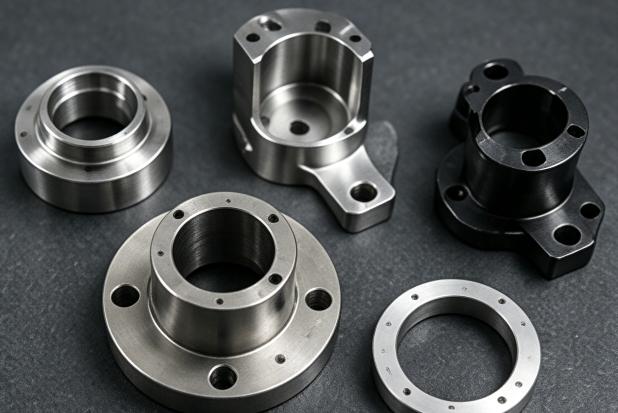
Capacidades de Inspeção de Qualidade em Usinagem CNC
Ser capaz de realizar usinagem CNC de forma confiável não se resume apenas a fabricar uma peça. Ser um fornecedor confiável de usinagem CNC também significa ser capaz de produzir repetidamente peças que correspondam aos desenhos de engenharia e apresentem as tolerâncias necessárias.
Por isso, ter recursos adequados de inspeção é um dos fatores importantes para avaliar um fornecedor de usinagem CNC.
Métodos comuns de inspeção CNC
Dependendo do tamanho, formato e requisitos de precisão da peça, os fornecedores de usinagem CNC podem empregar diferentes equipamentos de inspeção.
Paquímetros e micrômetros podem ser usados para medir parâmetros comuns como diâmetro externo, diâmetro interno e espessura.
Um medidor de altura pode ser usado para inspecionar a altura e as dimensões posicionais.
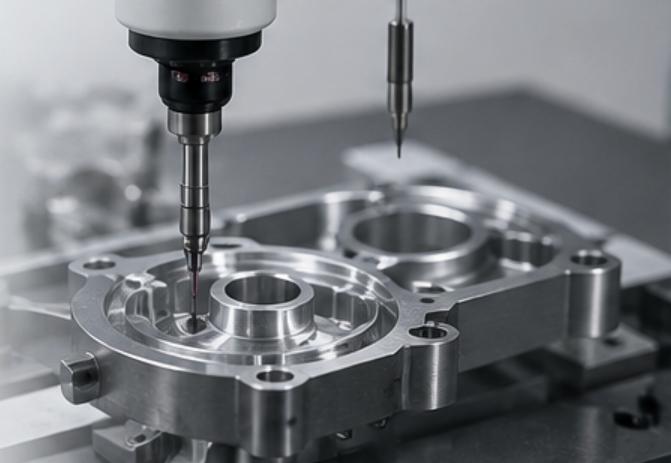
Para geometrias complexas e peças de alta precisão, a inspeção por CMM pode fornecer medições dimensionais mais abrangentes.
Para verificar a aparência e perfis complexos, pode-se utilizar a inspeção óptica. Quando a qualidade da superfície é crucial, a medição da rugosidade superficial permite verificar se a superfície acabada atende aos requisitos especificados.
Documentação de Qualidade
Os fornecedores podem fornecer documentos de qualidade quando houver necessidade de componentes de alta precisão ou de trabalhos de produção com base nos requisitos do cliente, como inspeção, dimensionamento e certificado de materiais.
Essa documentação pode auxiliar os clientes a garantir que os componentes atendam aos padrões exigidos em relação a desenhos, materiais e qualidade.
Em particular, quando há produção em larga escala, a inspeção de qualidade permitirá identificar variações dimensionais.
A usinagem CNC é adequada para prototipagem ou produção?
A usinagem CNC é adequada tanto para a prototipagem de produtos quanto para a produção em baixo e alto volume.
Em comparação com a moldagem por injeção e a fundição sob pressão, que normalmente exigem ferramentas ou moldes específicos, a usinagem CNC não requer um molde dedicado. Isso proporciona aos fabricantes maior flexibilidade para o desenvolvimento de produtos e a produção de peças personalizadas.
Prototipagem CNC
A prototipagem CNC é particularmente adequada para os estágios iniciais do desenvolvimento de produtos. Ela pode ser usada para validação de projetos, testes funcionais, testes de engenharia e desenvolvimento de novos produtos.
Quando um projeto precisa ser modificado, a usinagem CNC permite que os fabricantes atualizem o programa de usinagem com base em novos arquivos CAD ou desenhos de engenharia, sem a necessidade de produzir um novo molde. Isso pode ajudar a encurtar o ciclo de desenvolvimento do protótipo.
Produção de baixo volume
Para quantidades que variam de dezenas a centenas de peças personalizadas, a usinagem CNC oferece uma solução de produção flexível.
É particularmente adequado para peças com geometrias complexas, materiais especiais ou requisitos de precisão dimensional relativamente elevados, pois a produção pode começar sem a necessidade de ferramentas específicas.
Produção de alto volume
Embora a usinagem CNC seja frequentemente associada à prototipagem e à fabricação de pequenos lotes, ela também pode ser usada para produção CNC em maior volume por meio de automação da produção, mais de uma máquina CNC, ferramentas, padronização e inspeção em processo.
Consequentemente, a usinagem CNC não se limita apenas à fabricação de protótipos. Dependendo da geometria da peça, do material, da quantidade, das tolerâncias e do custo desejado, a usinagem CNC pode ser utilizada na prototipagem, na fabricação de pequenos lotes e na produção em larga escala.
Como escolher um fornecedor com base em suas capacidades de usinagem CNC?
Ao selecionar uma oficina de usinagem CNC, você não deve basear a escolha dos fornecedores apenas no preço.
O mais importante é garantir que as capacidades do fornecedor atendam às suas necessidades de usinagem, materiais, tolerâncias, dimensões, acabamento superficial, inspeção e capacidade de produção.
Confirmar processos de usinagem
Em primeiro lugar, é preciso verificar se o fornecedor é capaz de realizar o tipo de usinagem necessário, que pode ser fresagem CNC, torneamento CNC, usinagem de 4 eixos, usinagem de 5 eixos ou eletroerosão.
Quando se trata de peças complexas, é preciso conhecer melhor as capacidades de usinagem do fornecedor.
Confirmar as capacidades do material
Materiais diferentes exigem ferramentas, parâmetros de corte e estratégias de usinagem diferentes.
Durante o processo de cotação, confirme se o fornecedor possui experiência comprovada na usinagem dos materiais que você precisa, como alumínio, aço inoxidável, titânio, latão ou plásticos de engenharia.
Confirme as tolerâncias e as dimensões de usinagem.
Se você tiver peças com dimensões críticas, verifique antecipadamente se o fornecedor é capaz de atingir a tolerância de usinagem CNC necessária.
Além disso, certifique-se de mencionar o comprimento, a largura, a altura e o diâmetro da sua peça para que o fornecedor possa verificar se ela está dentro da capacidade de usinagem da máquina.
Confirme as capacidades de acabamento de superfície.
Se as suas peças forem anodizadas, jateadas com microesferas, polidas, revestidas ou passivadas, verifique se o fornecedor é capaz de prestar esses serviços e atender aos requisitos dimensionais e de acabamento necessários.
Confirme as capacidades de inspeção de qualidade.
Para peças usinadas em CNC de precisão, preste muita atenção às capacidades de inspeção do fornecedor.
Por exemplo, determine se o fornecedor possui equipamentos como máquinas de medição por coordenadas (CMMs), micrômetros e sistemas de inspeção óptica, e se ele pode fornecer relatórios de inspeção, relatórios dimensionais e certificados de materiais de acordo com os requisitos do projeto.
Confirmar capacidade de produção
Quando o seu projeto consiste não apenas em protótipos, mas também em lotes de produção futuros, você precisa avaliar a capacidade de produção, os prazos de entrega, a qualidade e a consistência do fornecedor.
Um fornecedor eficiente de usinagem CNC não deve apenas entregar um pedido, mas também fornecer qualidade e desempenho consistentes em entregas futuras.
Capacidades de usinagem CNC KENENG
Como fornecedora profissional de peças usinadas em CNC sob medida , a KENENG oferece serviços completos de usinagem CNC, desde prototipagem e fabricação de baixo volume até produção em série.
Podemos recomendar soluções de usinagem adequadas com base na geometria da peça, nos materiais, nas tolerâncias e nos requisitos de quantidade do cliente.
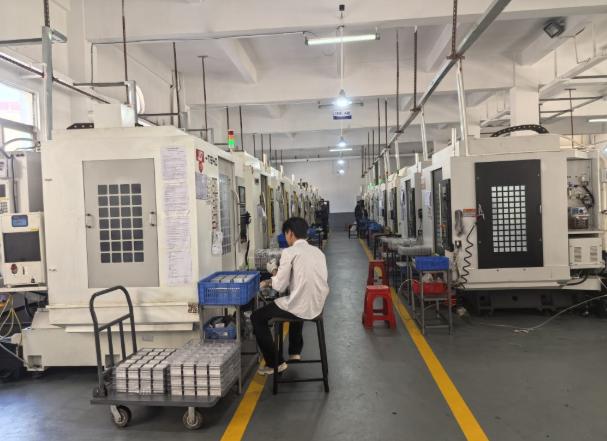
Nossas principais capacidades de usinagem CNC incluem:
- Fresagem CNC: Oferece recursos em operações de usinagem de 3, 4 e 5 eixos para criar formas complexas, ranhuras, furos e peças multifacetadas.
- Torneamento CNC: Oferece recursos em usinagem de 2 eixos e multieixos, bem como usinagem com ferramentas acionadas e tornos tipo suíço para fabricar rotores precisos, como eixos, buchas e conexões.
- Variedade de Materiais: Oferecemos serviços de usinagem em alumínio, aço inoxidável, aço carbono, aço liga, latão, cobre, titânio, Inconel e plásticos de engenharia como PEEK, POM e Nylon.
- Precisão e controle de qualidade: As tolerâncias padrão podem atingir ± 0.005 ″Embora tolerâncias mais rigorosas possam ser alcançadas dependendo da geometria da peça e de requisitos específicos, o controle de qualidade pode ser auxiliado por equipamentos de inspeção, como máquinas de medição por coordenadas (MMCs).
- Acabamento de Superfícies e Operações Secundárias: Oferecemos serviços de rebarbação, rosqueamento, anodização, jateamento com microesferas, galvanoplastia, passivação, pintura eletrostática a pó, tratamento térmico e outros processos secundários.
- Protótipo para produção: Nossos serviços abrangem peças individuais, prototipagem, fabricação em pequenos volumes, bem como produção em grandes volumes.
Equipados com instalações completas de usinagem, operações secundárias e inspeção, somos capazes não apenas de produzir produtos padrão, mas também de oferecer soluções personalizadas de usinagem CNC de acordo com desenhos 2D/3D e especificações especiais dos clientes.