
Lieferzeit für CNC-Bearbeitung: Wie lange dauert die Herstellung von kundenspezifischen Teilen?
In precision manufacturing and hardware development, “time is market competitiveness.” Whether for new product R&D iterations, prototype validation, or urgent spare part replacements, the lead time of CNC machined parts directly determines project launch deadlines and market responsiveness.
However, you might often face these frustrating questions: Why do different manufacturers quote drastically different lead times for the exact same drawings? What hidden factors are slowing down delivery? How can you get parts faster without compromising quality?
In this post, we will provide an in-depth breakdown of CNC machining lead times, from basic definitions and key influencing factors to optimization strategies and vendor selection, helping you plan custom part procurement more efficiently.
Inhaltsverzeichnis
Wie hoch ist die Vorlaufzeit für die CNC-Bearbeitung? What Is the Typical Turnaround?
Lead Time in CNC Machining is defined as the duration that starts from the time when a customer confirms the order, provides final CAD drawings and makes payment till the time when the manufacturing facility finishes the production, conducts quality check and packages/ships the product to the customer’s doorstep.
It consists of much more than just “machine cutting time.” It consists of the whole process chain – including order assessment, material sourcing, production scheduling, post processing and quality control.
For CNC machining, lead times vary depending on the order type and volume as follows:
| Auftragsart | Typische Menge | Standardvorlaufzeit | Schnelle Bearbeitung | Am besten geeignet für |
| Schneller Prototypenbau | 1 Stk | 3 - 7-Tage | 24 - 48 Stunden | Structural validation, functional testing, urgent trade show models |
| Kleinserienfertigung | 10 Stk | 1 - 2 Wochen | 3 - 5-Tage | Market testing, early-stage low-volume assembly |
| Massenproduktion | 1,000+ Stk | 3 – 4+ Wochen | Negotiable based on schedule | Scaled production, regular replenishment |
Top 6 Factors Influencing CNC Machining Lead Time
Understanding key variables is the first step toward optimizing your procurement workflow. The length of the delivery cycle typically depends on six key aspects:
1. Design Complexity & Tolerances
Anzahl der Achsen: 3-axis simple milling machines can be fixtured easily and have easy-to-program tool paths, whereas 4-axis or 5-axis simultaneous machining is required for the machining of complex surfaces and multi-faces, which requires longer programming and setup times.
Enge Toleranzen: In situations where very enge Toleranzen such as ±0.005 mm are defined in the drawings, machining may require slow cutting speed, multiple setups at controlled temperature, or other operations such as grinding and wire EDM.
2. Material Availability & Machinability
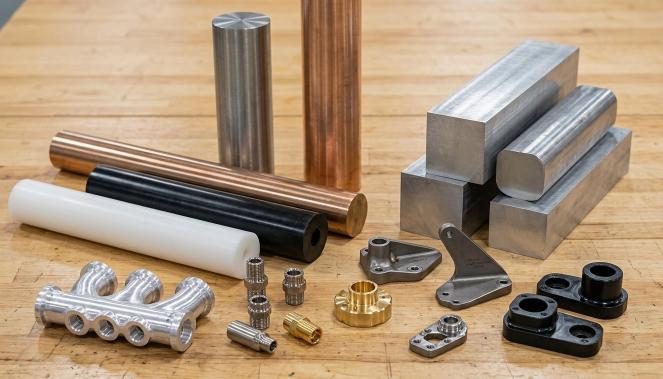
Standardmaterialien: General metals and plastics like Aluminum (AL6061, AL7075), Brass, or even regular Stainless Steel (SUS304) can be generally available in the form of raw bars or plates for instant commencement of production process.
Specialty/Rare Materials: Titanium, Inconel, engineering plastics like PEEK, or certain grades of tungsten carbide require material procurement which is not available; hence, will take 3-7 days or more for material arrival. Apart from this, machining of difficult materials requires slow machining speeds along with tool wear time.
3. Oberflächenveredelung & Nachbearbeitung
Almost all machined parts produced using the CNC method need surface finishing in order to improve their resistance to wear, corrosion or simply for aesthetic purposes.
Common Post-Processing Operations: Anodizing, Sand Blasting, Passivation, Plating, Powder Coating, Heat Treatment, etc.
Outsourcing Lead Time: Should the machining company not have plating and anodizing facilities in-house, then there will be additional 2 to 5 working days added to the overall schedule.
4. CAD File Completeness & DFM Readiness
Incomplete drawing documentation is one of the most common “non-technical” causes of delivery delays:
Missing 2D engineering drawings (lacking thread specifications, critical tolerances, or GD&T annotations).
Discrepancies between 3D CAD models (STEP/IGES) and 2D PDF drawings.
Machining parts with non-machinable geometry due to standard milling cutters (such as sharp square inside edges, blind holes).
Such problems lead engineering personnel to go through prolonged email exchanges, which waste from 1 to 3 days prior to production.
5. Order Volume & Machine Capacity
Even though high volume jobs can enjoy short unit cycle times because of automation, the design time of fixtures or jigs, custom tooling manufacturing, and the FAI process need definite time. Additionally, the shop floor capacity utilization rate of a machine shop will affect queue time.
6. Quality Control & Inspection Requirements
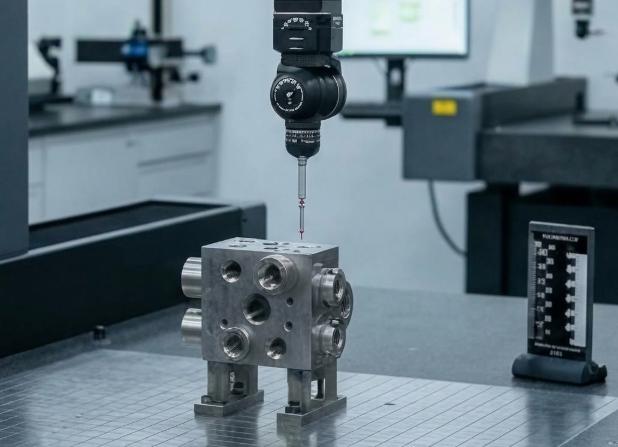
Simple dimensional sampling takes very little time. However, if a project mandates 100% CMM (Coordinate Measuring Machine) inspection, comprehensive FAI reports, Material Certification, or full ROHS/REACH compliance reports, quality control steps will require additional scheduled time.
How to Effectively Shorten CNC Machining Lead Time?
Zu Veteran CNC-Bearbeitungsvorlaufzeit and accelerate your product development cycle, consider implementing these actionable tips during the early design and procurement phases:
1. Practice Design for Manufacturability (DFM Optimization)
Minimize Deep Cuts and Narrow Slots: Try to restrict your cavity depth to 4 times that of the cutter’s diameter.
Use Internal Corner Radii (R-Angles): As mentioned above, CNC milling cutters are rotary tools and therefore cannot create sharp inside 90° corners. The addition of internal corner radii greatly helps minimize tool changes and EDM wire/sinker cutting.
Toleranzen mit Bedacht anwenden: Only assign tight tolerances to critical mating surfaces; use standard commercial tolerances (e.g., ISO 2768-m) for non-mating features to maximize cutting efficiency.
2. Prioritize Standard In-Stock Materials
Wherever feasible, select readily available materials that have high machinability characteristics. For instance, substitute scarce aluminum alloys for AL6061-T6, and use regular 304 Stainless Steel instead of specialty metals.
3. Simplify or Combine Surface Finishing Requirements
For interior structural components or preliminary prototype test pieces, specify As-Machined, or a minimal deburr/degrease. There will be no additional handling time needed to finish the exterior surface.
4. Submit Standardized and Complete Technical Packages
Provide complete files during the RFQ stage:
Standard 3D CAD files (preferred formats: .STEP or .IGES).
Clear 2D engineering drawings (PDF format detailing thread sizes, tolerances, surface roughness, and post-processing specs). Complete inputs enable engineers to perform DFM reviews and release jobs to production within hours.
5. Partner with an Integrated One-Stop Manufacturer
Work with a machine shop that possesses multi-axis CNC machines, as well as post-processing logistics and a quick quotation response system. Production sites allow for redundancies to be built in, and their shift schedules can be quickly adjusted in case of the need to use alternative machines.
Why Choose KENENG as Your Fast CNC Machining Partner?
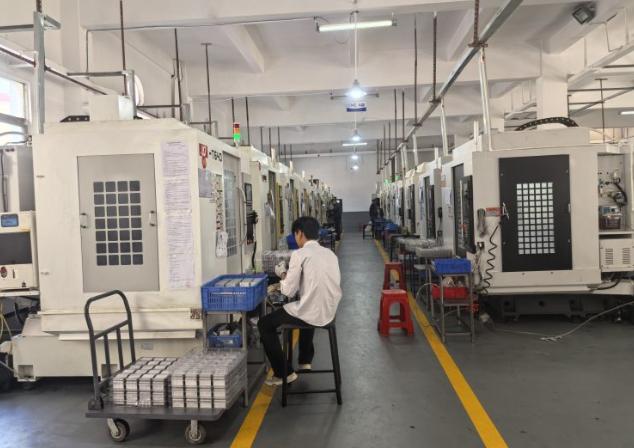
Custom CNC procurement demands on-time deliveries and fast response to keep the project moving smoothly. With an operation that utilizes a 3,000 square meter CNC workshop that has 16 CNC machining centers and over 60 experts, KENENG is able to complete over 300 projects every month while delivering over 200,000 CNC parts with response times of 3 days.
Here is how we guarantee reliable lead times based on our core manufacturing capabilities:
1. 24/7 Rapid Response & Free DFM Analysis (Eliminating Communication Bottlenecks)
Dedizierter Support rund um die Uhr: Pre-sales and post-sales support staffs are available round-the-clock to ensure that all inquiries and engineering inquiries are taken care of instantly.
Free DFM Assessment: We offer free Design for Manufacturing analysis through our experienced engineering team so that your parts can be optimized and you don’t have to make revisions later.
2. Clear Delivery Commitments (As Fast As 3 Business Days)
We offer clear, predictable lead times tailored to part complexity and volume, backed by expedited options:
Simple Prototypes: As fast as 3 – 5 business days.
Standardlieferzeit: 5 – 10 Werktage.
Großserienfertigung: Typically 3 – 4 weeks, depending on total quantity.
3. 5-Axis Machining & Turn-Mill Multi-Tasking (Minimizing Setup & Transfer Times)
5-Achsen-CNC-Fräsen: Enables simultaneous 5-sided machining in a single setup. Complex geometries, compound angles, and deep pockets are machined without re-fixturing, drastically reducing lead time while elevating accuracy.
Turn-Mill Live Tooling: Combines turning and milling operations on a single machine. Features like off-center holes, flats, and keyway slots are produced in one continuous cycle without switching machines.
4. 200+ Material Options in Stock (Bypassing Procurement Delays)
We have an abundant stock of more than 200 types of metals and plastics (Aluminum 6061/7075, Stainless Steel 303/304/316, Titanium, Inconel, PEEK, POM, and so forth). The extensive stock available on site ensures no time lag for procuring raw materials; we can commence machining after receiving orders.
5. One-Stop Secondary Operations & Surface Finishing
Capabilities encompass milling, turning, drilling, tapping, EDM/wire cutting, deburring, grinding, and sub-assembly. Surface finish operations such as sandblasting, Type II/III Anodizing, Nickel/Cromaloy/Zinc Plating, Passivation, Powder Coating, Heat Treating, and more are all seamlessly integrated in order to eliminate delays associated with outsourcing these operations to other vendors.
6. Rigorous Quality Control & CMM Inspection (Preventing Rework Delays)
With the help of advanced measuring devices like CMM and optical profile projectors, we have standard tolerance levels of ±0.005” (±0.127 mm) and highly accurate tolerance levels of ±0.0005” (±0.0127 mm). “Getting it right the first time” policy ensures that we deliver our promises regarding on-time delivery dates.
Fazit
CNC machining lead time is not an unpredictable “black box.” Through thoughtful DFM optimization, standardized material selection, and collaboration with an efficient manufacturing partner, you can significantly shorten product development cycles from blueprint to physical part.
Looking for high-precision, fast-turnaround CNC machining services?
Kontakt KENENG today, and our engineering team will provide you with an accurate quote and a free DFM manufacturability report within 24 hours!