
Projeto para Usinagem CNC: 10 Princípios Essenciais que Você Deve Conhecer
CNC machining is widely used in industrial equipment, automotive components, aerospace, medical devices, and precision machinery manufacturing. However, a well-designed part must do more than meet functional and assembly requirements. It should also be manufacturable with consistent quality, reasonable lead times, and controlled production costs.
Proper design can reduce unnecessary machining operations, minimize tool wear and workpiece deformation, and improve consistency in batch production. In contrast, overlooking manufacturing constraints during the design stage may require specialized tools, multiple setups, or additional finishing operations, increasing overall production costs.
This article explores 10 key CNC machining design principles covering material selection, wall thickness, internal corner radii, deep cavities, holes and threads, tolerances, surface finish, and workholding. These guidelines can help you optimize part designs before production begins.
Conteúdo
What Is CNC Machining Design?
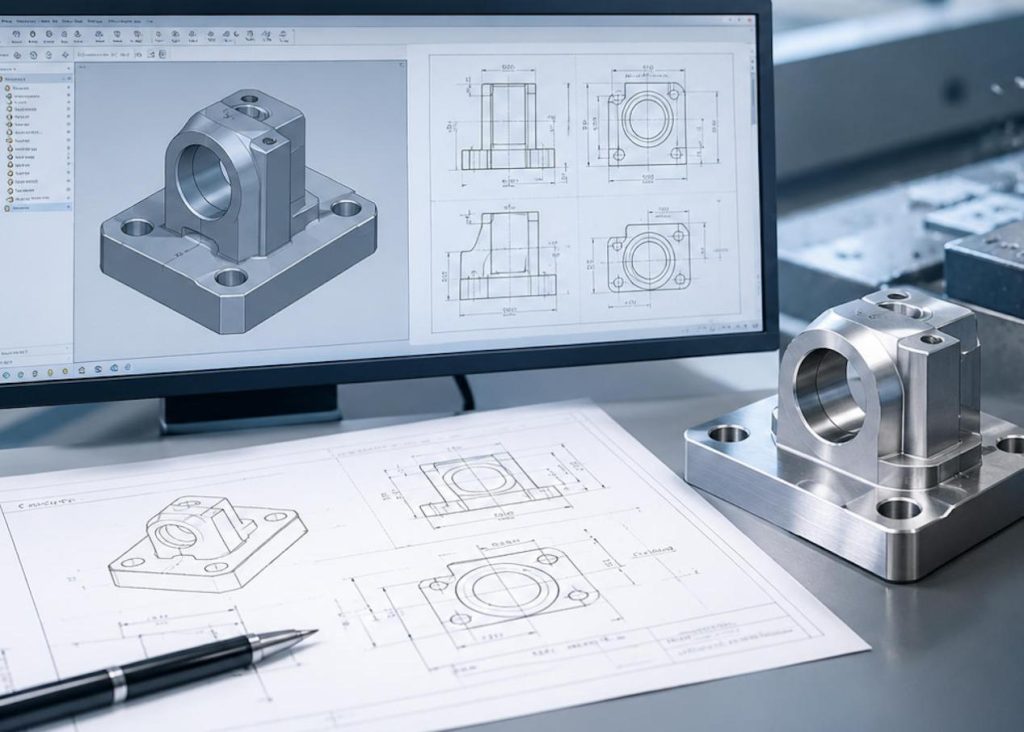
CNC machining design is an engineering method where manufacturability considerations are included in the design of the product. Conventional design of the product usually takes into account function, shape, and interrelationships between different parts of the product. DFM takes it one step further where the ability to cut the particular feature, ability to hold the work piece securely, ability to machine the particular material, and ability to meet the given dimensional and surface requirements economically are taken into account.
For instance, an elongated and narrow cavity may be structurally sufficient, but it may pose difficulties during its machining process due to the fact that the cutting tool will have to go far inside the component. It can result in deflections and vibrations of the tool and problems with chips’ removal. In addition, requiring high precision for each dimension regardless of their significance in assembly or function can cause high costs of machining and inspection processes.
Performing manufacturability analysis prior to production will help to detect such problems and consider necessary changes of geometry, dimensions, or tolerances.
Why Is CNC Machining Design Optimization Important?
A well-optimized CNC machining design offers several advantages:
- Lower machining costs: Reduce unnecessary cutting operations, specialized tooling, and additional processes.
- Estabilidade dimensional aprimorada: Minimize the effects of tool deflection, workpiece deformation, and machining vibration.
- Simplified production workflows: Improve tool accessibility and reduce unnecessary setups and repositioning.
- More predictable manufacturing: Find out abcout any possible reworking, inspecting, or process changes that could be needed before manufacturing begins.
- Greater batch consistency: Make parts more easily reproducible in repeatable manufacturing environments.
Good design for CNC machining does not necessarily involve designing parts in such a way that they are as simplistic as possible. Good design involves designing parts without unnecessary manufacturing complexity.
10 Key Principles for CNC Machining Design
1. Select Materials Based on the Application
Selection of material is significant not only in respect of strength and durability of the components but also ease of fabrication. Aluminum alloys are generally easy to machine and suitable for making light weight components.
The selection of stainless steel becomes necessary in case of any requirement of corrosion resistance although some types of stainless steel may be difficult to machine. Engineering plastics are generally selected for insulation or for making light weight components.
Strength, operating environment, corrosion resistance, machinability, and cost of the material must all be considered in choosing a material.
2. Maintain Appropriate Wall Thickness to Prevent Deformation
Thin-walled parts are susceptible to cutting forces and clamping pressure during CNC machining. These forces can cause deformation, vibration, and dimensional inaccuracies.
Where functional requirements allow, avoid unnecessarily thin walls. Thicker ribbing or changes to geometry will work for higher thin-wall designs. The appropriate thickness of walls will depend on material properties, wall height, manufacturing technique, and level of accuracy desired, so a one-size-fits-all minimum wall thickness is not applicable to all cases.
3. Use Appropriate Internal Corner Radii
The CNC milling cutter cannot generate true inside corners since there is always some radius on the cutter. Therefore, there will be a radius on the internal corner of pockets and cavities.
In cases where the radius needed is too small, then a smaller diameter cutter should be used, which will increase the time taken in machining and possibility of damaging the cutter. Where possible, larger inside radii should be used.
4. Avoid Unnecessary Deep and Narrow Cavities
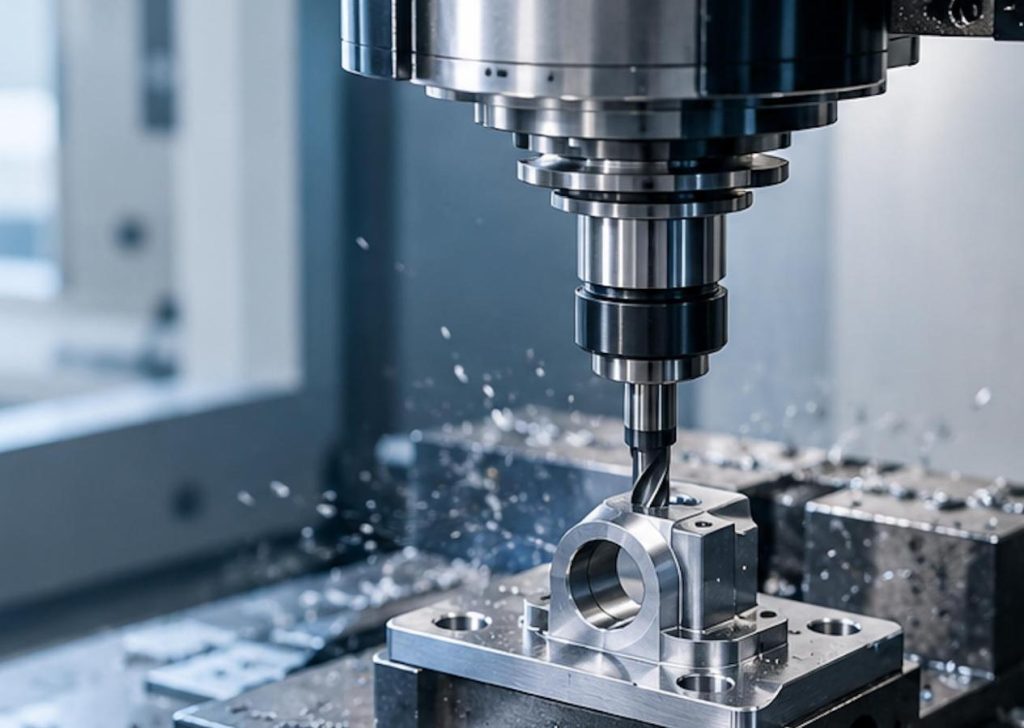
Deep and narrow holes require the use of elongated cutting tools or extended reach of the cutting tool, which might result in increased deflections, vibrations, and problems with chip removal. This may decrease machining accuracy and raise production costs.
Whenever possible, decrease unnecessary depth of holes and narrow slots, keeping enough room for tool access and chips evacuation. In case when the deep hole is inevitable for the part’s performance, analyze the length of the cutting tool and achievable machining accuracy.
5. Optimize Hole Diameter, Depth, and Machining Method
The size, depth, and tolerances of holes impact the choice of tools and the machining process itself. If feasible according to the functional requirements, standard hole sizes are easier to create with typical tools.
In case of deep holes, holes at angles, or holes needing high precision, it is necessary to analyze the access to the holes, chip removal, and inspection after machining beforehand. In case of blind holes, one needs to differentiate between the full hole depth and the actual required hole depth.
6. Specify Thread Standards and Effective Thread Depth
The thread specifications must indicate the relevant standard, nominal diameter, pitch, and depth of effective threads. By using standardized threads, there would not be much need to use specialized tooling for thread cutting and measurement tools. In case of blind threaded holes, ensure that sufficient clearance is provided for drill point and clearance. The thread engagement length must be based on material strengths and operating conditions.
7. Apply Tight Tolerances Only to Critical Dimensions
There may be a need for tight tolerances in some cases due to the nature of precise fits, but such tolerances lead to higher machining and inspection costs. Specify the dimensional aspects that are involved in the fit, function, or seal, and assign the proper tolerances to these aspects.
For those dimensions that have little effect on the performance of the part, general tolerances should be sufficient.
8. Define Surface Finish and Post-Processing Requirements
The finishing demands of various surfaces can be quite varied. Some surfaces that are to be sealed, areas of sliding contact, or even areas that will mate precisely might demand more stringent surface finish control, while other housing surfaces might not need such high standards of control.
The roughness requirements of surfaces must be clearly defined. Other processes like anodizing, polishing, or painting should also be mentioned, as they may affect the dimensions of the surfaces to be created.
9. Simplify Part Geometry and Improve Tool Accessibility
Due to excess grooves, very complicated curvature surfaces, and thin sections, the toolpath becomes difficult and also the number of orientations and setups increases.
Wherever possible, minimize non-functioning features, adopt standard designs for identical geometries, and also try to select such geometry which can be machined with common tools. In case of complex geometry, it should be verified whether machining is possible in all required areas.
10. Minimize Setups and Optimize Workholding
Every new setup might add more time and also lead to some positioning errors. In the designing phase, proper locating datums must be decided along with the orientation of the parts such that maximum number of operations could be done with minimum setups.
For thin walls and complex parts, clamping positions, support points, and machining order should be considered to avoid any deformation while machining.
How Can CNC Machining Design Reduce Manufacturing Costs?
The expenses of CNC milling extend far past just machine cycle time and involve numerous additional things like material, programming, set up, tooling, finishing, inspection, and production volume.
An efficient design will allow you to eliminate unnecessary manufacturing requirements, allowing manufacturing effort to be focused only on functionality.
1. Reduce Unnecessary Machining Time
Deep holes, thin grooves, complicated curves, and difficult-to-machine areas can lead to increased time for machining and finishing.
When the functionality allows, it is possible to simplify the geometry, adjust the size of the cavities and select the feature sizes according to the available tools.
2. Reduce Setup and Specialized Tooling Requirements
Components that can be machined with the help of standard machines in fewer setups are generally easier to manufacture more effectively.
However, it is important to note that fixtures that are designed especially for manufacturing a particular component do not always result in higher costs. For complicated components or when making components in a repeat process, their use may prove beneficial in the long run.
3. Avoid Unnecessary Precision Requirements
The practice of limiting tolerances to only those dimensions which really influence fit, seal, or function will minimize unnecessary finishing and inspection.
It does not imply any reduction in quality levels. It is a matter of matching up manufacturing with the true use of the part.
4. Improve Material Utilization
In the case when a component is produced using the machining process from solid, any superfluous internal cavities or shapes could add to not only material waste but also the removal of material.
Depending on the structural needs, one could think about optimizing the blanks’ sizes, minimizing material removal and simplifying the non-functional features.
In the case of large-scale production, it could also make sense to analyze other manufacturing methods than CNC machining.
Common CNC Machining Design Mistakes to Avoid
1. Designing Too Many Sharp Internal Corners
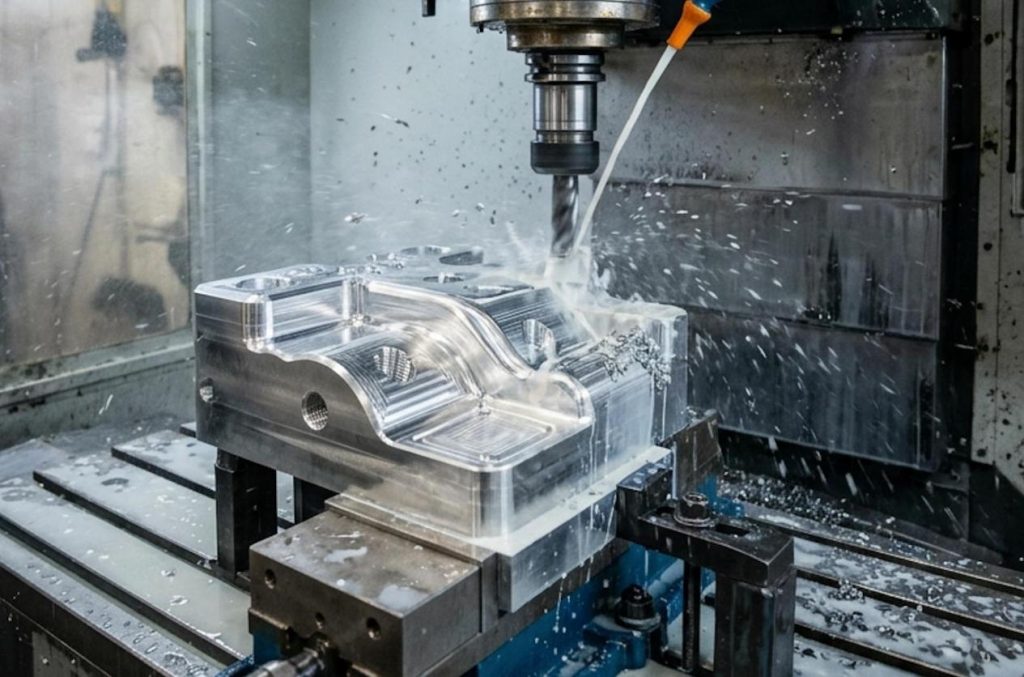
Conventional CNC milling cannot directly produce perfectly sharp internal corners. If corner radii are too small, smaller-diameter tools may be required, increasing machining time and tool wear. Where assembly and functional requirements permit, use appropriate internal radii instead.
2. Ignoring Thin-Wall Rigidity
The thin walls that lack proper support can become distorted due to cutting force or clamping force, thereby distorting the dimensions of the part and the surface finish. Consider the rigidity of the structure according to the material used, wall thickness, and machining process.
3. Overlooking Tool Accessibility in Deep Holes and Cavities
Deep holes and cavities could require too much overhang of the tool, could prevent evacuation of chips, and destabilize the cutting process. Consider the depth of holes and width of cavities and entry when you design a part.
4. Aplicar tolerâncias rigorosas a todas as dimensões
Tolerances that are too stringent do not make parts work better but simply raise costs of machining, inspecting, and quality control. Find out which dimensions are crucial in relation to fit up, movement, sealing, etc., and apply normal tolerances to other dimensions.
5. Leaving Material and Surface Treatment Requirements Unspecified
In case of uncertainty regarding material grades, surface finish, or any processing after production (for example, anodizing and painting) in the drawings prepared by engineers, it is possible for different vendors to choose their own process. This may cause discrepancies in quotation and production of components.
6. Failing to Consider Actual Manufacturing Conditions
While some sections may seem feasible in a CAD rendering, they will be difficult to manufacture because they will need special equipment, set-ups, and inspection processes when manufactured in real life. It is recommended to seek advice from a CNC machining company before completing the design process.
Considering these problems in the designing process will prevent unnecessary changes and extra costs later on.
Como escolher o parceiro certo para usinagem CNC?
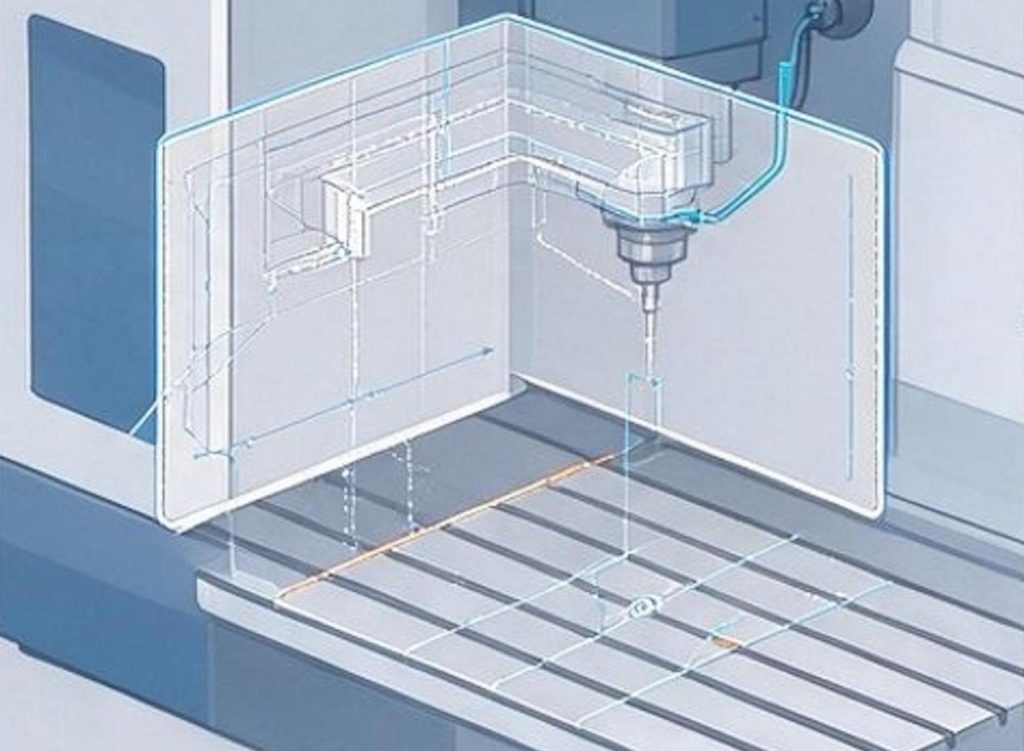
Do not make comparisons among the Fornecedores de usinagem CNC in terms of quotations only when choosing a CNC machining provider. Instead, consider the manufacturing capacities, quality control processes, and support of the project on their part. The right CNC machining provider will be able to find possible manufacturing problems at the design stage and suggest ways to improve design.
1. Evaluate Whether Their Machining Capabilities Match Your Requirements
The abilities of different suppliers to process different types of material, manufacture parts of varying sizes, handle complex geometry, and manage dimensional tolerance vary.
It is important to check that your supplier is familiar with the materials and part characteristics that you are targeting before placing your order.
2. Review Quality Control and Inspection Capabilities
An efficient CNC machine shop must have an inspection procedure in place for measurements and be capable of providing measurement reports when needed.
In the case of high-precision parts, make sure that all dimensions, tolerances, and surface finish can be checked accurately. Specifications of the machine itself cannot ensure precision of the final product.
3. Confirm Material, Surface Treatment, and Delivery Requirements
It is essential that before placing the quote request and ordering, one finds out the grade of the material, heat treatment, surface treatment, number of pieces in the order, and time of delivery. It is important to make sure that post processing, testing, and packaging will be included in the quote.
4. Assess Design Support and Communication
A capable machining partner should do more than manufacture parts according to drawings. The supplier should also provide design-for-manufacturability (DFM) feedback and practical recommendations for issues involving thin walls, deep cavities, tight tolerances, and complex workholding.
Timely, technically informed communication helps reduce design revisions and production delays.
KENENG CNC Machining Manufacturer: Free DFM Assessment
KENENG provides CNC machining services as well as free DFM review service that will help our customers determine the feasibility of their parts prior to production.
The engineering department examines 3D CAD models and drawings to detect any potential difficulties with the design or manufacturing process. Subsequently, we provide advice to improve the machining process and reduce costs while preserving functionality.

Why Choose KENENG for Custom CNC Machining?
Free DFM assessment: Review part geometry, manufacturing feasibility, tolerance requirements, and potential design issues before production, helping identify opportunities for optimization.
Multi-axis CNC machining capabilities: Services include 3-axis, 4-axis, and 5-axis CNC milling, CNC turning, mill-turn machining, drilling, tapping, electrical discharge machining (EDM), and wire EDM.
A wide range of materials: We support aluminum alloys, stainless steel, carbon steel, alloy steel, brass, copper, titanium alloys, and various engineering plastics. Material selection can be tailored to the required strength, corrosion resistance, weight, and operating environment.
Opções de produção flexíveis: We provide flexible production methods that range from single part prototyping to smaller batch production and larger production runs.
Surface finishing and secondary operations: Depending on the type of material and the need for the project, we have capabilities such as anodization, electroplating, passivation, sand blasting, painting, deburring, tapping, among others.
Responsive communication and delivery: KENENG values effective communication and production scheduling. Some selected projects can be delivered within just three working days.
Request a Free DFM Assessment for Your CNC Parts
If you are designing a new product or reworking a part’s design, getting expert manufacturing advice at the beginning can save you from problems and expenses down the road.
Send your 3D CAD model and engineering drawings to KENENG along with information on material, key dimensions, tolerance, surface finish requirements, and expected order quantity. Our team will help evaluate the proposed machining approach and discuss practical design optimization opportunities.
Conclusion: Optimize CNC Machining Design for Quality and Cost Efficiency
CNC Machining design must consider all of the functionality and performance specifications in conjunction with the process of manufacture itself. The use of the right materials, correct wall thicknesses, internal corner radiuses, tolerance considerations, and elimination of unnecessary geometric shapes will assist in reducing the manufacturing difficulties, improve time efficiency and reduce manufacturing costs.
In cases of complicated components or projects that require high precision standards, it would be beneficial to contact a CNC machining fabrication company prior to manufacture. This will enable one to carry out a design for manufacturability review that will help detect possible problems in the design process and suggest improvements.
If you are developing a new product or looking to optimize an existing part, KENENG provides custom CNC machining services and free DFM feedback to help you evaluate your design, select suitable machining processes, and support prototype development, small-batch production, and larger-scale manufacturing.