
¿Cómo afecta la selección de materiales a la calidad de las piezas estampadas?
La selección del material sigue siendo uno de los factores clave para obtener piezas estampadas de buena calidad. Las características del material elegido influyen directamente en la conformabilidad, la precisión dimensional, el acabado superficial, la resistencia al desgaste y el rendimiento general de los componentes estampados.
Seleccionar los materiales adecuados para las piezas estampadas de metal implica considerar sus propiedades mecánicas, los requisitos de la aplicación, las condiciones de fabricación y los costos. Si el material no es el apropiado, pueden surgir defectos, aumentar los costos de producción y disminuir la fiabilidad del producto. Sin embargo, al elegir cuidadosamente el material, los fabricantes pueden lograr una calidad constante y una producción eficiente de las piezas estampadas de metal.
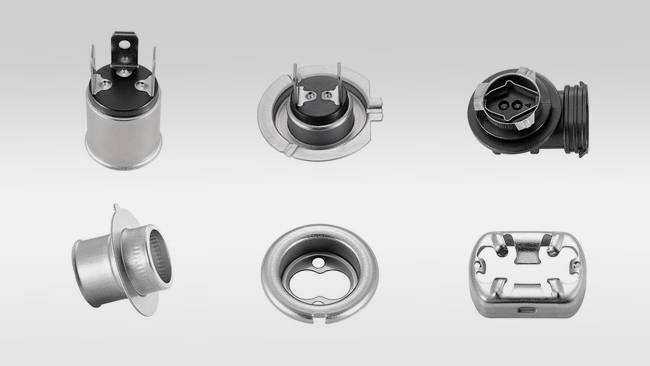
Índice
Por qué Selección de Materiales es importante para la Mfabricación de piezas de estampación
Durante el proceso de estampado , las láminas de metal pasan por diversas operaciones, como corte, doblado, punzonado, conformado y embutición profunda. Cada paso aplica tensiones específicas al material, e incluso una pequeña discrepancia puede ser determinante. Si el material elegido no soporta estas fuerzas, pueden aparecer grietas, deformaciones indeseadas, un efecto de recuperación elástica excesivo o incluso inconsistencias dimensionales en la pieza final.
Para obtener piezas estampadas de alta calidad , el material debe tener las propiedades adecuadas, no solo para el diseño del producto, sino también para el proceso de fabricación. Por ejemplo, una pieza con una geometría compleja y con múltiples características suele requerir un material con alta ductilidad, mientras que un componente estructural destinado a un uso intensivo generalmente se beneficia de una mayor resistencia y dureza.
Cuando la selección de materiales se realiza correctamente, la producción tiende a ser más estable. Se reduce el desperdicio, las herramientas sufren menos desgaste y las piezas estampadas personalizadas terminadas se ajustan de manera más consistente a las especificaciones de diseño requeridas.
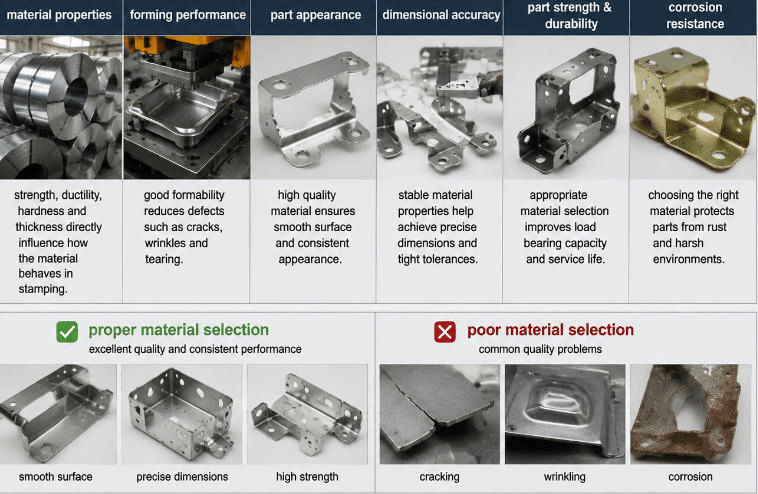
Aspectos clave de la selección de materiales que afectan la calidad de las piezas estampadas
1. La relación entre las propiedades del material y el rendimiento del estampado.
Cada material metálico posee propiedades físico-mecánicas propias que determinan su comportamiento durante el estampado y el proceso de fabricación de la lámina. Factores como la resistencia a la tracción, la dureza, la ductilidad, la elasticidad e incluso el espesor influyen en la facilidad con la que una lámina metálica puede cortarse, doblarse, estirarse o moldearse.
| Propiedad material | Impacto en el proceso de estampado | Efecto en el rendimiento de las piezas estampadas | Consideraciones de calidad |
| Resistencia a la tracción | Determina la fuerza necesaria para el conformado y la capacidad del material para soportar la tensión durante el estampado. | Una mayor resistencia a la tracción mejora la capacidad de carga y la durabilidad de las piezas terminadas. | Una resistencia excesivamente alta puede aumentar la dificultad de conformado y requerir herramientas más resistentes. |
| Fuerza de rendimiento | Factores que influyen en el inicio de la deformación permanente durante las operaciones de doblado y conformado. | Afecta la estabilidad dimensional y el rendimiento estructural de las piezas estampadas. | Una resistencia a la fluencia adecuada ayuda a prevenir deformaciones no deseadas durante el servicio. |
| Ductilidad | Determina cuánto puede estirarse o doblarse el material antes de agrietarse. | Mejora la capacidad de crear formas complejas y componentes embutidos. | La baja ductilidad puede provocar grietas, fisuras y mayores tasas de desperdicio. |
| Dureza | Afecta al corte, a la fuerza de conformado y al desgaste de la herramienta durante el estampado. | Proporciona resistencia al desgaste y mejora la durabilidad de la pieza. | Una dureza excesiva puede reducir la conformabilidad y acelerar el desgaste de la matriz. |
| Comportamiento elástico/de recuperación | Influye en cuánto recupera el material su forma original después de formarse. | Afecta a la precisión dimensional y al rendimiento del ensamblaje. | La selección adecuada de materiales ayuda a reducir los defectos relacionados con la recuperación elástica. |
| Resistencia a la fatiga | Determina la resistencia a la carga repetida durante el uso del producto. | Mejora la fiabilidad a largo plazo de los componentes estampados. | Imprescindible para piezas expuestas a vibraciones, impactos o esfuerzos cíclicos. |
| Propiedades termales | Afectan al rendimiento durante aplicaciones de alta temperatura y procesos relacionados con el calor. | Ayuda a mantener la estabilidad de la pieza en entornos exigentes. | Importante para componentes aeroespaciales, automotrices e industriales. |
| Conductividad eléctrica | Influye en la selección de materiales para aplicaciones de estampado eléctrico. | Garantiza un rendimiento eléctrico y una transferencia de calor eficientes. | Fundamental para conectores, terminales y componentes electrónicos. |
2. Resistencia del material y durabilidad de la pieza
La resistencia del material elegido influye directamente tanto en el rendimiento como en la vida útil de las piezas estampadas. Cuando el material es más resistente, los componentes resultantes suelen soportar cargas más pesadas, impactos repentinos y el desgaste mecánico diario sin fallar prematuramente.
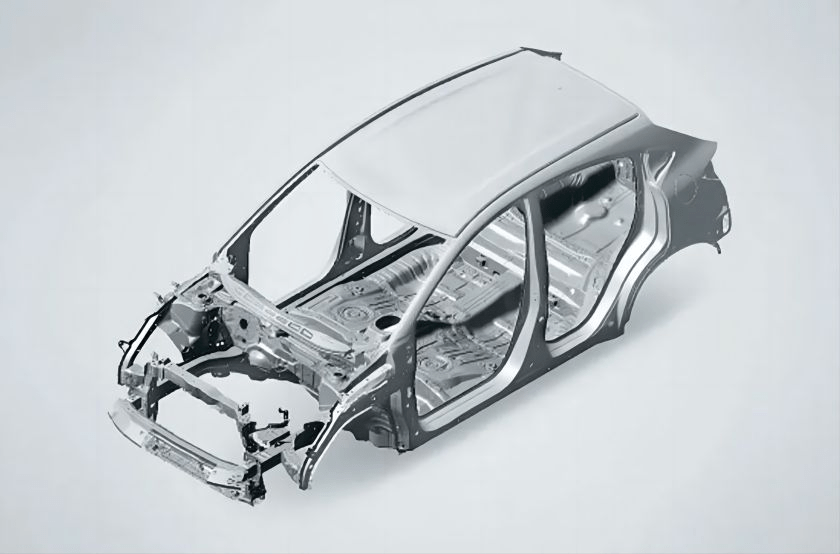
En la industria automotriz, las piezas estructurales estampadas suelen requerir acero de alta resistencia para mejorar la seguridad y, al mismo tiempo, reducir la masa del vehículo. Sin embargo, existe un inconveniente: los materiales de mayor resistencia también pueden presentar dificultades en la fabricación, ya que generalmente requieren fuerzas de conformado más intensas y un control más preciso de los parámetros de estampado.
Si la resistencia del material resulta ser demasiado baja para el uso previsto, la pieza terminada podría deformarse durante su funcionamiento. Por otro lado, si la resistencia es mayor de la necesaria, los fabricantes suelen tener dificultades para obtener la geometría correcta y mantener una eficiencia de producción constante. Por ello, es fundamental elegir el nivel de resistencia adecuado para lograr un equilibrio entre el rendimiento real y la facilidad de fabricación.
3. Ductilidad del material y calidad de conformado
La ductilidad es uno de los factores más importantes que influyen en la calidad del estampado y, además, suele determinar el resultado del proceso de conformado. Se refiere a la cantidad de deformación plástica que un material puede sufrir antes de romperse.
En operaciones de estampado como el doblado, el embutido profundo y el gofrado, la lámina suele experimentar estiramiento y compresión simultáneamente. Cuando el material tiene mayor ductilidad, puede absorber esas tensiones con mayor facilidad, lo que reduce la probabilidad de problemas como grietas, roturas y arrugas.
Los materiales de baja ductilidad a veces requieren más pasos de procesamiento, ajustes en la disposición de las herramientas o velocidades de producción más lentas para evitar que se detecten fallos. Cuando los fabricantes eligen materiales con el comportamiento de flexión adecuado, pueden aumentar la estabilidad del proceso y lograr crear geometrías de piezas más complejas.
4. Impacto del espesor del material en la precisión
El espesor del material es importante para la precisión dimensional, la resistencia mecánica y el acabado superficial. Si el espesor de la lámina varía, el proceso de conformado se vuelve menos uniforme, lo que puede provocar diferencias entre las distintas piezas estampadas.
Los materiales más gruesos suelen ofrecer mayor resistencia y rigidez, aunque también requieren fuerzas de estampado mayores y herramientas más robustas. Además, pueden incrementar los costes de fabricación debido al mayor consumo de material.
Los materiales más delgados pueden reducir el peso y los costos, pero pueden generar problemas relacionados con la deformación, el arrugamiento y la manipulación durante la fabricación. Mantener un espesor uniforme en todo el suministro de material es fundamental para producir piezas estampadas de alta calidad con dimensiones precisas.
5. Selección de materiales en función de los requisitos de la aplicación.
Los distintos sectores y áreas de productos tienen diferentes expectativas sobre cómo debe comportarse una pieza estampada, y eso afecta directamente al material que se elija.
Muchas piezas estampadas para automóviles utilizan acero de alta resistencia o acero avanzado de alta resistencia para mejorar la seguridad y reducir el peso del vehículo. Estas piezas estructurales deben soportar grandes esfuerzos mecánicos y, al mismo tiempo, mantener dimensiones precisas, incluso bajo cargas repetidas.
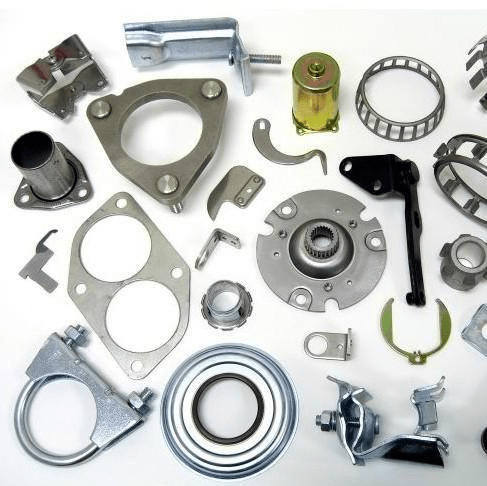
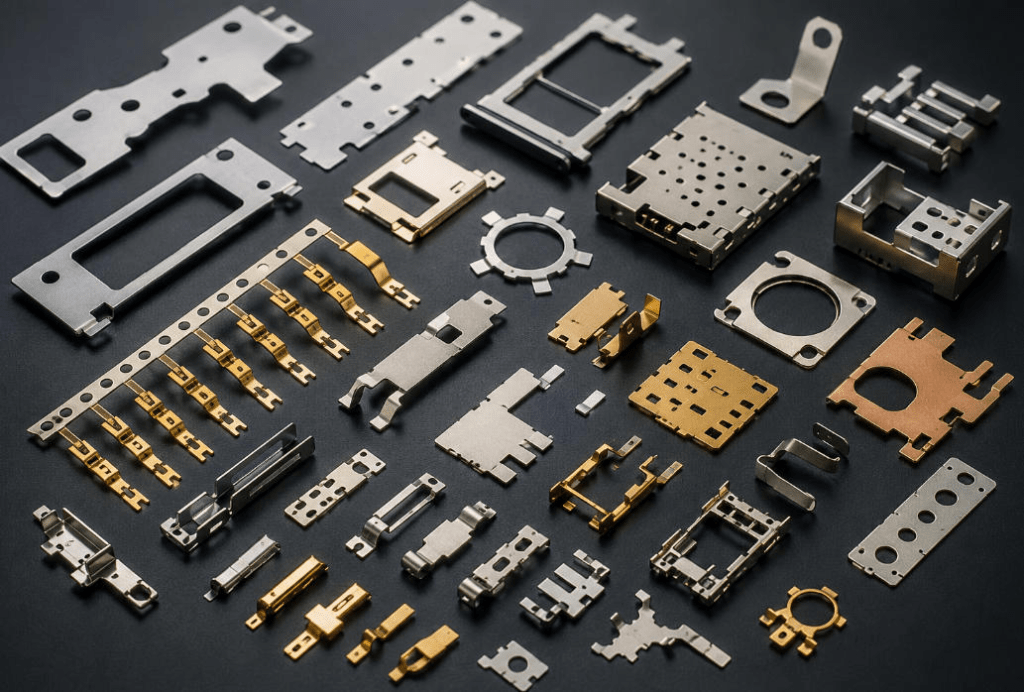
Para los componentes electrónicos estampados , se suelen elegir materiales como el cobre, el latón y el aluminio. Estos materiales ofrecen una alta conductividad eléctrica y, además, suelen resistir bien la corrosión, lo cual es importante para un rendimiento a largo plazo.
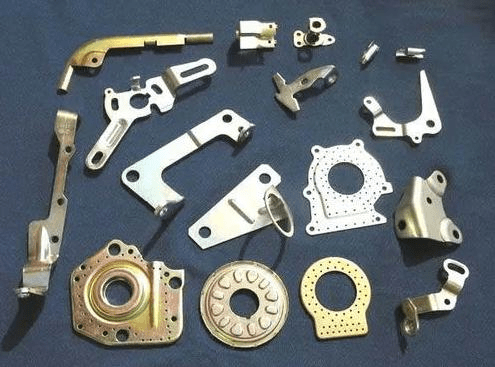
Los equipos médicos y de procesamiento de alimentos suelen utilizar acero inoxidable debido a su durabilidad, limpieza y resistencia a la corrosión química, incluso en entornos difíciles.
En la maquinaria industrial, los componentes a veces necesitan materiales que combinen resistencia, resistencia al desgaste y fiabilidad duradera, al tiempo que funcionan en condiciones exigentes, con un rendimiento constante a lo largo del tiempo.
6. Calidad superficial y apariencia de las piezas estampadas
La selección del material también influye en el acabado superficial de los componentes estampados . Cuando una carcasa o caja requiere una apariencia atractiva, por ejemplo, en el caso de carcasas electrónicas, piezas ornamentales o productos de consumo cotidianos, los fabricantes suelen elegir aleaciones con muy buenas características superficiales.
Si la materia prima es de baja calidad, puede presentar imperfecciones superficiales, como pequeñas inclusiones, arañazos o recubrimientos mal distribuidos. Tras el estampado, estos problemas pueden hacerse más visibles y tienden a afectar negativamente al aspecto general del producto, además de requerir pasos de acabado adicionales.
Los materiales con una buena calidad superficial facilitan a los fabricantes la obtención de resultados de estampado más uniformes y, a menudo, requieren menos pulido, recubrimiento u otras operaciones posteriores.
7. Compatibilidad de materiales con herramientas de estampado
La interacción entre el material y las herramientas de estampado influye en la vida útil de las herramientas, la velocidad de producción y la uniformidad de las piezas. Un material más duro puede generar fricción y aumentar el desgaste de matrices, punzones y otras piezas de la herramienta.
Para la fabricación en grandes volúmenes, es fundamental seleccionar un material que equilibre las necesidades de rendimiento con la compatibilidad de las herramientas. Si el desgaste de las herramientas es excesivo, pueden producirse desviaciones dimensionales, imperfecciones superficiales y mayores gastos de mantenimiento.
Incluso con una lubricación adecuada y ajustes precisos en la configuración del estampado, que reducen algunos problemas, la elección del material apropiado sigue siendo el paso fundamental para proteger el rendimiento de las herramientas.
8. Resistencia a la corrosión y rendimiento a largo plazo
Para las secciones expuestas a la humedad, productos químicos o entornos hostiles, la resistencia a la corrosión es fundamental a la hora de elegir el material. El acero inoxidable, el acero galvanizado y ciertas aleaciones de aluminio suelen ofrecer una protección más sólida contra la corrosión.
Una pieza estampada puede tener una apariencia impecable en cuanto a precisión dimensional, pero aun así puede fallar prematuramente si el material elegido no soporta las condiciones reales de funcionamiento. Al seleccionar materiales resistentes a la corrosión, el producto se mantiene fiable durante más tiempo y se reduce la necesidad de mantenimiento.
En sectores como los equipos marinos, los dispositivos médicos y la maquinaria para exteriores, a menudo se requieren materiales de estampado resistentes a la corrosión para cumplir con las expectativas de rendimiento a largo plazo.
9. Selección de materiales y rentabilidad
Si bien los materiales de alta calidad pueden ofrecer un mejor rendimiento, también influyen en los costos de fabricación. Es necesario evaluar el precio del material, la estabilidad del suministro, la dificultad del procesamiento y la generación de desechos antes de elegir los materiales de estampado.
Un material de bajo costo puede parecer atractivo al principio, pero puede generar mayores gastos posteriormente debido a mayores tasas de desperdicio, procesos adicionales o una vida útil más corta. Asimismo, un precio excesivo por un material demasiado caro también puede resultar un desperdicio si supera lo necesario para un rendimiento óptimo.
Elegir bien los materiales consiste principalmente en encontrar el equilibrio adecuado, es decir, una calidad de primer nivel, un flujo de fabricación fluido y un coste total real a lo largo de todo el proceso de producción.
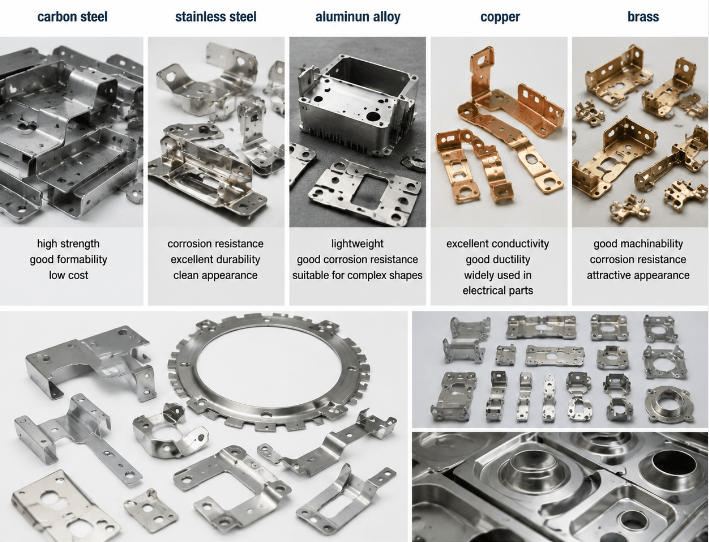
Materiales comunes utilizados para piezas estampadas
| Tipo De Material | Propiedades clave | Ventajas del estampado | Aplicaciones comunes del estampado |
| Acero bajo en carbono | Buena ductilidad, alta conformabilidad, resistencia moderada, fácil de procesar. | Excelente rendimiento de conformado, bajo costo, adecuado para formas complejas. | Soportes para automóviles, repuestos para electrodomésticos, ferretería en general, cajas |
| Acero de alta resistencia (HSS) | Mayor resistencia a la tracción, mayor capacidad de carga, mayor dureza. | Produce componentes resistentes y ligeros, mejora el rendimiento estructural. | Piezas estructurales para automóviles, componentes de seguridad, piezas para equipos industriales |
| Acero avanzado de alta resistencia (AHSS) | Muy alta relación resistencia-peso, buena absorción de energía. | Admite diseños ligeros manteniendo la resistencia y la resistencia a los impactos. | Estructuras de carrocería de vehículos, piezas de refuerzo, componentes del chasis |
| Acero Inoxidable | Alta resistencia a la corrosión, durabilidad, buen acabado superficial. | Larga vida útil, aspecto limpio, resistencia a entornos adversos. | Equipos médicos, piezas para procesamiento de alimentos, electrodomésticos de cocina, componentes marinos |
| Aleaciones de aluminio | Ligero, resistente a la corrosión, con buena conductividad eléctrica y térmica. | Reduce el peso del producto, adecuado para aplicaciones de transporte. | Piezas aeroespaciales, paneles de automoción, carcasas electrónicas |
| Cobre / Latón | Excelente conductividad eléctrica, alta conductividad térmica, buena ductilidad. | Ideal para aplicaciones eléctricas y de transferencia de calor. | Terminales eléctricos, conectores, componentes conductores |
| Aleaciones de titanio | Alta relación resistencia-peso, excelente resistencia a la corrosión, resistencia al calor. | Ofrece un rendimiento excepcional en entornos exigentes. | Componentes aeroespaciales, dispositivos médicos, equipos de alto rendimiento |
| Aleaciones de níquel | Alta resistencia a la temperatura, resistencia a la corrosión, fuerte rendimiento mecánico. | Mantiene la fiabilidad en condiciones extremas. | Piezas aeroespaciales, equipos químicos, componentes para la generación de energía. |
| Acero galvanizado | Base de acero con revestimiento protector de zinc, resistente a la corrosión. | Proporciona una protección contra la corrosión asequible y una buena durabilidad. | Paneles para automóviles, equipos para exteriores, componentes para la construcción |
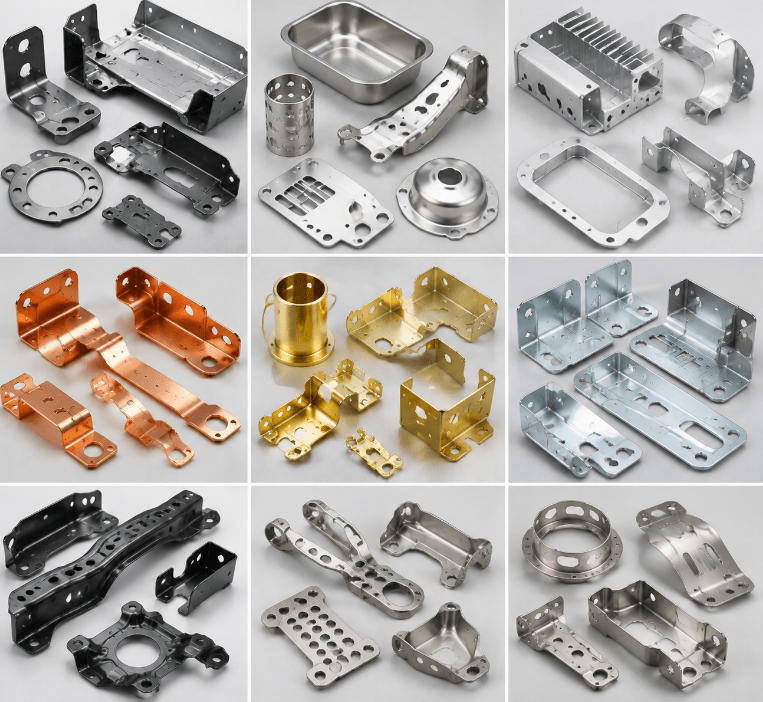
El rol de Ensayos de materiales en el control de calidad de piezas de estampación
Antes de que comience la producción, las pruebas de materiales permiten a los fabricantes comprobar si el material elegido cumple con las especificaciones de diseño. Pruebas como el ensayo de tracción, la medición de la dureza, la medición del espesor y la inspección de la superficie ofrecen información práctica sobre el comportamiento del material durante su uso.
Utilizar materiales de calidad constante reduce las fluctuaciones en la producción y ayuda a prevenir fallos inesperados en el estampado. Si trabaja con proveedores de materiales fiables y mantiene un riguroso protocolo de inspección de materiales, tendrá más probabilidades de obtener piezas estampadas de calidad estable.
Para terminar
La elección del material adecuado influye directamente en la calidad, el rendimiento y el éxito de la fabricación de piezas estampadas. Factores como la resistencia, la ductilidad, el espesor, el estado de la superficie, la resistencia a la corrosión y la compatibilidad con las herramientas de estampado determinan el aspecto y el funcionamiento del producto final.
Un material cuidadosamente seleccionado permite a los fabricantes producir componentes estampados precisos y duraderos, además de controlar los costos y reducir los defectos y otros problemas de producción. Al considerar tanto las necesidades de la aplicación como el entorno de fabricación real, las empresas pueden optimizar su proceso de estampado y obtener mejores resultados en general.