
Cold-rolled Steel vs. Hot-rolled Steel for Stamping Parts
Steel matters a lot in metal stamping. It is chosen for strength, flexibility in design, long service life, and cost-effectiveness. Among the various steel materials available, cold-rolled steel and hot-rolled steel are two commonly used options for producing Stanzteile.
Both types show up in industrial manufacturing. However, cold-rolled steel and hot-rolled steel have different production processes, surface characteristics, dimensional tolerances, mechanical properties, and forming performance. These factors can affect how fast stamping runs, the final part fit, tooling wear and overall manufacturing costs.
If a manufacturer knows what separates cold-rolled steel from hot-rolled steel, it is easier to select the right materials for different stamping jobs. The following sections compare the two materials from several important perspectives.
Inhaltsverzeichnis
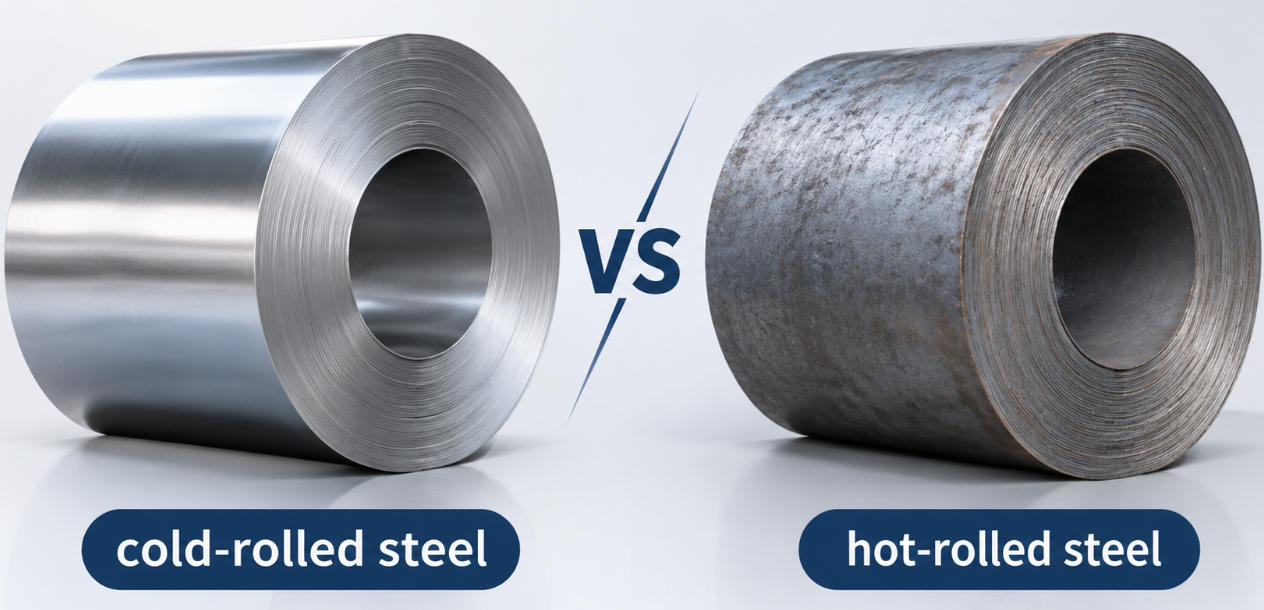
An Overview of Cold-rolled Steel
Cold-rolled steel starts with hot-rolled steel. Then it gets processed again at about room temperature or close to it. Rollers in the mill reduce thickness and aim to tighten up how accurate the dimensions are. The surface finish also improves.
Cold rolling uses plastic deformation while the steel is not reheated to very high temperatures. As a result, the steel usually ends up harder and stronger because of work hardening. The surface also tends to be smoother and more even from one sheet area to the next.
For stamping work, cold-rolled steel is often picked when tight dimensions are needed, when appearance matters, and when forming results must stay steady.
An Overview of Hot-rolled Steel
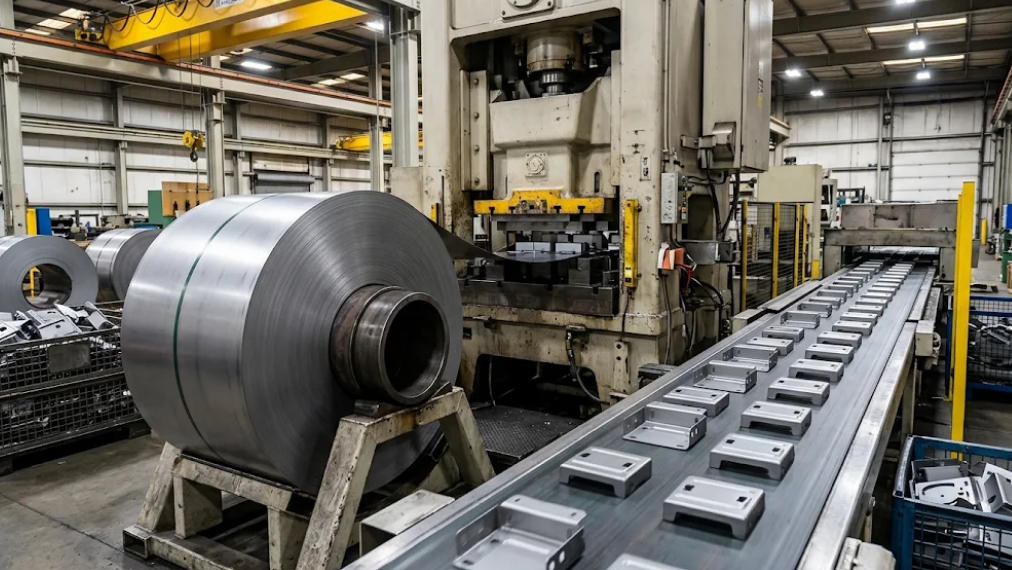
Hot-rolled steel is made by heating steel above its recrystallization temperature. After that, it goes through rolling mills to reach the planned thickness and shape.
Because the rolling happens at high heat, the steel deforms more easily. After rolling, the steel cools on its own. That natural cooling can lead to changes in how the dimensions land and how the surface ends up looking.
Compared with cold-rolled steel, hot-rolled steel usually has a rougher surface and looser dimensional tolerance. Even so, it is often cheaper. It is also offered across many thickness options.
In stamping, hot-rolled steel is commonly used when a thicker section, higher structural strength, or a less strict surface finish is acceptable.
Key Differences Between Cold-Rolled Steel and Hot-Rolled Steel for Stamping Parts
1. Herstellungsprozess
The most fundamental difference between cold-rolled steel and hot-rolled steel is their manufacturing process.
Hot-rolled steel is made by heating steel above its recrystallization temperature, then rolling it to reduce thickness and reach the needed shape. After rolling, it cools naturally. This method is fairly simple and is used to make steel sheets, plates, and coils.
Cold-rolled steel is usually made by taking hot-rolled steel and running it through more rolling steps close to room temperature. After that, the sheet goes through extra rolling mills. This helps it reach thinner sizes. It also improves thickness consistency. Surface quality tends to look better, too.
These manufacturing paths can change how the steel performs in stamping.
2. Oberflächenfinish
Stamping part sDein Gesicht Veredelung is an important consideration, especially when the finished components require painting, plating, or other surface treatments.
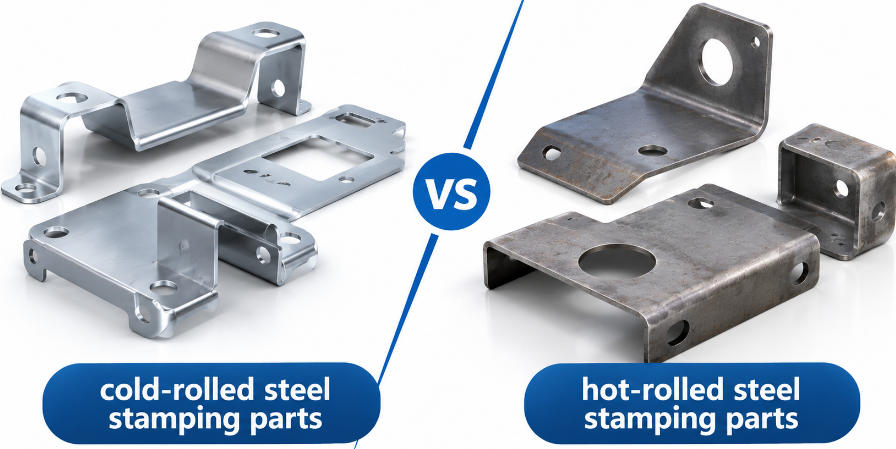
Cold-rolled steel often has a smoother surface. It also tends to be cleaner and more even. Because of this, it can work well when the final look is important or when tight surface treatment is required.
Hot-rolled steel usually has a rougher surface. The reason is the high temperatures used during processing. It can carry mill scale. That scale often has to be removed first. Pickling and blasting are common options. Other cleaning methods may be used as well.
The following chart summarizes their surface finish differences
| Vergleichsfaktor | Kaltgewalzter Stahl | Warmgewalzten Stahl |
| Oberflächenerscheinung | Glatt und gleichmäßig | Rougher and less uniform |
| Oberflächenoxidation | Generally cleaner surface | Often contains mill scale |
| Reibungskoeffizient | In der Regel niedriger | In der Regel höher |
| Painting Preparation | Usually requires less surface preparation | May require descaling or pickling |
| Plating Suitability | Suitable after appropriate cleaning | Erfordert eine geeignete Oberflächenvorbereitung |
| Visuelle Qualität | Better for visible components | More suitable for non-decorative components |
3. Dimensional Accuracy and Thickness Tolerance
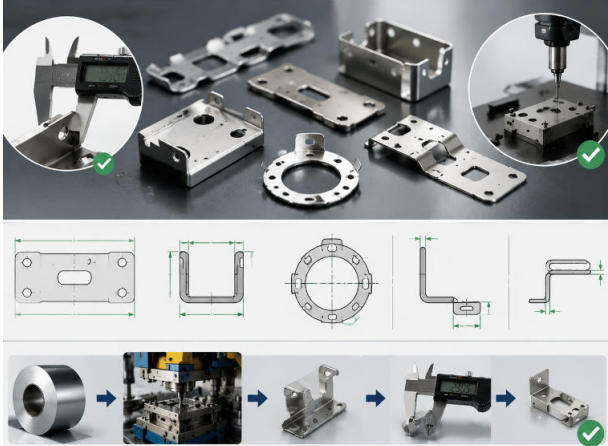
Dimensional accuracy is another major difference between cold-rolled and hot-rolled steel.
Cold-rolled steel typically holds tighter thickness limits. Its dimensions are usually more uniform. That helps in stamping cases where small thickness changes can shift final part size. It can also affect die clearance. It may even change forming results.
Hot-rolled steel often shows broader thickness tolerances. This links back to temperature changes during rolling and cooling. Those shifts may force changes in tooling setup. They can also impact how production is tuned.
| Vergleichsfaktor | Kaltgewalzter Stahl | Warmgewalzten Stahl |
| Dickenkonsistenz | Im Allgemeinen konsistenter | Variabler |
| Maßtoleranz | Enger | Wider |
| Flatness | Generell besser | May have more variation |
| Präzisionsprägen | Sehr gut geeignet | Depends on tolerance requirements |
| Tooling Adjustment | Oft vorhersehbarer | May require more process adjustments |
| Dimensional Stability During Production | Im Allgemeinen einfacher zu kontrollieren | Requires attention to material variations |
For manufacturers producing precision brackets, electrical enclosures, and appliance panels, cold-rolled steel can provide advantages in dimensional control.
4. Mechanische Eigenschaften
Cold-rolled and hot-rolled steel may show different mechanical behavior. This is tied to how each one is produced.
During cold rolling, the steel undergoes work hardening. In general, this raises strength and hardness. At the same time, ductility that remains is lower than it was in the starting hot-rolled material.
Hot-rolled steel avoids that extra cold-work step during production. Based on the grade and the processing conditions, it may still provide good ductility. For that reason, it can suit a range of forming jobs.
| Mechanische Eigenschaft | Kaltgewalzter Stahl | Warmgewalzten Stahl |
| Zugfestigkeit | Often higher for comparable starting grades | Hängt von der Stahlsorte ab |
| Streckgrenze | Generally increased by work hardening | Hängt von der Qualität und der Verarbeitung ab. |
| Härte | Generell höher | Generally lower for comparable material |
| Duktilität | May be reduced by cold working | Often offers good ductility |
| Bruchdehnung | Depends on grade and temper | Hängt von der Klasse ab |
| Forming Performance | Excellent in suitable drawing grades | Good in suitable forming grades |
It is important to distinguish between different steel grades. For example, deep-drawing-quality cold-rolled steel can offer excellent formability, while some higher-strength cold-rolled grades may require more careful forming conditions.
5. Stanzleistung
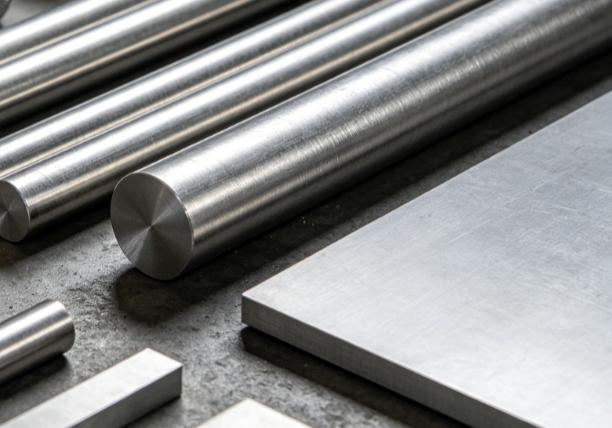
Das material selected for stamping directly affects forming force, material flow, springback, tool wear, and finished-part quality.
Cold-rolled steel tends to be steady in thickness and surface traits. That makes it a good match for precision stamping. It also fits repeatable runs. Typical uses include blanking, punching, bending, and drawing.
Hot-rolled steel can work for many stamping tasks. This is common when the parts are thicker. It is also used for structural pieces. Even so, the surface condition and dimensional swings may call for extra process checks.
| Stanzfaktor | Kaltgewalzter Stahl | Warmgewalzten Stahl |
| Ausblenden | Suitable for precision blanking | Suitable for general blanking |
| Lochung | Gute Maßhaltigkeit | Requires attention to thickness variation |
| Beugung | Good with appropriate grade selection | Good with appropriate grade selection |
| Tiefziehen | Excellent in suitable drawing grades | Possible with suitable drawing-quality grades |
| Zurückspringen | Depends on grade and strength | Depends on grade and strength |
| Oberflächenkratzer | Im Allgemeinen einfacher zu kontrollieren | Mill scale may affect surface quality |
| Produktionskonsistenz | Im Allgemeinen besser vorhersehbar | Depends on material uniformity |
Neither material is automatically better for every stamping operation. The specific steel grade, thickness, forming geometry, and tooling design are equally important.
6. Materialkosten
Material cost matters in metal stamping. This is most noticeable for makers producing large volumes of components.
Hot-rolled steel is often cheaper. That is usually because it goes through fewer extra steps before it reaches the buyer. It also tends to fit well when parts are thick and the surface does not need to be very polished.
Cold-rolled steel typically costs more. The reason is that it needs extra rolling and processing. Those steps help improve both thickness control and surface quality.
However, manufacturers should consider total production costs rather than material prices alone.
| Kostenfaktor | Kaltgewalzter Stahl | Warmgewalzten Stahl |
| Material Purchase Cost | Generell höher | Im Allgemeinen niedriger |
| Additional Surface Preparation | Oft weniger | Möglicherweise ist mehr erforderlich |
| Dickenkontrolle | Im Allgemeinen einfacher | May require additional monitoring |
| Überlegungen zur Werkzeugausstattung | Predictable material dimensions | Möglicherweise sind Anpassungen erforderlich |
| Prozesskosten | Abhängig von der Anwendung | Abhängig von der Anwendung |
| Gesamtkostenvorteil | Präzision und Oberflächengüte | Economical material selection |
For large-volume stamping projects, choosing the appropriate steel can help reduce material waste, production interruptions, and unnecessary finishing expenses.
7. Industrielle Anwendungen
Cold-rolled steel and hot-rolled steel do not match the same needs in manufacturing. They show up in automotive work, electronics, home appliances, construction, and industrial machines.
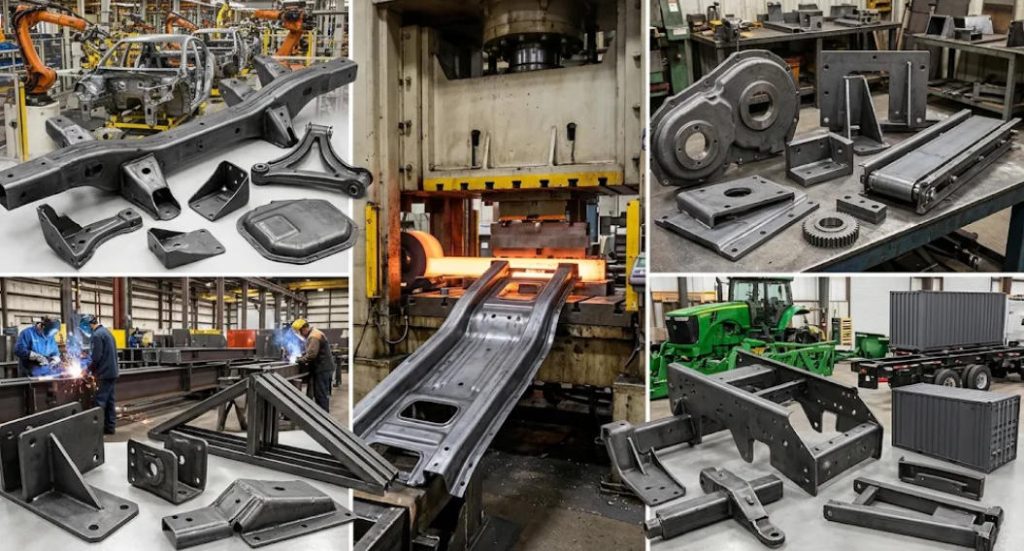
Cold-rolled steel is commonly picked when a part must have a clean surface and tight dimensions. Hot-rolled steel is often used for heavier structural parts. In those cases, lower cost and solid mechanical behavior matter.
| Branche | Cold-Rolled Steel Stamping Parts | Hot-Rolled Steel Stamping Parts |
| Automobilindustrie | Interior panels, seat brackets, precision mounting parts | Chassis brackets, reinforcement plates, structural supports |
| Haushaltsgeräte | Refrigerator panels, washing machine components, housings | Heavy support brackets, structural frames |
| Elektronik | Electrical enclosures, mounting plates, precision brackets | Heavy equipment support plates |
| Bauwesen | Precision fittings, light-duty brackets | Structural connectors, reinforcement plates |
| Industriemaschinen | Equipment covers, precision mounting components | Machine frames, heavy-duty brackets |
| Möbel | Cabinet hardware, drawer components, decorative fittings | Metal frames, heavy-duty supports |
The final selection should always be based on the technical specifications and performance requirements of the finished component.
8. Suitable Stamping Applications
In addition to general industrial applications, the complexity and structural requirements of individual stamped parts can influence material selection.
| Stamping Part Requirement | Empfohlenes Material | Hauptgrund |
| Hohe Oberflächenqualität | Kaltgewalzter Stahl | Glattere Oberfläche |
| Enge Dickentoleranz | Kaltgewalzter Stahl | Bessere Dimensionskonsistenz |
| Precision Small Components | Kaltgewalzter Stahl | More predictable thickness |
| Dekorative Metallplatten | Kaltgewalzter Stahl | Besseres Aussehen |
| Hochleistungshalterungen | Warmgewalzten Stahl | Economical option for thicker sections |
| Structural Reinforcement Parts | Warmgewalzten Stahl | Suitable grades offer required strength |
| Cost-Sensitive Components | Warmgewalzten Stahl | Im Allgemeinen niedrigere Materialkosten |
| Deep-Drawn Stamped Components | Suitable Drawing-Quality Steel | Formability depends on the specific grade |
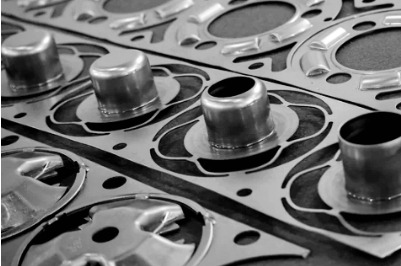
Zusammenfassende Vergleichstabelle Kalt-rolled Steel and Hot-rolled Steel for Stamping Parts
| Vergleichsfaktor | Kaltgewalzter Stahl | Warmgewalzten Stahl |
| Herstellungsprozess | Rolled at or near room temperature | Rolled at high temperatures above the recrystallization temperature |
| Oberflächenfinish | Smooth, clean, and uniform | Rougher surface, often with mill scale |
| Reibungskoeffizient | Im Allgemeinen niedriger | Generell höher |
| Dickentoleranz | Engere Dickentoleranzen | Wider thickness tolerances |
| Dimensionale Genauigkeit | Höhere Dimensionskonsistenz | Relatively lower dimensional consistency |
| Flatness | Generally better flatness | May have greater flatness variations |
| Härte | Generally higher due to work hardening | Generally lower for comparable starting grades |
| Zugfestigkeit | Often higher for comparable starting grades | Depends on steel grade and processing |
| Streckgrenze | Generally increased by cold working | Depends on material grade |
| Duktilität | May be reduced by work hardening | Often offers good ductility |
| Formbarkeit | Excellent in suitable drawing-quality grades | Good in suitable forming-quality grades |
| Blanking Performance | Suitable for precision blanking | Suitable for general blanking |
| Biegeleistung | Good with appropriate grade and bending radius | Good with appropriate grade and bending radius |
| Tiefziehen | Suitable for precision deep-drawing applications | Suitable when appropriate drawing-quality grades are selected |
| Prägegenauigkeit | More predictable due to thickness consistency | May require additional process adjustments |
| Oberflächenbearbeitung | Usually requires less initial surface preparation | May require descaling or pickling |
| Materialkosten | Generell höher | Im Allgemeinen niedriger |
| Produktionskosten | May reduce finishing and dimensional correction costs | May require additional surface preparation |
| Beste Anwendungen | Precision and appearance-sensitive stamping parts | Structural and cost-sensitive stamping parts |
So wählen Sie zwischen Kalt-rolled Steel and Hot-rolled Steel for Stamping Parts
Choosing between cold-rolled and hot-rolled steel for stamping parts requires more than comparing their purchase prices. Manufacturers should evaluate the complete production process and the final product requirements.
Teilekonstruktion und Geometrie
Customized metal stamped parts can have very specific shapes. If the design is complex, it needs careful attention. For example, tight bend areas, narrow radii, or deep drawing can limit which steels work.
Cold-rolled drawing grade steel can fit precision work. For bigger structural shapes, some hot-rolled grades may also work well.
Materialstärke
Material tDicke von Stanzteilen changes more than only weight. It affects forming forces, final dimensions, springback, and the tooling plan.
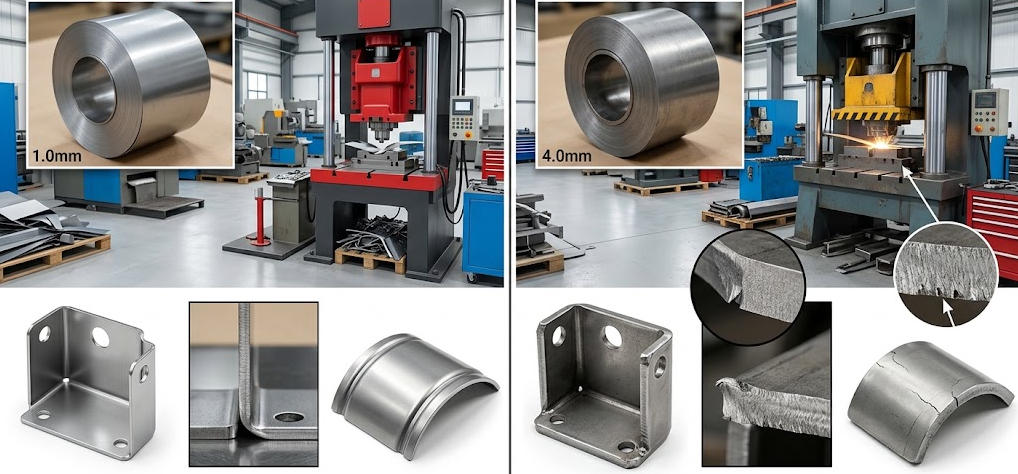
Cold-rolled steel is often chosen when thickness consistency is required. Hot-rolled steel can be fine for thicker parts if the allowed tolerance is acceptable.
Anforderungen an die Oberflächenbeschaffenheit
When the stamped part will be seen or will get decorative finishing, cold-rolled steel is often the better match. Its surface is usually smoother.
If the part stays hidden in the final assembly, the rougher surface of hot-rolled steel may be acceptable.
Mechanische Eigenschaften
Stamping performance depend on strength and ductility. Tensile strength, yield strength, elongation, and hardness all play roles.
Review the material test reports. Then confirm the steel grade meets the needed requirements.
Produktionskosten
Steel cost is only part of the real bill. Other factors also matter, like extra cleaning, surface treatment, scrap losses, tool wear, and how efficiently production runs.
Anforderungen an den Stanzprozess
Stamping can include blanking, punching, bending, embossing, and deep drawing. Each step stresses the material in its own way.
Choose a steel grade that fits the forming plan. Tooling design and forming behavior must also be aligned.
Zusammenfassung
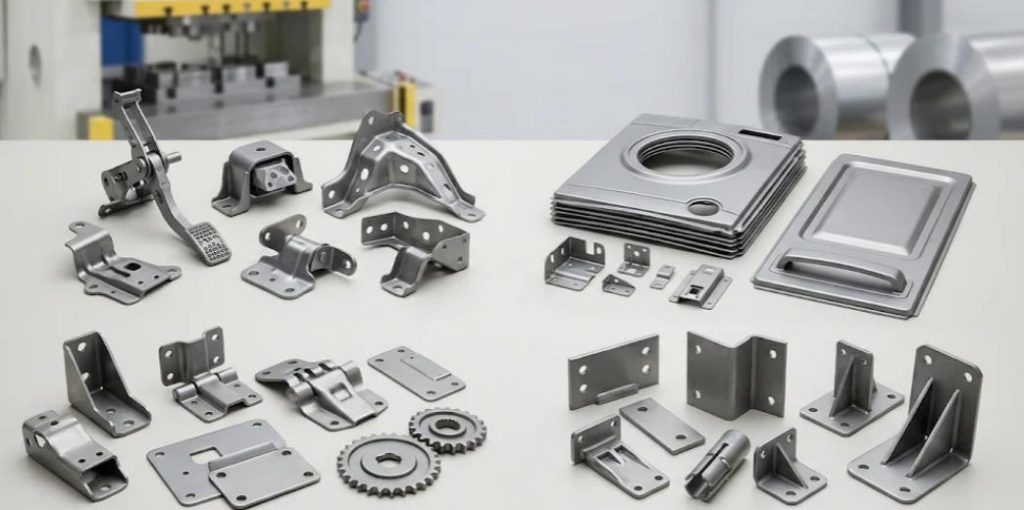
- Kaltgewalzter Stahl generally provides better surface quality, tighter thickness tolerances, and more consistent dimensions, making it an excellent choice for precision stamping parts and components requiring attractive finishes.
- Warmgewalzten Stahl offers a more economical material option and is widely used for thicker components, structural brackets, reinforcement plates, and industrial equipment parts.
Fazit
Cold-rolled steel and hot-rolled steel each have their own traits. Because of that, they suit different stamping applications.
Stamping parts manufacturers need to select the right material based on the part design, mechanical requirements, forming complexity, surface quality, and production budget. When these factors are checked side by side, results tend to improve. The stamping process can run more smoothly, costs often drop, and the final stamped parts come out more consistently.