OEM-CNC-Bearbeitungsteile: Prozess, Materialien und Lieferantenauswahl
n industries such as machinery manufacturing, automotive, industrial equipment, electronics, and oil & gas, companies often need custom non-standard parts based on their specific product structures and technical requirements. Compared with purchasing standard components, OEM-CNC-Bearbeitungsteile can be manufactured according to customer-provided CAD drawings, 3D models, dimensions, tolerances, and material specifications, making them ideal for applications that require high precision, complex geometries, and consistent quality.
From prototype development to mass production, OEM CNC machining can support different stages of manufacturing. Using processes such as CNC milling, CNC turning, and 5-axis machining, manufacturers can produce complex metal and plastic components for a wide range of applications.
This article provides a comprehensive overview of OEM CNC Machining Parts, including machining types, materials, processes, surface finishes, quality control, applications, and how to choose the right CNC machining supplier.
Inhaltsverzeichnis
Why Choose OEM CNC Machining Parts?
As for those corporations that require customized products, OEM CNC machining brings some benefits including flexibility in terms of dimensions, high precision, ability of complicated machining processes, and quality consistency.
1. Benutzerdefinierte Abmessungen
Custom OEM CNC machining parts may be produced based on the drawings, dimensions, and technical specifications provided by the customer and independent from standardized dimensions.
For those products that have small internal space, specific installation needs, or dimensions needed for mating parts together, custom dimensions will be useful.
2. Hohe Präzision
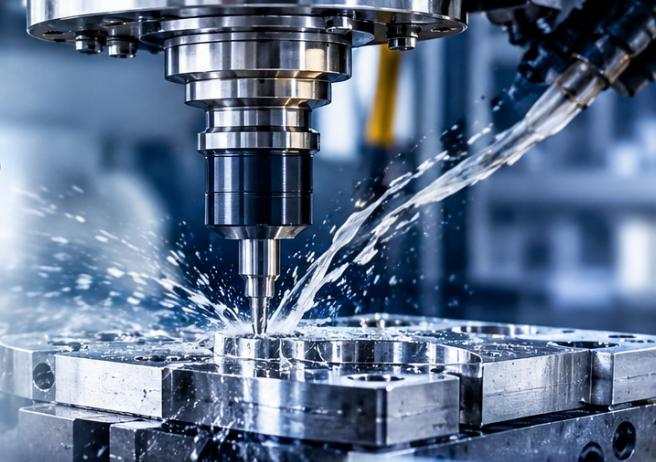
CNC machining employs computerized programming to control the movements of the tools, enabling the manufacturer to obtain high dimension precision and good repeatability.
When manufacturing shafts, precision couplings, mechanical parts, and equipment parts, dimensional stability will minimize errors during assembly and help enhance the reliability of the equipment.
3. Komplexe Geometrien
Today’s CNC machining machinery is capable of manufacturing holes, slots, curves, threads, cavities, and complex geometries.
Whereas some parts are hard to manufacture using the conventional machining process, the use of multi-axis CNC machining helps to minimize errors during multiple positioning.
4. Flexible Produktionsmengen
OEM CNC machining is suitable not only for mass production but also for different stages of product development and manufacturing, including:
- Prototyp
- Kleinserienfertigung
- Produktion mittlerer Stückzahlen
- Massenproduktion
This allows companies to start with prototype parts and gradually scale up to larger production volumes once the design has been validated, without completely changing the manufacturing method.
5. Gleichbleibende Qualität
With CNC programming and machining, manufacturers can ensure consistent sizing and quality in the same production run.
This is beneficial for OEMs that have to procure the same parts over a long period of time and want to ensure that the assembly process is done without complications due to inconsistent machining quality.
What Types of OEM CNC Machining Parts Can Be Manufactured?
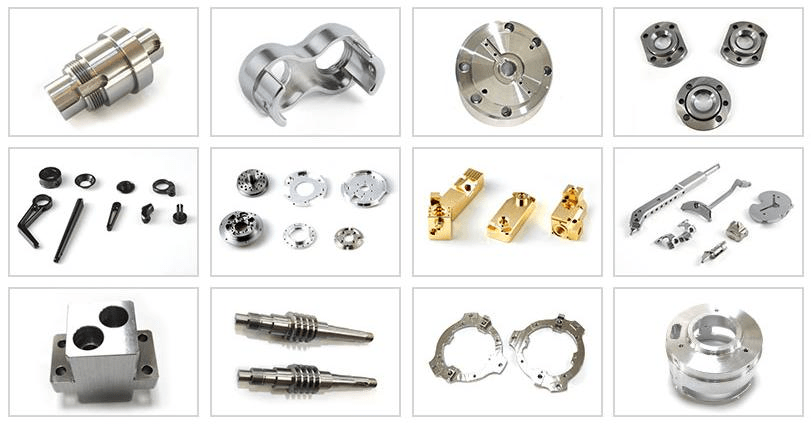
Depending on the machining method, part structure, and precision requirements, OEM CNC machining parts can be manufactured in many different forms. Different CNC machining processes are suitable for different part designs and production requirements.
OEM CNC Milling Parts
CNC milling components are among the most popular kinds of OEM CNC machining parts. Through the use of rotating cutting tools, the CNC milling machines can create flat surfaces, grooves, holes, curved surfaces, and other complicated shapes.
Some examples of products that can be made through CNC milling include brackets, plates, housing, manifolds, machine parts, and fixtures.
OEM CNC Turning Parts
CNC-Drehteile are mainly used for cylindrical and rotational components. During the turning process, the work piece rotates and the cutting tool is responsible for removing material to form the required geometrical shape.
CNC Turning may be done on the outside diameter, inside bore, end faces, and threading. Some of the common elements made through CNC Turning are shafts, bushes, pins, spacers, sleeves, rollers, and threaded components.
CNC Turn-Mill Parts
When it comes to intricate parts that incorporate both turning and milling elements, then turn-milling through CNC machines could be considered a good choice.
It is possible to do such machining processes like turning, milling, drilling, tapping, and more, all in one turn-mill machine without any transfers or set-ups of the part being machined.
5-Achsen-CNC-bearbeitete Teile
5-axis CNC machining parts are suitable for components with complex curved surfaces, multiple angled features, or deep cavities.
Unlike 3-axis machining, 5-axis machining makes it possible for the cutting tool to approach the workpiece from different angles. This results in fewer setups and movements, and is especially effective in applications such as aerospace, automobile, medical device manufacturing, mold, and industrial parts manufacturing.
Präzisionsgefertigte CNC-Komponenten
There are some parts in many industrial applications such as automotive, medical equipment, electronics, industrial machines, and oil & gas equipment which need precise tolerance levels and stringent surface finish standards.
It is important that precision CNC machine parts have proper control of the machining process and detailed inspection in order to meet the required customer drawings, assembly criteria, and special part specifications.
Kundenspezifische CNC-Prototypenteile
OEM CNC machining is also suitable for the product development stage, where manufacturers can produce CNC prototypes based on customer-provided CAD files, 2D drawings, or samples.
These prototypes can be used for design verification, assembly testing, and functional testing. Once the design has been validated, the same manufacturing process can be scaled to low-volume or mass production.
Materials for OEM CNC Machining Parts
Materials directly influence the mass, tensile strength, resistance to corrosion, wear, and longevity of the components machined using the CNC process. Hence, material selection in OEM CNC machining must be done based on the function of the component and its working conditions.
Aluminium
Aluminum is one of the materials that are used extensively in CNC machining. It is light in mass, easily machineable, strong, and has good corrosion resistance properties. Moreover, aluminum alloys can also be subjected to various surface treatments like anodizing.
As a result, aluminum CNC parts are widely used for housings, brackets, automotive components, electronic components, and other lightweight components.
Edelstahl
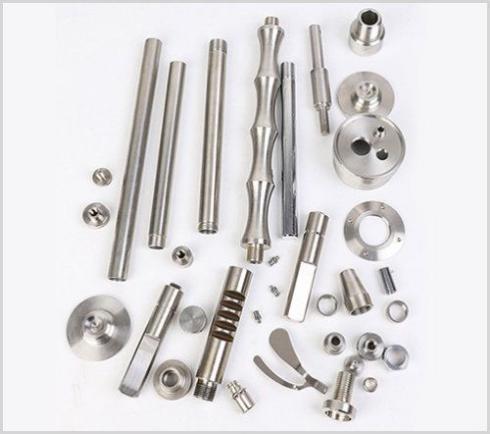
Stainless steel offers good strength, corrosion resistance, and temperature resistance, making it suitable for demanding operating environments. Different stainless steel grades provide different levels of mechanical performance and corrosion resistance.
Therefore, stainless steel CNC parts are widely used in industrial equipment, food processing equipment, medical equipment, chemical processing equipment, and oil & gas equipment.
Kohlenstoffstahl und legierter Stahl
Carbon steel and alloy steel are used for making mechanical parts that have a requirement of being strong, hard, and wear-resistant. The alloy steel is also capable of undergoing heat treatment.
These materials are used for manufacturing shafts, gears, machine parts, and equipment parts that have a requirement of high-load carrying capacity.
Titan
Titanium has characteristics that include high strength and low weight, and good corrosion resistance, which makes it appropriate for cases where both properties are required.
It is harder to machine titanium CNC parts compared to aluminum and normal steels, and it can be time-consuming to machine titanium CNC parts. It might take extra time and effort.
Titanium CNC parts are used in the aerospace industry, medical field, and other industries.
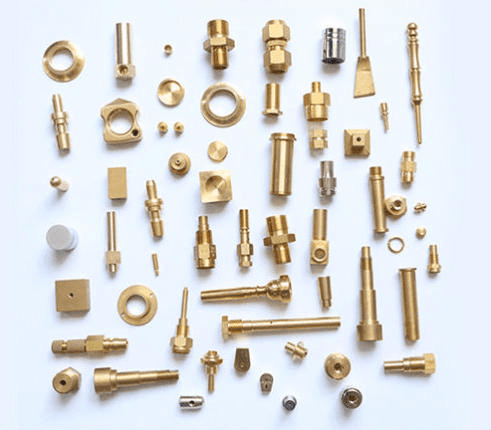
Messing und Kupfer
Brass as well as copper possesses high machinability properties. Copper gives excellent electrical and thermal conductivity, whereas brass has good corrosion resistance and machinability.
These materials are extensively used in making electrical parts and connectors, terminals, valves and other CNC parts which need to be made from electrically conductive material or easily machinable material.
Technische Kunststoffe
Apart from metals, CNC machining can also be employed in the production of various types of engineering plastics like POM, Nylon, PTFE, PEEK, ABS, and PC.
The benefits of these types of materials include lightweight, chemical resistance, and insulation of electrical properties. These materials find applications in bushings, insulators, gears, seals, housings, etc.
The appropriate material should be selected based on the required strength, temperature range, chemical resistance, weight, and operating environment.
CNC Machining Processes for OEM Parts
Various types of OEM CNC machining components involve different manufacturing processes based on their shape, dimensions, materials, and tolerances.
During the production process, several CNC processes can be used in combination in order to meet the necessary dimensional tolerances and other criteria.
CNC Fräsen
CNC milling is one of the most commonly used CNC machining operations. In this case, the material is cut using rotating tools, and the operation allows obtaining flat areas, pockets, slots, holes, and intricate shapes.
For the manufacture of various components, such as brackets, housings, plates, etc., CNC milling is applicable in different amounts of production.
CNC-Drehen
CNC turning is mainly used for shafts, bushings, pins, sleeves, and other cylindrical or rotational components.
By controlling workpiece rotation and tool feed, CNC turning can produce external diameters, internal bores, end faces, and threads. For relatively regular rotational components, CNC turning can provide high machining efficiency.
CNC Bohren
CNC drilling is used to produce holes with different diameters and depths, including through holes and blind holes. Depending on the design, additional operations such as reaming, tapping, and countersinking can also be performed.
In OEM production, drilling is often combined with CNC milling or CNC turning to complete more complex components.
CNC-Schleifen
For components requiring high dimensional accuracy, tight geometric tolerances, and excellent surface quality, a grinding process may be added after CNC machining.
Grinding can further improve dimensional accuracy and surface roughness. It is commonly used for shafts, precision components, and other parts requiring close-fitting or high-precision surfaces.
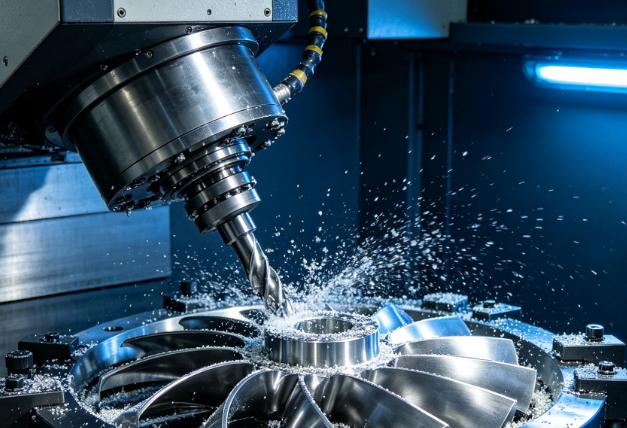
5-Achsen-CNC-Bearbeitung
In 5-Achsen-CNC-Bearbeitung, the cutting tool is able to access the work piece from different angles, thus making the process appropriate for machining complex curved surfaces, angled surfaces, and deep cavities.
As opposed to machining a complex part using several setups, 5-axis machining may help in reducing the setups required, thus improving machining efficiency.
Surface Finishes for OEM CNC Machining Parts
Surface finishing processes may vary based on the material, operational environment, and appearance of the part after CNC machining.
A suitable surface finish may not only help in enhancing the appearance of a component but also increase corrosion resistance, abrasion resistance, hardness, and other properties of the surface.
Gängige Oberflächenveredelungsoptionen
Common surface finishing options include anodizing, powder coating, electropolishing, passivation, nickel plating, chrome plating, bead blasting, brushing, and polishing.
Different processes are suitable for different materials and applications.
For example, anodizing is commonly used for aluminum parts to improve surface hardness, corrosion resistance, and appearance, while passivation is commonly applied to stainless steel parts to improve their corrosion resistance.
How to Ensure the Quality of OEM CNC Machining Parts?
For OEM customers, supplier selection should not be based on machining price alone. Quality control capabilities are equally important.
A comprehensive quality control system helps ensure that finished components meet customer drawings, dimensional tolerances, and application requirements.
Rohstoffkontrolle
The first step is to ensure that raw materials meet the specified material grade, dimensions, and applicable standards.
For industrial applications with strict material requirements, suppliers can provide material certificates upon request to help verify the material source and basic properties.
Prüfung während der Bearbeitung
In-process inspection allows manufacturers to check critical dimensions and machining conditions during production.
If dimensional deviations are detected, machining parameters can be adjusted promptly, reducing the risk of quality problems across a production batch.
Endkontrolle
After machining is completed, a final inspection is performed to confirm that the components meet the customer’s technical requirements.
Common inspection items include dimensions, tolerances, surface finish, thread specifications, hole dimensions, and visual appearance.
For batch orders, sampling inspection or 100% inspection can also be performed according to customer requirements to further ensure product consistency.
Messinstrumente
The professional CNC machining factories will apply the measuring tools based on the structure and precision requirements of the part to be machined, including vernier caliper, micrometer, height gauge, Coordinate Measuring Machine (CMM), and optical measuring tool.
When the parts have high precision or complicated structures, the Coordinate Measuring Machine (CMM) can be adopted to do measurements.
How to Choose an OEM CNC Machining Manufacturer?
Choosing the right OEM CNC machining manufacturer is important for ensuring the successful execution of a project.
In addition to pricing, customers should evaluate the supplier’s machining capabilities, quality control system, production capacity, engineering support, and communication efficiency.
1. Check CNC Machining Capabilities
First, check that the supplier has all the necessary capabilities in terms of machining for your project, including CNC milling, CNC turning, 5 axis machining, turn-mill machining, and precision machining.
It is also necessary to ensure the availability of the corresponding equipment and machining expertise of the supplier in case of complicated pieces.
2. Evaluate Material Capabilities
Material processing capabilities might be different for various vendors.
When your project requires machining of titanium, stainless steel, aluminum, alloy steel, and engineered plastics, you must check whether the vendor has any experience with machining such materials.
Machining of difficult materials requires the right tooling, the right cutting conditions, and appropriate machining experience.
3. Ask About Tolerance Capabilities
Do not focus only on claims such as “high precision.” More importantly, determine whether the supplier can consistently maintain the critical dimensions and tolerances specified in your engineering drawings.
Before requesting a quote, you can provide 2D drawings or 3D CAD files so the supplier can evaluate the machining difficulty and achievable tolerances.
4. Check Quality Control
Ask whether the supplier has a comprehensive quality inspection process and whether they can provide documents such as inspection reports, dimensional reports, material certificates, and certificates of conformity according to project requirements.
A well-established quality control system helps reduce dimensional variations and maintain consistency between production batches.
5. Produktionskapazität berücksichtigen
It is expected that a good OEM supplier would be able to offer manufacturing services constantly through various phases of the project, including from prototype → small batch production → large-scale production.
It is also beneficial to assess the manufacturing capacity of the supplier, manufacturing lead times, and delivery management capability.
6. Evaluate Surface Treatment Options
If a supplier has the ability to provide not only CNC machining but also surface finishing such as anodizing, plating, polishing, or powder coating, then customers can save time and effort in contacting different suppliers. This is because such suppliers can offer one-stop manufacturing services.
7. Consider Engineering Support
OEM projects often involve more than simply machining according to a drawing. They may also require drawing review, DFM feedback, and design optimization.
Therefore, when choosing a supplier, consider the expertise of its engineering team and the efficiency of its communication.
A supplier that can identify potential manufacturing issues before production begins can help reduce rework risks and overall project costs.
Choose KENENG for Custom OEM CNC Machining Parts
Are you searching for a trustworthy OEM CNC machining parts manufacturer? KENENG offers customized CNC machining services for prototyping, limited quantity production, and mass production.
Equipped with CNC milling, CNC turning, and 5-axis CNC machining technologies and skilled at machining various types of metals and engineering plastics, KENENG is able to manufacture custom-made parts based on customers’ 2D drawings and 3D CAD models.
Through DFM design review, material selection, CNC machining, quality control and surface finishing, KENENG offers one-stop manufacturing services to enhance production efficiency and lower the cost of communication within supply chain.
Have a CNC machining project? Send your drawings or CAD files to KENENG to discuss your requirements and receive a customized manufacturing solution and fast quotation.