Stratégies d'ébavurage pour les pièces usinées CNC de précision
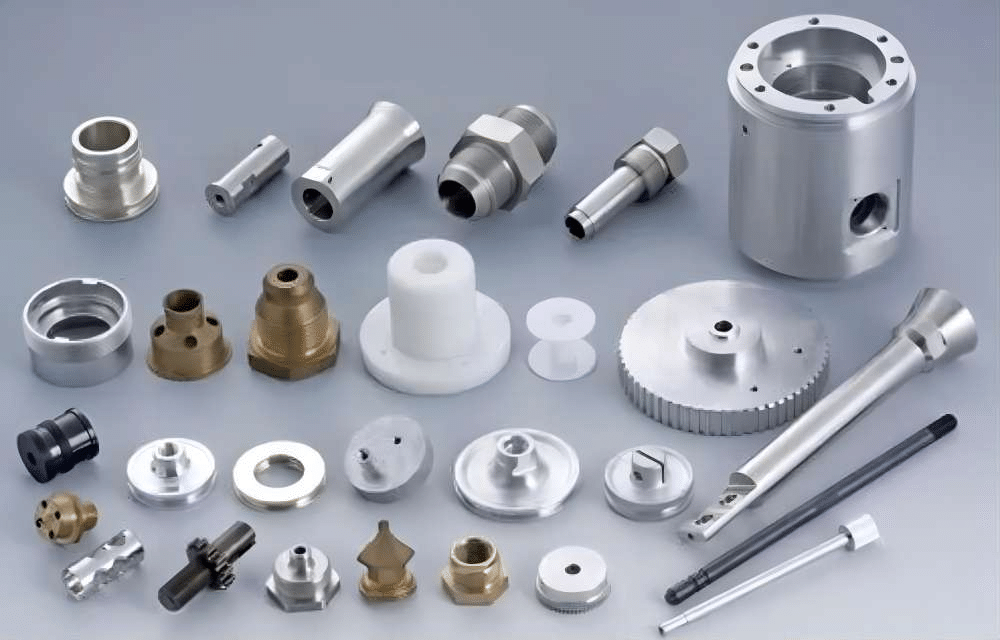
Usinage CNC de précision is used to make parts that need tight tolerances, complex geometries, and smooth surfaces. However, machining processes like milling, drilling, turning, and grinding can leave burrs. Burrs are small bits of extra metal that show up near edges, holes, and machined surfaces. These burrs can affect dimensional accuracy, assembly performance, product safety and lower overall part quality.
Deburring is a post-processing step. It gets rid of those extra projections and readies Pièces usinées CNC for their job. Selecting the right deburring approach for precision CNC parts, depends on the material, part geometry, burr size, tolerance needs, production volume, and cost targets. When manufacturers know the available methods, they can keep output more stable and still meet tight requirements.
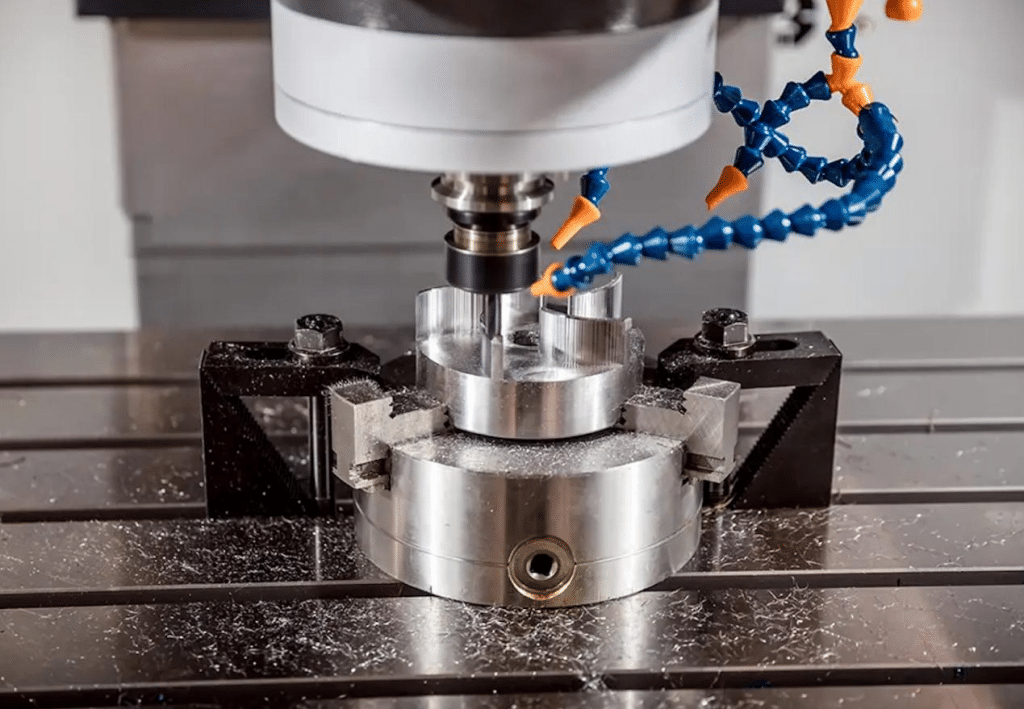
Table des Matières
Organisateur Ce que is Deburring in Precision CNC Machining
Deburring means removing extra material that forms during machining. Burrs often appear when a cutting tool pushes, tears, or bends metal instead of cutting a clean edge. You see them a lot around drilled holes, where passages meet, on thin walls, in slots, and along sharp corners.
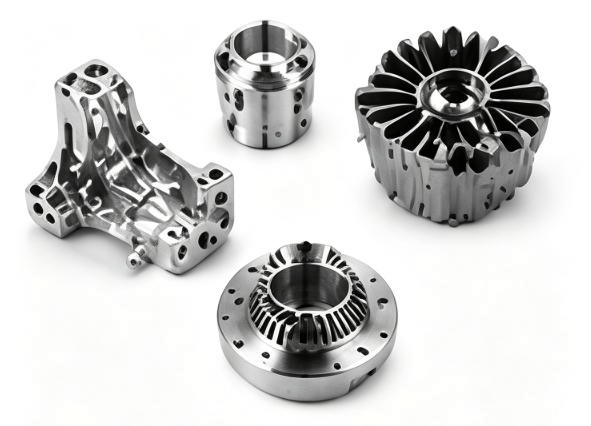
Avec CNC de précision usinage les pièces, even tiny burrs can cause trouble. They can block assembly parts, harm seals, clog fluid paths, add debris to sensitive areas, or create stress spots. This matters in aerospace, auto, medical devices, and industrial equipment, where dependable performance is expected.
General deburring can be rougher, but precision work needs tighter control. The goal is not only to remove burrs. It is also to keep the stated dimensions, the edge shape, the surface finish, and the functional features that the part is meant to have.
Common Deburring Methods for Precision CNC Machined Parts
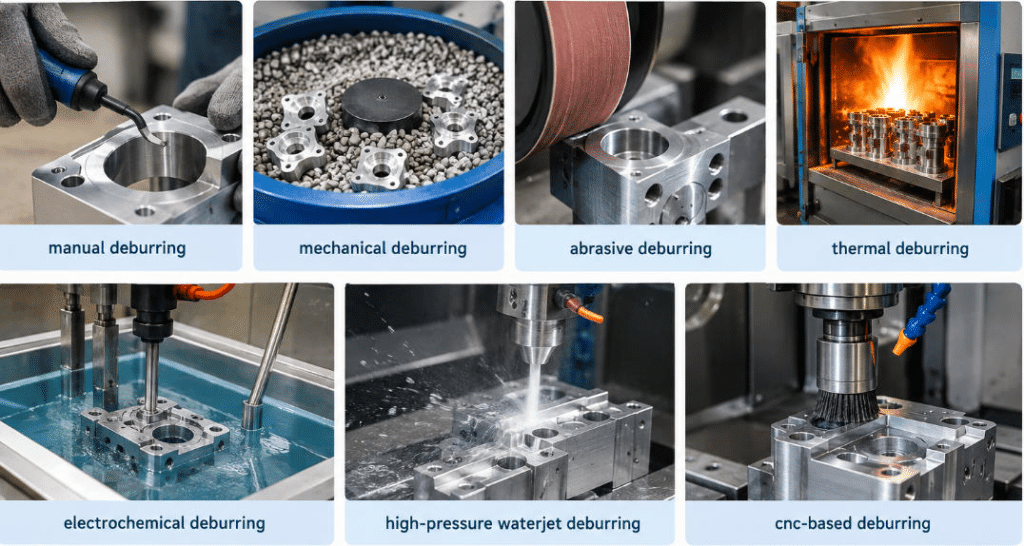
Different deburring methods offer different levels of precision, automation, surface quality, and cost efficiency. Manufacturers should select a process based on the characteristics of the part rather than relying on a single technique for every application.
1. Ébavurage manuel
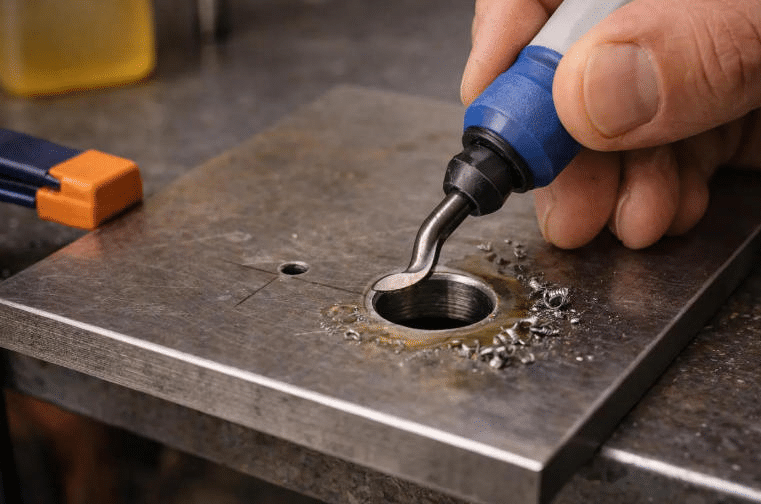
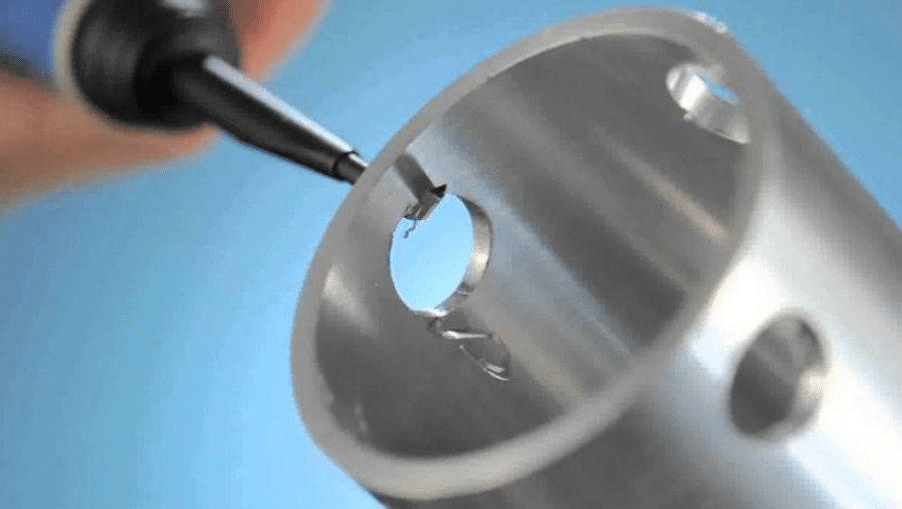
Manual deburring uses hand tools like deburring blades, files, scrapers, abrasive pads, and brushes made for this task. The goal is to lift burrs off machined parts.
People can control the amount of metal removed. That makes manual work a fit for prototypes, low runs, and parts with delicate features. It also lets workers clean spots that machines may struggle to reach.
The downside is that the result depends on the operator. Too much force, or uneven motion, can nick edges, change dimensions, or make chamfers look inconsistent. If parts have many holes or complex shapes, labor time can climb fast.
Manual deburring works best when the run size is small. It fits well when burr sites are easy to reach. It also helps when you need quick changes and do not care as much about maximum output.
2. Ébavurage mécanique
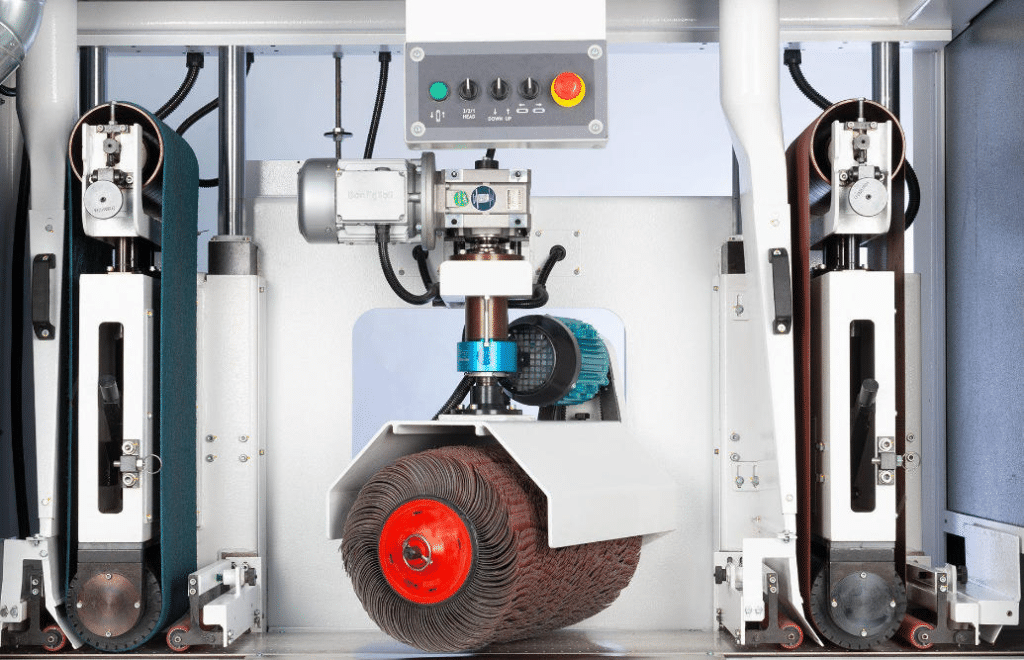
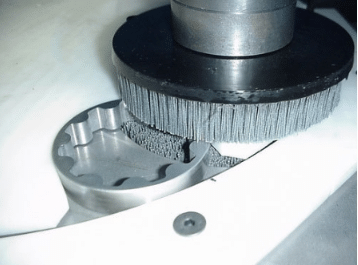
Mechanical deburring relies on machines and tooling to knock off burrs. Typical setups include vibratory finishing units, tumbling systems, rotary brush heads, abrasive belts, and purpose-built deburring machines. All of these use planned mechanical contact to smooth edges.
In vibratory and tumbling processes, parts move together with abrasive media. Over time, the edges get rounded in a controlled way and the surface finish becomes more even. Rotary brushes and other shaped tools can focus on specific faces or on edge zones that are harder to reach.
This approach fits medium to higher production runs. It is also a good match when several parts need the same edge finish. It can cut down on hand work and speed up the overall processing.
Even so, the choice needs care. Burrs in small holes and tight internal channels can be hard to treat without touching faces you want to keep unchanged. Thin, delicate parts can also be at risk. After processing, you may need a cleaning step to clear leftover abrasive and fine debris.
3. Abrasive Deburring
Abrasive deburring removes burrs using abrasive cutting tools. Examples include grinding wheels, abrasive belts, sanding tools, and abrasive stones.
This option tends to work well for bigger burrs and sharp outer edges. It can also be used when an extra finishing step is needed on a surface. If you pick the right abrasive and the right grit size, you can set how aggressive the cut becomes. That helps reach the target edge and finish.
Abrasive deburring is used for steel, stainless steel, aluminum, and other materials that can be machined. It can also take off small surface marks that remain after machining.
The key issue is how much material gets removed. Too much action can create an unwanted chamfer. It can also round the edges more than allowed, or thin out parts with thin walls. For precision CNC work, you need tight control of tool pressure, processing time, abrasive choice, and inspection steps.
4. Ébavurage thermique
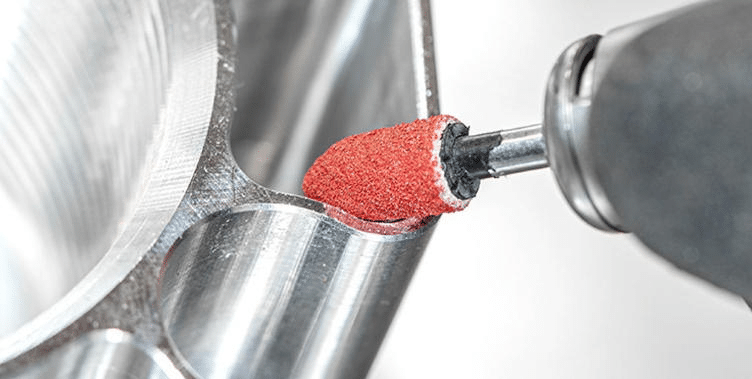
Thermal deburring, sometimes called the thermal energy method, removes small burrs using a fast combustion step in a chamber. The heat that forms helps oxidize or strip the small burrs. With correct control, the main metal body stays mostly as it is.
A major benefit is access to burrs inside complex spaces. It can work in internal passages, at intersecting holes, and in areas that are hard to reach with other tools. Because of this, it is often used on hydraulic parts, fuel system pieces, valve bodies, and other precision parts that have detailed internal shapes.
Thermal deburring usually needs dedicated hardware and tight control during the run. You have to check material fit, the part shape, the current surface finish, and whether oxidation or other heat changes could happen. Afterward, you may also need a second cleaning step or a corrosion protection step.
Thermal deburring often makes the most sense when standard deburring tools cannot get to internal burrs in a reliable way. It also works best when the part design matches the heat-based approach.
5. Ébavurage électrochimique
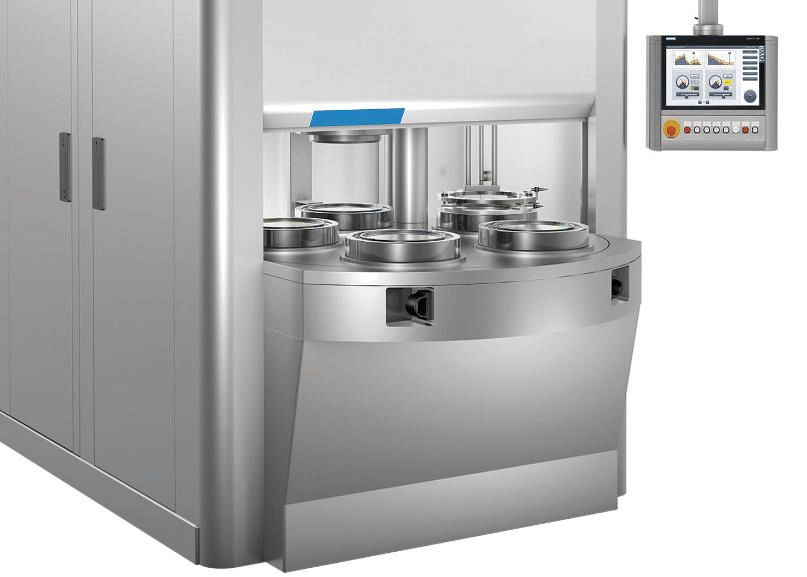
Electrochemical deburring removes conductive material by using a steady electrochemical reaction. The workpiece ties into an electrical circuit. A purpose-built tool and an electrolyte guide the removal to the burr zone you want to target.
Since the method does not depend on normal cutting forces, it can clear burrs in hard-to-reach spots. It also helps lower mechanical stress on the part. This approach is a good fit for intersecting holes, intricate internal routes, and parts where burr removal needs to stay consistent.
Electrochemical deburring is often used for stainless steel, steel alloys, and other materials that conduct electricity. Results depend on conductivity, electrolyte match, tool or electrode design, and where the burr sits.
The downsides are tied to setup cost, fixturing needs, electrolyte handling, and the risk of removing material you did not plan to remove. You may need rinsing, drying, and corrosion control after the work is done.
6. High-Pressure Waterjet Deburring
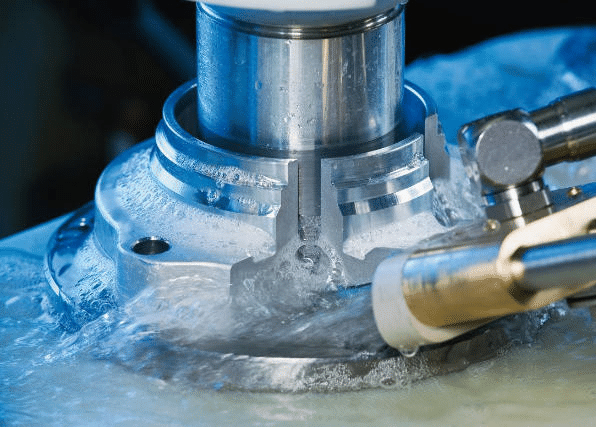
High-pressure waterjet deburring uses a pressurized water stream to loosen burrs and leftover machining debris. Some setups mix water with abrasive media. Other setups use pure water, and those two options are not the same in use.
This approach can help clear intersecting passages, lift off weak burrs, and push chips out of complex parts. It is especially helpful when cleanliness inside the part matters as much as burr removal. Examples include hydraulic, pneumatic, and fluid-handling systems.
Waterjet deburring can cut down direct contact with the workpiece. Still, results rely on burr thickness, the material, nozzle access, the water pressure, and the angle of the jet. Burrs that are hard-set or thick may need a different method.
Shops also have to manage trapped moisture, corrosion concerns, and drying steps. This matters more for carbon steel and for parts that have thin internal passages.
7. CNC-Based Deburring
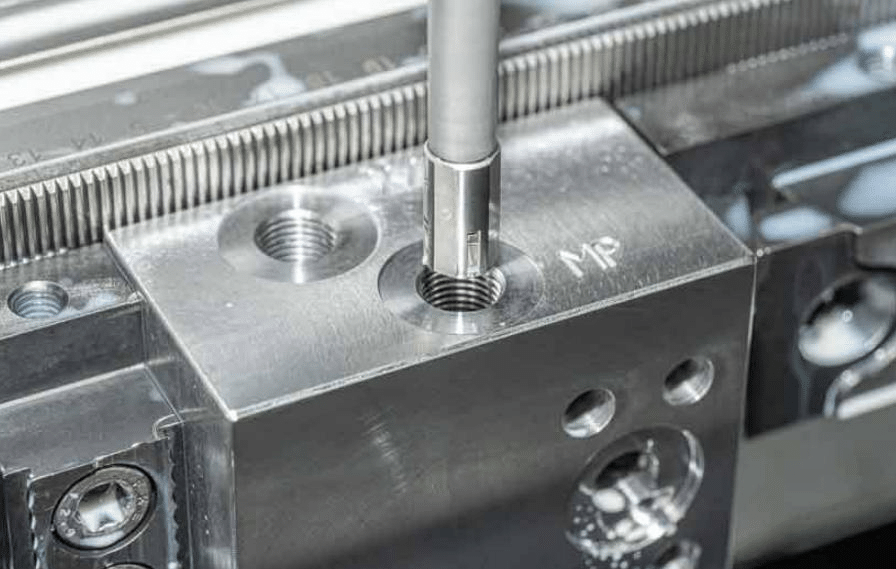
CNC-based deburring uses set machine motions and specific tools. Depending on the setup, it may use chamfering tools, brushes, or deburring cutters to remove burrs on its own.
Because it can be folded into an existing CNC machining plan, some teams can deburr holes and edges without moving the parts to a separate area. That can cut down handling time, support repeatable results, and make production steps easier to run.
CNC deburring works best when burr spots are known and the part shape stays the same from run to run. In that case, the program can send the tool to the right edges, form a steady chamfer, and keep the edge condition close across batches.
Still, it does not run on its own. The setup must allow tool entry, the toolpath has to be programmed correctly, and cutting settings need attention. Burrs can change as tools wear, as the workpiece material behaves, and as the cut conditions shift. Because of that, you still need checks.
For fast, high-volume output, it can help to do deburring as part of the main CNC machining step. This can cut down on extra handling and other second-pass costs.
Comparison of Deburring Methods
The following chart summarizes the main differences between common deburring methods for precision CNC machined parts.
| Méthode d'ébavurage | Principe de fonctionnement | Avantages | Désavantages | ACTIVITES Applications |
| Ébavurage manuel | Uses hand tools, files, scrapers, and brushes to remove burrs | Flexible, low equipment cost, suitable for complex details | Labor-intensive and dependent on operator skill | Prototypes, small batches, precision edges |
| Ébavurage mécanique | Uses vibratory finishing, tumbling, rotary brushes, or dedicated machines | Efficient, repeatable, suitable for batch processing | May damage delicate features or alter edge dimensions | Aluminum housings, brackets, and metal components |
| Abrasive Deburring | Uses abrasive belts, grinding wheels, stones, or pads to remove excess material | Effective on larger burrs and external edges; improves CNC surface finish | Risk of excessive material removal and surface damage | Machined plates, steel parts, external edges |
| Ébavurage thermique | Uses controlled thermal energy to remove small burrs, including those in internal passages | Reaches complex internal geometries and intersecting holes | High equipment cost; requires material and process compatibility | Hydraulic manifolds, valve bodies, fuel system components |
| Electrochemical Deburring | Uses a controlled electrochemical reaction to dissolve burrs on conductive materials | Minimal mechanical stress; effective for difficult-to-reach burrs | Requires specialized equipment, fixtures, and electrolyte management | Precision metal parts, intersecting holes, internal channels |
| High-Pressure Waterjet Deburring | Uses a high-pressure water stream to remove loose burrs and machining debris | Helps clean internal passages and reduces direct tool contact | Less effective on firmly attached or heavy burrs | Hydraulic components, fluid channels, pneumatic parts |
| CNC-Based Deburring | Uses programmed CNC movements and specialized cutters or brushes | High repeatability, automation, reduced part handling | Requires programming, suitable tooling, and tool access | High-volume precision CNC machined parts |
Facteurs clés à considérer pour Selecting a Deburring Method
Type de matériau et dureté
What you cut has a big effect on how burrs form and how hard they are to clear. Aluminum is softer, so edges can end up rolled over or smeared. Stainless steel can create harder burrs that resist removal and may get worse with work hardening. Hardened steels and titanium parts often call for dedicated tools or tight control of the process.
Before picking a deburring method, companies should look at hardness, how the material bends, how it reacts to heat, and whether chemicals will cause issues.
Burr Size and Location
Burrs on outer, open edges are usually easier than burrs in deep holes, tight channels, or where passages cross. Small, light burrs may clear well with brushing or electrochemical steps. Bigger burrs often need cutting or grinding first.
Spotting where burrs will appear during design and machining helps the team choose a proper method. It also helps reduce costly rework later.
Tolérances dimensionnelles et état de surface
Precision CNC components include tight limits on size. That can include sealing areas, bearing faces, and threads that must stay in spec. A heavy deburring approach can shift those features even if the burr looks gone.
So the team should set limits for edge breaks, chamfer size, roughness, and what counts as an acceptable burr-removal result. After that, inspection should confirm the part still matches the drawing.
Volume et coût de production
For prototypes and small lots, manual deburring can be a good fit. For repeat jobs, automation can lower labor time. Thermal and electrochemical options can cost more to set up. Those methods make more sense when the part shape and production count justify the upfront work.
When you count the total cost, include machines, tooling, operator time, supplies, inspection, cleaning, and possible scrap. Do not count only the direct deburring task.
Component Geometry and Accessibility
More complex shapes can slow burr removal. This is common when parts have thin walls, deep cavities, blind holes, or crossing passages. The process has to reach the burr while keeping nearby features from getting damaged.
In many situations, using more than one deburring approach works best. Take CNC deburring for outside edges. Then use electrochemical or thermal deburring to clear burrs that sit deep inside and are hard to reach.
Résumé
- Ébavurage manuel convient pour low-volume production and localized burrs.
- Mechanical and CNC-based methods are often more efficient for production répétitive.
- Thermal and electrochemical deburring are worth considering for passages internes complexes that conventional tools can’t reach.
- Méthodes abrasives fonctionne bien pour bords accessibles.
- Waterjet deburring is particularly useful when flushing away residual chips est également important.
For precision CNC machined parts, always verify that the selected process removes burrs without compromising dimensional tolerances, surface finish, or critical functional features.
Common Challenges in Precision CNC Deburring
Although deburring improves component quality, it can introduce new manufacturing challenges if the process is not properly controlled.
| Défi commun | Les raisons principales | Impact sur la qualité des pièces | Solutions recommandées |
| Inconsistent Burr Removal | Variations in tool wear, machining parameters, or operator technique | Remaining burrs and inconsistent edge quality | Standardize deburring procedures and use automated tools where appropriate |
| Over-Deburring | Excessive tool pressure, processing time, or abrasive action | Dimensional deviations, excessive chamfers, and damaged edges | Control material removal and define acceptable edge-break dimensions |
| Difficult-to-Reach Burrs | Complex geometries, intersecting holes, deep cavities, and narrow passages | Residual burrs may obstruct flow or interfere with assembly | Use specialized internal deburring tools, thermal deburring, or electrochemical deburring |
| Dommages superficiels | Incorrect abrasive selection, excessive force, or unsuitable tooling | Scratches, rough surfaces, and damage to functional features | Select compatible tools and protect critical surfaces |
| Difficultés liées au matériau | Differences in hardness, ductility, toughness, and thermal sensitivity | Ineffective burr removal or damage to the workpiece | Optimize the process for each material and validate machining parameters |
| Tolérances dimensionnelles serrées | Very small allowable changes to edges, holes, and component dimensions | Loss of dimensional accuracy and potential component rejection | Use controlled CNC deburring, precision fixtures, and dimensional inspection |
| High Labor and Processing Costs | Manual finishing, complicated geometries, and multiple processing stages | Longer lead times and lower production efficiency | Integrate deburring into CNC machining or automate repetitive operations |
| Residual Chips and Abrasive Media | Inadequate cleaning after mechanical or abrasive deburring | Contamination, blocked passages, and assembly problems | Add suitable flushing, washing, drying, and cleanliness inspections |
| Résultats incohérents d'un lot à l'autre | Changes in tool condition, material batches, or process settings | Variation in product quality and increased rework | Monitor process parameters and implement regular quality checks |
| Difficultés d'inspection | Hidden burrs and limited access to internal features | Undetected defects may reach final assembly | Use magnification, borescopes, optical inspection, or suitable specialized measurement tools |
Successful deburring requires balancing effective burr removal with dimensional accuracy, surface integrity, and production efficiency. For precision CNC machined parts, manufacturers should define clear edge-quality requirements, select material-compatible processes, and verify critical features through appropriate inspection procedures.
How to Improve Deburring Efficiency in CNC Manufacturing
Reduce Burr Formation During Machining
It usually costs less to prevent big burrs than to clean them later. Use proper cutting speed and feed. Also pick the right tool shape. Tool sharpness matters too. Machining paths and exit choices also affect edge quality.
Watch tool wear over time. Pay attention to how the workpiece material behaves. In CNC forage, manage the breakthrough conditions. A tuned drill exit can shrink the burr left at the part’s surface.
Integrate Deburring Into the Production Process
When it makes sense, include chamfering or deburring in the CNC program. This can cut down extra handling. It can also make results more even from one part to the next.
If a separate finishing step is required, write clear work instructions. Use set inspection rules. This helps keep each batch on the same standard.
Utiliser l'automatisation pour les tâches répétitives
Use automated deburring units, robotic finishing setups, or CNC-controlled tools. These options can improve repeatability. They also reduce how much the job depends on manual work. Automation is most helpful for repeated shapes and high output runs.
Still, automation needs the right setup. Use suitable tooling and keep fixturing steady. Track tool wear. Confirm results with inspection. Do not rely on automation alone. You still need process checks.
Establish Quality Inspection Procedures
Deburring quality should be checked with methods that fit the part. For open edges, visual checks and magnification can be enough. For internal features, use borescopes, optical systems, tactile tools, or other measurement gear.
For key parts, you may need more than burr removal checks. Measure dimensions. Verify surface finish. Check cleanliness. Run functional tests when required. Define where burrs are not allowed. Also state which edge conditions are acceptable.
Réflexions finales
Deburring is a key step for precision CNC machined parts. It affects dimensional accuracy, assembly reliability, surface condition, and safety. Manual, mechanical, abrasive, thermal, electrochemical, waterjet, and CNC-based deburring methods each bring their own strengths and limits.
To choose the best option, review material traits, burr size and location, dimensional tolerances, component geometry, production volume and total processing cost. Pair effective machining strategies with suitable deburring technology and consistent inspection. This can lower defects, raise output, and deliver more consistent high-precision customized CNC components.
For manufacturers seeking high-quality CNC machining parts, the best deburring strategy is one that clears away the extra burrs but does not touch the parts that must stay exact, compromising the component’s critical dimensions, functional surfaces, or long-term performance.