
Quelle est l'épaisseur maximale d'un matériau que l'on peut estamper sur métal ?
Metal stamping is a metal forming process widely used in automotive, electronics, electrical equipment, industrial machinery, and hardware manufacturing. By using a press and specialized dies, sheet metal can be processed into components with specific shapes, dimensions, and structural features. When selecting metal stamping services, material thickness is one of the key factors that buyers and product design engineers need to consider.
Alors, how thick a material can Vous timbre en métal? This article details the stamping thickness for different metal materials, key factors influencing maximum processing thickness, and how to choose the right metal stamping process.
Table des Matières
How Thick of a Material Can Metal Stamping Process?
Le Estampage de métal covers a broad variety of thickness of material; most commonly used applications, however, are confined to sheet metals ranging from 0.5 mm to about 6 mm. In case of any material either too thick or too thin, a specialized assessment is needed considering the nature of material, stamping machinery, and die design.
In general, thinner metal sheets are used for making connectors and electronics, while heavier sheet metals are required for automotive parts, machine frames, and other industrial parts.
Material thickness is classified as follows:
| Épaisseur de matériau | Caractéristiques de traitement | Applications courantes |
| 0.1 – 0.5 mm | Thin material stamping; requires high die clearance and positioning precision | Electronic terminals, precision connectors |
| 0.5 – 2.0 mm | Common thin plate stamping range; suitable for various precision stamping processes | Electrical components, hardware accessories |
| 2.0 – 4.0 mm | Requires higher press tonnage and die strength | Automotive parts, equipment brackets |
| 4.0 – 6.0 mm | Relatively thick plate processing; requires key evaluation of equipment load | Structural parts, mechanical components |
| Au-dessus de 6.0 mm | Typically requires heavy-duty equipment, specialized dies, and targeted process evaluation | Thick plate structural parts, special industrial components |
À noter: The classification given above should be considered only as a basic guideline. The real maximum thickness depends on many factors, including the length of the part contour, strength of material, blanking area, forming depth, and capacity of the equipment used.
Thin Material Stamping
Thin Material Stamping generally employs thin metal materials and is commonly applied in the field of electronics industry, electrical industry and precision machine tool manufacturing.
For instance, electronics connector, contact clip, metal spring, small hardware components will need to use thin metal material in order to fulfill lightness, miniaturization and compactness in products.
Even though Thin Material Stamping doesn’t need extremely big press tonnage, it needs high process stability since such material tends to be deformed, warp or wrinkle.
Medium Thickness Metal Stamping
Medium thickness materials are often used in automotive components, industrial products and machinery.
They will generally require some level of strength. These materials are also subject to processes such as punching, blanking and bending to create complex part shapes.
In comparison to thin materials, medium thickness materials generally require high tonnage presses and place greater demands on press stiffness, die strength and overall process stability.
Thick Metal Stamping
Thick material stamping is typically used for parts made from strong metals.
An example would be fixing brackets for pieces of industrial machinery, fittings and structural components within an automobile that may need to be made from a thicker steel or metal.
The manufacturer must take into account various factors during the stamping process. These include press tonnage, the type of die, the gap size and shape of the part. In some cases the material could be too thick or the part highly formed so multiple stamping stages would be required or other methods used such as Laser Cutting or CNC Machining.
This just means that thick material can be stamped however it must be decided if the process is a more cost effective and reliable option.

Stamping Thickness Ranges for Different Metal Materials
The stamping capability of different materials will be influenced by their type and mechanical properties. The thickness may be the same but the tensile strength, shear strength, hardness and ductility can vary. This will cause a significant difference with the stamping forces and tools required.
Below is a list of some of the most common materials used for metal stamping and their processing characteristics.
Acier Inoxydable
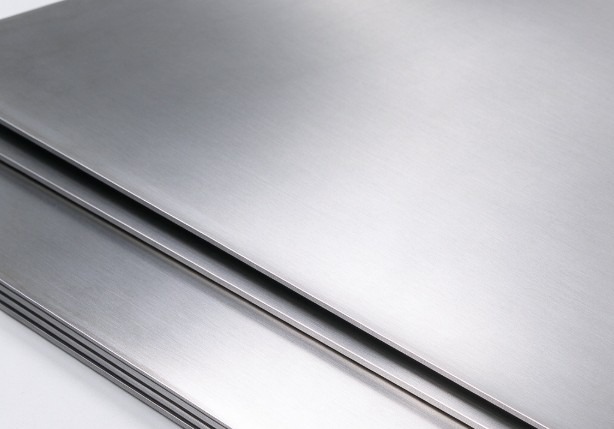
Stainless steel has great resistance to corrosion, high strength and high heat resistance so is used extensively in the automotive industry, medical devices, electronics, industrial equipment and household appliances. Common stamping grades are 304, 316 and 430.
Key points to consider when stamping stainless steels:
- Certain grades are very strong. Higher forces needed.
- Some austenetic stainless steels are prone to work hardening. Processing parameters need to be controlled.
- Stainless steels can show significant spring back after forming. The dies need to compensate for this.
- Dies used to stamp stainless steels will have high demands placed upon them regarding material, coating and lubrication.
Thicker stainless steel grades will require consideration to be given to the amount of press tonnage and strength required in the dies. This will depend on the grade, hardness and component structure.
Acier au carbone
Carbon steel is a very common material used in metal stamping. It shows great mechanical properties, versatile processing characteristics and good economic benefits. Many products can be stamped using carbon steels such as automotive brackets, mechanical joints, metal casings, fixing components and industry hardware.
There are many types of carbon steel available, each with different strengths and formabilities. Low carbon steels are typically highly ductile and can be used for punching, bending and deep drawing processes.
Carbon steel stamping primarily requires attention to:
- Yield strength and tensile strength of the material.
- The relationship between material thickness and press tonnage.
- Burrs and edge quality produced during blanking.
- Bending radius and the risk of material cracking.
- Die clearance and dimensional stability after processing.
For thicker carbon steel plates, higher equipment load capacity and sturdier stamping dies are typically required.
Alliages d'aluminium
Aluminum alloys have a light weight, high corrosion resistance and high thermal conductivity. This means they are commonly used in the production of cars, planes, electronic components and consumer electronics. Common aluminum alloys used in stamping are 5052, 3003 and 6061. Different grades and tempers of aluminum will affect the stamping.
Key features of aluminum alloy stamping:
- Low density: Can reduce weight of products.
- Good ductility: Some aluminum alloys are ideal for bending and deep drawing.
- Surface protection: Aluminum has a relatively soft surface; therefore requires surface protection.
- Spring back: Depending on the temper of aluminium, there will be different levels of spring back. Correct forming parameters will need to be used.
Overall consideration of product thickness, loading requirements, temper, bend radius and accuracy of processing is required when choosing an aluminium alloy.
Cuivre et alliages de cuivre
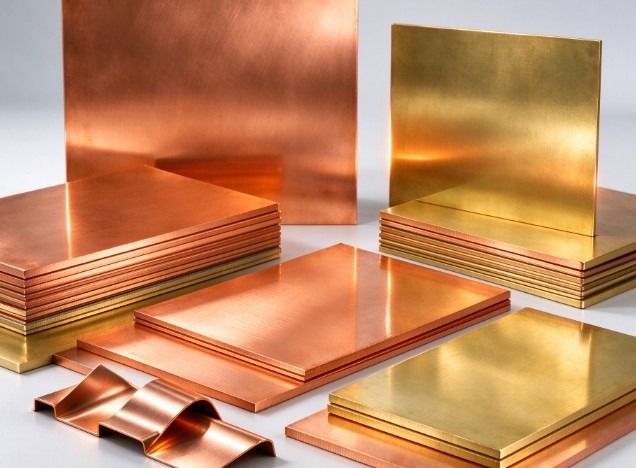
Copper and copper alloys offer excellent electrical conductivity, thermal conductivity, and workability. They are commonly used for electrical connectors, electronic terminals, switch contacts, and conductive components. Common materials include pure copper, brass, and phosphor bronze.
Copper and copper alloy stamping requires attention to:
- The impact of material hardness and temper on formability.
- Surface quality protection during stamping.
- The influence of die clearance on burr and blanking quality
- Elasticity, electricity conduction and accuracy
Thinner materials will have an influence on the stamping process, but also on the electrical conductivity, contact pressure and structural integrity of precision components used in the electronic and electrical industry.
What Factors Determine the Maximum Processing Thickness in Metal Stamping?
The maximum processing thickness in metal stamping is not determined solely by press tonnage; it is the joint outcome of equipment, material, die design, and product design. The following factors are particularly critical:
Type de matériau et dureté
Different metals will have different properties which means the forces needed could be very different.
Stainless steels are stronger than Low carbon steels. Alloys are weaker than many common temper types. This can mean a larger tonnage will be needed to form parts of the same size and thickness.
Material hardness and heat treatment temper will also affect the formability. Harder materials will require more from your punches, dies and coatings. It is important to know what grade of material will be used along with hardness and properties before deciding on thickness.
Press Tonnage and Machine Capacity
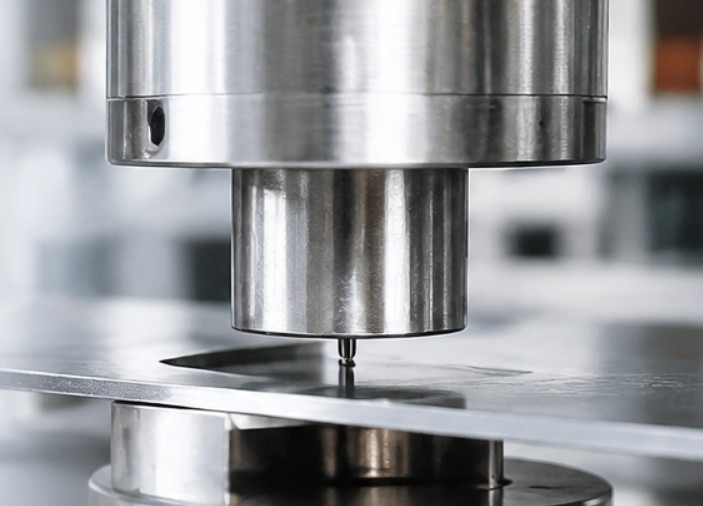
Press tonnage is an important factor in metal stamping. The press must exert sufficient force during punching/blanking for the punch to cut through the material. In general, the greater the thickness and strength of the material being stamped, plus the larger the cut edge, the more force will be required.
A rough theoretical value for the blanking force required in common blanking operations can be calculated using the following formula:

Où? :
F: Theoretical blanking force
L: Total blanking perimeter of the material
t: Material thickness
τ: Shear strength of the material
(Note: Appropriate units must be used consistently during calculation.)
This is mainly used for estimating forces. We have to consider stripping forces, forming forces, tonnage during operating strokes, die construction and appropriate safety factors when calculating for actual production. A lack of tonnage will cause incomplete stamping, dimensional inaccuracies, damage to dies or overloading of equipment.
Die Design and Tooling Strength
The die is an important component during stamping. As the thickness of the material being stamped increases the punch and die cavity will be subjected to higher impact forces. If the die isn’t strong enough the punch may break, deformations and decrease in tool life may occur.
Die design needs to focus on:
- Punch and die cavity materials and hardness.
- Matching die clearance to material thickness.
- Stability of die guidance and positioning structures.
- Rational distribution of blanking contours and forces.
- Die wear resistance and stability during continuous production.
For mass-produced parts, a proper die design not only improves product consistency but also reduces maintenance costs and downtime risks.
Géométrie et complexité des pièces
Identical material thickness does not imply that all parts can use the exact same stamping process. A simple circular hole punch and a complex part requiring multiple bends pose completely different requirements on equipment and tooling.
The following features increase processing difficulty:
- Smaller hole diameters and hole-to-hole spacing.
- Smaller internal bending radii.
- Deeper draw structures.
- Multi-directional bending and complex forming features.
- Strict dimensions, tolerances, and flatness requirements.
Therefore, manufacturers must evaluate 2D drawings, 3D models, and actual usage requirements to judge whether the material thickness fits the existing process.
Stamping Process Type
Different stamping methods may be used to produce different structures based on the product requirements. Progressive Die Stamping is suitable for producing complex parts using a continuous process, whereas Deep Drawing will be more suitable to produce a deep hollow structure. This will affect the maximum thickness that can be used, production rate, tooling costs and part quality.
How Material Thickness Affects Metal Stamping Quality?
In addition to affecting equipment/tooling limitations, material thickness will affect dimensional, surface and performance characteristics of the final stampings.
Stamping Force and Equipment Load
As material thickness increases blanking forces increase. This means that the stamping process may be carried out at or above the equipment rating which can cause instability and potential damage to the machinery and tooling. It is important to calculate the blanking forces needed from material properties, cutting profiles and in the planning stages.
Die Clearance and Burrs
Clearance is the gap between punch and die cavity. Correct clearance will produce a clean sheared edge with minimal burr.
Too little clearance will increase the load on the press and cause tools to wear rapidly.
Too much clearance will cause a high amount of burr and will cause poor edge quality.
Adjustable clearance should be used depending upon the type of material, thickness and desired edge quality.
Bending Radius and Material Springback
When bending, the metal will plastically deform however there will be some elastic recovery once forces are removed (called spring back). The thickness, strength, ductility and bend radius all play a role on the amount of spring back.
Metals that are thick need to have particular attention paid to stress distribution around the bend zone to avoid any cracks or dimensional issues. Using correct bend radii, altered tooling and spring back compensation will help ensure good quality forming.
Dimensional Accuracy and Product Consistency
Variations of thickness will affect dimensional accuracy, hole position, bend angle and flatness. In precision stamped components inconsistent material thickness will cause issues with fitting during assembly and function. Manufacturers take great care to ensure the quality of the product by ensuring that material is checked for consistency, tools are debugged, first article inspection is carried out and then mass production.
Which Metal Stamping Processes Fit Different Material Thicknesses?
Choosing the proper process boosts production efficiency while controlling tooling investment and quality.
Estampage progressif
Progressive stamping is a highly efficient process that is perfect for large quantities. The metal coil is fed into the press where it performs several processes such as punch, blank, bend and form.
Uses: Electronic connectors, car hardware, metal springs, Precision terminals, High quantity Hardware.
Features: This combines multiple processes in 1 operation to help ensure maximum efficiency. The material thickness and complexity will need to be suitable for the type of press and dies available.
Estampage composé
Compound die stamping performs multiple blanking operations (e.g., simultaneous punching and outer contour blanking) within a single press stroke using one die set.
Applications : Washers, metal discs, flat connectors, precision blanked parts.
Caractéristiques: Ideal for flat parts demanding high positional accuracy and fast production runs.
Dessin profond
Deep drawing is a process which uses punches and dies to plastically deform flat stock into cup/box/hollow components.
Applications : Metal casings Automotive parts Stainless steel containers Electrical device casings Industrial shells
Caractéristiques: Issues can occur due to the thickness of the material, draw ratio, ductility, blank holder force, and corner radii of the die. Thick materials or deep profiles may need to be produced using multiple stages to prevent splitting/wrinkling.
Emboutissage de précision en métal
Precision stamping focuses on components demanding tight dimensional tolerances, high positional accuracy, and strict consistency.
Applications : Automotive electronics, consumer electronics, electrical connectors, medical device components, precision machinery subassemblies.
Caractéristiques: Requires optimized material thickness alongside fine-tuned die structures, precise press positioning, steady feeding, and comprehensive QC inspection.
Masquage fin
Fine blanking is a specialized blanking process requiring advanced tooling setups and precise force control. Compared to conventional stamping, it yields exceptionally smooth, vertical shear edges and superior dimensional stability.
Applications : Automotive gears, precision structural components, functional mechanical parts.
Caractéristiques: Requires evaluation of material properties, edge quality needs, and equipment capability before selection.
How to Choose the Right Material Thickness for Stamped Metal Parts?
Design engineers and procurement specialists should evaluate functional requirements, process limits, and production runs alongside raw material costs.
Match Thickness to Strength Requirements
Thickness directly impacts part stiffness, load capacity, and deformation resistance. If a part bears substantial mechanical loads, increasing thickness or choosing higher-strength alloys is advisable. However, thicker is not always better; structural design and force distribution must be factored in.
Define Process Plans Based on Part Geometry
Different part functions dictate thickness parameters. Electronic connectors prioritize spring contact and conductivity, whereas industrial brackets focus on structural strength and rigidity. During design, hole diameters, bend radii, draw depths, sheet thickness, and tolerances must be jointly evaluated to avoid designs that exceed stamping limits.
Balance Material Cost and Production Efficiency
The material thickness will affect how much raw material you need and therefore your overall costs. By choosing an optimum thickness you can reduce any waste. The size of order will also affect which processes are chosen. Using progressive dies will reduce your costs per unit but may not be the best option if you have a smaller quantity.
Perform DFM Assessments Prior to Production
DFM (Conception pour la fabrication) is a critical front-end evaluation stage. Prior to tool building and mass production, manufacturers analyze 2D/3D CAD models to assess:
- Whether material grade and thickness fit the target process.
- If hole, blanking, and bend features are manufacturable.
- Compliance of hole diameters, spacing, and edge distances.
- Risk of bend cracking.
- Needs for tooling structural tweaks or added processing steps.
- Opportunities to streamline design to minimize scrap and tool costs.
- Early DFM reviews mitigate downstream tooling modifications and quality issues.
Why Choose KENENG for Custom Metal Stamping Services?
KENENG est un professionnel fabricant d'emboutissage de métaux located in China with 17 years of export experience. We serve clients from over 180 countries and regions and provide custom metal stamped parts, tool design. We provide processing according to your drawings or samples.
We support processing for a wide range of metals including stainless steel, aluminum, copper, brass, titanium alloys, and spring steels.
Key Features of KENENG:
Traitement polyvalent des matériaux : Supports stainless steel, aluminum, copper, brass, titanium alloys, spring steel, and more.
Broad Thickness Range: Processes sheet thicknesses from 0.05 mm à 8.0 mm, depending on material characteristics and part geometry.
Custom Tooling Design: Offers complete part and mold/die engineering based on provided drawings or physical samples.
Capacités de haute précision : Achieves processing tolerances down to 0.005 mm, subject to tooling specs and part requirements.
Équipements d'usinage de pointe : Provides fast, medium, and slow wire-cut EDM services for rapid prototyping and small-batch production.
Assurance Qualité: Certifié sous IATF 16949 et ISO 9001: 2015, adhérer à AQL 0.65 normes d'inspection.
If you are seeking a reliable custom metal stamping partner, contact KENENG with your product drawings or samples to receive a tailored manufacturing solution for your project.

Conclusion
The thickness of the metal stamping operation depends on a number of factors including the type of material, strength, press tonnage, stamping die and shape of the part. Thin gauges are commonly used in precision electronics and electrical parts whereas heavier sheet metal is heavily used for structural parts, automotive parts and machinery.
Choosing the correct thickness and method of metal stamping will improve the quality of the product whilst also reducing tooling design and cost per part for companies requiring bespoke metal stamping.
We offer bespoke metal component manufacturing and precision machining. If you need metal stamping please contact us with your technical drawings and specification so we can give you a professional feasibility study and bespoke manufacturing plan.