
Common Defects in Stamping Parts: How to Prevent
Metal stamping is mainly used to produce precise components for automotive, electronics, aerospace, medical equipment, etc. However, stamping defects can show up during production because of troubles with raw materials, tooling design, machine settings, lubrication, and process control. These defects can weaken product performance, raise production costs, and even cause material waste. If you understand the common defects in stamping parts and use effective prevention approaches, it becomes easier to achieve stable and high-quality manufacturing.
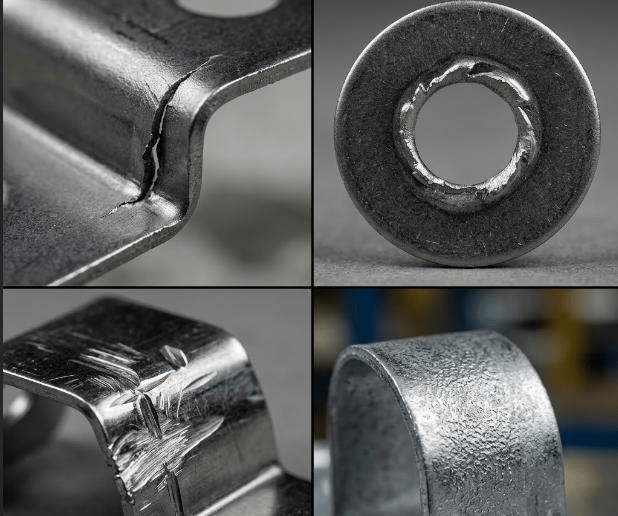
Table of Contents
Common Defects in Stamping Parts
1. Cracking and Fracture
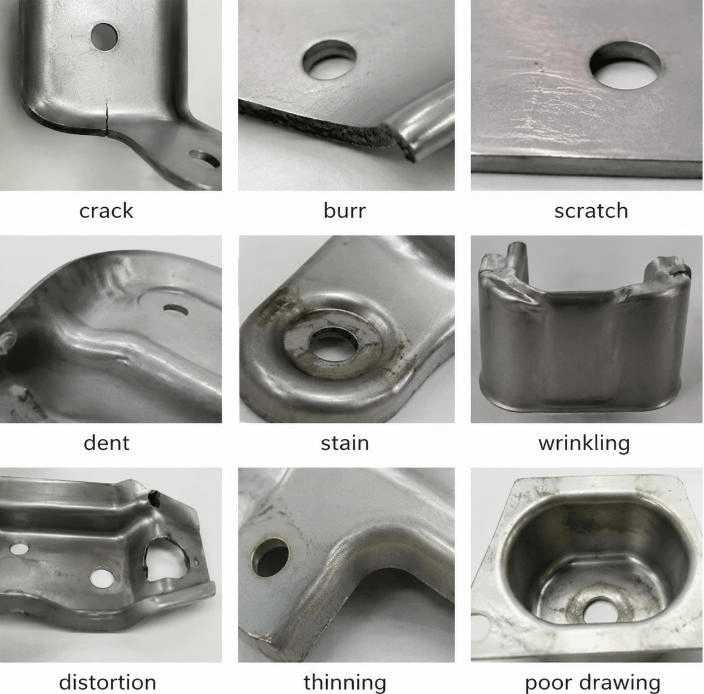
Cracking is one of the most serious flaws in stamped components. It usually happens when the metal cannot tolerate the stress made during forming. You might notice cracks near corners, near holes, in bending regions, or in areas that experience heavy deformation.
The main causes of cracking include poor material ductility, excessive forming force, sharp die corners, not enough lubrication, and improper forming speed. Materials with low elongation can be extra vulnerable when deep drawing and stretching operations happen.
2. Wrinkling
Wrinkling shows up when too much compressive stress creates unwanted folds , or surface waves on stamped parts. You often see this in deep-drawn components, mainly when large areas of sheet metal get compressed while forming.
The usual drivers behind wrinkling include inadequate blank holder force, excessive material flow, wrong die clearance, and unfitting forming conditions. Parts that end up wrinkled frequently miss the required appearance and the dimensional requirements too.
3. Burr Formation
Burrs are sharp edges or raised metal fragments that appear after cutting and punching. Even if the burrs look small, they may still upset assembly accuracy, product safety, and surface quality.
Common causes of excessive burrs are worn cutting edges, incorrect punch to die clearance, poor tool alignment, and improper upkeep. Once stamping tools grow dull over time, the cutting quality slowly drops, you notice it more than you expect.
4. Dimensional Inaccuracy
Dimensional errors happen when customized stamping parts do not align with the needed specifications. These issues can lead to assembly headaches, weak product performance, and higher scrap or rejection.
The reasons behind dimensional inaccuracy often include worn tooling, uneven material thickness, wrong machine settings, bad positioning, and changes tied to temperature during the production run.
5. Surface Scratches and Marks
Surface quality matters a lot for many stamped products, particularly visible parts used in automotive interiors, electronics, and everyday consumer items. Scratches, dents, and other surface blemishes can show up during forming, shipping, or handling by operators and conveyors.
These defects are frequently traced back to contaminated tooling surfaces, inadequate lubrication, rough die surfaces, imperfect material feeding, or just incorrect handling procedures.
6. Springback
Springback shows up a lot in bending and forming operations. Once the stamping load is removed, the metal goes back in part toward its original geometry, this happens because of elastic recovery, so you end up with dimensional drift or deviations.
How much springback you get depends on material behavior, thickness, bending angle, and the forming conditions. High-strength steels and other advanced materials are especially prone to this problem, with less forgiveness during the process.
7. Warping and Distortion
Warping occurs when stamped components stop keeping their target shape because stresses are not distributed evenly, or when residual stress remains after forming. Thin, large-sized parts tend to be the most vulnerable to distortion and shape change.
Typical triggers are uneven material flow, inconsistent pressure distribution, improper stamping sequence choices, and also excessive internal stress left inside the part.
8. Misalignment and Offset Defects
Misalignment occurs when the edges of holes or formed features are positioned incorrectly. This defect is especially common in progressive stamping because multiple forming stations are involved.
The causes may include inaccurate tooling installation, worn guide pins, improper material feeding, and machine vibration that keeps showing up.
9. Material Thinning and Uneven Deformation
During stretching or deep drawing stamping, excessive material flow can make some zones of a stamped part end up thinner than you would expect. When thinning gets severe, it can weaken the component and raise the chance of failure.
A few things that contribute to material thinning are too much forming pressure, the wrong kind of material, weak lubrication, and incorrect settings for the process.
10. Tool Wear and Maintenance Issues
Stamping tools take repeated impacts and friction during high-volume production. Over time, tool wear may bring about defects like burrs, changes in dimensions, and inconsistent part quality.
Weak lubrication, tool materials that are not suitable, excessive stamping pressure, and not enough maintenance can speed up tool degradation.
Effective Methods to Prevent Defects in Stamping Parts
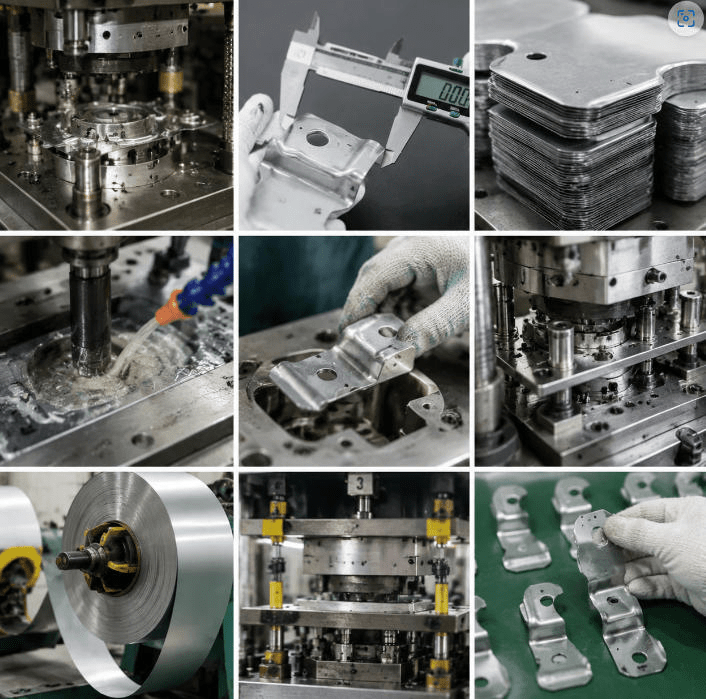
Preventing stamping defects really needs a broad mindset, mixing correct material control, well-tuned tooling, careful process management, smarter inspection practices, and a steady cycle of continuous improvement. If any piece slips, you can see the issues show up later, like surface troubles or dimensional drift.
1. Selecting Suitable Materials for Stamping Processes
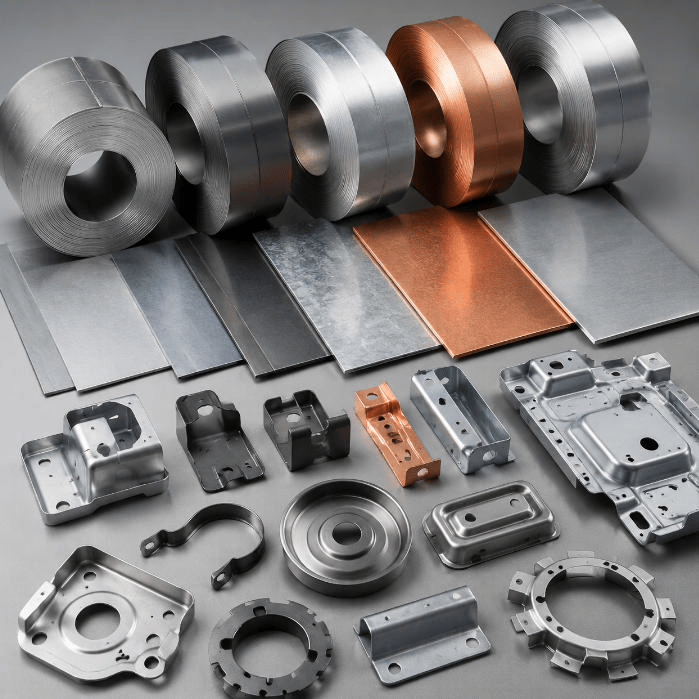
Selecting the right stamping part material matters a lot for preventing defects. Metals behave differently when it comes to strength, hardness, ductility, and what they can actually tolerate during forming. These properties will guide how the part behaves during the stamping operation, and where stress concentrates.
| Material Selection Factor | Description | Impact on Stamping Quality |
| Material Formability | Materials should have sufficient ductility and elongation to withstand bending, drawing, and forming operations without cracking. | Reduces risks of cracks, fractures, and forming failures. |
| Mechanical Strength | The material’s tensile strength, yield strength, and hardness must match the requirements of the final part and stamping process. | Ensures structural reliability while preventing excessive deformation. |
| Material Thickness Consistency | Uniform sheet thickness helps maintain stable forming conditions and accurate dimensions. | Prevents uneven deformation, dimensional errors, and weak areas. |
| Surface Quality | Materials should have smooth, clean surfaces without scratches, rust, or defects before stamping. | Improves appearance and reduces surface defects on finished stamped parts. |
| Work Hardening Behavior | The material’s ability to maintain strength after deformation should be considered during forming. | Helps avoid unexpected cracking and improves part durability. |
| Corrosion Resistance | Materials with suitable corrosion resistance should be selected based on the application environment. | Enhances product lifespan and reduces post-production treatments. |
| Compatibility with Stamping Method | Material properties should match the specific process, such as punching, bending, deep drawing, or progressive stamping. | Improves process stability and reduces defect rates. |
| Cost and Availability | Material choice should balance performance requirements, supply availability, and production costs. | Supports efficient manufacturing while maintaining quality. |
2. Optimizing Stamping Die Design and Manufacturing
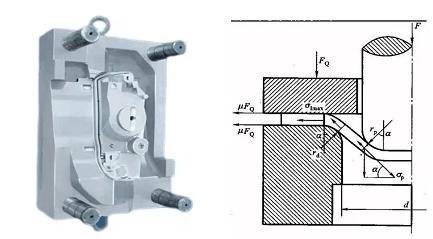
The stamping die is among the most critical drivers of part performance. When a die is designed poorly, or manufactured in a questionable way, it may cause dimensional inaccuracies, noticeable surface harm, excessive burrs, and uneven deformation that you do not notice right away, unless you measure carefully.
The stamping die design that is proper really needs to look at material flow, how the forming force gets distributed, the clearance between the punches and dies, and those stress concentration zones that tend to show up later. In general, rounded corners and suitable radii should be used, so the stress concentration is reduced and the risk of cracking becomes smaller.
Also, high-precision die manufacturing is important, not just because it looks good but because it maintains steady production quality. Using advanced machining technologies, carrying out careful assembly steps, and selecting high-quality die materials can boost tool durability, and it helps reduce defects that come from tooling errors, even small ones.
3. Maintaining the Correct Stamping Parameters
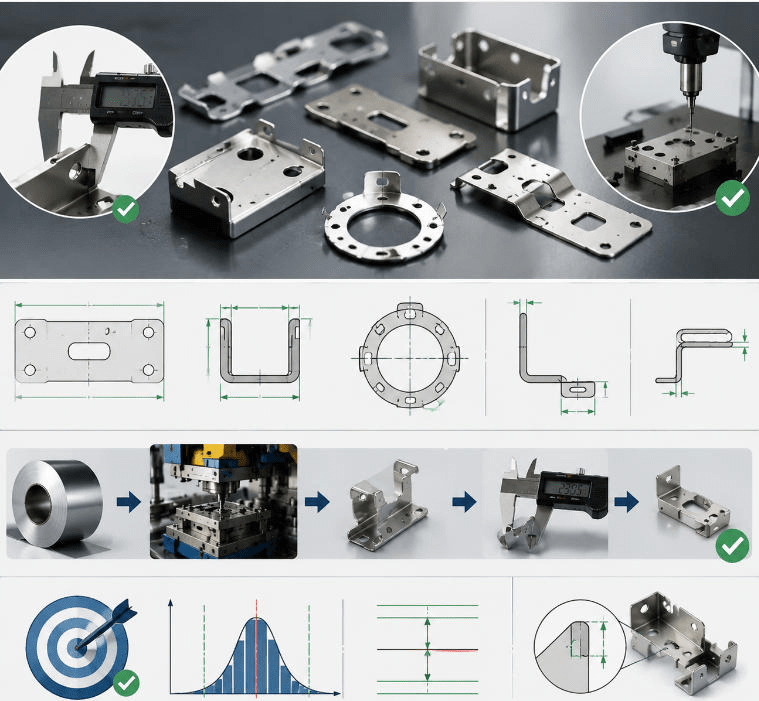
Stamping parameters, for example forming speed, pressure, stroke length, and feeding accuracy, strongly influence how the final part turns out. If the settings are wrong, defects can appear.
| Stamping Parameter | Description | Impact on Stamping Quality |
| Stamping Force | The applied force must be properly adjusted according to material type, thickness, and forming requirements. | Prevents cracking, incomplete forming, and excessive deformation. |
| Stamping Speed | The forming speed should be controlled to ensure stable material flow and reduce stress concentration. | Helps avoid wrinkles, fractures, and surface defects. |
| Stroke Length | The press stroke must match the part design and forming depth requirements. | Ensures complete forming and maintains dimensional accuracy. |
| Die Clearance | The gap between the punch and die should be optimized based on material thickness and process type. | Reduces burrs, edge damage, and dimensional deviations. |
| Blank Holder Force | Proper pressure should be applied to control material movement during deep drawing operations. | Prevents wrinkling while allowing smooth material flow. |
| Feeding Accuracy | The material feeding distance and alignment must remain consistent during stamping. | Improves part positioning and prevents misalignment defects. |
| Lubrication Conditions | The type and amount of lubricant should be controlled to reduce friction between material and tooling. | Minimizes scratches, tearing, and premature tool wear. |
| Temperature Control | Production temperature should be maintained within suitable limits, especially for temperature-sensitive materials or processes. | Improves forming stability and reduces material property changes. |
| Press Machine Settings | Machine alignment, pressure settings, and operating conditions should be regularly checked and adjusted. | Maintains consistent production quality and reduces equipment-related defects. |
| Process Monitoring | Real-time monitoring of stamping conditions helps detect abnormal changes during production. | Enables quick adjustments and prevents large quantities of defective parts. |
4. Improving Lubrication and Reducing Friction
Friction between the metal sheet and the stamping tools matters a lot for the final part quality. Higher friction can lead to scratches, surface harm, nonuniform material movement, and faster tool wear, in other words the die does not last as expected.
Using an appropriate lubricant reduces friction, supports smoother material travel while forming, and lengthens die life. The lubricant kind, as well as how much is used, should be chosen based on the workpiece material, the stamping method, and the actual production needs.
Regular cleaning of stamping tools is also necessary, because contaminants or accumulated metal particles can end up damaging part surfaces, and it can mess with forming accuracy in the process.
5. Performing Regular Tool Maintenance
Stamping dies face repeated mechanical stress during high-volume production. Over time, wear and damage can build up, and this can create defects like burrs, dimensional deviations, as well as inconsistent part quality.
Regular checking and tool upkeep are essential to prevent these problems. Manufacturers should look at cutting edges, examine the guide components, review die surfaces, and verify alignment systems, so that early signs of wear can be spotted.
Swapping worn components, fixing damaged regions, and keeping tool conditions in good shape can improve production stability by a lot. Preventive maintenance programs tend to work better than waiting for defects to show up while production is running.
6. Applying Advanced Simulation and Process Analysis
Modern manufacturing is leaning more and more on simulation tech to foresee and block stamping defects, prior to any actual run. Then, computer-aided engineering tools, basically CAE, help engineers look at material response, stress spread, and what forming conditions really are.
With simulation, possible troubles like cracking, wrinkling, springback, and too much thinning are flagged early, and then they get fixed during the design phase. In turn, there’s less pressure to do repeated tryouts, plus die structures and process parameters can be tuned more accurately.
There’s also process analysis, which gives manufacturers a better way to push efficiency higher, cut material waste, and reduce product development lead times.
7. Implementing Real-Time Quality Inspection Systems
Quality inspection is a must for catching and stopping stamping defects. Conventional inspection methods often depend on manual checking, and that can be slow, plus it may fail to notice defects right away.
Advanced stamping part inspection methods rely on machine vision, various sensors, and automated measuring gear can watch stamping parts while they are being produced. In practice, they can catch surface defects, small changes in dimensions, off-spec outlines, and also problems related to assembly, all with strong precision.
With inspection running in real time, makers can spot process troubles faster and correct them before huge batches of faulty parts get underway.
8. Controlling Production Environment and Equipment Conditions
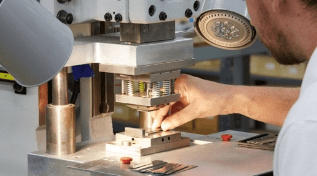
Stable conditions during production are required to keep stamping quality repeatable. Machine vibration, temperature drift, contamination, and even alignment of the equipment can affect how accurate the parts turn out.
Routine calibration of stamping machines matters, because it keeps the equipment inside the needed tolerances. Good environmental regulation and regular cleaning of the tooling also reduce the risk of surprise defects.
Modern factories more and more use digital monitoring systems to gather production records and spot abnormal situations before they turn into defective products.
9. Training Operators and Improving Process Management
Human factors can also affect stamping quality, improper machine operation, incorrect setup procedures, and limited process know how may cause production mistakes.
By providing broad training, operators learn about stamping processes, equipment operation, safety requirements, and the relevant quality rules. Standard operating procedures make sure production steps are carried out consistently, and without variation.
Ongoing improvement programs, including defect analysis and corrective measures, help manufacturers uncover root causes and stop repeated issues.
Summary
Defects in stamping parts, like cracking, wrinkling, burrs, dimensional inaccuracy, etc, can really reduce manufacturing efficiency and also make the final product less reliable. In practice, most of these stamping defects come from the way material behavior, die conditions, equipment capability, and process settings, all meet together. If manufacturers pick the right materials, improve die design, keep the equipment in good health, fine-tune production parameters, and apply better inspection technologies, then stamping part defects can be prevented much more effectively.