
How CNC Machining Powers the Modern Transportation Industry
In the modern transportation industry, whether it’s automobiles, aircraft, trains, or ships, every component must meet “precision down to the smallest detail.” CNC machining acts like a flawless “robot craftsman,” dedicated to shaping these precision parts to perfection.
By replacing manual work with programmed automation, CNC technology not only boosts speed and efficiency but also ensures that every single part is identical, stable, and reliable. For this reason, CNC machining has become the “unsung hero” behind transportation manufacturing, quietly supporting our ever-faster-moving world.
Through this article, let’s explore how CNC machining is transforming the transportation industry.
Table of Contents
What Is CNC Machining and Why Is It Crucial to the Transportation Industry?
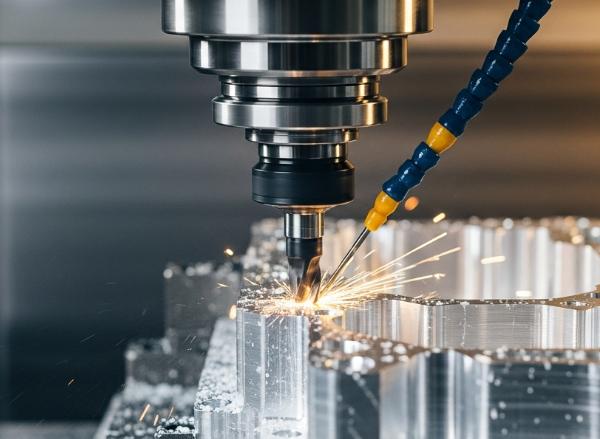
CNC machining is an automated form of metalworking wherein the tools utilized in the process are commanded by computerized commands to execute various functions, including cutting, drilling, and milling. The major benefit of CNC over manually operated machining methods lies in its ability to work as a “precision system” that is able to produce highly accurate parts repetitively.
Its key advantages include:
- High precision: Typically achieving tolerances of ±0.01 mm or even higher
- High consistency: Ideal for mass production with uniform quality
- High level of automation: Reduces human error and improves efficiency
- Ability to machine complex geometries: Easily handles multi-axis and intricate designs
For industries dealing with transportation tools, these qualities play an essential role. Engine components, brake systems, and aircraft structure parts need very high levels of accuracy and reliability. Any mistakes may lead to performance issues or even pose certain safety hazards.
This makes CNC machining a necessary technique in both improving the efficiency of production and guaranteeing performance and safety of transportation tools.
Main Applications of CNC Machining in the Transportation Industry
Due to the advancement in transportation systems, which includes increasing performance, enhanced safety, and lightweight materials, there have been increased demands on component manufacturing. With precise operations, consistent performance, and outstanding ability to machine intricate parts, CNC machining has gained popularity in the automotive, aviation, railroad, and maritime sectors.
Indeed, CNC machining has played an indispensable role in the manufacturing process of virtually all contemporary transportation systems on land, in the air, and at sea.
Automotive Industry
For the automotive industry, automotive CNC machining is considered one of the manufacturing techniques used extensively, with almost all critical parts covered. Some common examples of application in the automotive industry include engine blocks and cylinders, transmission parts, and brake system parts, which influence the performance and safety of vehicles.
Because of the increasing popularity of electric vehicles, there is more need to develop lightweight and high-precision parts. Such parts include those in battery and motor assemblies that should be strong yet light. CNC machining plays an essential role here because it ensures precision and optimized use of materials.
Aerospace Industry
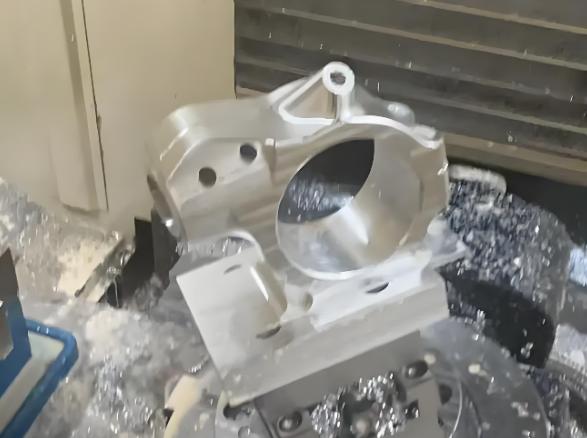
There are very high demands in the aerospace industry when it comes to machining precision and material properties. CNC machining is mostly utilized to machine structural aircraft parts, blades of turbines, and other highly precise machined parts, which consist of materials like titanium and aluminum alloys.
Such parts usually have complicated designs and surfaces, and they require precise machining to make. That is why multi-axis CNC machining machines are used to achieve the necessary precision because even the slightest inaccuracy can result in severe risks.
Railway Transportation
In railway systems, CNC machining is mainly applied to track connectors, wheel assemblies, and braking system components. These parts must operate reliably under high load and continuous working conditions, requiring excellent durability and consistency.
By using CNC machining, manufacturers can ensure dimensional accuracy and uniformity, which improves train stability and safety while also reducing long-term maintenance costs.
Marine and Shipping Industry
However, in the marine industry, the machinery faces constant exposure to moisture and salt. In such cases, the durability against corrosion becomes highly critical. The marine industry makes use of CNC machining technology for creating components of the propulsion systems, structures, and stainless steel or alloy resistant to corrosion.
The CNC machining process allows the formation of complicated structures with great accuracy and without altering the physical properties of the materials.
Core Advantages of CNC Machining in Transportation Component Manufacturing
CNC machining is highly preferred when manufacturing transportation parts since it satisfies all the demands of this sector in terms of precision, productivity, and consistency. This applies to the manufacture of parts for automobiles, aircraft, or even trains. In the transportation sector, CNC machinery makes significant contributions to improving the quality of products manufactured and their efficiency.
High Precision and Strict Tolerance Control
The transportation industry requires extremely tight tolerances for many critical components. CNC machining uses computer-controlled tool paths to achieve micron-level precision, effectively eliminating human error.
This high level of accuracy ensures perfect assembly between parts and guarantees the long-term stability and safety of key systems such as engines and braking systems.
Strong Material Compatibility
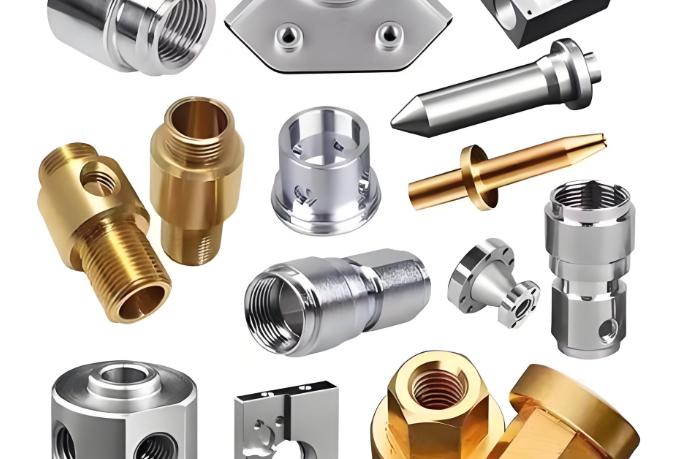
The versatility of CNC machining is also reflected in its ability to work on many types of CNC machining materials. Some common ones include:
Alloy aluminum: This material is very light weight, and can be used to reduce the weight of vehicles.
Stainless steel: This is known for its strength and toughness, and is therefore appropriate for structures requiring high resistance.
Titanium alloy: Its excellent strength to weight ratio makes titanium alloys very useful in aircraft.
Engineering plastics: These offer insulation and lightweight properties in particular functional areas.
High Consistency in Mass Production
Consistency plays an important role in mass production. Consistent dimensions and performance of parts made using CNC machining depend on a common program for all manufactured parts.
Consistency leads to better assembly processes and eliminates problems with different parts because of their variability.
Reduced Human Error and Lower Costs
The conventional machining process involves extensive human labor. The performance of machinists may vary depending on the years of experience.
However, CNC machining limits human involvement to a bare minimum, which helps reduce mistakes.
Common Materials Used in CNC Machining for the Transportation Industry
When it comes to producing components for transportation industry, there are many materials to choose from. This choice depends on many factors like durability, weight, corrosion resistance, and even price. Below is the list of CNC machining materials commonly used in CNC machining for transportation industry:
| Material Type | Characteristics | Applications |
| Aluminum Alloy | Lightweight, corrosion-resistant, easy to machine | Automotive structural parts, aerospace components, body frames |
| Stainless Steel | High strength, corrosion resistance, wear-resistant | Brake systems, marine parts, railway connectors |
| Carbon Steel / Alloy Steel | High strength, cost-effective, strong load-bearing capacity | Railway components, chassis structures, mechanical supports |
| Titanium Alloy | High strength, lightweight, heat-resistant, corrosion-resistant | Aerospace structural parts, engine components |
| Engineering Plastics (e.g., POM, PEEK, Nylon) | Good insulation, lightweight, wear-resistant, shock-absorbing | Internal functional parts, insulation components, low-load structures |
| Copper & Copper Alloys | Excellent electrical and thermal conductivity, wear-resistant | Electrical connectors, sensor components |
| Magnesium Alloy | Extremely lightweight, good vibration damping | High-end automotive lightweight structural parts |
The choice of these materials has a direct impact on the functioning and longevity of the components. Due to the high precision achieved in CNC machining, these materials can be manufactured in such a way that they conform to the demanding requirements of the transportation sector.
Challenges of CNC Machining in the Transportation Industry
Despite its benefits, CNC machining is subject to some challenges when applied to the transportation sector. These considerations make CNC machining more challenging from the perspective of manufacturing and technology.
Requirement for Extreme Accuracy
The transportation sector requires highly precise dimensions, particularly with respect to important components like engines, brakes, and aerospace structures. In some cases, precision can be extremely fine down to the micron.
Even the smallest deviation can affect assembly performance and may compromise operational safety. Therefore, CNC equipment stability, tool precision, and machining environment all require extremely high standards.
Processing Complex Structures Is Difficult
With an increase in complexity of modern designs, there are some parts that cannot be manufactured by normal machining because they feature complicated forms with rounded shapes, several angles, and deep recesses. In most cases, production of such products requires use of 5-axis CNC machines.
Moreover, there are increased challenges in programing skills and tool path planning during the machining process.
Advanced Materials Are Hard To Process
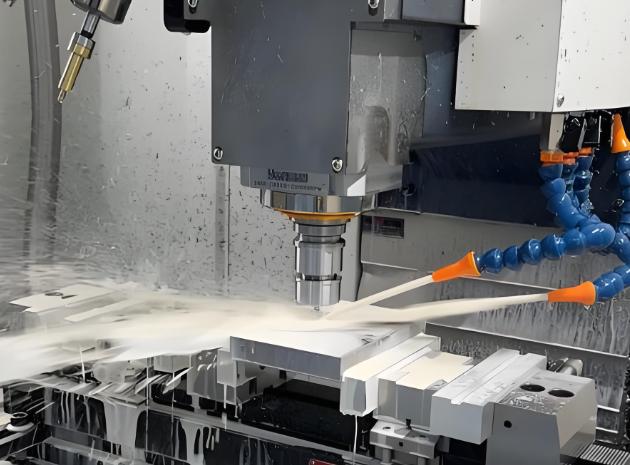
Titanium alloys and high strength steels are mostly used in aerospace and high-end transport sectors. Though the two types of materials perform excellently, their processing is very hard because they have high strength properties and wear out the cutter fast.
Therefore, there is need for specialized tools and machining parameters for efficient work.
Strict Industry Certification and Standards
Manufactures operating in the transportation sector, specifically the aerospace and railway sectors, operate under tight manufacturing guidelines such as ISO quality management systems and aerospace manufacturing standards. These guidelines are not limited to the products themselves but also cover issues such as inspection and traceability management.
Hence, it becomes necessary for manufactures in this sector to come up with a successful quality control program and ensure compliance with all industry requirements in order to become part of the best supply chains.
As a consequence, apart from enhancing the technical expertise of CNC Machining in the transportation sector, it would lead to improvements in manufacturing techniques and equipment.
How to Choose a Reliable CNC Machining Supplier
In the field of transportation, the quality of parts has an effect on the entire operation of the equipment. Thus, choosing a trustworthy CNC machining service provider is very important. A competent company will offer not only machining but also assistance in optimizing design and improving processes.
Relevant Experience in the Transport Industry
One of the factors that matter in this case is experience in the manufacture of transport equipment. Companies that have experience in working with automobile, aerospace, or railway components are familiar with all the industry requirements.
Availability of Multi-Axis CNC Machinery
More complex components would need 5-axis CNC machinery or even higher capacity machining facilities. Higher capacity machining means better accuracy as well as less chance for compound errors to accumulate over multiple setups.
A Robust Quality Control Process
Quality consistency is paramount in the transportation industry. Well-respected suppliers usually have a rigorous quality control process that includes various forms of certifications such as ISOs, along with the use of sophisticated inspection equipment such as Coordinate Measuring Machines.
Stable Delivery Capability
In addition to quality, delivery performance is equally important. Transportation projects often have tight schedules and large production demands. A dependable supplier must be able to ensure on-time and consistent delivery through efficient production planning and scalable manufacturing capacity.
Why Choose KENENG as Your CNC Machining Partner
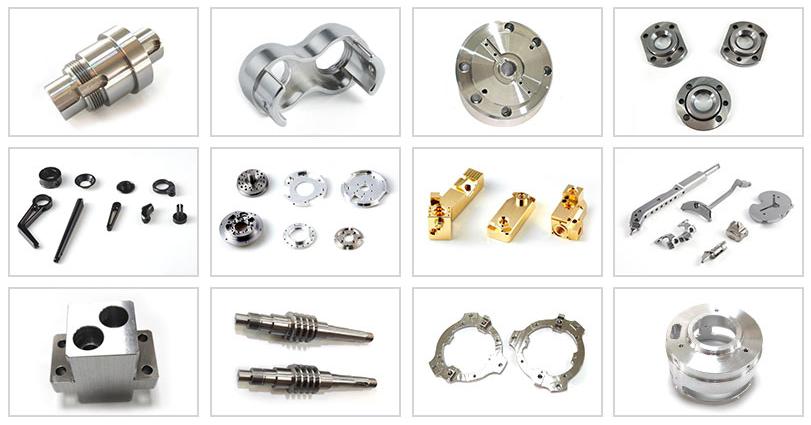
If you need a trusted provider of CNC machine parts for the transportation sector, our services go beyond machining; KENENG CNC machining service offers total engineering and manufacturing solutions that are accurate, stable, and efficient.
Highest Precision and Quality Control
Through our state-of-the-art CNC machines and CMM measuring devices, we can manufacture parts with micron-level accuracy, ensuring that all parts meet quality requirements, particularly those used in the automotive, aerospace, and railway industries.
Complex Parts Manufacturing Capability
We offer 3-axis, 4-axis, 5-axis, and mill-turn machining, enabling efficient production of complex geometries such as curved surfaces, deep cavities, and multi-angle structures.
Wide Material Selection
We machine a full range of materials, including aluminum, stainless steel, titanium, carbon steel, and engineering plastics like PEEK, helping customers choose the best material for each application.
Fast Shipping & Scalable Fabrication
Our fast shipping and scalable fabrication capabilities can satisfy your needs from quick prototype development to full-scale production in various stages of your projects.
Advanced Engineering Manufacturing Capabilities
Equipped with a 3,000㎡ workshop, more than 60 professionals, and 16 CNC machine tools, our company has accomplished over 300 projects with guaranteed quality and worldwide shipping.
We are more than a CNC parts maker; we are your engineering manufacturing partner that offers reliable CNC machining services to upgrade the transportation industry continuously.
In Summary
CNC machine operation has developed into an important core manufacturing technology that is critical to the transportation industry. CNC machines are involved in the production of various components across different industries such as automotive, aerospace, railways, and marine transport among others in order to improve product efficiency and performance as well as ensure safety.
With advancements in smart manufacturing processes, CNC machine operations will continue to be significant in the transportation industry in the coming years.
Feel free to contact KENENG for your CNC machine operations support and quotations.