
How CNC Machining Supports the Mining Industry
The mining industry is one of the most demanding sectors in the global industrial system. From open-pit mining to underground extraction, equipment operates continuously under extreme conditions such as high impact, heavy wear, dust exposure, and corrosive environments.
Under these harsh conditions, traditional machining methods often struggle to meet the precision and strength requirements of critical components. In contrast, CNC machining has become an essential technology in mining equipment manufacturing and maintenance due to its high precision, excellent consistency, and strong material adaptability.
Whether it is crushers, conveyor systems, or drilling equipment, CNC machining provides stable and reliable support for key components that ensure efficient and continuous mining operations.
Table of Contents
Part 1. Why the Mining Industry Cannot Do Without CNC Machining
In the challenging mining industry, where heavy-duty workloads and intense wear and tear prevail, accuracy and reliability of parts play an important role in operational performance and safety.
1. Meeting High-Precision and Complex Structural Requirements
Most of the mining machinery contains complicated parts like gearboxes, hydraulics, crushing devices, etc., which necessitate very accurate and complicated machining process.
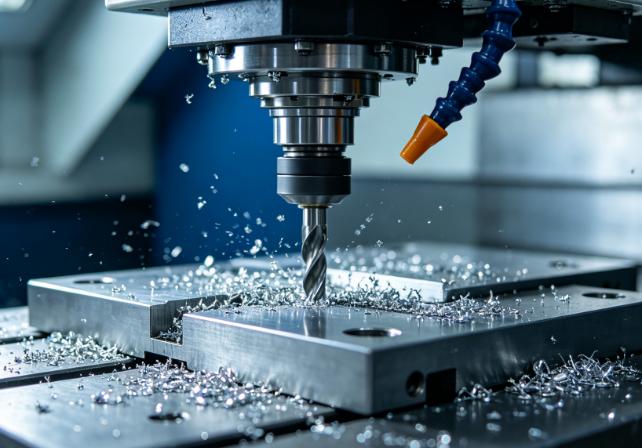
Using CNC machining allows producing parts with micrometer precision, thus making sure that all of the important parts fit well and match perfectly. The other advantage of CNC is ability to form the required complicated geometry structure with only one manufacturing cycle.
2. Withstanding Extreme Wear Environments
The abrasive nature of ore, rocks, and other mining material exerts tremendous wear on mechanical equipment, and mechanically engineered parts tend not to last under such rigorous conditions.
CNC machining allows hard materials to be accurately machined to provide better resistance to wear, impact strength, and longevity, thus decreasing machine maintenance time in mining activities.
3. Supporting the Processing of Multiple High-Performance Materials
High-performance materials have been widely used in the manufacture of mining components because of the need to satisfy varying needs in operations. High manganese steel is applied in parts that require resistance to impact and wear; alloy steel in strong structural parts; stainless steel in corrosive settings; and carbon steel in economic structural applications.
It is feasible for CNC machining to work on the high-strength materials without compromising dimensional integrity and material performance.
Part 2. Common CNC Machined Components in Mining Equipment
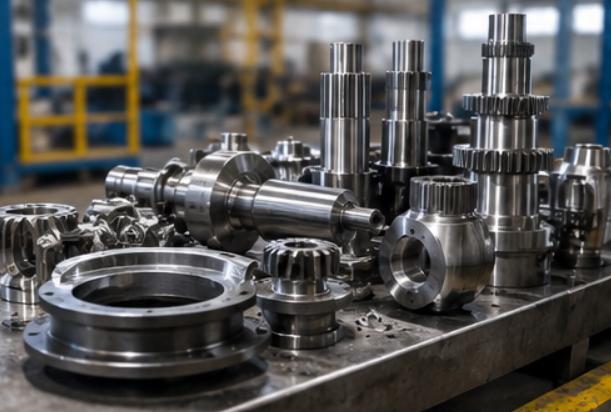
In the mining industry, CNC machining finds extensive application in the production and maintenance of various essential parts. They must be subjected to immense loads, shocks, and abrasions, demanding precise machining, good material properties, and solid mechanical strength. CNC machining guarantees that such parts operate effectively despite the harsh operating environment.
| Component | Application & Function | CNC Machining Advantages |
| Crusher Parts | Includes jaw plates, hammers, and impact plates. These parts are exposed to extreme impact forces in crushing systems and are core components of crushers. | CNC machining ensures precise geometric matching and superior surface quality, improving impact resistance and wear resistance, and significantly extending service life. |
| Conveyor System Parts | Includes rollers, idlers, brackets, and drive shafts used for continuous transport of ore and materials. | Ensures high concentricity and dimensional consistency, reducing vibration and misalignment, improving conveying efficiency and lowering failure rates. |
| Drilling Bits & Heads | Used in early-stage mining operations for drilling under high pressure and intense friction conditions. | Enables optimized cutting angles and chip removal design, improving drilling efficiency and reducing tool wear. |
| Gearbox Housing | A key power transmission component that ensures precise gear alignment and stable operation. | Allows integrated machining of complex structures, improving assembly accuracy, sealing performance, and long-term operational stability. |
| Hydraulic Components | Includes hydraulic cylinders, valve bodies, and pistons used for driving and control systems. | Provides micron-level precision, ensuring excellent sealing performance and improving pressure stability and response efficiency. |
| Pump Parts | Used for dewatering, slurry transportation, and ore slurry handling in mining environments. | Precisely machines impeller curves and internal flow channels, improving fluid efficiency and reducing energy loss. |
| Wear Plates | Protective components that shield internal structures from direct abrasion. | Ensures uniform thickness and precise installation fit; combined with high-hardness materials, significantly extends equipment service life. |
Part 3. Main Challenges of CNC Machining in the Mining Industry
The environment encountered in mining operations is very complicated and tough, which makes greater requirements in design, materials, and processing procedures for CNC machining. The following situations are common in mining operations.
1. High-Intensity Wear Environment
As ore fragments constantly collide and scrape against the surfaces of components during crushing, transportation, and sieving operations, they wear out components rapidly. Such abrasions occur not only very quickly but also have a very strong impact on components, making it necessary to use materials that have extremely high hardness and high resistance to abrasions.
2. High Load Operating Pressure
The mining machinery usually works under full-load or overloading circumstances for long periods of time, like crushing machines and conveyor belts that work under constant heavy loads. Therefore, the parts used should be able to withstand not only strong loads but also possess good stability to avoid deformation or failure.
3. Demanding Requirements for Dimensions Stabilization
When working in continuous vibration conditions and being subjected to various impacts, the ability to preserve dimensions is very important. The slightest changes can make a system unstable, which means it will fail soon after. Therefore, it is necessary to assure CNC machined part dimensions’ stability all its lifetime.
4. Harsh Working Conditions
As it was mentioned before, mining operations can be accompanied by high dust concentration in the air, moisture presence, and even some corrosive materials. All these factors can influence the surface condition and cause deterioration of equipment pieces. Thus, along with precision machining, corrosion protection and strengthening treatment become obligatory.
Part 4. Typical Application Scenarios of CNC Machining in the Mining Industry
CNC machined parts are often employed for many important systems in the mining industry, which include extraction and transport, to crushing and mineral processing systems. All these processes work under heavy loading and continuous operations, and thus have strict requirements for accuracy, durability, and reliability. The malfunction of any system part will inevitably result in the loss of the working time.
1. Surface Mining Machinery
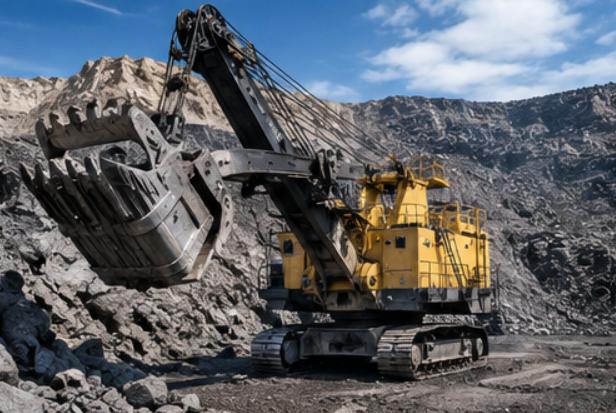
There are excavators, loaders, and mining trucks in surface mining machinery. This type of equipment works under constant loading conditions and complex ground surface.
CNC-machined parts are mainly used in key structural and power transmission components, ensuring stability, durability, and reliable performance under extreme operating conditions.
2. Underground Mining Systems
Conditions in underground mines are cramped and difficult, involving factors like high levels of humidity, dust, and poor visibility.
The use of highly accurate CNC-machined parts helps increase machine performance and decrease the need for maintenance, providing a smooth working condition for ventilation systems, transportation systems, and support systems.
3. Mineral Processing Plants
The mineral processing plants have a series of continuous processes including crushing, grinding, classifying, and flotation, thus necessitating constant operations.
CNC machined parts are common in pumps, screens, and transmissions for the assurance of continuous and efficient processing operations.
4. Drilling & Blasting Systems
Drilling and blasting are the initial phases of mining that involve the use of machinery which experiences heavy impacts and frictional force.
The components for these machines can be produced through CNC machining for increased precision, efficiency, and reduced chances of machine wear.
5. Crushing & Screening Systems
Crushing and screening of ore are fundamental procedures in mining that demand high capability to operate continuously at a high level.
In the case of crushing and screening systems, CNC-machined components find application in their core parts as they provide durability in high impact and wear situations.
Conclusion: Optimizing Mining Operating Costs Through High-Quality Machining
Choosing high-quality CNC machined parts is not simply about replacing old parts; it is a business decision that will decrease the Total Cost of Ownership. By using tougher material options and more precise machining processes, mining operations can greatly increase their MTBO, giving them an edge over other companies in the competitive industry.
Looking for a Reliable Mining Machinery Machining Partner?
If you are looking for a CNC machining supplier capable of providing high-precision custom manufacturing services, KENENG is ready to support you.
Send us your CAD/PDF drawings today to receive a detailed technical evaluation and quotation within 24 hours.