How to Choose a Professional CNC Turned Parts Manufacturer
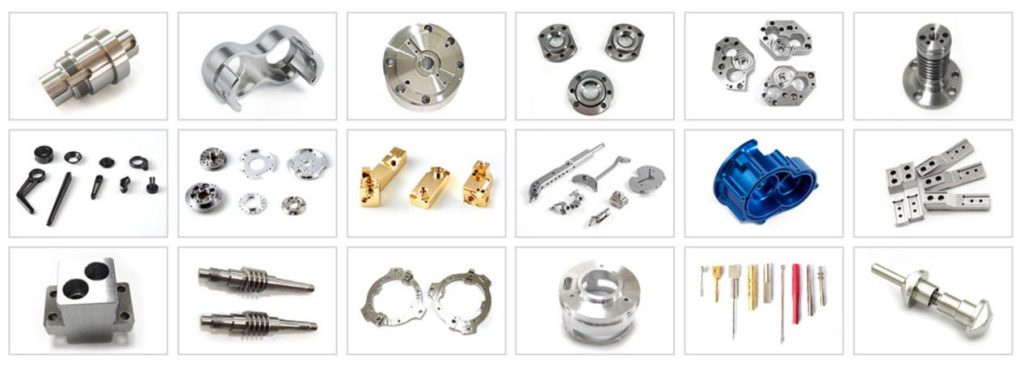
In modern precision manufacturing, no matter how flawless a blueprint is, it must ultimately be transformed into high-quality physical components. From automotive fuel injector nozzles and miniature medical connectors to high-strength aerospace shafts, CNC turned parts play an indispensable role across major industrial sectors.
However, finding a CNC turned parts manufacturer capable of simultaneously meeting micron-level tolerances, strict deadlines, and highly competitive pricing remains a massive challenge for many procurement engineers and project managers.
With thousands of machine shops globally, how do you evaluate your options and make the right choice? This article reveals the key factors to consider when choosing a top-tier CNC turning factory. Let’s dive in!
Table of Contents
What are CNC Turned Parts?
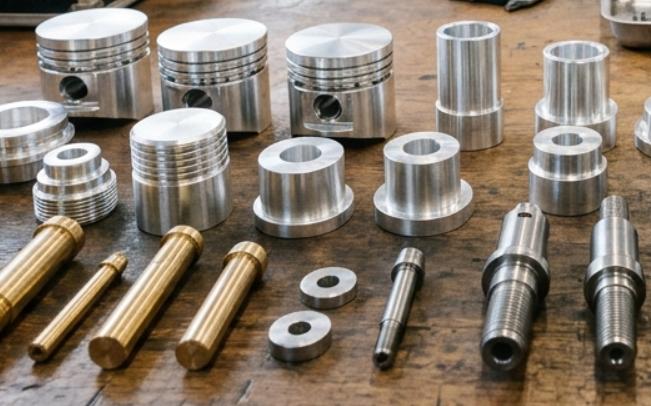
CNC turned parts are precision components manufactured using Computer Numerical Control (CNC) lathes. The machining principle is a classic one: a metal or plastic bar stock is secured in a rotating spindle and spun at high speeds. A precisely controlled cutting tool then moves into the rotating material, shaving away excess raw stock like a sculptor to create the final desired shape.
Key Features: Highly symmetrical rotationally, highly efficient machining process, and great surface finish.
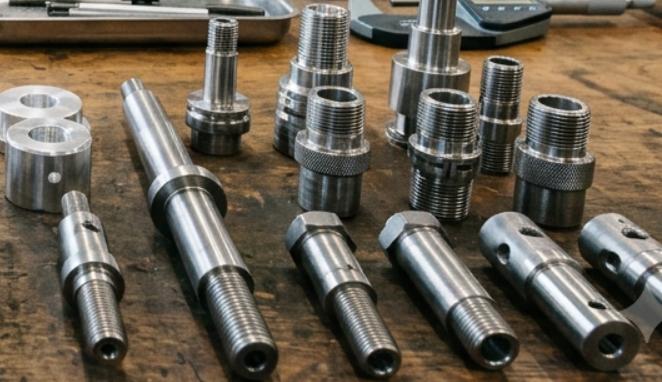
Common Geometries: Shaft, cylinder, stepped shaft, thread, bushing, and piping fittings/connections.
Key Advantages: When compared to any other machining process, the coaxiality and dimensions of the machining process can be achieved at micron level much quicker using turning.
Why Choose a Professional CNC Turned Parts Manufacturer?
It would be very advantageous for your company to collaborate with a dedicated factory as opposed to a general machine shop, which will benefit you in many ways.
Ultra-High Accuracy (±0.005 mm): Modern manufacturing plants make use of top-notch machine tools to reliably maintain ±0.005 mm tolerance levels. This is necessary when there is the need for tight interference fit and seal surfaces.
Quality Uniformity: B2B clients demand that tens of thousands of components be precisely uniform. Dedicated manufacturers use sophisticated closed loop quality control system.
High Cost Effectiveness: Through the use of integrated automatic bar feeders and efficient tool paths, specialty foundries make maximum use of material and minimize cycle times, giving you those structural cost efficiencies.
Rapid Prototyping and Production: Getting to market quickly is essential. Professional operations have rapid prototyping departments which will have samples produced in days, ensuring smooth transition into production runs.
Design for Manufacturability (DFM): Good partners don’t just mindlessly follow your designs. They have DFM services which will analyze your designs to find potential expensive problem areas prior to machining.
Custom Manufacturing (OEM and ODM): Whether it’s sourcing unique materials or OEM/ODM manufacturing from your proprietary designs, professional manufacturers can accommodate your needs.
How to Choose a Professional CNC Turning Manufacturer?
1. Core Technical Capabilities
A manufacturer’s core competitiveness is reflected first and foremost by its workshop equipment and technical expertise. While traditional 2-axis lathes can only handle simple rotational parts, complex modern industrial components require more advanced technological support:
Multi Axis CNC Lathe: This machine has a built-in capability of performing operations using 3 axis, 4 axis or even 5 axis simultaneously, making it possible to carry out turning, milling, drilling and tapping operations with a single setup, thereby reducing tolerance due to re-clamping.
Swiss-Type Machining: If your work piece is slender and requires very high precision machining of small diameters (less than Φ32 mm) and high aspect ratios (like medical bone screws, electronics probes, etc.), please ensure that the vendor can machine on the Swiss type CNC lathe which has a very rigid guide bush.
Live Tooling (Turn-Mill Multi-Tasking): Live tooling integrates milling capabilities into a lathe, enabling one-stop machining for complex geometries. This is a critical indicator of a factory’s production efficiency.
2. Broad Material Capabilities & Comprehensive Surface Finishing
Different industrial applications have vastly different material requirements. A mature CNC turning factory should be well-versed in processing a wide variety of metals and engineering plastics, while offering a complete suite of surface finishing services.
Material Capabilities
| Material Category | Common Grades | Typical Applications |
| Aluminum Alloys | 6061, 7075, 2024, 6082 | Aerospace, automotive lightweighting, drone chassis, electronic heatsinks |
| Stainless Steel | 303, 304, 316, 416, 17-4 PH | Medical devices, food machinery, marine equipment, corrosion-resistant fasteners |
| Brass & Copper | C36000, H59, H62, Pure Copper | Electronic connectors, pneumatic valves, plumbing fittings, high-conductivity parts |
| Titanium Alloys | Grade 2, Grade 5 (Ti-6Al-4V) | Medical implants, aerospace fasteners, high-end sporting goods |
| Engineering Plastics | PEEK, POM (Delrin), Nylon, PTFE | Insulating washers, semiconductor equipment components, low-friction bushings |
One-Stop Surface Finishes
Top-tier manufacturers can meet strict post-processing requirements specified on engineering drawings, including but not limited to: Anodizing, Passivation, Plating, Heat Treatment, Bead Blasting, and Laser Engraving.
3. Strict Quality Control & Advanced Inspection Equipment
In precision machining, tolerances are often measured in microns (μm). Verbal promises mean nothing; actual capability must be backed by data and inspection hardware. When evaluating a CNC turned parts manufacturer, look for the following:
Quality Management System Certifications:
ISO 9001:2015: The basic quality management standard.
IATF 16949: The tough entry-level standard for the automobile industry.
ISO 13485: The best medical device manufacturing standard.
Modern Inspection Laboratory: It is responsible for verifying that the manufacturing unit is using highly accurate measuring equipment. An acceptable shop should contain at least the following: CMMs (Coordinate Measuring Machines), used for complicated tolerance geometry; Optical Comparators (2.5D/3D), fast profiling tools; together with roughness testers, thread gages, and micrometers.
Traceability: The manufacturing facility needs to have a good quality process, which will enable it to have a closed loop traceability system such as: IQC (Incoming Quality Control) → IPQC (In-Process Quality Control) → FQC (Final Quality Control).
4. Flexibility from Prototyping to Mass Production
Different stages of a project demand different production volumes. During early R&D, you may only need 1–10 samples for fitment and assembly verification (Low-Volume Prototyping); once the design is finalized, you will require a stable supply of thousands of parts.
An ideal manufacturing partner offers flexible production mechanics:
Low MOQ Support: A willingness to collaborate with engineers during early-stage R&D by providing low-cost, fast-turnaround prototyping.
Automated Mass Production: Equippage with automatic bar feeders and automated lines capable of 24/7 lights-out manufacturing to lower per-part costs and guarantee reliable lead times during mass production.
5. Value-Added Service: DFM Optimization Support
A top-tier CNC turned parts manufacturer acts as an extension of your own R&D team rather than just a blind executor of prints.
Experienced manufacturing engineers will conduct a DFM (Design for Manufacturing) analysis as soon as they receive your drawings. For example, they can:
Evaluate whether specified tolerances are overly restrictive (unnecessary precision exponentially drives up costs without adding practical value to the assembly).
Propose optimization of R-angles within the interior parts to ensure they can fit cutting tools and minimize tool breaks.
Propose other materials which have equivalent mechanical properties but are available at a much lower cost.
With the help of professional DFM feedback from the manufacturer, you can considerably reduce manufacturing costs and lead time for your parts.
Conclusion
The selection of the correct CNC machined parts supplier is very important in terms of ensuring high-quality products, cost management, and time management. The evaluation of their machinery axes, experience in materials, quality assurance process, and design for manufacturing will help you screen the correct one.
As a professional CNC turned parts manufacturer with years of industry experience, KENENG is dedicated to providing high-precision, top-quality custom turning solutions to global clients. Whether it is low-volume prototyping or mass production of tens of thousands of units, our advanced CNC lathes, Swiss-type machines, and rigorous ISO quality control systems are here to safeguard your project every step of the way.
FAQs about CNC Turning
What is the difference between CNC Turning and CNC Milling?
A: The core difference of CNC Turning vs CNC Milling lies in “what rotates.” The CNC Turning process involves rotating the raw material (the bar stock) at high speed using the spindle while keeping the tool stationary but moving it along the axes to remove material and produce rotationally shaped or cylindrical components. However, for the CNC Milling process, the raw material is held to the worktable as the multi tooth milling tool rotates at high speed along several axes to remove material and produce complicated shapes like slots or irregular flat surfaces.
When should I choose Swiss CNC turning over conventional CNC turning?
A: You should opt for Swiss CNC turning when your components are small, intricate, and have a high length-to-diameter ratio (typically under 32 mm in diameter). Conventional lathes can allow slender parts to deflect or bend under tool pressure. Swiss-type lathes utilize a sliding headstock and a guide bushing that supports the raw bar stock right next to the cutting tool. This provides absolute rigidity, enabling the machine to achieve micro-inch surface finishes and hold sub-micron tolerances easily.
Can CNC turning machines produce non-cylindrical shapes?
A: Yes, CNC turning machines having Live Tools and Y-Axis are capable of forming non-cylindrical surfaces. The basic shape will remain cylindrical but then the machine can stop the rotational movement of the spindle at various angular positions (C-Axis Indexing), and then driven milling tools, drills or tapping tools can be engaged. This way, no need to shift the work piece on some other milling machine to achieve the same result.