Small Batch vs. Mass Production of CNC Parts: Which Method is Right for Your Project
CNC machining has been used a lot to make high-precision parts for industries like aerospace, automotive, medical devices, and consumer electronics. One of the first things manufacturers have to decide is if they should produce CNC parts in small batch, or through mass production. Each method brings its own set of benefits and trade-offs in terms of cost, flexibility, production speed, and even quality.
Getting clear on how small batch CNC production differs from mass production helps businesses pick a more efficient manufacturing strategy based on what the project actually needs, what the budget allows, and what the market is trying to reach.
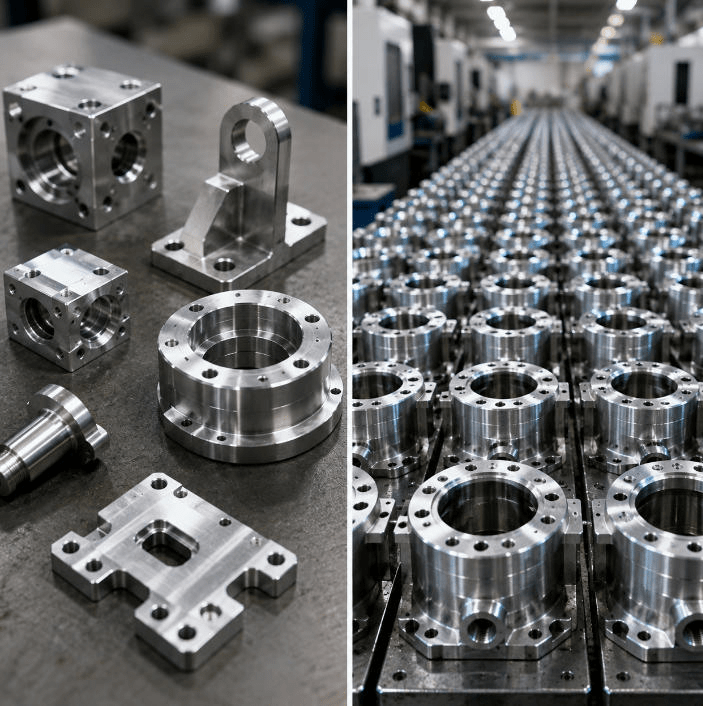
Table of Contents
Understanding Small Batch Production of CNC Parts
Small batch production of CNC parts is about manufacturing a limited quantity of CNC components, usually from a few pieces up to several hundred units. It sits in that middle zone between prototyping and larger-scale manufacturing, so companies can verify the design, react to tailored requests, or serve niche markets without having to lock money into big inventories.
Key Characteristics
Small batch CNC production leans on flexibility, careful detail, and quick response rather than chasing peak throughput. Makers are able to generate a range of part variants, handle engineering updates smoothly, and work with different materials inside short production runs. This adaptability makes small batch CNC machining especially helpful in areas where product layouts keep changing, or when customer requirements are not identical.
Also, every production run can go through a more detailed check and quality verification, making sure that each piece ends up meeting tight dimensional and performance needs.
Common Applications
Small batch production of CNC parts is used a lot across different industries where high precision components are needed in limited quantities. You will often see this for prototype development, pilot production, aerospace components, medical devices, robotics, industrial automation gear, automotive performance parts, scientific instruments, replacement components, and customized machinery. It is also a good option for startup teams and businesses launching a new product before moving into higher volume output.
Benefits
- More design flexibility: CAD/CAM tools can be updated quickly, so improvements in the design, or customer-specific requests can be implemented faster.
- Lower upfront costs: because dedicated molds and that pricey production tooling are unnecessary, the initial manufacturing investment stays relatively low.
- Rapid production turnaround: short production runs cut down lead times, so delivery is faster for prototypes, replacement parts, and customized orders
- High machining accuracy: CNC technology gives excellent dimensional precision, repeatability, and surface quality across each and every component
- Support for customization: different product variants can be manufactured efficiently, without big interruptions in the production process
- Lean inventory management: making only the amount needed reduces storage costs, it also minimizes leftover stock and the chance of product obsolescence
Limitations
Even though small batch production is very flexible, it also has a few limitations that are hard to ignore. Usually, the cost per part comes out higher, since the machine setup, programming, tooling, and inspection expenses get spread over a smaller number of components. If there are a lot of machine changeovers, production efficiency can drop compared to continuous, high-volume manufacturing. Also the manufacturer may not take advantage of bulk material purchasing discounts, which can create slightly higher raw material costs for particular projects.
Understanding Mass Production of CNC Parts
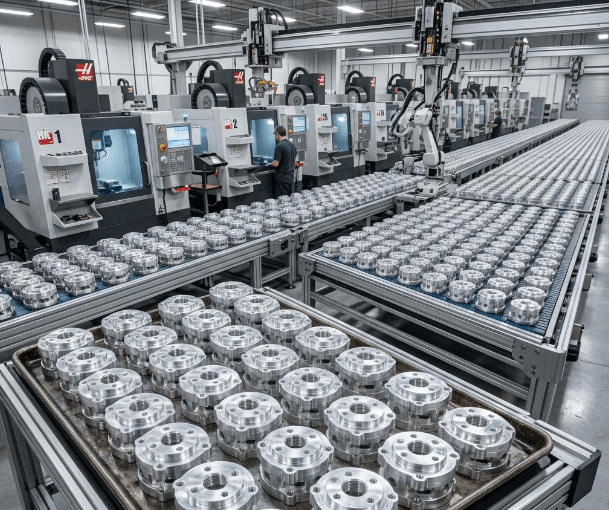
Mass production means producing thousands, or sometimes even millions of the same CNC components across long production runs. The whole approach leans on efficiency, steady output, and lower unit cost by using optimized machining programs, automation, standardized workflows, and keeping the line running continuously.
This production playbook blends advanced CNC machining with automation that uses robotic loading setups, pallet changers, automatic tool exchangers, and in-line inspection gear. By dialing down hand work and pushing machine uptime up as much as possible, manufacturers can reach strong output levels while also lowering the unit cost per part.
Key Features
High volume output is meant to boost manufacturing efficiency using standardized machining routines and continuous flow operations. CNC programs, cutting parameters, holding fixtures, and inspection steps are tuned in advance, before ramping up, so that each component stays aligned with the same specs during the whole manufacturing run.
Automation really matters in mass production because it brings down cycle time, makes output more repeatable, reduces the chance of human error, and lets machines run for long stretches with low downtime. This elevated level of process steering makes sure quality stays consistent even when volumes get huge.
Typical Applications
In terms of common uses, mass production of CNC parts is common in sectors where people want standardized items at scale. You often see it for automotive engine and transmission pieces, consumer electronics enclosures, parts for industrial machinery, aerospace hardware, household appliances, power tools, medical devices, and various mechanical assemblies. It works especially well when the product design stays stable and the manufacturing life cycle is long.
Advantages
- Lower cost per unit: the fixed outlays, like programming, initial setup, and tooling, are diluted over very large quantities, so the cost per piece drops noticeably.
- High manufacturing efficiency: continuous machining operations, combined with automated production setups, tend to keep machine time more fully used and this increases overall output a lot.
- Consistent product quality: using standardized machining parameters, plus automated quality control, makes sure every component lands within tight dimensional and performance requirements, without deviation.
- Improved material utilization: better toolpaths, smarter cutting strategies and bulk material procurement can lower scrap, and reduce total material expenses too.
- Greater automation: robotic systems, automatic tool changers, pallet systems, and in-process inspection help push productivity upward while also cutting down on labor needs.
- Scalability for large orders: mass production lets manufacturers handle big customer demand, and still keep dependable delivery timing, along with steady product quality.
Limitations
Even with its efficiency, mass production still brings some problems in real life. The early outlay for fixtures, automation hardware, process development, and quality systems is often noticeably higher than what you’d spend for small batch manufacturing. Also, if engineering changes happen later, it can get more expensive, because adjusting the well-established production method may mean reprogramming machines, reworking the fixtures, and revalidating the quality routine.
On top of that, bigger production runs usually need larger inventory levels. That pushes up storage costs, and it also adds the risk of surplus product if customer demand shifts suddenly. So, proper demand prediction and disciplined inventory control are needed to protect profitability, and keep everything steady.
The Comparison Between Small Batch and Mass Production of CNC Parts
| Comparison Factor | Small Batch CNC Production | Mass Production of CNC Parts |
| Production Volume | Typically produces a few to several hundred parts. | Produces thousands to millions of identical parts. |
| Initial Investment | Lower upfront costs due to minimal tooling and simpler setup. | Higher initial investment for process optimization, fixtures, automation, and production planning. |
| Cost per Unit | Higher because setup and programming costs are spread over fewer parts. | Lower as fixed costs are distributed across large production volumes. |
| Lead Time | Shorter lead times, making it ideal for rapid prototyping and urgent orders of CNC components. | Longer preparation time, but much higher output once production begins. |
| Design Flexibility | Excellent flexibility for engineering changes and customized designs. | Limited flexibility; design modifications can be costly and disrupt production. |
| Customization | Highly suitable for customized, low-volume, and specialized components. | Best suited for standardized parts with consistent specifications. |
| Production Efficiency | Efficient for low-volume manufacturing but involves more frequent machine setups. | Highly efficient through continuous production, automation, and optimized machining cycles. |
| Quality Consistency | High precision with close inspection of individual parts. | Outstanding consistency through standardized processes and automated quality control. |
| Inventory Requirements | Supports lean manufacturing with low inventory levels and reduced storage costs. | Often requires larger inventories to support continuous production and customer demand. |
| Material Utilization | May generate slightly higher material waste due to frequent setup adjustments. | Better material utilization through optimized toolpaths and bulk material purchasing. |
| Automation Level | Primarily uses flexible CNC machining with limited automation. | Frequently integrates robotics, pallet systems, automatic tool changers, and in-line inspection. |
| Business Risk | Lower financial risk because production quantities match immediate demand. | Higher financial risk if demand forecasts are inaccurate or product designs change. |
| Scalability | Easy to adjust production quantities for changing customer needs. | Highly scalable for stable, long-term, high-demand manufacturing. |
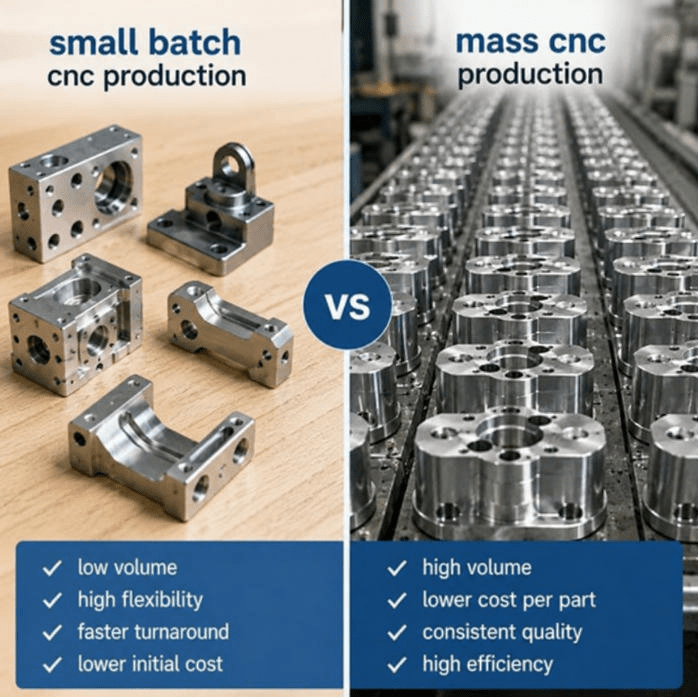
Key Considerations for Choosing the Right Production Strategy for CNC Parts Between Small Batch and Mass Production
Choosing between small batch and mass production for CNC parts is basically a strategic call that touches manufacturing costs, efficiency of production, product quality, and yes business profit in the end. The best way to manufacture depends on several things, like how much you need, how long the product will live, what budget you have, and a few other related items. Taking a careful look at those points before you start making anything lets manufacturers use resources better while still matching what customers expect, in a practical way.
- Production Volume and Market Demand
How many parts you plan to make is one of the most decisive factors for the manufacturing method. Small batch CNC production works well for low-volume orders, tailored assemblies, and trial production runs, especially when demand is not fully predictable yet. Mass production is usually cheaper per unit when demand stays steady, and when you need big volumes of the same parts over a longer time span.
- Product Design Stability
The maturity level of the product design should also push the manufacturing decision in a practical direction. If engineering changes are still expected, then small batch production offers a bit more wiggle room, so machining programs can be updated quickly, without causing turbulence to the ongoing output. Once the design has been fully validated and standardized, mass production tends to let manufacturers squeeze more efficiency out of the process and bring the overall costs down.
- Manufacturing Cost and Budget
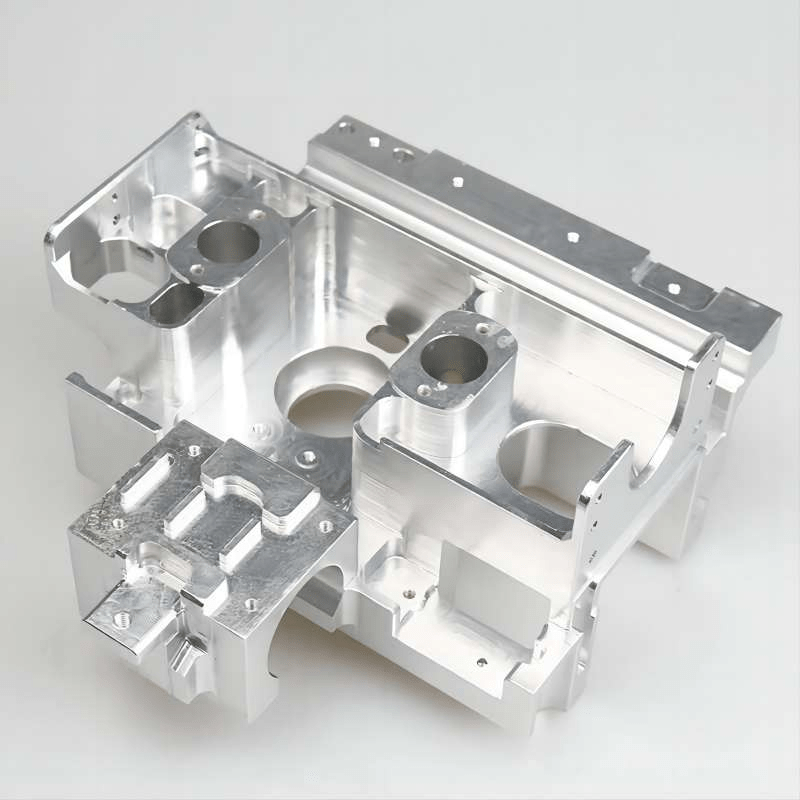
Manufacturers should weigh both the first purchase-like investment and the future, long-run production expenses. Small batch production usually needs less upfront funding, because it does not depend heavily on specialized tooling, or heavy automation setups. Even so the cost per part is typically higher. Mass production demands more initial capital for process tuning, fixtures, automation systems and inspection routines, but the unit price falls strongly as volumes rise.
- Lead Time Requirements
Delivery schedules really do matter when choosing the right production approach. With small batch you often get shorter lead time in CNC part production, which makes it a good fit for urgent orders, early prototypes and even replacement parts. Mass production can demand a longer preparation and additional setup time, but once the manufacturing line is rolling, it tends to deliver much more output.
- Customization Needs
When it comes to customization needs, items that go through frequent design changes or include customer-specific features tend to perform better with small batch production. CNC machining helps you revise the machining program fast, without having to do heavy retooling. Meanwhile, for standardized components where the specifications stay steady, mass production usually brings better efficiency and stronger repeatability.
- Inventory and Supply Chain Management
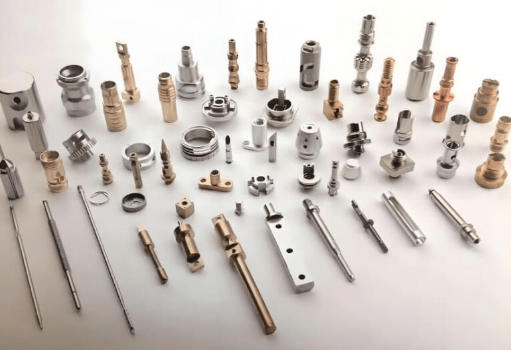
Then there is the inventory and supply chain management side, where planning becomes pretty sensitive to timing and variability. Businesses that pick lean manufacturing principles frequently choose small batch production because it keeps inventories lean and lowers the chance of surplus stock. Mass production usually ends up needing bigger inventory buffers to keep things running constantly and to satisfy market demand, which makes demand forecasting pretty essential in practice.
- Quality and Precision Requirements
Both manufacturing approaches can deliver excellent dimensional accuracy when modern CNC machining technology is used. Still, manufacturers should think about inspection methods and the quality management systems behind them. In small batch production there is often time for close inspection on each component, while mass production leans on standardized inspection routines automated measurement systems, and statistical process control so the quality stays steady across higher output ranges.
- Automation and Manufacturing Efficiency
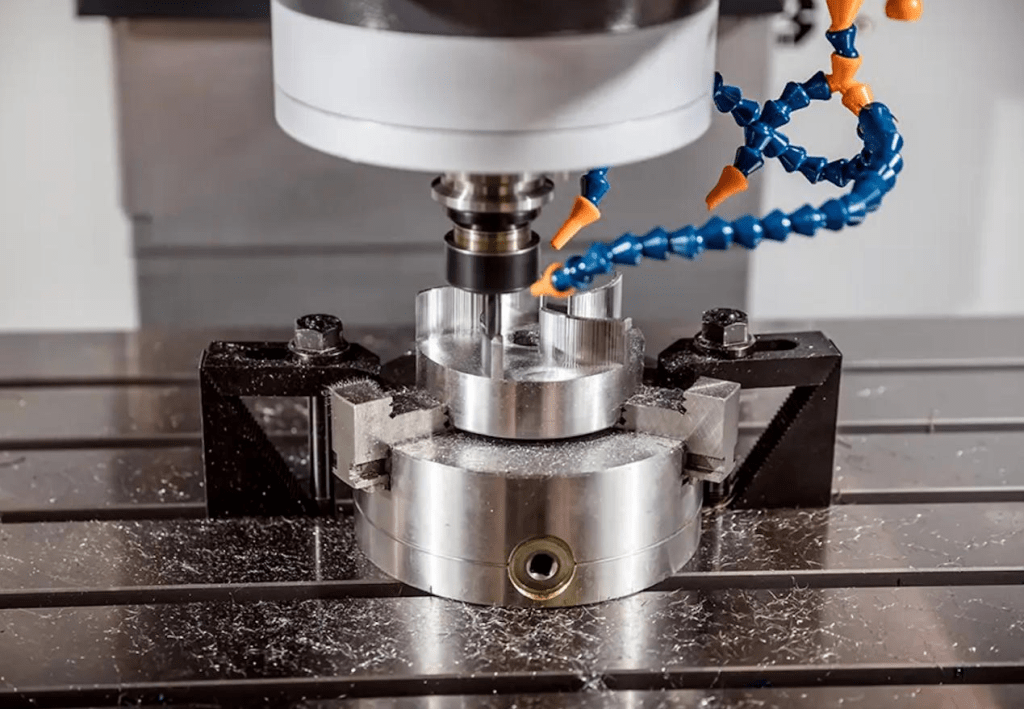
The desired amount of automation should match the production goals. In small batch manufacturing, there is usually a focus on flexibility, with operators handling several part types, and running shorter production sequences. Mass production, on the other hand, can take advantage of more advanced automation tools, like robotic loading systems, pallet changers, automatic tool changers, plus inline inspection units, all of which push output while also lowering direct labor expenses.
- Material Availability and Procurement
How raw materials get procured can affect both manufacturing performance and the total cost. For small batch work, flexibility matters when using specialized materials that are only available in limited quantities. For mass production, bulk purchasing discounts often help, and material utilization tends to be more efficient. In any case manufacturers should make sure the material supply stays steady enough to support the chosen production approach.
- Future Scalability
Companies should also look at long-term business growth. Small batch production is a low-risk route for rolling out new offerings and testing market reactions, even when the signals are not super clear at first. If demand ends up rising over time, the supplier can slowly shift into mass production so costs become more manageable and capacity goes up, without sacrificing quality.
Summary
When Small Batch CNC Production Should Be Chosen
- Product designs are still being fine-tuned.
- Market demand feels unpredictable.
- Highly customized CNC components are required.
- Inventory carrying costs need to stay minimal.
- Early product launches matter a lot.
- Prototype validation and trial production are necessary.
When is Mass CNC Production the Better Choice
- Product demand stays strong.
- Designs have been fully verified.
- The cost per part has to be driven down.
- Long-term manufacturing efficiency is critical.
- Automated production systems can be used to the fullest.
- Product consistency is the main goal.
Final Thoughts
Both small batch and mass production play essential roles in modern CNC manufacturing. By carefully evaluating production volume, budget, lead time, customization needs, etc., manufacturers can pick the CNC production approach that delivers the most value and enduring competitiveness.