
Titanium CNC Machining: Essential Facts & Tips
In modern advanced manufacturing, Titanium Alloy has become an essential material in aerospace, medical devices, automotive racing, marine engineering, and other industries due to its excellent strength-to-weight ratio, outstanding corrosion resistance, and excellent biocompatibility.
However, for purchasing managers and mechanical engineers, titanium is also well known as a difficult-to-machine material. Due to its low thermal conductivity and high chemical reactivity, titanium alloys can easily cause rapid tool wear, heat buildup, and workpiece deformation during CNC machining.
This article takes an in-depth look at Titanium CNC Machining and explains how to choose a reliable titanium CNC machining manufacturer.
Table of Contents
What Is Titanium CNC Machining?
CNC titanium machining is known as the process of using CNC machining equipment to carry out computerized titanium cutting from titanium alloys according to CAD drawings or designs.
Unlike conventional manual machining processes, CNC titanium machining employs computer-programmed motions of tools in order to produce titanium components with complex shapes and high accuracy.
Common titanium CNC machining processes include:
- CNC Milling
- CNC Turning
- CNC Drilling
- CNC Threading
- CNC Boring
- 3-Axis Machining
- 4-Axis Machining
- 5-Axis Machining
Different machining methods are suitable for different types of parts. For instance, CNC milling machines are appropriate for shaping intricate surfaces, grooves, holes, and curves; on the other hand, CNC turning machines are best used for rotational symmetry objects like shafts, sleeves, and rings.
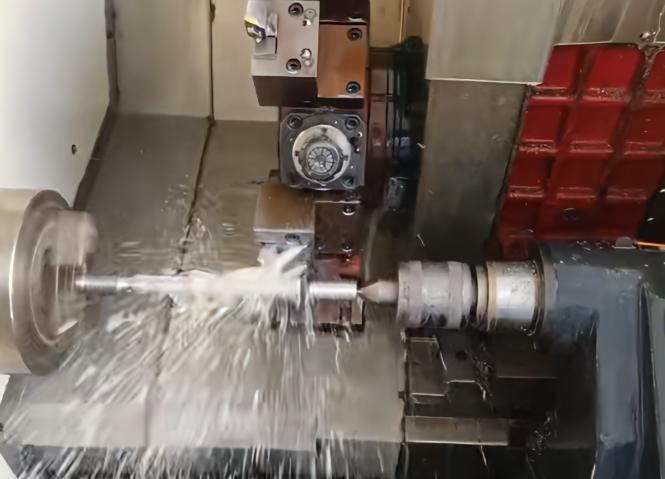
titanium cnc machining
Why Is Titanium CNC Machining Difficult?
Titanium alloy has excellent properties such as high strength, lightness, anti-corrosive, and heat-resistant characteristics, and these properties make titanium alloy one of the widely used materials in the aerospace industry, medical industry, automotive industry, and many more. On the contrary, due to these properties, Titanium CNC Machining becomes difficult in comparison to the common materials like aluminum and stainless steel.
There are many factors involved in titanium alloys which must be considered while performing the machining on titanium alloy.
1. Titanium Has Low Thermal Conductivity
One of the problems associated with machining of titanium alloy is its poor thermal conductivity. During the process of CNC Machining, the heat generated due to the process is not dissipated quickly from the material being machined. This makes heat accumulate at the region of the cutting tool.
High cutting temperatures will increase tool wear and may even have an effect on surface finish and machining stability. For this reason, for machining titanium, cutting speed, feed, depth of cut, and cooling options must be selected taking into consideration the grade of titanium and the type of machining process involved.
2. High Strength Increases Cutting Loads
Titanium alloys are strong materials. Titanium alloys used in aircrafts, like Ti-6Al-4V, have to endure relatively high cutting forces due to the nature of their machining.
Otherwise, there may be such problems as tool fracture, vibration, dimensional inaccuracies, and low surface quality. Therefore, Titanium CNC machining typically requires customized machining parameters based on the specific material and part design rather than simply applying parameters used for aluminum or other easier-to-machine materials.
3. More Significant Tool Wear
The high temperatures and cutting loads generated during titanium machining can result in more significant tool wear. Unlike easily machineable metals like aluminum, titanium poses more stringent requirements for tooling and machining processes.
For this reason, when manufacturing titanium machined components, issues like tool material, tool design, cutting parameters, and tool path should all be taken into account. The maintenance of the tools through inspection and their timely replacement will also contribute to good dimensional tolerances and surface finish.
4. Risk of Work Hardening
Titanium machining also requires attention to work hardening. If the cutting tool does not maintain a stable and continuous cutting action and instead rubs against, dwells on, or repeatedly cuts the workpiece surface, the local material may become more difficult to machine.
Therefore, during Titanium CNC Machining, prolonged tool rubbing against the workpiece surface should be avoided. Proper tool paths and machining strategies should be used to maintain stable cutting conditions and reduce the risk of work hardening and subsequent tool wear.
5. Thin-Walled Parts Are Prone to Deformation
Titanium alloys are strong but have low elastic modulus. Therefore, some titanium components having thin walls and deep cavities can easily be subjected to deformation when being machined.
Machining errors may arise due to excessive clamping force, lack of proper support, or incorrect machining sequence.
Therefore, apart from CNC machine and CNC tools during the machining of complex titanium CNC parts, one has to pay attention to such factors as fixture, clamping method, positioning of supports, and machining sequence.
Common Titanium Grades for CNC Machining
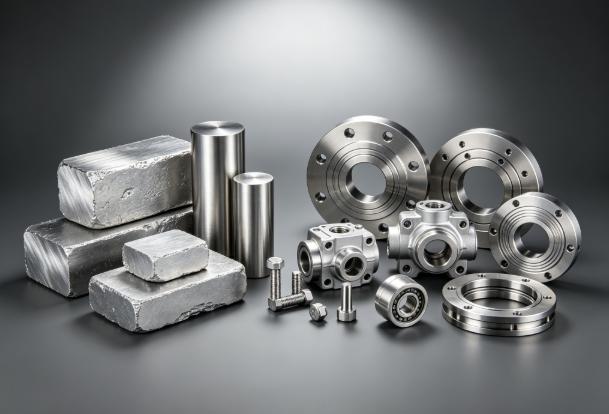
Titanium materials of different grades differ greatly with regard to strength, ductility, corrosion resistance, heat resistance, and machinability. Consequently, before embarking on Titanium CNC Machining, it is important to choose the correct titanium grade not only in relation to the final properties of the part but also with regard to machining tools and parameters.
Below is the list of titanium materials used for CNC machining:
| Titanium Grade | Main Characteristics | Common Applications |
| Grade 1 | Commercially pure titanium with excellent ductility, formability, and corrosion resistance, but relatively low strength | Chemical processing equipment, heat exchangers, piping, general industrial parts |
| Grade 2 | Good overall performance with a balanced combination of strength, ductility, and corrosion resistance | Chemical processing, marine equipment, industrial equipment, pressure vessels |
| Grade 5 (Ti-6Al-4V) | High strength, excellent strength-to-weight ratio, good fatigue and heat resistance; one of the most widely used titanium alloys | Aerospace, automotive, medical devices, industrial equipment |
| Grade 9 (Ti-3Al-2.5V) | Higher strength than commercially pure titanium, with good ductility and formability | Aerospace, hydraulic tubing, industrial components |
| Grade 23 (Ti-6Al-4V ELI) | Higher purity and toughness than Grade 5, with improved fracture toughness and low-temperature performance | Medical implants, aerospace, high-performance components |
Grade 1 and Grade 2: Good Corrosion Resistance
Grade 1 and Grade 2 are grades of titanium that are commercially pure, giving them great resistance to corrosion and high formability. Grade 1 gives improved formability and ductility, whereas Grade 2 gives increased strength.
Both grades have found wide applications in industrial equipment, chemical processing equipment, and marine applications. If an application needs corrosion resistance and good formability, then these two grades should be considered.
Grade 5: The Most Common Titanium Alloy
Grade 5, or Ti-6Al-4V, is an alloy that is highly valued when it comes to CNC machining of titanium alloys. It has high strength-to-weight ratio, high fatigue resistance, and high corrosion resistance. That is why this alloy is often applied for the manufacturing of aerospace and medical products and other demanding applications.
Nevertheless, the increased strength of the material also means that it is harder to process. Cutting heat, tool wear, and machining vibrations should be well controlled during Ti-6Al-4V CNC machining.
Grade 9: Balance of Strength and Formability
Grade 9 (Ti-3Al-2.5V) gives the best combination of high strength and good ductility, along with being good at resisting corrosion.
Unlike some other titanium alloys that have high strength, Grade 9 is more formable and machinable than them. It finds common use in aerospace structures, hydraulic tubing, etc.
Grade 23: Higher Toughness for Critical Applications
Grade 23 (Ti-6Al-4V ELI) is known to be an extra-low interstitial grade of Grade 5, where ELI stands for Extra Low Interstitial. It should be noted that in comparison with regular Grade 5, it provides better ductility and fracture toughness and thus is more applicable for reliability-requiring operations.
Grade 23 is commonly used in medical implants, aerospace, and other high-performance components. In these applications, the material needs to meet not only strength requirements but also requirements for fatigue performance, toughness, and long-term reliability.
Common Tolerances for Titanium CNC Machining
In actual CNC machining projects, for titanium parts with reasonable structures and moderate dimensions, typical CNC machining tolerances can generally reach approximately ±0.05 mm (±0.002 in).
For precision machining projects with well-controlled equipment, tooling, and machining processes, some critical dimensions may be further controlled to approximately ±0.02 mm (±0.0008 in). For high-precision parts that undergo finishing operations, stabilization, and strict inspection, certain specific dimensions may even reach the ±0.01 mm (±0.0004 in) level. However, this normally needs to be evaluated according to the specific part geometry and drawing requirements and should not be considered a standard tolerance for all titanium parts.
A simple reference is:
| Machining Type | Approximate Tolerance |
| Standard Titanium CNC Machining | ±0.05 mm |
| Precision CNC Machining | ±0.02 mm |
| High-Precision Critical Dimensions | ±0.01 mm |
As is essential to mention that these figures are the reference range and do not imply that the components will always be able to meet these standards. The sizes of the components, thickness of walls, quality of titanium used, geometric complexity of the part, the machining process used, and the conditions under which inspection is done have an effect on the accuracy of the part produced. For thin-wall titanium machined parts, meeting ±0.01mm may be difficult.
Titanium CNC Machining Surface Finishes
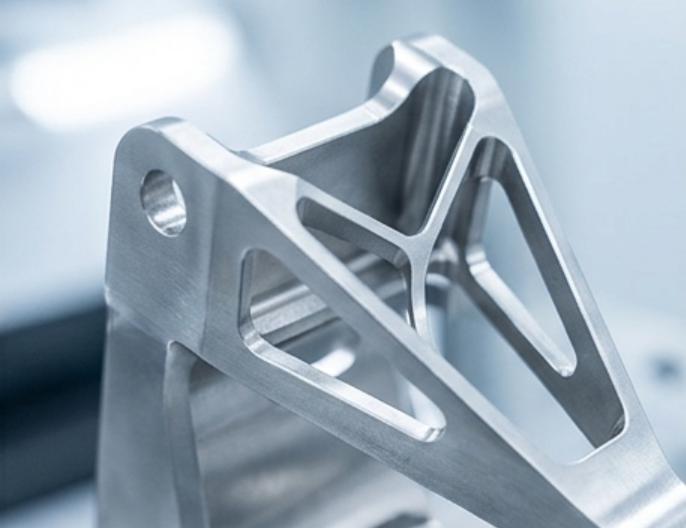
Surface finish for titanium workpieces produced via CNC machining is not solely based on the machining machine and cutting tools but rather influenced by several other elements like cutting parameters, tool geometries, machining directions, and grades of material used for machining.
In accordance with the part function, aesthetics requirement, roughness, and its operational environment, various finishes for titanium surfaces are available.
As-Machined
As-Machined refers to retaining the original surface condition after CNC machining, which typically includes visible tool marks.
This finish does not require additional post-processing, making it relatively cost-effective. It is suitable for internal structural components, functional mechanical parts, and titanium machined parts where appearance is not a major concern.
Polishing
Polishing uses mechanical polishing and other processes to further reduce surface roughness, resulting in a smoother and more uniform titanium surface.
This finish is suitable for parts requiring a high level of surface smoothness and can also reduce some machining marks. For medical components, precision equipment, and certain appearance-critical parts, the required surface roughness should be determined based on the final application.
Brushing
Brushing uses abrasives or brushing processes to create a uniform, directional texture on the titanium surface.
Compared with simple polishing, a brushed surface usually has a more visible texture and can help reduce the appearance of minor machining marks. It is commonly used for parts requiring consistent appearance and surface texture.
Bead Blasting
Bead blasting uses fine abrasive media projected onto the part surface to create a more uniform matte or fine-textured finish.
This process can improve the appearance of the part and reduce some visible CNC tool marks. It is commonly used for industrial and consumer parts requiring a consistent surface texture. However, blasting parameters should be properly controlled to avoid affecting critical dimensions and precision-fit areas.
Anodizing
Anodizing can use an electrochemical process to form a stable oxide layer on the titanium surface and, depending on the process conditions, produce different colors and surface effects.
Titanium anodizing is commonly used for medical devices, consumer products, aerospace components, and specialized industrial parts. In addition to appearance requirements, the specific treatment should be determined according to the material grade, dimensional requirements, and final operating environment.
Major Applications of Titanium CNC Machining
Since titanium alloys have great mechanical properties such as strength, light weight, and excellent corrosion and high-temperature resistance, Titanium CNC Machining is commonly used in many industries including aerospace, medical, automotive, oil and gas, chemical, etc., that require tough materials.
For each specific application, the requirement of material grade, tolerance, surface finish, and manufacturing method will be different. Thus, the material grade and machining method to use shall be chosen based on the conditions and requirements of the part itself.
Medical
The characteristics of titanium alloys include high biocompatibility, corrosion resistance, and mechanical properties. These properties make titanium alloys widely used for medical devices and equipment. Titanium is a highly preferred material in applications where the alloy comes into contact with the human body or applications where high reliability of the material is needed.
Titanium CNC Machining can be utilized to create surgical tools, medical devices, orthopedic parts, and implants. Grade 5 and Grade 23 titanium alloys are the common materials used in medical applications. High-demanding parts like medical implants require consideration of dimensional tolerance, material specification, surface finish, and surface treatment among other requirements.
Automotive
In automotive and high-performance vehicle applications, titanium is mainly used for components requiring light weight, high strength, and high-temperature resistance. CNC machining can be used to manufacture complex and high-precision titanium components.
In high-performance automotive and racing applications, titanium machined parts may be used for certain performance components, lightweight components, racing components, and exhaust components. Titanium’s high strength-to-weight ratio can help reduce component weight, making it suitable for applications where performance and weight are critical.
Aerospace
Titanium CNC Machining has many important applications in aerospace industry. Titanium has high strength to weight ratio and the component will not become heavy even if they have good mechanical properties. This makes titanium ideal for structural parts and functional parts in aerospace industry.
Titanium CNC machining can be used to fabricate aircraft parts, structural parts, engine parts, brackets, housings, and aerospace fasteners. Since aerospace components require high precision, material traceability, good surface finish, and high reliability, material, tool, machining process, and inspection need to be controlled.
Oil & Gas
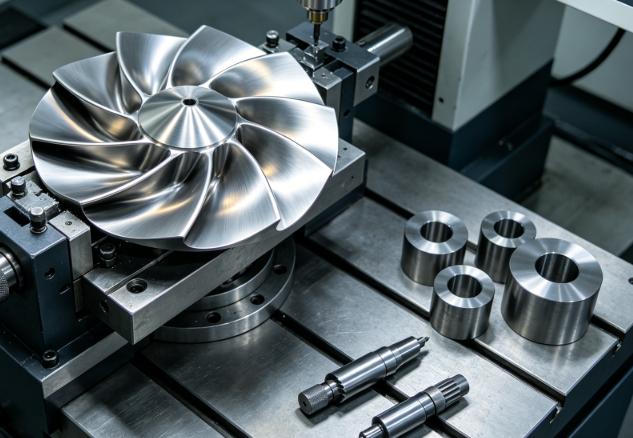
In the Oil & Gas industry, certain equipment components may operate for extended periods under high pressure, corrosive media, and complex working conditions. Titanium’s excellent corrosion resistance makes it suitable for certain specialized industrial components, particularly applications where high corrosion resistance is required.
Through Titanium CNC Machining, manufacturers can produce corrosion-resistant components, specialized fittings, valve components, and custom equipment parts. However, titanium is not suitable for every oil and gas application. Material selection should take into account the composition of the medium, temperature, pressure, corrosive environment, and applicable industry standards.
Chemical Processing
Titanium alloys offer excellent corrosion resistance and therefore have value in certain chemical processing equipment and corrosive environments. Compared with conventional metals, an appropriate titanium grade can provide better long-term performance in specific corrosive conditions.
Titanium CNC machined parts can be used for fittings, housings, pump components, and chemical equipment components. For these parts, material selection should consider not only mechanical strength but also the type and concentration of the chemical medium, temperature, and operating conditions to ensure that the components meet actual service requirements.
Titanium CNC Machining vs. Aluminum CNC Machining
Titanium and aluminum are equally light metals; however, their behavior in the process of CNC machining differs considerably, with aluminum concentrating on machining effectiveness, lightness, and cost savings, while titanium values high durability and resistance to corrosion and harsh operating conditions.
When it comes to CNC machining projects, one should take into account not only material density and strength when comparing metals. Cutting characteristics, tool life, part warping, time consumption during machining, and general manufacturing costs should be considered too.
| Comparison Item | Titanium | Aluminum |
| Typical Materials | Grade 2, Grade 5 (Ti-6Al-4V), Grade 9, Grade 23 | 6061-T6, 7075-T6, etc. |
| Density | Approx. 4.5 g/cm³ | Approx. 2.7 g/cm³ |
| Specific Strength | High, suitable for high-load and lightweight structures | Good, suitable for general lightweight structures |
| Elastic Modulus | Approx. 105–120 GPa | Approx. 69–71 GPa |
| Thermal Conductivity | Low, making cutting heat more concentrated around the tool and cutting zone | High, allowing relatively easier heat dissipation |
| CNC Machining Difficulty | High, requiring greater attention to tooling, cooling, machine rigidity, and cutting parameters | Low to moderate, generally offering better cutting efficiency |
| Recommended Machining Speed | Typically lower cutting speeds are used to control cutting heat and tool wear | Generally allows higher cutting speeds and feed rates |
| Tool Wear | Relatively significant; tool condition needs to be carefully controlled | Relatively low |
| Thin-Walled Machining | Relatively low rigidity; deformation and vibration require careful control | Generally easier to machine, although thin-wall deformation still needs to be controlled |
| Corrosion Resistance | Excellent, suitable for many demanding corrosive environments | Good, depending on alloy grade and environment |
| High-Temperature Performance | Good, suitable for high-temperature and high-performance applications | Relatively lower |
| Machining Cost | Generally higher | Generally lower |
| Typical Applications | Aerospace, medical, oil & gas, high-performance industrial equipment | Automotive, electronics, machinery, consumer electronics |
| Better Suited For | Parts requiring high strength, corrosion resistance, and long-term reliability | Parts where weight, machining efficiency, and cost are the primary concerns |
Titanium vs. Aluminum: Which Should You Choose?
Aluminum is most economic where the main design criteria are reduction of material weight, increased machining efficiency, and control over the manufacturing cost, when the part is exposed to comparatively normal conditions of mechanical and environmental loading.
Titanium becomes more advantageous in cases when the part should be working over a longer period of time under high mechanical loading, corrosive environments, or high temperatures, having high strength-to-weight ratio and reliability. Even though the material and the process of CNC machining of titanium are quite costly, its greater durability and good suitability to harsh working conditions can make the choice justified.
How to Choose a Titanium CNC Machining Manufacturer?
Choosing the right Titanium CNC Machining manufacturer should not be based on price alone. Titanium machining places high demands on equipment, tooling, machining processes, and quality control. Therefore, it is recommended to evaluate a supplier based on the following factors.
1. Check Titanium Machining Experience
Firstly, check to see if the supplier is familiar with titanium machining, especially for grades like 5 and 23 titanium. Having an experienced supplier allows the supplier to set appropriate machining parameters according to the material grade, geometry, and tolerance requirements.
2. Check CNC Machine Capabilities
Check to see if the supplier is capable of handling 3-axis, 4-axis, 5-axis CNC machining, CNC turning, and CNC milling according to the part geometry. If your part has curved surface geometries, deep cavities, or even multi-angle geometry, 5-axis machining will be more efficient and accurate.
3. Check Quality Control
In the case of precision titanium machined parts, it needs to be checked whether the supplier has full inspection facilities like CMM inspection, dimensional inspection, and process inspection. In the case of difficult aerospace and medical jobs, it needs to be verified that the manufacturer can provide material certifications.
4. Verify Material Traceability
Check whether the supplier provides the correct material certification for the job and ensures that the titanium grade and material condition and batch number can be traced. It is an important consideration for difficult materials.
5. Consider Production Capability
If the project may require mass production in the future, it is recommended to choose a manufacturer capable of supporting the full process from Prototype → Small Batch → Mass Production. This can reduce the need for requalification and process adjustments when changing suppliers and can also help maintain consistent quality between production batches.
6. Look for Engineering Support
A good supplier of titanium CNC machining should do more than just produce parts from the drawings provided. This is because such a good supplier should be capable of offering DFM services, which entail helping customers improve their choices of material, tolerances, wall thickness, manufacturing method, and tool paths without adding unnecessary costs in the process.
KENENG: Your Titanium CNC Machining Partner
Titanium has the advantages of being strong, less heat conductive, and highly resistant to corrosion, but at the same time, these characteristics make higher requirements of machining machines, tools, cuts, etc. It is for this reason that choosing the right CNC machining company with titanium machining capabilities is necessary to ensure stable machining quality.
KENENG is a manufacturer providing custom CNC machining services with experience in machining titanium and other high-performance metals. KENENG operates an approximately 3,000-square-meter CNC machining workshop, has more than 60 employees, and is equipped with 16 CNC machining machines. The company provides CNC Milling, CNC Turning, and multi-axis machining services.
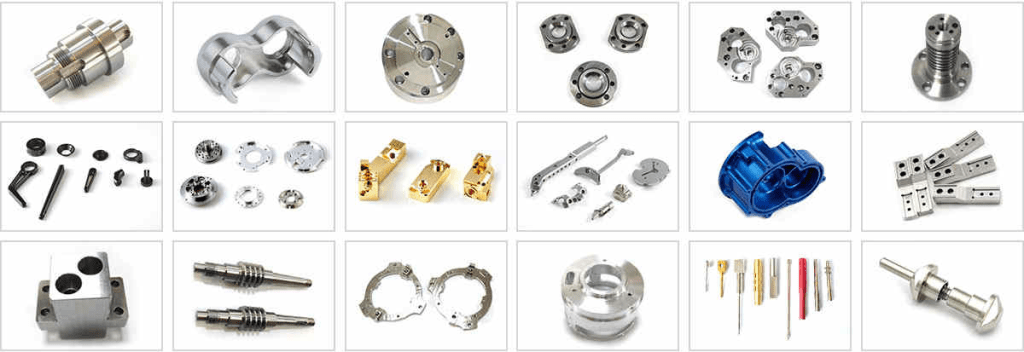
For titanium CNC machining projects, KENENG can provide the following support:
Titanium Machining Experience: Materials include Titanium, Inconel, stainless steel, aluminum alloys, and other metals. Material and machining solutions can be evaluated according to the performance and application requirements of the parts.
3/4/5-Axis CNC Machining: KENENG is equipped with 3-axis, 4-axis, and 5-axis CNC milling capabilities. 5-axis machining is suitable for complex curved surfaces, compound angles, deep cavities, and other structures, helping reduce repeated setups for certain parts.
Precision Tolerance Control: Depending on the part geometry, material, and production volume, KENENG’s CNC machining capabilities can achieve tight tolerances of approximately ±0.0005″ (±0.0127 mm).
Quality Inspection: For precision titanium machined parts, KENENG is equipped with CMM and optical comparator inspection equipment to verify dimensional accuracy and quality requirements.
From Prototype to Production: Whether you need a single prototype, small-batch production, or mass production, KENENG can provide corresponding CNC machining support based on your project requirements.
DFM Engineering Support: Before production, KENENG’s engineering team can perform a DFM (Design for Manufacturability) evaluation and help optimize the design from the perspectives of machining feasibility, cost, and product performance.
Need Titanium CNC Machining?
If you are looking for a Titanium CNC Machining Manufacturer or need to machine Ti-6Al-4V, precision titanium parts, or complex CNC titanium components, KENENG can support your project from engineering evaluation and prototype machining through to mass production.
Simply provide your 3D CAD files, 2D engineering drawings, Titanium Grade, quantity, tolerances, and surface finish requirements. The KENENG engineering team can evaluate your project based on the part geometry and machining requirements and provide an appropriate CNC machining solution and quotation.