
What to Look for in Aerospace CNC Machining Manufacturers
In the aerospace, defense, and satellite communications industries, even the smallest component failure can lead to immeasurable losses. From jet engine blades operating under thousands of degrees of heat to satellite structural parts working in the extreme temperature fluctuations of outer space, the aerospace industry demands the most stringent requirements of any manufacturing sector. CNC machining aerospace manufacturing plays a central role in this supply chain, responsible for transforming advanced engineering designs into safe and reliable physical components. Choosing a CNC machining manufacturer with top-tier technical capability and a robust compliance system is critical to project success.
Table of Contents
What Do Precision Aerospace CNC Machining Parts Manufacturers Do?
Precision aerospace CNC machining manufacturers refer to manufacturing firms that specialize in delivering precise machining operations for the aerospace sector using their advanced CNC machines. The machining involves processing raw materials such as titanium alloys, aluminum alloys, and high-temperature alloys to create components according to aerospace specifications.
Unlike machining firms in general, aerospace parts manufacturers need to have not only high-level precision machining capacity but also build up complete systems of quality control, material tracking, and inspections to accommodate the special needs of the aerospace industry.
Professional aerospace CNC machining generally offer all-around services that include prototype design, process verification, pilot run production, and mass production to help their clients cut down their time for R&D and minimize production risk.
Why Precision Is Critical in Aerospace Manufacturing
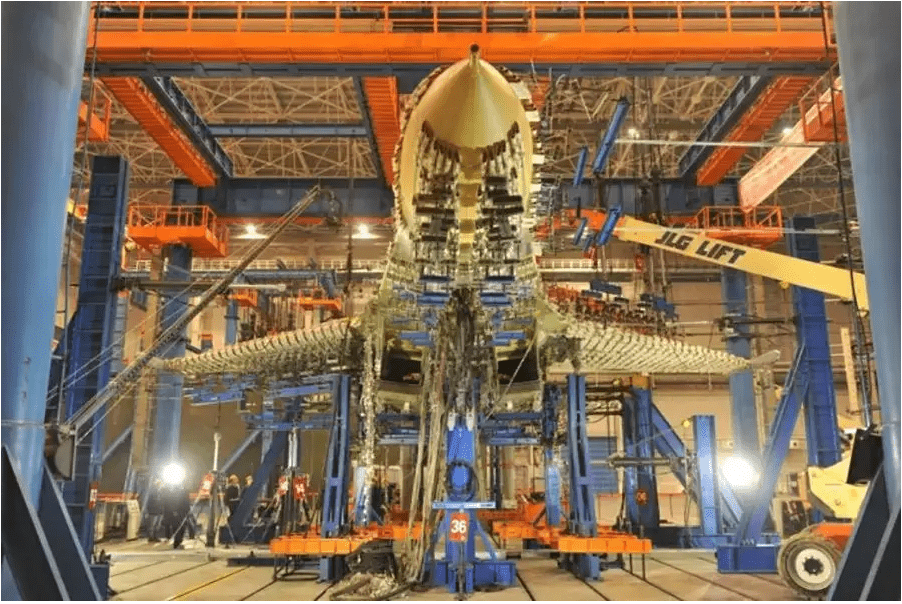
The aerospace industry is among the most challenging industries when it comes to part precision. The term “precision” is not only a measure but also has direct connections to the safety and efficiency of aerospace vehicles.
Flight Safety Requirements
The flights of aircraft, spacecraft, and rockets are characterized by extremely high temperature conditions, supersonic airflow, and other loads. Failure of any parts may cause tragic accidents.
Extremely Tight Tolerances
Many aerospace components require tolerances as tight as ±0.01 mm or even higher precision. For engine components, hydraulic system parts, and precision structural assemblies, dimensional accuracy directly determines assembly quality and service life.
Complex Structural Designs
Modern aerospace products increasingly emphasize lightweighting and high performance, featuring complex surfaces, thin-wall structures, and irregular geometries. These parts typically require five-axis CNC machining technology.
Demanding Material Requirements
Aerospace applications widely use titanium alloys, Inconel high-temperature alloys, and advanced engineering plastics. Although these materials offer excellent performance, they are difficult to machine and require advanced equipment and process control.
Key Capabilities of Top Aerospace CNC Machining Parts Manufacturers
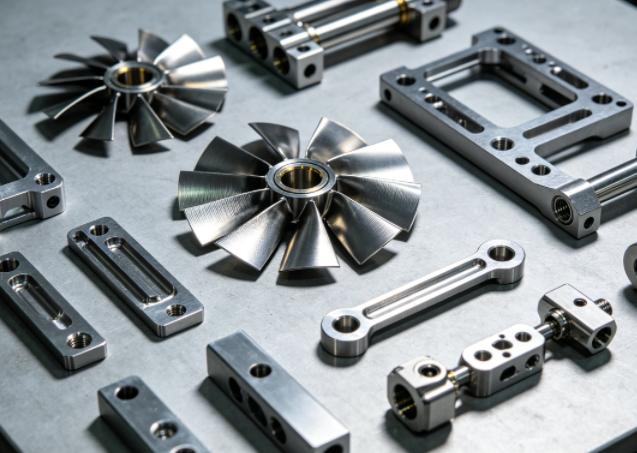
Excellent aerospace CNC machining manufacturers do not only possess the ability to make parts but are also good at controlling the process with high accuracy, process stability, material handling, and quality control.
Five Axis CNC Machining Capability
In aerospace manufacturing, five-axis CNC machining capability is becoming basic. As compared to three-axis machining processes, five-axis machining processes can be completed in one cycle without the need for repositioning, which leads to increased accuracy.
This makes five-axis machining a good choice for making parts such as impellers, turbines, engines, and wing connection structures.
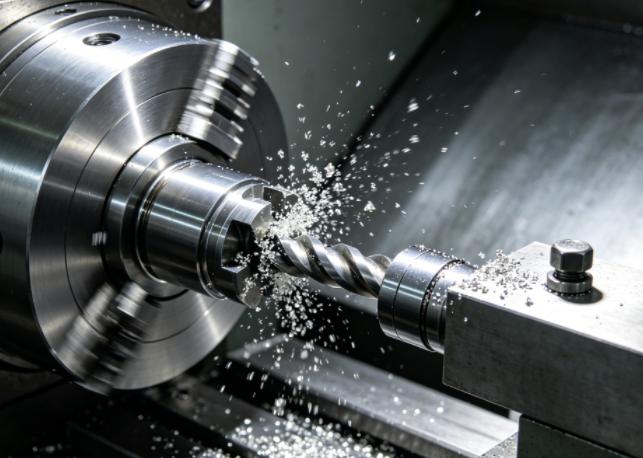
Precision Turning and Milling Capability
As most aerospace parts comprise shafts, thin-walled sections, and high strength joints, therefore, they demand a highly stable machining capability.
High-quality suppliers employ rigid CNC lathe and precise machining centers to guarantee consistent dimensions throughout the entire process without errors due to thermal expansion or vibrations.
Highly Advanced Inspection Capability
In the field of aerospace engineering, the capability to machine a part is what makes a manufacture capable of producing it; however, the capability to inspect the part is what makes it useful.
Well-established manufactures invest in highly advanced inspection systems such as CMM, optical measurements, laser scanning, and surface roughness measurements.
Extensive Material Processing Experience
Aerospace materials vary significantly in machinability.
For example:
- Aluminum alloys (6061, 7075) require excellent surface finish control
- Titanium alloy (Ti-6Al-4V) generates heat and is difficult to machine
- Inconel 718 causes severe tool wear
- Engineering plastics (PEEK, Ultem) require deformation control
- Experienced manufacturers adjust tool paths, cutting speeds, and cooling strategies accordingly.
Surface Finishing and Post-Processing Capability
Aerospace components often require surface treatments such as anodizing, passivation, sandblasting, hard coating, nickel plating, and functional coatings to improve corrosion resistance, wear resistance, and fatigue life.
Integrated process management helps avoid dimensional deviations caused by secondary setups.
Aerospace Parts Commonly Manufactured by CNC Machining Companies
CNC machining is used to produce a wide range of critical aerospace components:
| Component Category | Typical Parts | Key Manufacturing Challenges |
| Engines & Propulsion Systems | Turbine blades, blisks, fuel nozzles, turbine pump housings | Complex freeform surfaces, high-temperature alloys, tight surface roughness requirements (Ra 0.4–0.8 μm) |
| Airframe & Structural Parts | Wing ribs, landing gear brackets, beams, bulkheads | Large size, thin-wall deformation, high material removal rate |
| Control & Hydraulic Systems | Valve bodies, actuators, manifolds, sensor housings | Micro internal channels, sealing precision, ±0.0025 mm tolerances |
| Electronics & Satellite Enclosures | Avionics housings, radar structures, waveguides | EMI shielding, heat dissipation, lightweight design |
Certifications Required for Aerospace CNC Manufacturers
Aerospace machining suppliers must comply with strict certification systems:
AS9100 Quality Management System
AS9100 is the most important aerospace quality certification, based on ISO 9001 with additional aerospace-specific requirements. It demonstrates strong process control, risk management, and traceability.
Material Traceability System
Every batch of aerospace material must be traceable, including supplier information, heat numbers, material certificates, and heat treatment records.
First Article Inspection (FAI)
FAI verifies that a new part fully meets design and process requirements before mass production begins.
How to Evaluate Precision Aerospace CNC Machining Parts Manufacturers
When selecting a supplier, price should never be the only deciding factor. In aerospace manufacturing, reliability, consistency, and process control are far more important than low-cost production. Key evaluation criteria include the following:
Experience in Aerospace
Suppliers with proven experience in the aerospace industry are already versed in the standards, audit processes, and documentation required by the industry. They save on trial-and-error costs and increase the chances of first-time approval. They can also predict any risk that may arise during manufacturing.
Precision Manufacturing Capacity
While a machine may have certain capabilities, what is essential in the end is whether a manufacturer can deliver consistent precision throughout the entire production cycle. Aerospace parts usually need stability over time. Therefore, it is important for a capable supplier to prove repeatability using inspection records and process capability (Cp/Cpk).
Advanced Equipment
The modern aerospace machining process uses five-axis machining centers, CNC turning-milling machining centers, and fixtures to complete complicated shapes using a smaller number of setups, which will minimize errors from multiple setups. But just owning state-of-the-art equipment is not enough—how well the equipment is programmed and maintained is very important too.
Complete Quality System
A highly-developed aerospace supplier uses a completely developed quality system for all stages of manufacturing. This usually includes checking of incoming materials, in-process quality control, final inspection, and sophisticated measurements like those made by CMM. FAI (First Article Inspection) is very important to guarantee that the produced part corresponds with the engineering drawing prior to full-scale production.
Flexibility in Production Capabilities
When it comes to aerospace products, the process may go from developing a prototype to validation through limited batch manufacturing. A company must be flexible to cover all of these aspects without compromising quality. Flexibility reduces lead times while ensuring consistent quality throughout the whole process.
Capability for On-time Deliveries
In an aerospace program, late arrival of one element impacts the entire installation process. It is important for the production process, as well as the capacity and project management capabilities of the company, to show their importance in terms of on-time deliveries.
Common Challenges in Aerospace CNC Machining
Even with modern CNC technology and experienced engineers, there are some common problems in aerospace machining that need to be taken into consideration:
Thinner Wall Distortion
The thin walls of aircraft parts tend to bend easily due to machining stresses. Stress relief from material during machining and force exerted by the tools make them prone to deformation. To avoid these problems, multi-operation machining techniques are used along with symmetrical paths and low-stress fixturing.
High Material Cost Risk
Materials like titanium alloys and Inconel for aerospace applications are very expensive. Any error in machining operations at later stages can cause huge losses for the company. To avoid any such loss, companies depend upon process simulation and toolpath verification as well as in-process inspection.
Tool Wear and Work Hardening
Tools wear out faster when machining difficult materials. The surface layer can sometimes become hard due to the work-hardening effect. Once the tools wear out, they can cause damage to precision parts. In order to avoid this, companies use monitoring of the life of tools and optimize machining conditions.
Conclusion
With the development of the aerospace industry, there will be a rising need for precision parts. Choosing an experienced aerospace CNC machining manufacturer that possesses great quality systems and capability means more than enhancing product quality; it also means less project risk and more competitiveness.
For aerospace manufacturers, suppliers are not just service providers, they are critical partners in product success. Building long-term cooperation with reliable manufacturers is key to maintaining an advantage in the highly competitive aerospace market.
If you are looking for a CNC machining supplier, KENENG is your trusted choice.