
How Material Selection Affects Stamping Parts Quality?
Material selection remains one of the key drivers in how good stamping parts turn out. The characteristics of the chosen material has direct influence on formability, dimensional accuracy, surface finish, wear resistance, and overall performance of the stamped components.
Selecting suitable materials for metal stamping parts means you really need to look at mechanical properties, application requirements, manufacturing conditions, and cost considerations. If the material is not a good match, you can get defects, production expenses rise, and product dependability drops. But when the material decision is made with care, manufacturers can achieve consistent quality and efficient production for metal stamping parts.
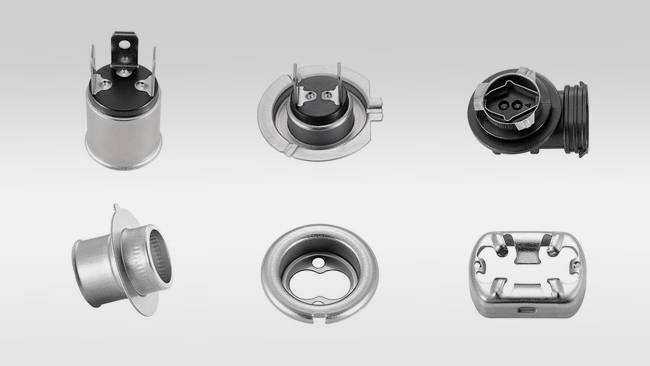
Table of Contents
Why Material Selection is Important for the Manufacturing of Stamping Parts
During the stamping process, metal sheets go through several operations, like cutting, bending, punching, forming, and deep drawing. Each step applies its own set of stresses on the material and even a little mismatch can matter. If the chosen material cannot cope with these forces, you may see cracking, unwanted deformation, too much springback, or even dimensional inconsistency in the final part.
To get high-quality stamping parts, the material has to have the right behavior, not only for the product design but also for the way manufacturing is carried out. For instance, a part with an intricate, multi-feature geometry often needs a material with strong ductility, while a structural component intended for heavy service usually benefits from greater strength and hardness.
When material selection is done correctly, production tends to stay steadier. Scrap goes down, tools suffer less wear, and finished custom stamping parts more consistently match the required design specifications.
Key Aspects of Material Selection Affecting the Quality of Stamping Parts
1. The Relationship Between Material Properties and Stamping Performance
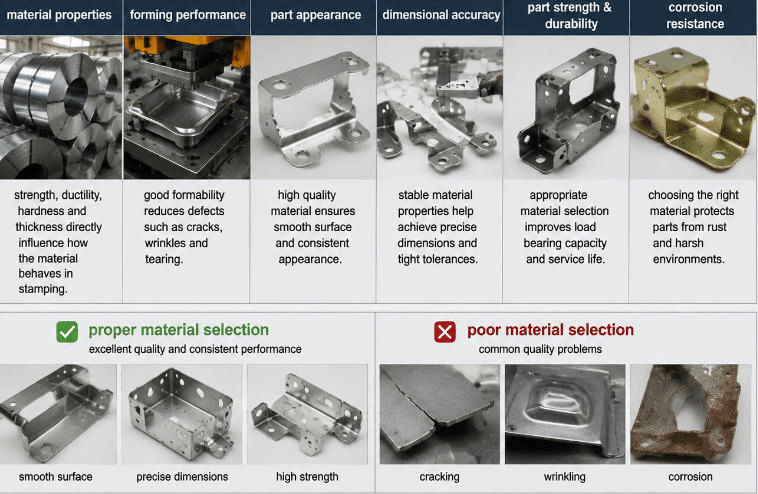
Every metal material has its own physical-mechanical traits, which kind of determine how it behaves during stamping, and what happens to the sheet while it is being processed. Stuff like tensile strength hardness, ductility, elasticity, and even thickness affect how easily a sheet metal can be cut, bent, drawn, or shaped in practice.
| Material Property | Impact on Stamping Process | Effect on Stamping Part Performance | Quality Considerations |
| Tensile Strength | Determines the force required for forming and the material’s ability to withstand stress during stamping | Higher tensile strength improves load-bearing capacity and durability of finished parts | Excessively high strength may increase forming difficulty and require stronger tooling |
| Yield Strength | Influences when permanent deformation begins during bending and forming operations | Affects dimensional stability and structural performance of stamped parts | Proper yield strength helps prevent unwanted deformation during service |
| Ductility | Determines how much the material can stretch or bend before cracking | Improves the ability to create complex shapes and deep-drawn components | Low ductility may cause cracks, splits, and higher scrap rates |
| Hardness | Affects cutting, forming force, and tool wear during stamping | Provides wear resistance and improves part durability | Excessive hardness can reduce formability and accelerate die wear |
| Elasticity / Springback Behavior | Influences how much the material returns to its original shape after forming | Impacts dimensional accuracy and assembly performance | Proper material selection helps reduce springback-related defects |
| Fatigue Strength | Determines resistance to repeated loading during product use | Improves long-term reliability of stamped components | Essential for parts exposed to vibration, impact, or cyclic stress |
| Thermal Properties | Affect performance during high-temperature applications and heat-related processes | Helps maintain part stability in demanding environments | Important for aerospace, automotive, and industrial components |
| Electrical Conductivity | Influences material selection for electrical stamping applications | Ensures efficient electrical performance and heat transfer | Critical for connectors, terminals, and electronic components |
2. Material Strength and Part Durability
The strength of the chosen material has a direct impact on both performance and the service life of stamped parts. When the material is stronger, the resulting components usually withstand heavier loads, sudden impacts, and daily mechanical stress without failing early.
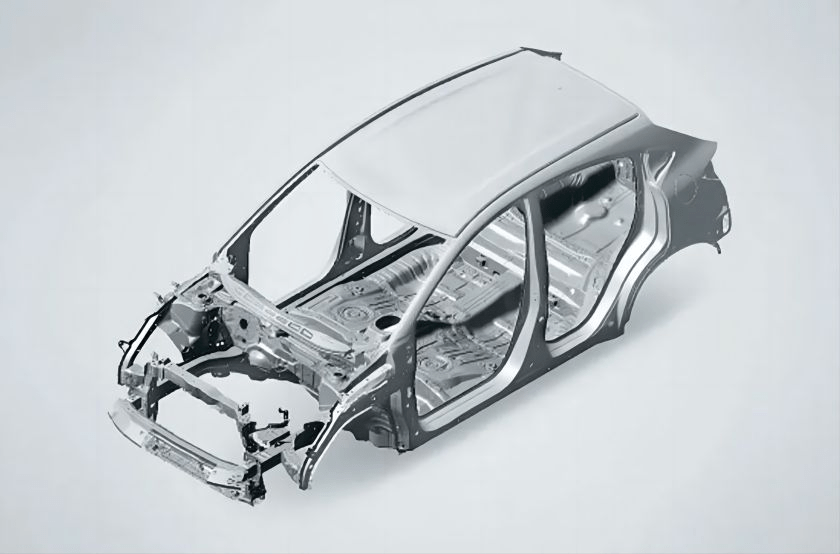
In automotive applications, stamped structural parts often need high-strength steel to improve safety, while also helping reduce vehicle mass. But there is a catch, higher-strength materials can bring manufacturing obstacles too, because they typically demand stronger forming forces, and they need more precise control of stamping parameters.
If the material strength ends up being too low for the intended use, the finished part may start to deform while it is operating. On the other hand, if the strength is higher than actually needed, manufacturers often run into trouble getting the correct geometry, plus maintaining steady production efficiency. Because of that, the right strength level really has to be chosen, to balance real performance with manufacturability.
3. Material Ductility and Forming Quality
Ductility is one of the most important factors that influence stamping quality, and it also tends to decide what happens when the forming goes on. It refers to how much a material can undergo plastic deformation before it fails.
In stamping operations like bending, deep drawing, and embossing, the sheet typically sees stretching alongside compression. When the material has better ductility, it can absorb those stresses more easily, which lowers the probability of issues like cracks, splitting, and wrinkling.
Low-ductility materials sometimes need more processing steps, adjusted tooling layouts, or slower production speeds, so failures do not show up. When manufacturers choose materials with the right bending behavior, they can raise process steadiness and manage to create more intricate part geometries.
4. Impact of Material Thickness on Precision
Material thickness matters for dimensional accuracy, mechanical strength, and surface finish. If the sheet thickness varies, the forming flow becomes less consistent, and that can cause differences from one stamped part to the next.
Thicker materials usually bring better strength and stiffness, though they also call for larger stamping forces and more robust tooling. They may further raise manufacturing expenses because of the extra material usage.
Thinner materials can reduce weight and material costs but may create challenges related to deformation, wrinkling, and handling during manufacturing. Maintaining consistent thickness throughout the material supply is essential for producing high-quality stamping parts with reliable dimensions.
5. Choosing Materials Based on Application Requirements
Different fields and product areas have different expectations for how a stamping part should behave, and that directly affects what material you pick.
Many automotive stamped parts rely on high-strength steel or advanced high-strength steel to boost safety while reducing vehicle weight. The structural pieces need to endure large mechanical stresses, yet still hold precise dimensions, even under repeated load.
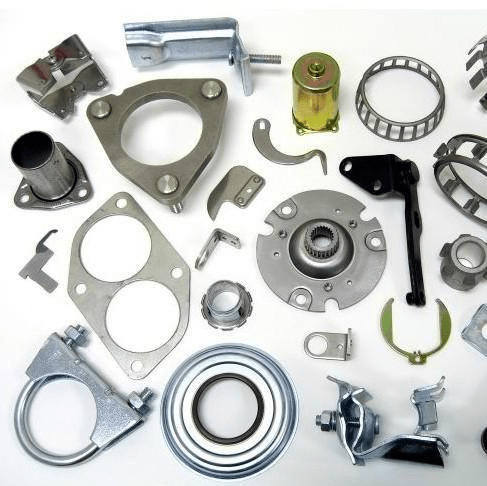
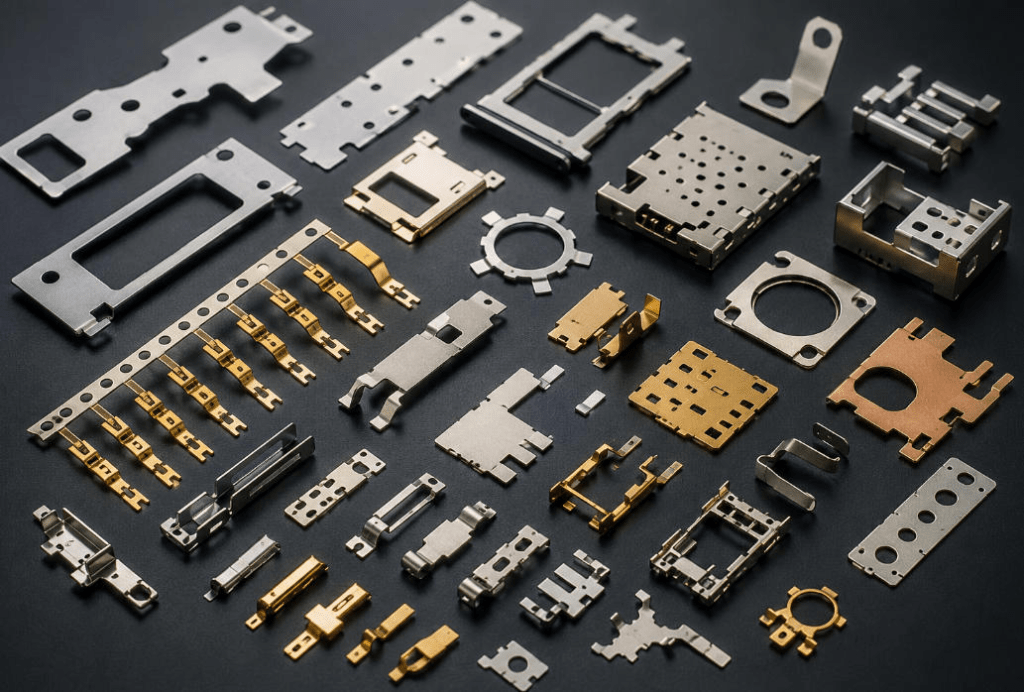
For electronic stamped components, materials like copper, brass and aluminum are commonly chosen. They offer strong electrical conductivity, also they tend to resist corrosion well, which matters for long-term performance.
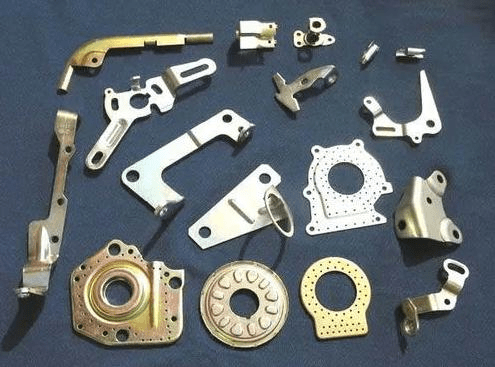
Medical and food-processing equipment often relies on stainless steel due to its durability cleanliness, and resistance to chemical corrosion, even in tough environments.
In industrial machinery, components sometimes need materials that bring together strength, wear resistance, and durable reliability while working under demanding conditions, with steady performance over time.
6. Surface Quality and Appearance of Stamped Parts
Material selection also influences the surface finish of stamped components. When a case or housing needs an attractive appearance, for example electronic enclosures, ornamental pieces, or everyday consumer products, manufacturers typically choose alloys with very good surface characteristics.
If the raw material is low quality, it can include surface imperfections, such as tiny inclusions, scratches, or coatings that are unevenly spread. After stamping these issues can become more visible, and they tend to reduce the overall product appearance, plus they may force extra finishing steps.
Materials that have a good surface quality make it easier for manufacturers to get smoother stamping outcomes and they often need less polishing, coating, or other follow-up operations.
7. Material Compatibility with Stamping Tools
What happens between the material and the stamping tools matters for tool life, how fast you can run production, and how consistent the parts stay. When the material is harder, it can add friction and raise the wear rate on dies, punches, and other tooling parts.
For high-volume manufacturing, you really want to select a material that balances performance needs with tool compatibility. If tool wear becomes excessive, you can see dimensional drift, surface imperfections, and higher maintenance expenses.
Even with proper lubrication and adjusted stamping settings that reduce some headaches, a suitable material choice is still the base step for protecting tooling performance.
8. Corrosion Resistance and Long-Term Performance
For sections that are exposed to moisture, chemicals, or rough surroundings, corrosion resistance really matters in the material choosing process. Stainless steel, galvanized steel, and specific aluminum alloys tend to give more solid protection from corrosion.
A stamped part might look very good in terms of dimensional accuracy, yet it can still fail early if the chosen material can’t handle the real operating environment. When you select corrosion-resistant materials, the product stays dependable longer, and the need for maintenance drops.
In areas like marine equipment, medical devices, and outdoor machinery corrosion-resistant stamping materials are often required to hit long-term performance expectations.
9. Material Selection and Cost Efficiency
Even if premium materials can deliver better performance, they also end up affecting manufacturing costs. Material price, supply stability, processing difficulty, and scrap generation all need to be reviewed before deciding on stamping materials.
A low-cost material might look appealing at first but then can lead to bigger expenses later because of higher scrap rates, extra processing steps, or a shorter service life. Meanwhile, going too far on price with an overly expensive material can also be a waste, if it exceeds what is actually needed for real performance.
Choosing materials well is mainly about finding the right equilibrium, meaning top-level quality, smooth manufacturing flow, and the real total cost across the whole production run.
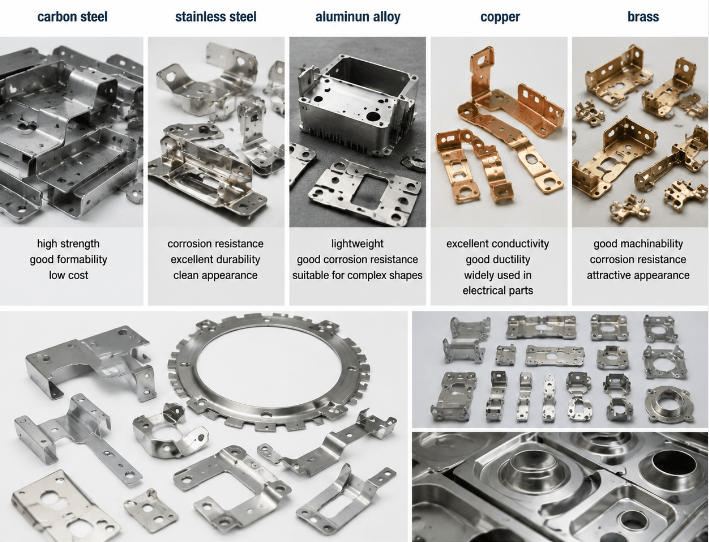
Common Materials Used for Stamping Parts
| Material Type | Key Properties | Advantages for Stamping | Common Stamping Applications |
| Low-Carbon Steel | Good ductility, high formability, moderate strength, easy to process | Excellent forming performance, low cost, suitable for complex shapes | Automotive brackets, appliance parts, general hardware, enclosures |
| High-Strength Steel (HSS) | Higher tensile strength, improved load-bearing capacity, greater hardness | Produces strong and lightweight components, improves structural performance | Automotive structural parts, safety components, industrial equipment parts |
| Advanced High-Strength Steel (AHSS) | Very high strength-to-weight ratio, good energy absorption | Supports lightweight designs while maintaining strength and crash resistance | Vehicle body structures, reinforcement parts, chassis components |
| Stainless Steel | High corrosion resistance, durability, good surface finish | Long service life, clean appearance, resistance to harsh environments | Medical equipment, food-processing parts, kitchen appliances, marine components |
| Aluminum Alloys | Lightweight, corrosion-resistant, good electrical and thermal conductivity | Reduces product weight, suitable for transportation applications | Aerospace parts, automotive panels, electronic housings |
| Copper/Brass | Excellent electrical conductivity, high thermal conductivity, good ductility | Ideal for electrical and heat-transfer applications | Electrical terminals, connectors, conductive components |
| Titanium Alloys | High strength-to-weight ratio, excellent corrosion resistance, heat resistance | Provides outstanding performance in demanding environments | Aerospace components, medical devices, high-performance equipment |
| Nickel Alloys | High temperature resistance, corrosion resistance, strong mechanical performance | Maintains reliability under extreme conditions | Aerospace parts, chemical equipment, power generation components |
| Galvanized Steel | Steel base with protective zinc coating, corrosion resistance | Provides affordable corrosion protection and good durability | Automotive panels, outdoor equipment, construction components |
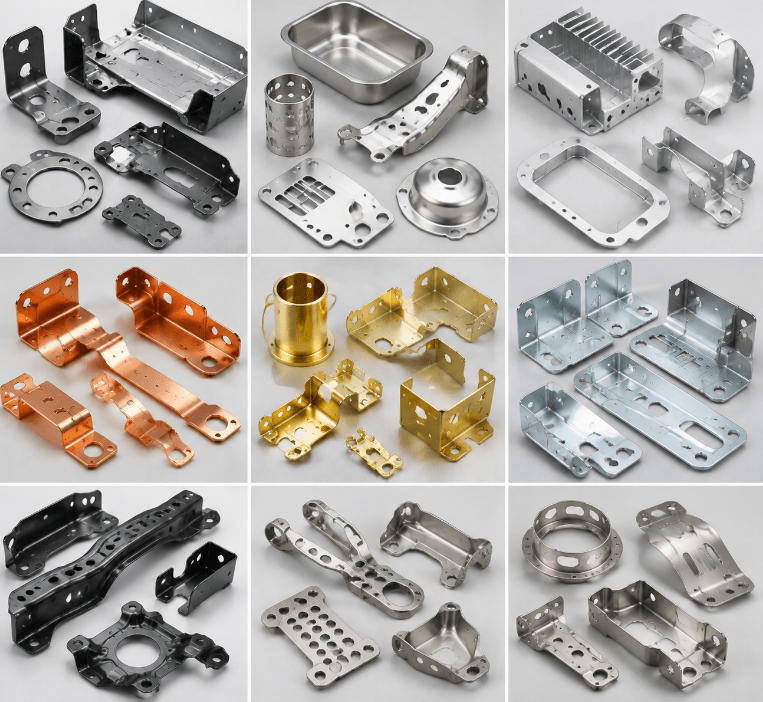
The Role of Material Testing in Quality Control of Stamping Parts
Before any production starts, material testing lets manufacturers check whether the chosen stock really matches the design expectations. Tests like tensile testing, hardness checks, thickness measurement, and surface inspection can give practical insight into how the material behaves during use.
Using material that stays consistent can reduce production swings, and it helps stop those surprise stamping failures. If you work with trustworthy material suppliers, and keep a firm incoming inspection routine, then you are more likely to end up with stable stamped part quality.
Final Words
Selecting the right material has a direct effect on the quality, performance, and manufacturing success of stamping parts. Factors like strength, ductility, thickness, surface condition, resistance to corrosion, and compatibility with stamping tools all play a role in what the finished product looks like and does.
A carefully selected material lets manufacturers make accurate stamped components that last, and they can also keep costs under control while lowering defects and other production challenges. When you look at both what the application needs and the real manufacturing environment, companies can tune their stamping process and get better results overall.