
Stainless Steel CNC Machining: Processes, Challenges and Best Practices
In modern manufacturing, stainless steel CNC machining has become a core solution for industries such as aerospace, medical devices, food processing, and automation equipment due to its outstanding corrosion resistance, mechanical strength, and attractive appearance.
However, stainless steel is far from an “easy-to-machine” material. Its high toughness and work-hardening characteristics require deep technical expertise to achieve high precision and excellent surface finishes. In this article, we will explore the key aspects of stainless steel CNC machining from a professional perspective, helping you optimize your designs and choose the most suitable machining solutions.
Table of Contents
Why Choose CNC Machining for Stainless Steel?
Stainless steel is a special type of alloy steel, which comprises at least 10.5% chromium content forming a protective oxide film over the metal surface. This makes stainless steel a highly resistant metal with respect to corrosion and provides high longevity under all conditions. There are various benefits in using CNC machining for stainless steel processing:
Ultra-Fine Precision
The latest multi-axis CNC machine is able to maintain accuracy at ±0.005 mm, allowing dimensional precision and repeatability. High precision is necessary when manufacturing parts for applications like aerospace, medical devices, and automotive industry as even slight deviation may lead to undesirable results.
Complicated Geometry
By applying the modern technology of CNC milling, manufacturing products with intricate geometries is no longer an issue. With the capability of machining with 3 axes, 4 axes, and 5 axes, it is now feasible to produce stainless steel parts of complicated geometry that cannot be machined through the regular approach.
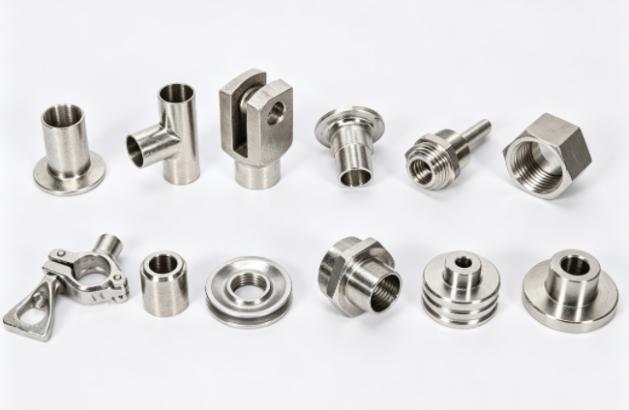
Complex Geometries
CNC milling can easily manufacture shapes with complicated holes, threads, curves, and other geometries. With the advanced capability of machining with 3 axes, 4 axes, and 5 axes, it becomes possible to make complex stainless steel parts which cannot be manufactured using the ordinary machining method.
Material Consistency
Compared with casting or forging, CNC machining provides more stable and consistent physical properties throughout the part. It is particularly suitable for small-batch, high-precision customized production, where consistency, reliability, and surface quality are critical requirements.
Common Stainless Steel Grades and Their Machining Characteristics
Before starting a CNC machining project, selecting the correct stainless steel grade is the first step in controlling both cost and quality.
1. Austenitic Stainless Steel
304 / 304L
The most commonly used stainless steel grade, offering excellent corrosion resistance and weldability. Its machinability is moderate, but it tends to work harden under improper cutting parameters.
316 / 316L
Comprises molybdenum that gives enhanced resistance to chloride corrosion. Used extensively in medical devices and marine applications. The difference with 304 is that 316 tends to stick to tools more often and requires high-performance coolant.
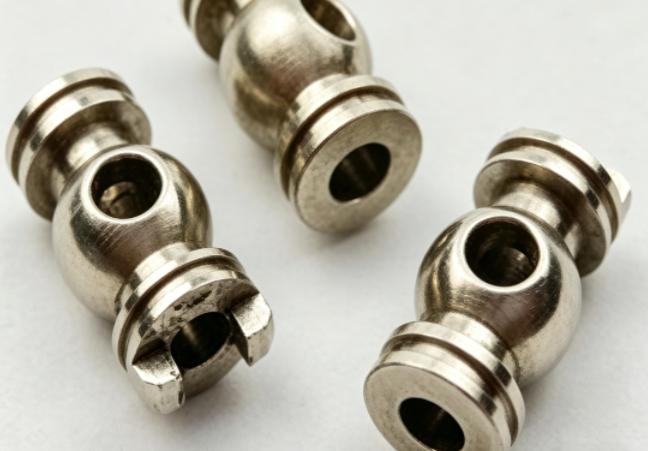
2. Martensitic & Ferritic Stainless Steel
416 / 430
416 is known as a “free-machining stainless steel” because sulfur is added to improve machinability. Its machining efficiency is significantly higher than 300-series stainless steels, making it suitable for high-volume fastener production.
3. Precipitation Hardening Stainless Steel
17-4 PH
This type of metal is highly resistant to fracture and scratching and finds extensive applications in the aircraft manufacturing industry and oil/gas industry. The behavior of its cutting characteristics significantly alters after being heat treated, which necessitates skilled knowledge about machining operations.
Stainless Steel CNC Machining Processes
Considering the properties of stainless steel, like strength, corrosion resistance, and low thermal conductivity, the processes of CNC machining causes fast tool wear and overheating issues. That is why better approaches and parameters are needed when carrying out CNC machining on stainless steel.
1. CNC Turning
CNC turning is mainly used for cylindrical, shaft-type, and rotationally symmetrical parts such as connecting shafts, sleeves, and flanges.
By rotating the workpiece at high speed while cutting with precision tools, CNC turning achieves accurate dimensional control and excellent surface finishes, making it ideal for mass production.
2. CNC Milling
CNC milling is most efficient in processing complex geometries like planes, grooves, convex and concave surfaces, and even multifaceted objects.
By utilizing 3-axis, 4-axis, or 5-axis CNC machines, highly accurate customized parts can be produced which are common in the field of medicine, aviation, automobile, and industrial equipment manufacturing.
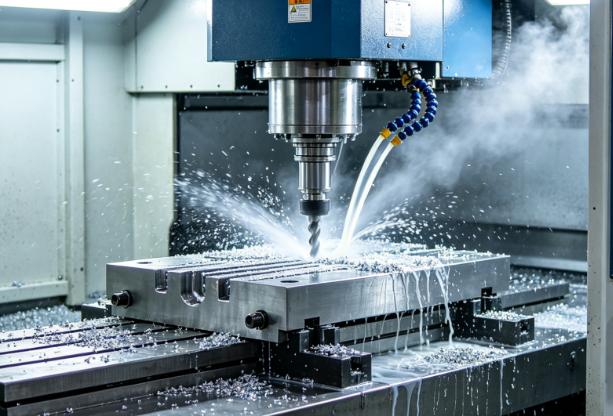
3. Drilling and Tapping
Drilling operations involve drilling precise holes while tapping is done to make internal threads.
As a result of stainless steel being tough, the process parameters of spindle speed, feed rate, and cooling fluids should be monitored carefully to avoid burring.
4. Surface Finishing
After machining, additional surface treatments are often applied to improve performance and appearance. Common finishing processes include:
- Polishing: Improves surface smoothness and creates a refined appearance.
- Passivation: Enhances oxidation resistance and corrosion resistance.
- Sandblasting: Produces a uniform matte texture and improves surface adhesion.
Proper post-processing not only improves product quality but also extends the service life of components.
Applications of Stainless Steel Parts in CNC Machining
Due to the unique characteristics of stainless steel such as corrosion resistance, good performance, and strength, stainless steel CNC parts have found wide application in many advanced industrial fields.
1. Aerospace
Stainless steel materials are often employed in aerospace for structural components, connections, and fastening parts.
2. Medical Equipment
The use of stainless steel materials in medical equipment for surgical tools, equipment parts, and implants has been widespread.
316L stainless steel is particularly useful due to its superior biocompatibility and corrosion resistance.
3. Automotive Industry
Stainless steel CNC components are extensively used in engine systems, exhaust systems, transmission structures, and support components.
Its heat resistance and wear resistance help improve durability and operational stability.
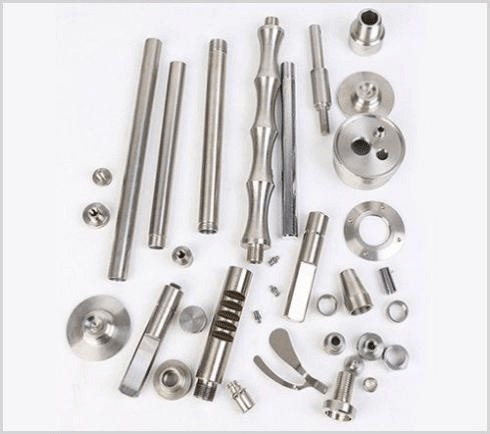
4. Marine Engineering
Marine environments contain high salt levels and humidity, demanding excellent corrosion resistance.
Therefore, stainless steel is commonly used in ship equipment, offshore platforms, structural connectors, and marine machinery components.
5. Food processing Machines
The materials such as 304 and 316 stainless steels are extensively used in food processing machinery and other food equipment such as conveyors and holding tanks because of their cleanliness and ability to resist corrosion.
These surfaces which are easy to clean meet the necessary safety requirements for handling foods.
6. Industrial Machinery
Industrial machinery contains stainless steel CNC machine parts which include pump enclosures, valves, mechanical components, and automation machines.
Technical Challenges with Stainless Steel CNC Machining
If you regularly experience broken tools or burning surface while machining the material, consider the following reasons:
1. Work Hardening
When working with stainless steel, it hardens quickly due to the heat and pressure from the cut. If the feed is insufficient, then the material burns because of the rubbing of the tool, making its hardness rise sharply and further machinability difficult.
2. Thermal Conductivity Problems
Stainless steel poorly transfers heat. As a result, most of the heat remains at the point of contact with the cutting edge. It leads to fast softening of the tool and inaccuracies.
3. Poor Chip Removal
The ductility of austenitic stainless steel leads to formation of long continuous chips that can damage the machined piece or get wrapped around the spindle.
Professional Strategies for Optimizing Stainless Steel Machining
Machining operations on stainless steel require sophisticated techniques because of its properties that include hardening, heat generation, and quick wearing of tools.
1. “Low Speed, High Feed” Technique
In stainless steel machining, lower spindle speed coupled with high feed speed is usually advised.
In this way, there will not be any unnecessary heat generation while also making sure that the correct cutting takes place without the cutting tool coming into contact with the hardened parts.
2. High-Pressure Cooling Systems
The high-pressure cooling system involves pumping of the coolant directly into the cutting area to remove heat fast and minimize tool wear and part distortion.
Apart from that, the system enhances chip formation and removal, thus avoiding chip entanglement.
3. Coated Cutting Tools
When machining stainless steel, coated tools made of carbide with high temperature resistant coatings like AlTiN (Aluminum Titanium Nitride) are commonly used.
Coated tools have better heat resistance, wear resistance, and anti-oxidation, thus ensuring good stability at high speed cutting operation.
4. Rigid Fixturing
Stainless steel is known to create strong cutting forces, which means that vibration may easily happen during the process of machining.
For this reason, machine tools, fixturing devices, and the clamping system used for holding workpieces should have outstanding rigidity.
Conclusion: Seeking a Right Stainless Steel CNC Machining Partner
Stainless steel CNC machining does not only refer to a type of manufacturing, but also an art of engineering. This calls for profound knowledge and expertise in terms of material characteristics and machining parameters.
If you are seeking for a dependable partner that can supply you high-quality and high-precision stainless steel parts, look no further than us, KENENG, that offers you one-stop service from DFM optimization to product shipment.
FAQs about Stainless Steel CNC Machining
Q: Why can’t my stainless steel parts achieve the required surface finish?
This is usually related to tool wear or mismatched feed rates. It is recommended to inspect the tool coating and increase coolant pressure appropriately.
Q: Why is 316 stainless steel more expensive to machine than 304?
Because 316 is harder and more adhesive during cutting, it causes greater tool wear and generally requires machining speeds about 20% slower than 304.