
How High-temperature Alloys are Used for CNC Parts?
A critical factor in CNC machining is material choice, specially when the components are, in the course of operation, sitting under high temperatures. High-temperature alloys have came up as essential material options for CNC parts that need to survive extreme heat while also keeping mechanical integrity and overall performance steady.
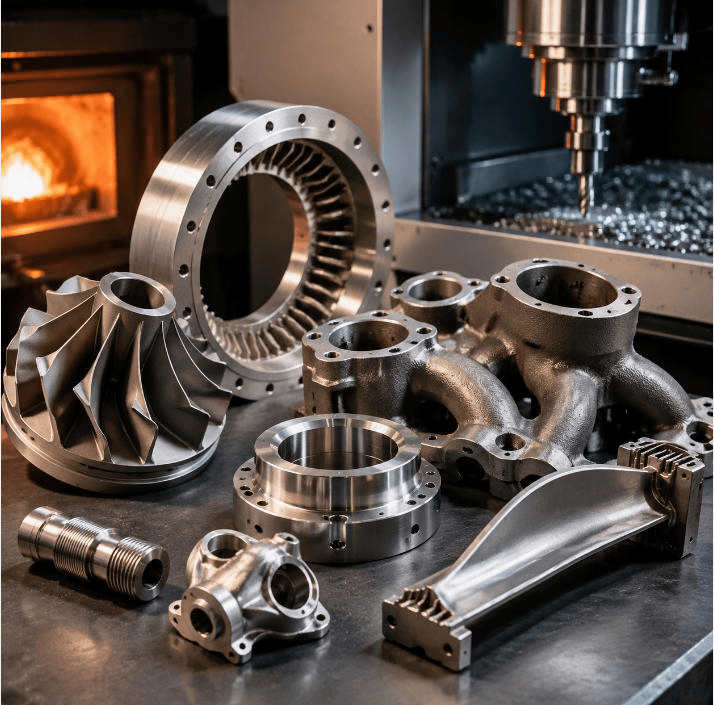
Table of Contents
Common Types of High-temperature Alloys
High-temperature alloys, often referred to as heat-resistant alloys, are specially engineered materials capable of retaining their mechanical properties under elevated temperatures.
The following chart provides common types of high-temperature alloys used for CNC parts.
| Alloy Type | Typical Composition | Maximum Operating Temperature | Key Properties |
| Inconel (Nickel-based) | Nickel, Chromium, Iron, Molybdenum | 980–1,093°C (1,800–2,000°F) | Excellent oxidation & corrosion resistance, retains strength at high temperatures |
| Hastelloy (Nickel-based) | Nickel, Molybdenum, Iron, Cobalt | 870°C (1,600°F) | High corrosion resistance in oxidizing & reducing environments, good mechanical strength |
| Stellite (Cobalt-based) | Cobalt, Chromium, Tungsten, Carbon | 870–980°C (1,600–1,800°F) | High wear resistance, maintains hardness at high temperatures |
| Titanium Alloys (Ti-6Al-4V) | Titanium, Aluminum, Vanadium | 600°C (1,100°F) | High strength-to-weight ratio, corrosion resistance, moderate high-temperature strength |
| Tool Steels (H-series, A-series) | Iron, Carbon, Chromium, Vanadium | 500–600°C (932–1,112°F) | Exceptional hardness and wear resistance, moderate heat resistance |
| Stainless Steel (Heat-resistant grades, e.g., 310, 321) | Iron, Chromium, Nickel | 1,000°C (1,832°F) | Good oxidation resistance, moderate strength retention at high temperature |
Advantages of Using High-Temperature Alloys as Materials for CNC Parts
Performance Under Extreme Conditions
CNC parts produced from high-temperature alloys can handle brutal operating settings that would weaken ordinary metals pretty quickly, in practice. These alloys keep their strength even after continuous heat exposure, repeated mechanical load, or thermal cycling, with little degradation. This advantage matters a lot in aerospace and power generation, because components like turbine blades, exhaust systems, and heat exchangers run under high temperatures for long stretches of time. When the material resists warping, softening, or cracking, CNC parts stay reliable, and they meet performance and safety benchmarks throughout their service life.
Resistance to Oxidation and Corrosion
In addition to thermal resistance, high-temperature alloys give exceptional protection, against oxidation and corrosion, that’s why they’re chosen more often. When temperatures rise, chemical reactions happen quicker and they can eat away at the metals, causing premature failure in the long run. These high temperature alloys are usually reinforced with elements like chromium, cobalt, and aluminum which end up forming protective oxide films right on the surface of the material. Because of that kind of resistance to corrosion and oxidation, CNC components stay dependable in harsh chemical settings, marine use, and industrial oprations with heat plus reactive materials.
Machinability and CNC compatibility
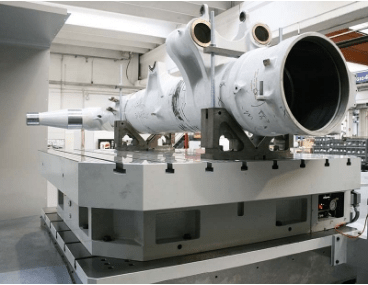
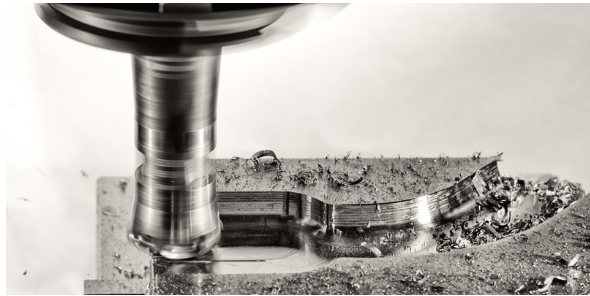
While high-temperature alloys are inherently tough , advances in CNC machining have made it possible to work with these challenging materials more efficiently and quickly. Precision toolpaths, specialized cutting tools, and controlled cooling approaches let manufacturers produce intricate designs without risking the material integrity too much. CNC simulation software can further foresee the thermal and mechanical conduct of high-temperature alloys during the machining phase, which reduces trial and error , and keeps the final quality high. Put together, advanced alloys with CNC technology enable the making of components that still hit tight tolerances and stay strong under very extreme operating conditions.

Common Applications of CNC Parts Made of High-Temperature Alloys
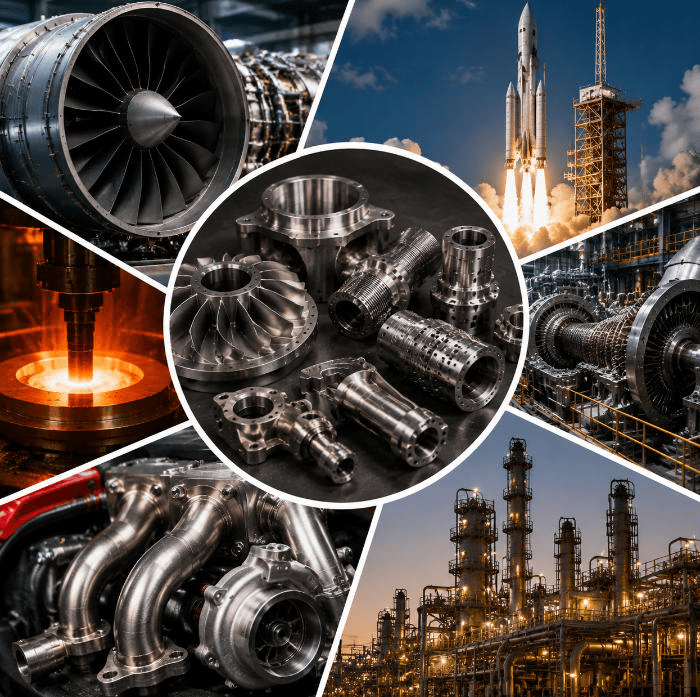
The following chart offers the main applications and reasons high-temperature alloys are chosen for CNC parts.
| Industry | CNC Part Examples | Alloy Types Typically Used | Functional Requirement |
| Aerospace | Turbine blades, exhaust systems, engine components | Nickel-based alloys, cobalt-based alloys | Maintain strength under extreme heat, resist oxidation |
| Automotive | Turbochargers, high-performance engine components, exhaust manifolds | Titanium alloys, heat-resistant stainless steels | Withstand high temperatures, retain dimensional stability |
| Energy & Power Generation | Gas turbine components, nuclear reactor parts, heat exchangers | Nickel-based alloys, cobalt-based alloys, stainless steels | Endure continuous heat and mechanical stress, resist corrosion |
| Industrial Machinery | Furnace components, molds, cutting tools | Tool steels, heat-resistant stainless steels, cobalt-based alloys | Resist warping and wear under high-temperature operation |
| Marine & Chemical Processing | Pump impellers, valves, heat exchangers | Hastelloy, nickel-based alloys | Corrosion resistance in high-temperature, chemically aggressive environments |
| Medical & Aerospace Structures | Prosthetic devices, high-performance structural parts | Titanium alloys | Lightweight, high strength-to-weight ratio, moderate heat resistance |
Key Considerations for Choosing the Appropriate High-Temperature Alloys for CNC Parts
Choosing the most suitable high-temperature alloy for CNC parts requires careful evaluation of multiple factors.
1. Understanding the Operating Environment
The first step for picking a high-temperature alloy is understanding what the CNC part will face in real use. The highest temperature the component will meet matters most. Some materials do well when the heat is moderate, but then they soften or lose strength once they are exposed to extreme temperatures. Also the environment may involve corrosive chemicals, oxidation, or repeating thermal swings. When engineers know these conditions, they can narrow down alloys that handle the thermal and chemical difficulties tied directly to the specific application.
2. Evaluating Mechanical and Thermal Requirements
CNC parts must often endure mechanical loads while running at high temperatures, so it becomes essential to look at both the mechanical needs and the thermal requirements for that particular application. In practice you need to check tensile strength, fatigue resistance, and also hardness retention at elevated temperatures. Different high temperature alloys vary in how well they can maintain these properties when they are under stress, so matching the alloy capability to the real operating demands of the component is crucial.
3. Balancing Cost and Performance
Even though high-temperature alloys deliver excellent performance, they can also demand a higher material price and more complex manufacturing. Picking the right alloy is a juggling act, performance needs, budget limits, and the real operating conditions. Engineers have to judge if the added value from a premium grade, longer service life, or stronger thermal endurance, is worth the expense for that particular application. In some situations a moderately heat-resistant option is enough, while in others you need the best performing material available, because safety and reliability can not be compromised.
4. Aligning with Industry Standards and Certifications
Certain industries like aerospace, automotive, and energy need strict adherence to standards, certifications, for materials used in critical components. In practice this means high-temperature alloys have to satisfy those regulatory requirements, so safety, quality, and performance stay consistent. When choosing an alloy, engineers should check that the material matches the right industry standards, and also that it has a history of reliable use for the specific intended job.
Advancements in CNC Machining Technologies for High-Temperature Alloys
| CNC Technology | Description | Benefits for High-Temperature Alloys | Applications |
| High-Speed CNC Milling | Uses higher spindle speeds and optimized feed rates | Reduces heat buildup, improves surface finish, increases productivity | Turbine blades, aerospace engine components |
| Cryogenic Machining | Uses liquid nitrogen or CO₂ to cool the cutting zone | Minimizes tool wear, prevents material work-hardening, improves dimensional accuracy | Nickel-based alloys, titanium alloys |
| Precision CNC Toolpath Strategies | Advanced CNC software plans tool movements to reduce cutting forces | Reduces stress on tough alloys, ensures accurate geometries | Complex aerospace and automotive components |
| Advanced Cutting Tools | Coated carbide, ceramic, and polycrystalline diamond (PCD) tools | Longer tool life, maintains sharpness, allows precise cutting of hard alloys | Cobalt-based alloys, high-strength stainless steels |
| Adaptive Machining | Real-time adjustment of feed rates and cutting speed based on material behavior | Prevents overheating, reduces tool breakage, optimizes machining efficiency | Titanium components, aerospace parts |
| CNC Simulation & Virtual Machining | Software simulates material response, cutting forces, and thermal impact | Minimizes trial-and-error, improves surface finish, reduces scrap | Prototyping and production of high-temperature alloy parts |
Final Words
High-temperature alloys are indispensable in CNC part manufacturing for use cases where heat resistance, strength, and long-lasting durability are required. Even if machining these materials brings distinct hurdles, improvements in CNC technology and material science have made it possible to create high-precision CNC parts that can endure extreme conditions. Picking the right alloy, along with a machining approach, helps ensure CNC components not only fit the design constraints but also deliver dependable operation in the harshest environments.