
How Titanium CNC Parts are Used in the Aerospace Industry?
The aerospace business needs materials plus components that bring together strength, accurate fabrication, light-weight benefits and reliability all at once. In that mix, titanium CNC parts have become the essential solution, because they give the kind of performance and long-lasting durability modern aircraft, spacecraft, and other aerospace systems really need. And when manufacturers leverage advanced CNC machining techniques, they are able to create intricate titanium pieces that still pass those strict engineering and regulatory rules the aerospace field always expects.
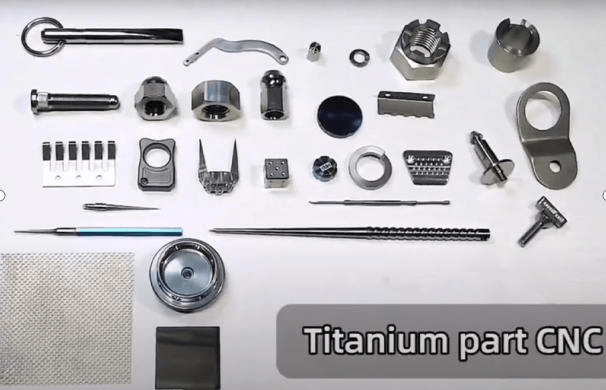
Table of Contents
Why Titanium is Ideal in Aerospace Application
Titanium is a high performance metal, it has a strong strength to weight ratio, good corrosion resistance, and impressive fatigue endurance. Because of that it fits aerospace use cases especially well, where you want to keep the mass low yet not damage the structural integrity. When you lighten aerospace components you are basically helping fuel efficiency go up, you can support more payload, and the whole aircraft or spacecraft performance tends to improve.
On top of that, titanium handles severe temperatures and tough environmental conditions. That makes it a strong pick for both structural parts and engine related components too. Its ability to resist corrosion and oxidation helps titanium pieces stay dependable even when the situation is rough, like high altitude flights, exposure to jet fuels, or contact with saline conditions during naval aviation operations.
CNC Machining for Titanium Aerospace Parts
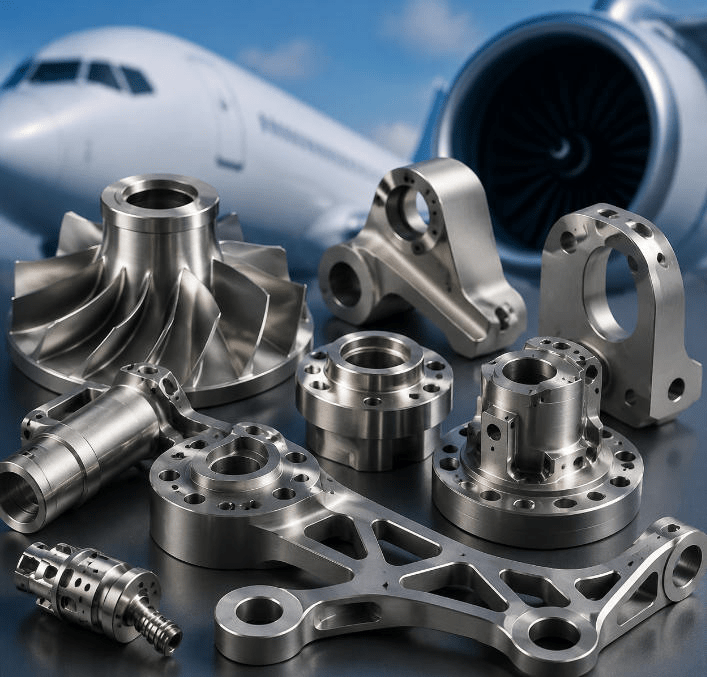
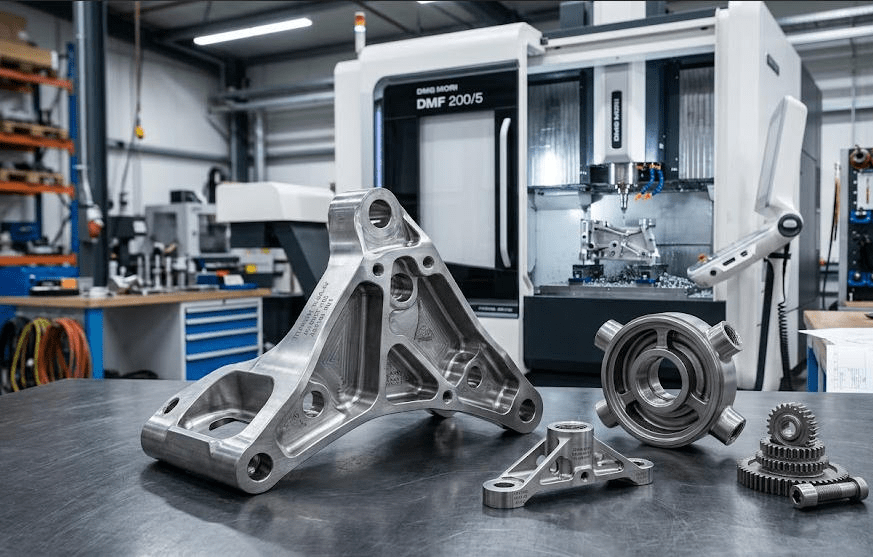
CNC machining lets aerospace manufacturers crank out titanium parts with really high precision and steady results, even when the design is pretty complex. In practice, the CNC work, like multi-axis milling, turning, and drilling, helps them shape those intricate forms and keep the tight tolerances that aerospace teams often need.
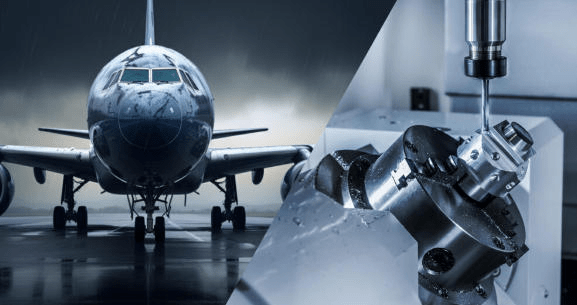
Titanium is not exactly an easy partner to cut, mainly because it doesn’t conduct heat well and it tends to work-harden as you go. Still, CNC technology gives very fine control over cutting speed, feed rate and even tool trajectories, so heat build-up is kept down, and tool wear is less of a problem. That way, you end up with high-quality CNC machining components that line up with the strict aerospace expectations.
CNC Machining Processes Used for Titanium Aerospace Parts
Producing titanium CNC parts requires specialized machining techniques due to titanium’s unique material characteristics.
| CNC Machining Process | Purpose | Advantages for Titanium |
| CNC Milling | Produces complex geometries, pockets, slots, and surface features in aerospace components | Multi-axis capability allows intricate designs; precise material removal; consistent accuracy |
| CNC Turning | Manufactures cylindrical parts such as shafts, fasteners, and connectors | High dimensional consistency; smooth surface finish; efficient for rotational parts |
| CNC Drilling | Creates precise holes for assembly, fastening, and fluid passage | Maintains exact hole diameter and alignment; reduces risk of cracking due to titanium hardness |
| CNC Grinding | Improves surface finish and dimensional accuracy | Produces fine tolerances; enhances fatigue resistance and part longevity |
| CNC Threading | Forms internal or external threads on aerospace components | Enables precise fit and high-strength joints; suitable for titanium’s work-hardening tendencies |
| CNC Slotting / Broaching | Creates keyways, slots, or specialized cut features | Allows intricate internal geometries; precise depth and width control |
| Finishing / Polishing | Refines surface quality and removes micro-burrs | Enhances fatigue resistance; ensures compliance with aerospace surface standards |
Applications of Titanium CNC Parts in Aerospace Industry
Across a wide range of aerospace applications, titanium CNC parts are vital for keeping performance steady and ensure safety.
1. Structural Components
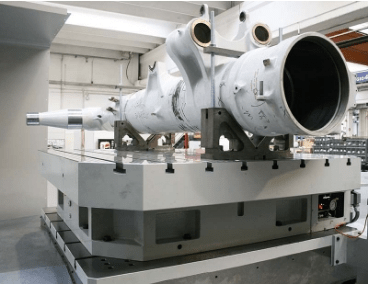
One of the biggest uses for titanium CNC parts shows up in aircraft structural components. Airframes, wing assemblies, fuselage sections, and landing gear systems often use titanium since it brings a strong strength-to-mass ratio. With CNC machining, these structural pieces can be formed with tight tolerances and tricky shapes that help aerodynamic flow while still protecting the structure. When titanium is used in the most critical areas, the overall airframe mass can drop, which then supports better fuel efficiency and higher payload capacity.
2. Jet Engine Components
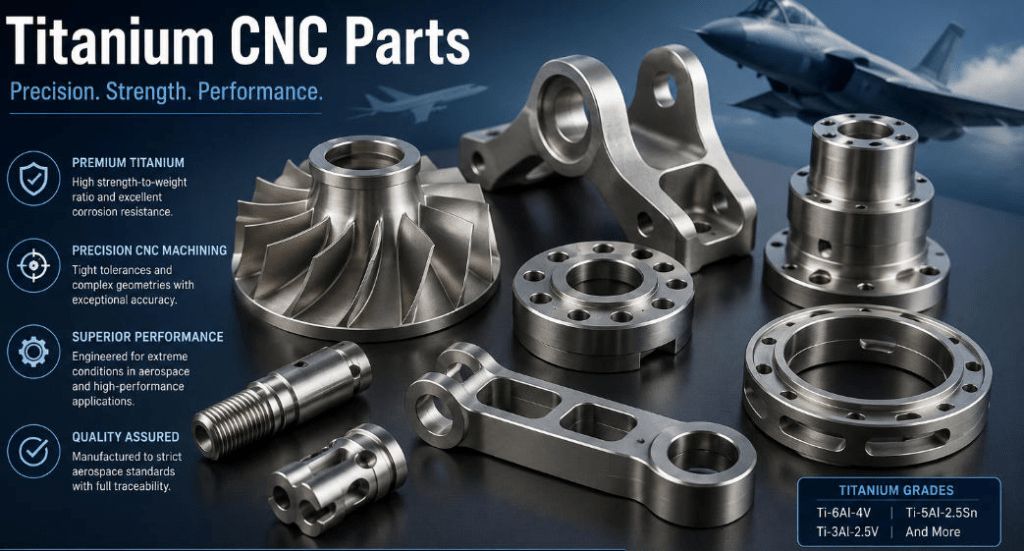
Titanium CNC parts show up a lot in jet engines, where the parts have to deal with extreme mechanical load and also very high temperatures. You will find things like compressor blades, housings, discs, and turbine elements, and they rely on titanium for its tough nature, endurance against fatigue, and thermal steadiness. CNC machining helps keep the measurements exactly right and produces smoother surfaces, which matters because airflow efficiency really depends on it, and reliability too. Using titanium inside the engine improves output, and it can also lengthen the service life, even when conditions stay demanding for long runs.
3. Fasteners and Connectors
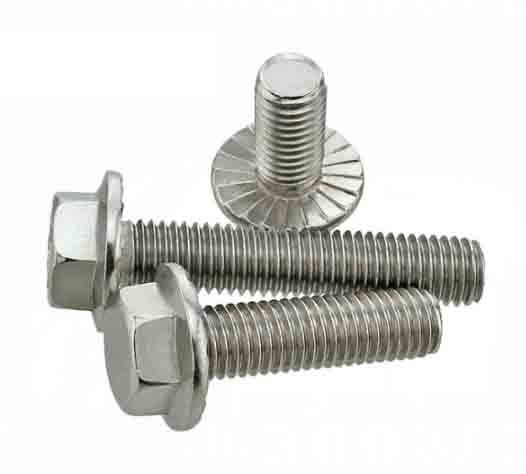
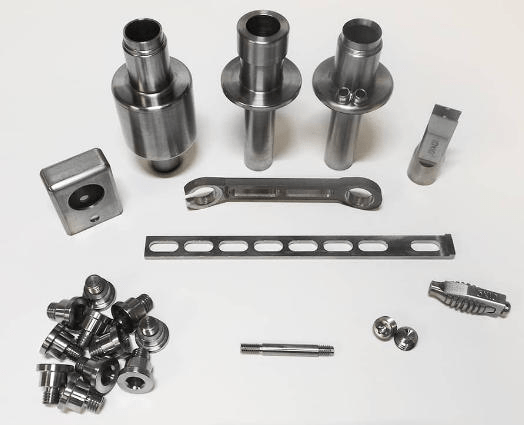
Fasteners, bolts, nuts and specialized connectors are another big area where titanium CNC parts get used. These bits and pieces take advantage of titanium’s strength, corrosion resistance, and also its capability to keep performance steady in harsh environments. Through CNC machining, each aerospace fastener is made to match the required tolerances, so you get a secure and lightweight assembly solution, for structural systems and mechanical systems too. Titanium fasteners matter for reliability, for safety, and for less maintenance over the long term in aerospace operations.
4. Landing Gear and Hydraulic Systems
Landing gear plus hydraulic systems are critical aerospace bits that take repeat stress and also get exposed to changing environmental conditions all the time. Titanium CNC parts get used in gears, shafts, brackets, and hydraulic connectors, because they offer the needed strength, fatigue resistance, and corrosion protection. With precision CNC machining, these items keep working reliably, which supports safe takeoffs landings and steady operation even when conditions get difficult.
5. Spacecraft and Satellite Applications
Titanium CNC parts are used a lot in spacecraft and satellite systems. Stuff like structural brackets frames propulsion components and other critical pieces really get a boost from titanium’s lightweight strength, plus the ability to handle extreme temperatures and space radiation. With CNC machining, engineers can build intricate, tailored shapes that match tight rules for mass, output, and safety, so mission success is more likely in low-earth orbit and also deep-space runs.
Advantages of Titanium CNC Parts in the Aerospace Industry
CNC titanium parts bring plenty of advantages that improve performance, dependability, and operating efficiency for aircraft and spacecraft systems.
1. High Strength-to-Weight Ratio
One of the most notable advantages of titanium CNC parts is how they deliver high strength-to-weight balance. Titanium offers comparable strength to steel while being meaningfully lighter, and it then cuts down on the overall mass of aircraft structures and components . That lighter feel helps fuel efficiency, supports a higher payload capacity, and improves the general flight behavior. For aerospace engineers, this means designs can be tuned to meet strength, durability, and efficiency needs, at the same time.
2. Corrosion Resistance and Durability
Titanium naturally generates a protective oxide layer that blocks corrosion, even in demanding settings like high-altitude operation, or exposure to seawater. Because of this built-in corrosion resistance, aerospace parts , from airframes to engine sections, keep their structural integrity during long service intervals . Less corrosion damage usually means fewer maintenance actions and a longer operational lifespan for important components.
3. Fatigue Resistance and Reliability
Aerospace components often get hit with repeated stress cycles during flight work. Titanium CNC parts show excellent fatigue resistance, so they can handle recurring mechanical strain without reaching failure. That resilience is especially meaningful for jet engine pieces, landing gear, and structural assemblies, where safety, and reliability really need to stay on point.
4. Precision and Consistency
CNC machining gives high accuracy and stable repeatability, so titanium parts can meet strict tolerances as well as complicated shape requirements. When manufacturing is kept accurate, each component aligns properly inside assemblies, that matters a lot for aerodynamics, structural integrity and the overall system performance. Also, CNC machining supports steady output quality across large runs, aligning with rigid aerospace benchmarks.
5. Design flexibility
CNC tech lets engineers dial in complex geometries and personalized layouts, that would be hard to pull off with traditional machining methods. Titanium CNC components can include detailed features, lighter weight cutouts, and more efficient internal frameworks, which supports new ideas in engineering design while still holding up structural strength.
6. Longevity and Cost Efficiency
When you pair titanium properties with accurate CNC machining, you get CNC parts that last, and typically lower overall lifecycle expenses. With strong durability, corrosion resistance, fatigue resistance, and very limited maintenance, titanium CNC hardware becomes a practical cost option for demanding aerospace uses.
Challenges in Producing Titanium CNC Parts for Aerospace Industry
| Challenge | Description | Impact on Aerospace Manufacturing |
| High Material Cost | Titanium is significantly more expensive than aluminum and many steel alloys due to extraction and processing complexities. | Increases production costs and requires efficient material utilization. |
| Low Thermal Conductivity | Titanium does not dissipate heat effectively during machining, causing heat to concentrate at the cutting zone. | Accelerates tool wear and can affect machining accuracy. |
| Tool Wear and Short Tool Life | The combination of high strength and heat generation places significant stress on cutting tools. | Leads to frequent tool replacement and higher machining expenses. |
| Work Hardening | Titanium tends to harden when subjected to cutting forces and heat during machining. | Makes subsequent machining operations more difficult and can reduce part quality. |
| Slow Machining Speeds | To prevent excessive heat buildup and maintain dimensional accuracy, lower cutting speeds are often required. | Increases production time and reduces manufacturing efficiency. |
| Complex Aerospace Geometries | Aerospace components often feature intricate shapes, thin walls, and tight tolerances. | Requires advanced multi-axis CNC machines and skilled programming. |
| Maintaining Tight Tolerances | Aerospace parts must meet extremely precise dimensional specifications. | Demands rigorous process control and quality assurance measures. |
| Surface Finish Requirements | Many aerospace components require superior surface quality to improve fatigue resistance and performance. | Additional finishing processes may be necessary, increasing production time. |
| Material Waste | Titanium aerospace parts are often machined from solid billets, resulting in significant material removal. | Raises material costs and reduces manufacturing efficiency. |
| Chip Control Difficulties | Titanium produces tough, stringy chips that can interfere with machining operations. | Increases the risk of tool damage and surface defects. |
| Quality and Certification Requirements | Aerospace components must comply with strict industry standards and certifications. | Requires extensive inspection, testing, and documentation. |
| Residual Stress Management | Machining operations can introduce internal stresses into titanium components. | May cause part distortion and affect long-term performance if not properly controlled. |
Quality and Compliance for Titanium CNC Parts in Aerospace Manufacturing
This quality and compliance make sure that titanium CNC parts, which are used in aerospace applications, actually meet the industry’s strict demands, for safety, performance, reliability, and traceability.
| Standard | Scope | Significance |
| AS9100 | Aerospace Quality Management System | Establishes quality control and risk management requirements for aerospace manufacturers. |
| ASTM Standards | Titanium material specifications and testing methods | Ensures material consistency and performance. |
| AMS (Aerospace Material Specifications) | Aerospace material processing and manufacturing requirements | Defines standards for titanium alloys and machining practices. |
| ISO 9001 | General Quality Management System | Supports process control and continuous quality improvement. |
| NADCAP | Special process accreditation | Verifies compliance for critical aerospace manufacturing processes and inspections. |
Final Words
Titanium CNC parts are a strong combination of top-tier material strength and precise manufacturing. With their really exceptional robustness, the lightweight benefits, plus a clear resistance to corrosion and long-lasting durability, they fit well in high-stress use cases across many different industries. Even with the reality that titanium machining can be a bit challenging, today’s CNC technologies let manufacturers produce very accurate, dependable components that still satisfy the strict expectations of modern engineering work.