
How Copper and Brass are Applied for Stamped Parts?
Among the many materials used for metal stamping, copper and brass are often chosen because they bring really strong conductivity, solid corrosion resistance, good formability, and that nice visual finish too. Because of this, they tend to work well for a lot of stamped parts where you need both real function and long-term durability, not just appearances.
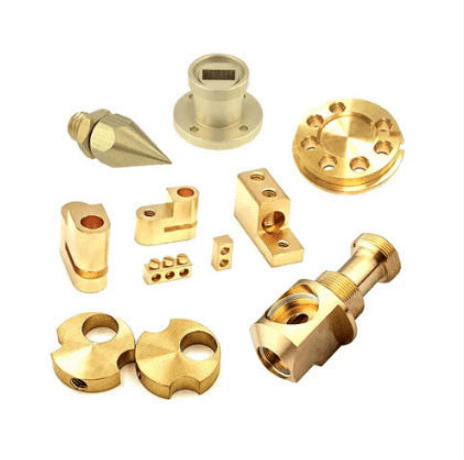
Table of Contents
Understanding Copper and Brass in Metal Stamping
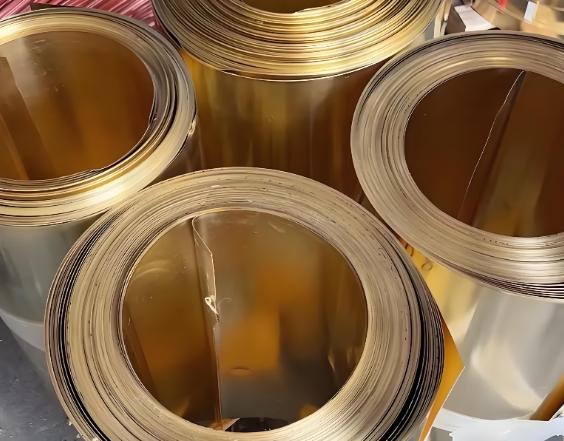
Copper is a softer metal that’s prized for its excellent electrical and thermal performance. It’s also straightforward to form, and that makes it convenient for intricate or more precision stamped parts. Brass, meanwhile, is an alloy mainly made of copper and zinc, and it gives you a mix of solid conductivity plus better strength and wear resistance, and even better machinability. Brass also shows an attractive gold-like look, so it’s commonly picked for decorative and architectural uses, even when appearance matters as much as the specs.
In actual stamping work, both copper and brass can be handled using blanking, bending, piercing, embossing, deep drawing, and progressive die stamping. This lets manufacturers shape complex geometries with high accuracy and repeatability that stays consistent from run to run.
Key Properties of Copper and Brass for Stamped Parts
| Property | Copper | Brass | Importance in Stamped Parts |
| Electrical Conductivity | Excellent | Very Good | Essential for connectors, terminals, and electrical components |
| Thermal Conductivity | Excellent | Good | Useful for heat sinks and thermal management parts |
| Corrosion Resistance | High | High | Improves durability in humid and harsh environments |
| Formability | Excellent | Excellent | Allows complex shapes and precision stamping |
| Strength | Moderate | Higher than copper | Provides structural stability and wear resistance |
| Ductility | Very High | High | Helps prevent cracking during bending and forming |
| Machinability | Good | Excellent | Enables easier secondary processing and finishing |
| Surface Finish | Smooth reddish finish | Bright gold-like finish | Suitable for decorative and visible applications |
| Wear Resistance | Moderate | Better than copper | Important for moving or contact components |
| Solderability | Excellent | Good | Supports electrical assembly and joining processes |
| Recyclability | Excellent | Excellent | Reduces material waste and supports sustainable manufacturing |
| Cost | Generally higher | More cost-effective | Influences material selection for large-scale production |
Applications of Copper and Brass Stamped Parts
1. Electrical industry
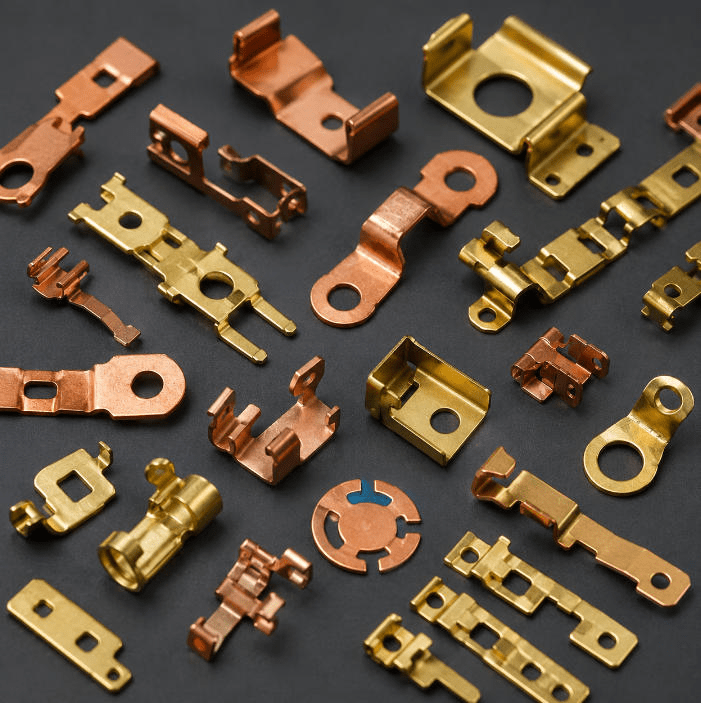
One of the more important uses of copper and brass stamped parts is in the electrical and electronics area. Copper is broadly seen as having excellent electrical conductivity, so it becomes a must-have material for connectors terminals, switch contacts, busbars, and relay parts. The stamped copper pieces get used a lot in power distribution setups, circuit breakers, transformers, and also battery systems where the need for efficient current passing is obvious.
Brass stamped parts are frequently chosen in electrical tools too, because they pair good conductivity with better mechanical robustness. Brass terminals, sockets, and connector housings are common in consumer electronics, telecom equipment, and industrial control systems. And the corrosion resistance of brass helps keep things dependable for a long time, especially when the operating conditions are tough, and not very forgiving.
2. Automotive Industry
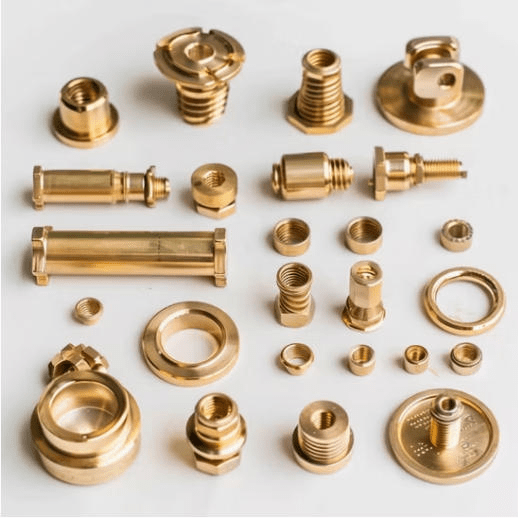
The automotive sector leans heavily on copper and brass stamped components for both traditional and electric vehicles, I mean, really, most people don’t think about it until it fails. Copper stamped parts are crucial in vehicle wiring system, battery connectors, electric motor assemblies, sensor housings, and charging setups. As electric vehicles keep growing globally, the appetite for high-performance copper pieces has risen a lot, mostly because they must handle efficient energy transmission, without wasting power.
Brass stamped components are also frequently selected for radiator parts, fuel system fittings, electrical terminals, and decorative trimming sections. Their great sturdiness and resistance against wear make them a fitting option for automotive environments that deal with heat , vibration, and moisture too. Also, brass contributions support practical output and even the visual appeal inside and outside vehicles, in a way that looks intentional, not accidental.
3. Telecommunications and Electronics
Modern communication devices need compact and precise, with very high reliability components, so copper and brass often fit well for stamping work. Copper stamped parts get used frequently in printed circuit board connectors, semiconductor components, shielding units, and signal transit devices, since they help reduce electrical resistance plus signal loss.
Brass stamped parts are also widely found in communication equipment, antenna setups, RF connectors, and networking equipment. Their mix of conductivity, dimensional stability, and machinability supports manufacturing of tiny electronic pieces with tight tolerances. As electronic devices keep getting smaller and more advanced, precision stamping of copper as well as brass components stays more important each year.
4. Plumbing and Fluid Systems
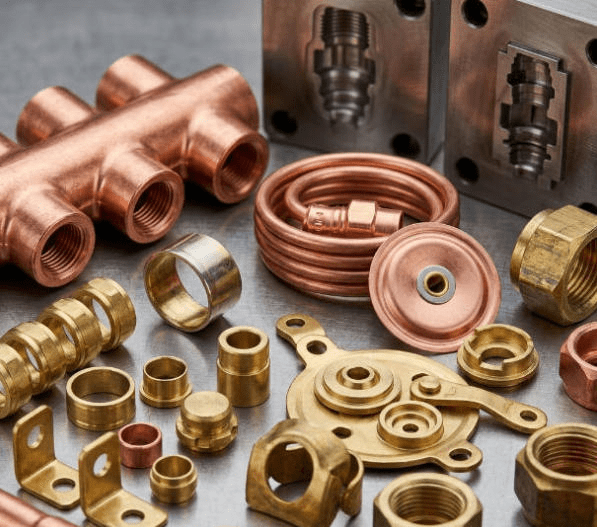
Brass stamped parts are used heavily in plumbing and fluid control setups, mainly because they have strong corrosion resistance and solid strength, which is pretty important. Stuff like valve plates, pipe fittings, seals, washers, and pressure control pieces are often made by brass stamping processes. Brass works especially well in water systems, because it resists rust ,and keeps its structural integrity for a long period of use.
Copper stamped parts show up too, mainly in heating systems, refrigeration gear, and HVAC applications where effective heat movement is essential. Copper has strong thermal conductivity, so stamped elements can pass along and release heat efficiently, and that helps with the overall performance of cooling and heating routines.
5. Architectural Applications
Beyond the industrial side of things, brass stamping parts tend to get attention for visual uses and architectural looks too. The natural gold-like color of brass makes it a go-to choice for door hardware, furniture hardware, lighting fixtures, ornamental panels, and nameplates. With stamping technology, manufacturers can produce fine surface textures, raised motifs, and tailored layouts, and it stays very repeatable.
Copper stamped parts show up in building work as well, like roofing accessories, wall decorations, decorative borders, and art-inspired installations. As time passes, copper forms a distinctive patina, which boosts the overall appearance and gives extra protection against corrosion, so it fits well in both modern architecture and more traditional design settings.
6. Renewable Energy Systems
The fast development of renewable energy technologies has created a steadily growing demand for copper and brass stamped parts. Copper is heavily used in solar panels, wind turbines, battery storage systems, and electric charging infrastructure because of its unmatched electrical conductivity, and that matters. Stamped copper connectors, and conductive plates contribute to better energy efficiency and reliability in renewable energy setups, too.
Brass components are also used in renewable energy equipment for connectors fasteners, and corrosion-resistant mechanical parts. Their durability helps keep performance steady in outdoor conditions, where moisture , temperature shifts, and other environmental contaminants are always present.
7. Industrial Machinery and Equipment
Industrial machinery often uses copper, and brass stamped parts in control systems, sensor units, switches, and mechanical assemblies that need steady performance. Copper pieces help with effective electrical operation in automation systems and industrial gear, while brass pieces give good resistance against wear and keep shape stable in moving setups.
With precision stamping manufacturers are able to create industrial parts that are very accurate, and they can match demanding tolerance limits. This matters a lot in sectors like aerospace, robotics, medical equipment, and precision instrumentation, where reliability, as well as consistency, is essential.
The Manufacturing Processes for Copper and Brass Stamped Parts
Advanced technologies enable manufacturers to produce complex copper and brass stamped parts with tight tolerances and consistent quality.
| Process | Description | Copper Part Applications | Brass Part Applications | Advantages |
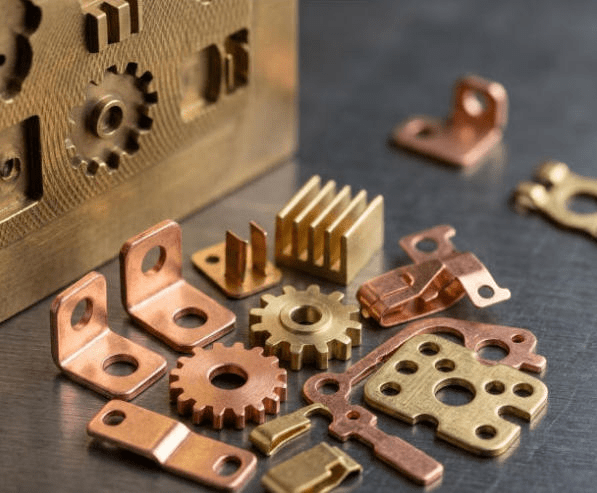
| Blanking | Cutting flat shapes from metal sheets using a die | Electrical contacts, busbars, washers | Decorative plates, terminals, washers | High production speed and material efficiency |
| Piercing | Creating holes or slots in stamped parts | Connector plates, grounding components | Valve plates, mounting brackets | Precise hole formation with good repeatability |
| Bending | Forming angles and curves in metal parts | Battery clips, conductive brackets | Hardware fittings, support clips | Produces complex shapes without welding |
| Embossing | Creating raised or recessed patterns on surfaces | Identification plates, conductive markings | Decorative panels, logos, nameplates | Enhances appearance and functionality |
| Deep Drawing | Forming deep hollow shapes from sheet metal | Copper housings, shielding covers | Brass cups, enclosures, casings | Suitable for seamless and durable components |
| Progressive Die Stamping | Performing multiple stamping operations in one continuous process | Electronic connectors, motor components | Precision terminals, hardware parts | High efficiency for mass production |
| Coining | Applying high pressure to create fine details or smooth surfaces | Precision electrical contacts | Decorative brass emblems | Excellent dimensional accuracy and surface finish |
| Forming | Reshaping metal into desired geometries | Heat sink fins, conductive springs | Mechanical clips, structural supports | Flexible production for customized parts |
| Curling | Rolling the edge of a metal part into a circular shape | Copper tube ends, shielding edges | Brass hinge parts, decorative trims | Improves safety and edge strength |
| Lancing | Cutting and bending metal without removing material | Ventilation tabs, contact springs | Locking tabs, mounting features | Reduces material waste and assembly steps |
Advantages of Using Copper and Brass in Stamped Parts
- Excellent Conductivity: Copper gives really strong electrical and thermal performance , and brass keeps reliable conductivity too, but with better mechanical resistance. So both are often chosen for things tied to electricity and heat.
- High Corrosion Resistance: Copper and brass can stand up to oxidation and harsh exposure, which helps stamped parts last longer , even when the conditions are damp or demanding.
- Superior Formability: Both metals are very ductile, meaning manufacturers can create tricky contours and thin-wall pieces without snapping or running into material failure while stamping.
- Attractive Surface Finish: Copper and brass have natural metallic looks that people notice right away. Brass is especially liked for decorative products because its appearance feels elegant.
- Recyclability: Copper and brass are highly re-usable materials. The scrap that gets created during stamping operations can usually be used again , which lets manufacturers cut down on material waste a bit , and still keep sustainable production efforts going.
Challenges and Solutions in Copper and Brass Applied for Stamped Parts
| Challenge | Description | Impact on Stamped Parts | Common Solutions |
| Material Softness | Copper and some brass alloys are relatively soft and ductile | Deformation, bending, and dimensional instability | Optimize stamping force and use proper support fixtures |
| Tool Wear | Continuous stamping can wear dies and punches | Reduced precision and increased maintenance costs | Use hardened tooling materials and protective coatings |
| Galling and Material Adhesion | Copper may stick to tooling surfaces during stamping | Surface defects and inconsistent part quality | Apply suitable lubricants and polished die surfaces |
| Surface Scratching | Copper and brass surfaces can scratch easily | Poor appearance and reduced conductivity | Improve material handling and use protective films |
| Burr Formation | Improper cutting clearance creates sharp edges | Assembly problems and safety risks | Optimize die clearance and perform deburring |
| Springback Effect | Material may partially return to original shape after bending | Difficulty in maintaining tight tolerances in stamped parts | Adjust die design and compensate forming angles |
| High-Speed Stamping Stress | Excessive production speed may increase stress and vibration | Cracking, distortion, and shorter tool life | Control stamping speed and improve lubrication |
| Oxidation and Tarnishing | Exposure to air and moisture may cause discoloration | Reduced appearance quality and conductivity | Use coatings, plating, or controlled storage conditions |
| Heat Generation | Friction during stamping can create excessive heat | Material expansion and tool damage | Apply cooling systems and effective lubrication |
| Material Thickness Variation | Inconsistent raw material thickness affects forming accuracy | Variation in part dimensions and quality | Use high-quality uniform material supplies |
| Dimensional Accuracy Control | High-precision customized stamping parts require extremely tight tolerances | Increased rejection rates if tolerances are not maintained | Use precision dies and automated inspection systems |
| Secondary Processing Difficulties | Welding, soldering, or plating may be challenging | Reduced assembly quality and processing efficiency | Clean surfaces properly and optimize joining parameters |
| Corrosion Concerns | Certain environments may accelerate corrosion or dezincification | Shortened service life of components | Apply protective coatings and corrosion-resistant alloys |
| Material Cost Fluctuations | Copper and zinc prices can vary significantly | Increased production costs and budget instability | Improve material utilization and recycling practices |
| Waste and Sustainability Issues | Stamping operations generate scrap materials and lubricant waste | Environmental and disposal concerns | Implement recycling systems and sustainable manufacturing practices |
Final Thoughts
Copper and brass are among the key materials in metal stamping because they bring strong conductivity, corrosion resistance, good formability and long-term durability to the table. Copper is commonly seen in electrical uses and thermal uses, while brass is chosen for decorative needs, plumbing work, and precision mechanical parts. As industries keep moving ahead toward electrification, automation, and more sustainability in manufacturing, the use of copper and brass stamped parts is expected to expand even further across numerous industrial sectors.