
High Volume CNC Machining: How It Improves Manufacturing Efficiency
In modern manufacturing, transitioning your project from prototyping to market entry usually brings along a set of massive challenges. How do you maintain precision across hundreds of thousands of parts while minimizing the cost per part? How do you ensure the 100,000th part is identical to the very first one?
The answer lies in high-volume CNC machining.
For sectors like automotive, medical, and consumer electronics, where precision and volume are non-negotiable, large-scale CNC manufacturing is more than just a production method; it is a core strategy for businesses to build a robust cost moat. This article breaks down the core benefits of high-volume CNC machining, cost optimization strategies, and how to choose the right manufacturing partner.
Table of Contents
What is High-Volume CNC Machining?
In the machining industry, high-volume CNC machining generally refers to the precision manufacturing of parts with continuous order volumes ranging from 1,000 to over 100,000 units per run.
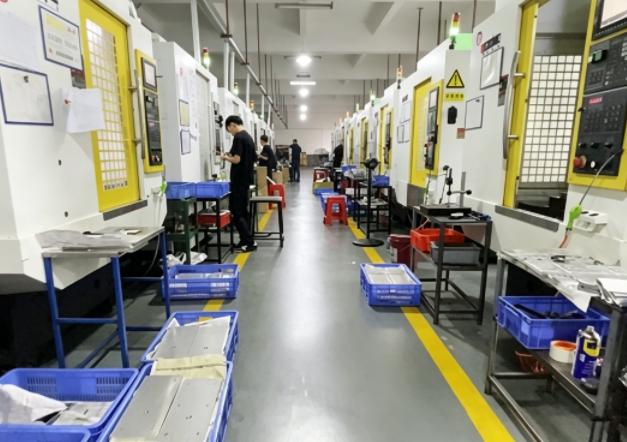
Unlike small-batch prototyping, mass production CNC machining relies heavily on automation and advanced machining strategies. To achieve 24/7 uninterrupted “Lights-Out Manufacturing”, modern machine shops typically utilize:
- Multi-axis simultaneous machining centers (such as 5-axis CNC machines or Swiss-type lathes).
- Automatic bar feeders and robotic arm loading/unloading systems.
- Pallet changers to allow setup and machining to happen concurrently.
Core Advantages of High-Volume CNC Machining
Lower Cost Per Part
The fixed upfront costs of high-volume production, such as programming and custom fixture development, are infinitely diluted as production capacity scales up. Compared to the high setup costs of low-volume runs, the distributed setup cost per part in a 100,000-piece run becomes negligible.
As order volume increases, the cost per part drops in a stepped fashion, creating a significant cost advantage for large enterprises.
Superior Consistency
Modern industrial CNC equipment relies on closed-loop control systems, eliminating human operational errors and demonstrating extreme stability throughout the production cycle.
Whether it is the first or the 100,000th part, dimensional tolerances and surface finishes remain strictly uniform, perfectly matching the “zero-defect” supply chain standards required by the automotive and medical industries.
Higher Production Efficiency
Mass production deeply integrates machining processes with automation technology. By implementing robotic loading/unloading, bar feeders, and automatic tool changers, modern shops easily achieve 24/7 continuous “lights-out manufacturing.”
This fully automated operation compresses part cycle times to the absolute minimum, boosting overall production efficiency by several to dozens of times compared to conventional machining.
Stronger Delivery Capability
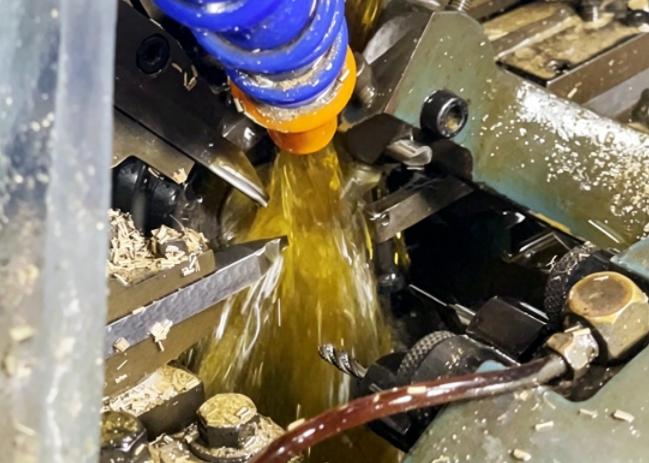
When market demand spikes or order peaks hit, mature high-volume CNC machining serves as a company’s strongest backbone. Since manufacturing parameters are fully locked in during the early stages, the shop does not need to re-verify processes; they simply increase machine utilization to rapidly ramp up capacity.
This stable, resilient output helps B2B buyers effectively mitigate risks like delivery delays and supply chain disruptions.
What Industries Need Large Volume CNC Machining?
In today’s industrial chain, any industry that focuses on maximizing its efficiency, achieving tight tolerance levels, and reducing its time-to-market is one that needs large volume CNC machining. Whether you are talking about everyday vehicles or lifesaving medical equipment, large volume CNC machining helps industries achieve efficiency at low costs:
Automotive Industry
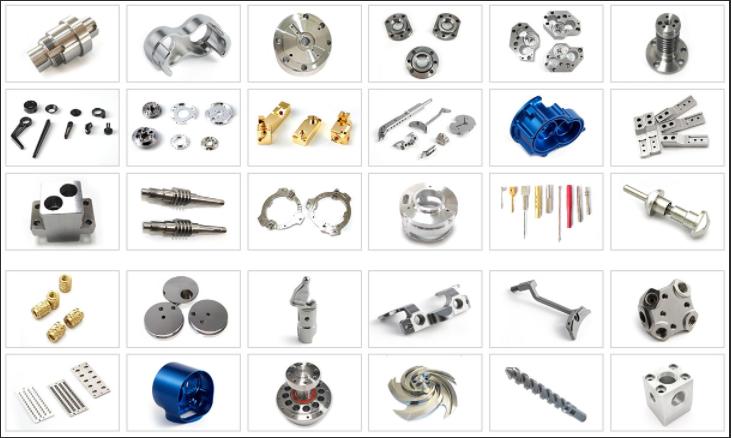
The automotive industry is the leading industry when it comes to large volume CNC machining because of its massive annual production requirements. In this sector, large-scale manufacturing is primarily used to produce engine blocks, gearbox housings, braking system components, steering components, and turbocharger parts.
High-volume CNC machining ensures these critical components maintain a high safety margin under long-term, heavy-load operations.
Aerospace Industry
Precision is one of the key features of aerospace CNC manufacturing along with its capacity for large-scale production. In order to ensure mass manufacturing with high levels of reliability and safety when it comes to flights, aerospace companies need machining techniques that will provide reliable high-precision products.
The requirement of large-scale machining in the aerospace industry concerns aircraft brackets, connectors, hydraulic units, and landing gear parts.
Medical Device Industry
The medical device sector sets high benchmarks for product precision and batch-to-batch consistency. With global healthcare markets demanding more high-quality devices, the medical supply chain relies heavily on automated, large-scale subtractive manufacturing.
Common high-volume machined products include micro-surgical instruments, orthopedic implants, medical equipment enclosures, and precision components. Capitalizing on the exceptional repeatability of high-volume CNC equipment perfectly eliminates human error, ensuring absolute medical safety for every batch.
Consumer Electronics Industry
The consumer electronics industry is characterized by rapid product iterations and sudden spikes in demand. To quickly capture the market post-product launch, tech brands must scale up production to millions of hardware units within extremely tight delivery windows.
Typical applications include metal phone enclosures, high-efficiency heat sinks, aluminum alloy frames, and precision connectors. Through high-volume CNC machining, manufacturers match the massive throughput demands of the consumer electronics market with incredibly low per-part costs and rapid response times.
High Volume CNC Machining vs. Low Volume CNC Machining: What’s the Difference?
Many clients evaluate both high-volume and low-volume production models when choosing a manufacturing solution. To give you a clearer perspective, we have compared the key indicators below:
| Evaluation Metric | Low-Volume CNC Machining | High-Volume CNC Machining |
| Typical Order Volume | 1 – 100 units | 1,000 – 100,000+ units |
| Upfront Setup Cost | Low | High (due to custom fixtures & program optimization) |
| Cost Per Part | High | Extremely Low |
| Automation Level | Primarily relies on manual loading | Highly automated (robotic arms / bar feeders) |
| Design Flexibility | High (designs can be modified anytime) | Lower (designs should not be frequently altered once locked) |
How to Minimize Costs in High-Volume Production?
When dealing with mass production projects, even a small improvement in the design could result in significant savings of hundreds of thousands of dollars when the production runs into 100,000 units or more. Following are some of the important techniques of DFM (Design for Manufacturability):
Using Easy-to-Machine Materials: Use easy to machine materials. In terms of machining speed, Al-alloy and Brass 360 machine much faster than stainless steel and titanium alloy. Material selection for custom high-volume machined parts directly dictates machine cycle times.
Simplify Part Geometry: Avoid excessively deep blind holes, extremely narrow internal corners, or complex thin-walled designs as much as possible. These designs increase tool changes or require expensive, specialized tooling.
Standardize Tolerances: Not every surface of a part requires an extreme tolerance of ±0.005 mm. Standardize tolerances for non-critical areas and reserve tight tolerances only for critical mating or functional surfaces. This significantly reduces scrap rates and inspection costs.
How to Choose a High-Volume CNC Machining Supplier?
In selecting global machining partners, it is important to select someone who can offer dependable delivery for extended periods of time. This will be a strategic partner who will assist you in optimizing your business process as well as sharing market risks. Some key points worth considering when selecting such partners include:
1. Advanced Industrial Automation & Production Capacity
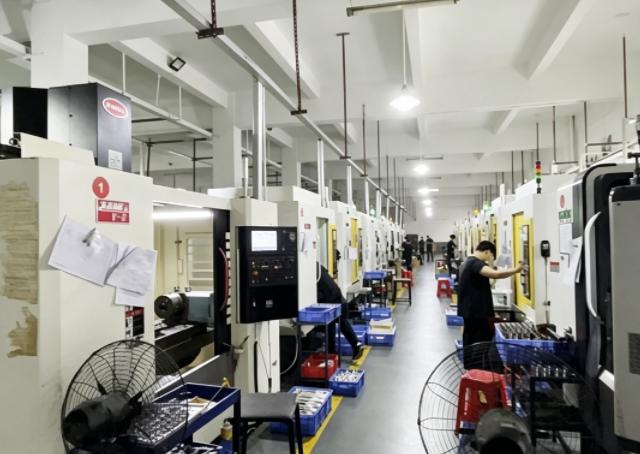
In large-scale production, a supplier’s equipment capability directly determines project lead times and capacity ceilings. An excellent long-term partner must own an adequate fleet of advanced machinery, such as 5-axis machining centers and high-speed Swiss-type CNC lathes.
More importantly, the supplier should feature comprehensive automation integrations, like robotic arm loading/unloading, which form the bedrock for 24/7 “lights-out manufacturing” and on-time volume deliveries.
2. Strict International Quality Management Certifications
Mass production will not be able to use post-production inspections alone; there must be more mature process controls to avoid any defects.
Choosing a supplier with standard ISO 9001 certified quality management system will be the first thing you should consider in terms of procurement risk minimization. There should be more strict standards for specialized industries, such as IATF 16949 and AS9100.
3. Experienced Engineering & DFM Support Capabilities
A high-value supplier’s core competitiveness often shines during early-stage technical collaboration. Premier manufacturers do not just machine parts according to blueprints; they provide experienced engineering teams that actively offer professional DFM optimization suggestions early in the design phase.
By offering cost-saving alternatives for material selection and geometric simplification, they help you trim unnecessary manufacturing spend from the source.
4. Supply Chain Resilience and Timely Deliveries
Under a lean manufacturing system, timely delivery percentages play a crucial role in ensuring the resilience of your supply chain.
When considering a supplier, do not focus merely on their ability to perform timely deliveries based on day-to-day capacities but also their ability to cope with unforeseen emergencies that might occur due to fluctuations in raw materials availability or unexpected surge in orders.
Conclusion: Launch Your Mass Production Project Today
High-volume CNC Machining is one of the tools that a company can leverage to improve its supply chain and enhance the competitiveness of its products. By designing with DFM principles in mind, selecting suitable materials, and working with an automation-focused manufacturing facility, you can easily increase your volume, save money, and improve quality.
Looking for a highly cost-effective, large-scale machining solution? Contact KENENG today. We provide free DFM manufacturability evaluations alongside highly competitive quotes for high-volume custom CNC machining. Let us help you bring your hardware project to life flawlessly!