How Precision CNC Machining Is Used in Robotics
In recent years, robotic technology has been rapidly transforming the way many industries operate. From industrial automation production lines to surgical robots, from intelligent warehouse logistics to service robots, robotics has become an essential part of modern manufacturing and smart technologies. As the range of robotic applications continues to expand, the market is placing higher demands on the performance, stability, and reliability of robotic systems.
In a robotic system, every mechanical structure, transmission component, and supporting part must possess extremely high precision and stability. If a component has excessive dimensional deviation or structural instability, it can affect the robot’s motion accuracy and overall performance. Therefore, precision CNC machining for robotics plays a crucial role in the manufacturing of robotic components.
Through high-precision CNC machining technology, manufacturers can produce robotic parts with strict tolerances, complex geometries, and high consistency, providing reliable support for the stable operation of robotic equipment.

Table of Contents
The Role of Precision CNC Machining in Robotics Manufacturing
Robotic equipment is typically composed of multiple precision mechanical structures, such as joint systems, transmission devices, support frames, and various sensor components. These parts often feature complex structures and require extremely high machining accuracy. Precision CNC machining is the core manufacturing technology that meets these demanding requirements.
High Precision and Tight Tolerance Control
The robotic machines need to make many repetitive movements with extreme precision. For instance, when a robotic arm is used for performing certain functions, such as gripping, welding, or assembling, in an industrial environment, the path of the robotic arm needs to be extremely accurate.
The precision of the CNC machining process is such that it is possible to attain machining tolerances of as low as ±0.01 mm or even higher precision levels. This is necessary for ensuring the precision of the fitting of all the robotic components, thereby ensuring the stability of the motion of the robot.
Capability to Machine Complex Structures
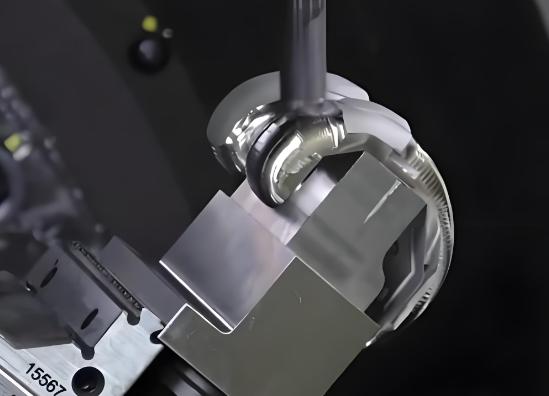
The components of robots often have intricate designs, e.g., multi-angle connectors, internal cavity structures, and curved surface designs. The production of intricate designs is often challenging through conventional machining techniques.
The production of intricate designs, e.g., multi-angle connectors, internal cavity structures, and curved surface designs, is efficiently done using the latest CNC machines, especially CNC machining centers with multiple axes.
- Robotic arm joint components
- Motor mounting brackets
- Transmission system housings
- Structural connectors for robotic assemblies
Through precision CNC machining, manufacturers can efficiently produce complex robotic parts with high accuracy.
Stable and Consistent Mass Production
As the robotics industry continues to expand, many robotics manufacturers require large-scale production of components. For mass production, consistency and stability of parts are extremely important.
The use of digital programs in CNC machining is essential in ensuring that all components are machined under similar machining conditions. This is vital for ensuring the quality of components and for the efficient production of robotic components, as discussed earlier, for the manufacturing industry.
CNC Machining Applications in Key Robotic Components
Components of robotic machines require precision machining using the CNC machining technique for manufacturing purposes. These components need to be of high quality, with regards to precision, strength, and reliability, for ensuring smooth and efficient functionality of the robotic machines. Below are some of the components of robotic machines that are manufactured using the CNC machining technique.
Robotic Arm Components
The robotic arm is one of the most important components of a robotic system. The robotic arm is responsible for performing several functions, such as gripping, assembling, welding, and material handling, among many others. While performing its functions, the robotic arm is expected to make movements in several directions and may also be required to carry heavy loads.
Therefore, the components of the robotic arm need to offer sufficient strength as well as precision so that the robotic arm does not lose stability, even when moving at high speeds.
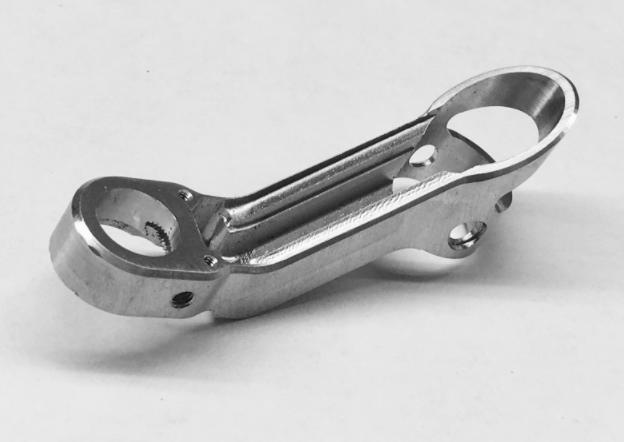
Precision CNC machining is commonly used for manufacturing several components of the robotic arm, such as the robotic arm joint housing, linkage rod assemblies, actuator mounting structures, and rotating joint brackets, among many others.
Due to the assistance of precision CNC machining, several components of the robotic arm are being manufactured with precision, so that the robotic arm does not lose stability, even when moving at high speeds. This, in turn, enhances the overall performance, reliability, and durability of the robotic arm.
Transmission Systems and Gearbox Components
The transmission system is the other significant component of the mechanical system of the robot. The system normally consists of gears, shafts, bearing seats, and reducers, among other components. The precision of the transmission system is normally significant in the motion accuracy, speed response, and stability of the robot in operation. Any slight variation in the components of the system could result in vibrations, increased noise levels, or low efficiency during operation.
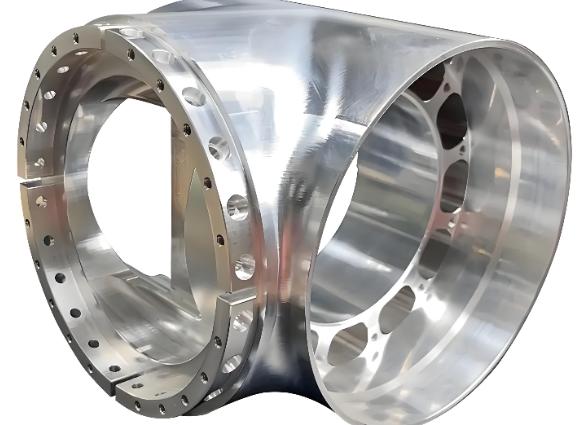
Precision CNC machining makes it possible to produce highly accurate transmission components, for instance, precision gearbox housings, transmission shafts, bearing mounting seats, and reducer structural components.
These parts demand the highest level of precise control in terms of their dimensions, as well as high surface finish, to ensure proper performance in the transmission system. Using CNC machining, it is possible to achieve the level of precision that will ensure the proper performance of the transmission system with minimum noise, least wear, and highest durability.
Sensor and Vision System Mounting Components
Modern robots are usually provided with a number of sensors such as vision cameras, LiDAR systems, etc. These devices are extremely useful in helping the robots perceive their surroundings, detect the objects in the surroundings, etc. To perform these functions properly, these devices are usually mounted on the robots.
Precision CNC machining can be used to produce high-precision mounting brackets or other components for the following:
- Camera brackets
- Sensor mounting bases
- LiDAR fixing components
These parts demand precise dimensions and high structural stability to guarantee that the sensors are securely fixed in their positions while the robot is in use. Using precise CNC machining techniques, the manufacturer is able to maintain precise positions of these devices, thus enhancing the robot’s awareness of its surroundings.
Custom Prototype Parts in the Robot Development Stage
During the robot R&D phase, engineers may have to validate several robot design ideas. Optimizing the mechanical structure of the robot may also have to be performed. For this, several versions of the robot parts may have to be produced for testing.
CNC machining is an excellent choice for rapid prototyping, as precise custom parts can be produced quickly based on the computer designs. Engineers can validate several structures, materials, and tolerances in a short span of time. CNC machining helps robotics businesses speed up the development of new products, making it easier for new robot products to reach the market.
Common Materials Used in CNC Machining in Robotics
Materials play a vital role in the manufacturing of robotic parts, and it is equally important to the machining process. Materials can vary depending on their strength, weight, resistance to corrosion, wear, and cost, and thus the selection of the material depends on the application of the robot. With the help of precision CNC machining, a variety of metals and engineering plastic materials can be efficiently machined to suit the requirements of robotic parts.
Aluminum Alloy
Aluminum alloy is one of the most commonly used materials in robotics manufacturing, thanks to its excellent overall properties. It is particularly suitable for robotic structural components that need to balance strength and weight.
Key advantages of aluminum alloy include:
- Lightweight, which helps reduce the overall weight of the robot and improve motion efficiency
- High strength, capable of meeting the structural demands of most components
- Good corrosion resistance, suitable for long-term stable operation
- Easy to machine, making it ideal for high-precision CNC processing
In practice, aluminum alloy is often used to manufacture:
- Robotic structural frames
- Enclosure components
- Robotic arm structures
- Support and connection parts
Exquisite aluminum parts are produced through CNC machining maintaining high levels of finish quality.
Stainless Steel
It was primarily being employed where a material with high load-bearing capacity that performs in conditions that stress the product is required. With high mechanical strength, resistant to abrasion, and corrosion, stainless steel is highly reliable in industrial environments.
Common applications of stainless steel such as high-load structural components, key parts of transmission systems and components required to construct industrial robots.
While sterner to cut as compared with aluminum, stainless steel can be cut with high precision by the latest CNC machines that guarantee final strength and reliability of the product.
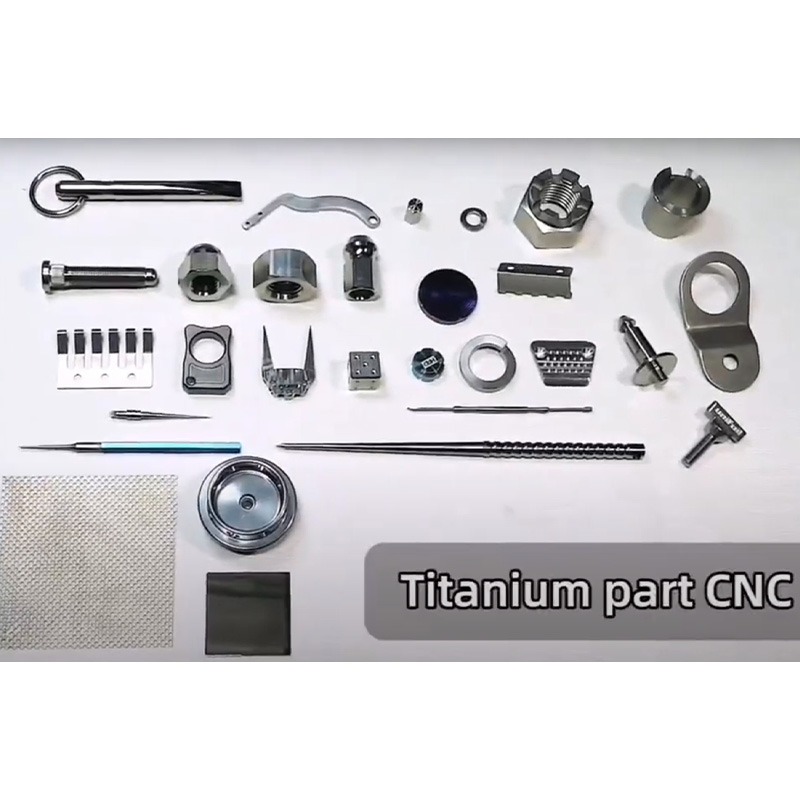
Titanium Alloy
Titanium alloy is celebrated for its high strength-to-weight ratio as well as for its high resistance to corrosion and fatigue. High-end robots employ this metal in their structure to render it lightweight and strong. Even with weakened profiles, titanium alloy can significantly decrease the weight of the structure.
Its typical applications include aerospace robots, medical robotic devices and high-performance automation equipment.
However, titanium alloy is harder to machine, which requires advanced CNC equipment and precise process control. Therefore, it is usually reserved for robotic systems with high performance requirements.
Engineering Plastics
Besides metals, engineering plastic materials also play an important role in the manufacturing of robots. Engineering plastic materials are light in weight, electrical insulators, and wear resistant, and hence useful for components that need weight and electrical properties.
Common engineering plastics include, PEEK, Nylon, Delrin (POM) and more.
These materials are typically used for:
- Lightweight moving parts
- Insulating structural components
- Sliding or low-friction components
With CNC machining, engineering plastics can also be processed with high precision, meeting the robotics system’s demands for lightweight construction and functional performance.
The Advantages of Precision CNC Machining for Robotics Companies
To robotics manufacturers, precision CNC machining is an essential method that guarantees manufacturing precision and stability to its products, thus enhancing product quality, speed in obtaining advancements, and overall competition.
Exceptional Machining Accuracy
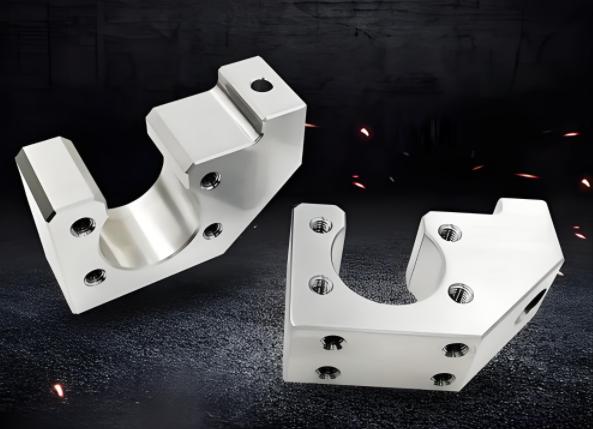
Precision CNC machining is capable of providing exceptional machining accuracy, which is essential in ensuring a precise fit between the different components of the robot system.
Besides ensuring the stability of the operation of the robotic arms, transmission systems, and sensor systems, the precision accuracy also ensures the overall performance and reliability of the robot system. For instance, in the case of high-load robot arms used in multi-angle movement, the precision accuracy ensures the overall efficiency of the system.
High Reliability
With stable processing methods and quality control, the reliability of the robotic parts is high, which reduces the rate of failure in the robots. Whether it is an industrial robot that is used to perform high-intensity activities or a service robot that is used in complex environments, the parts are reliable, thus promoting stable operations with reduced maintenance costs.
Flexible Customization
CNC machining is ideal for customized production, meeting the diverse needs of robotics companies across different projects and stages, including:
Prototype development – Quickly produce high-precision prototype parts for testing and design optimization
Small-batch production – Support trial production and small-scale custom orders
Mass production – Enable stable and efficient large-scale manufacturing while maintaining precision
This flexibility allows robotics companies to adjust production strategies according to customer needs and product development plans, improving market responsiveness.
Shortened Product Development Cycle
Due to the fast and precise nature of CNC machining, robotics companies are able to speed up the testing and refinement process in the R&D phase. In this way, the company is able to efficiently move from the concept phase to mass production, thereby increasing the innovation and competitiveness of the company.
In conclusion, precision CNC machining is a vital core technology in the field of robotics manufacturing due to the precision, reliability, customization, and fast response it offers to robotics companies.
Precision Machining Driving Innovation in Robotics
With the ever-increasing advancements in the field of automation technology, the need for high-precision components in the field of the robotics industry is increasing day by day. Precision CNC machining is offering the field of the robotics manufacturing industry highly precise, reliable, and flexible solutions.
From the structural components of the robotic arms to the components of the transmission systems, precision CNC machining is offering the field of the robotics industry a strong platform for its growth in the near future. In the near future, with the ever-increasing advancements in the field of the robotics technology, precision CNC machining is expected to play an ever-increasing role in this field.