How Thick of Material Can You Metal Stamp?
When you are looking for a metal stamping service, one of the most basic but important questions you may ask the metal stamping manufacturer is: “How thick of material can you metal stamp?” Material thickness directly affects the processes of stamping, equipment selection, and quality of the finished parts. As a professional metal stamping service manufacturer, we would like to give you a comprehensive guide that will help you answer this question. Let’s dive in!
Part 1. Factors Determining Maximum Material Thickness in Metal Stamping
The ability of the factories determines how thick the material can be for metal stamping. It is not fixed what can be stamped, as it depends on a number of factors. Here are some key factors:
1. Type of Material
Different metal stamping materials have different physical properties, which have direct impacts on the difficulty and achievable thickness of stamping:
- Carbon Steel: Highly hard and durable, but difficult to shape. Stamping thick sheets requires higher stamping force.
- Aluminum: Lightweight, highly ductile, suitable for thicker sheets with less die wear.
- Stainless Steel: Highly corrosion-resistant but rigid. The thick plate stamping generally needs a large tonnage press or hydraulic press for obtaining good formability.
2. Material Hardness
The hardness of a material is proportional to the requirement for stamping force. This increases not only the equipment load but also accelerates tool wear and may cause part deformation. Thick stamping of high-hardness materials is usually limited, and proper press selection with optimization of process parameters should be performed.
3. Press Tonnage and Equipment Capability
The stamping thickness has a close relation with the press tonnage:
- Light-duty presses are suitable for thin sheets or soft materials.
- Heavy-duty or hydraulic presses: These are utilized for thick or hard materials, and provide ample force with stability to maintain accuracy in the parts.
4. Design of Dies
The die itself is a key factor determining maximum stamping thickness. Structure, precision, and durability will directly affect the results of the stamping:
- Complex parts or deep-drawn components call for precision die design to ensure uniform material stress without tore or deformation.
- The material and treatment also affect its thick sheet stamping ability.
5. Part Complexity
The more complicated the shape of the part, the greater the stamping force and number of process steps, which can reduce the maximum feasible material thickness:
- Simple flat or regular-shaped parts: Allow thicker materials and are easier to stamp.
- Deep-drawn, bent, or irregular parts: Basically require thinner materials or multi-step stamping to ensure the quality of forming and longevity of the die.
Part 2. General Reference for Metal Stamping Thickness
The possible thickness achievable with metal stamping depends on the material type and also on the capability of the stamping equipment. Herein, we give a general reference of thickness for common metals:
| Material Type | Light-Duty Press Thickness | Heavy-Duty Press Thickness |
| Carbon Steel | 0.5mm – 6mm | 6mm – 12mm |
| Stainless Steel | 0.3mm – 3mm | 3mm – 8mm |
| Aluminum Alloy | 0.5mm – 8mm | 8mm – 15mm |
| Copper & Copper Alloys | 0.2mm – 5mm | 5mm – 10mm |
Notes:
The above thickness ranges are general industry reference values and will vary with different model presses, die designs, and part complexities.
In general, thin sheet metals or softer metals are amenable to light-duty presses, while thicker or harder metals are better dealt with heavy-duty presses or hydraulic presses.
For parts with deep draws, complex shapes, or requiring high accuracies, the maximum usable gauge may be less than the typical ranges shown.
Part 3. What are the Technical Solutions for Stamping Thick Materials?
When working with particularly thick materials or a complicated part geometry, the quality can be best achieved with special techniques and process optimization. Following are some of the common techniques of metal stamping:
1. Cold Stamping
Cold stamping is possible with moderately hard materials and at room temperature. Some of the key advantages include:
- High dimensional accuracy and surface finish.
- Minimum thermal distortion or metallurgical changes.
- Good on medium-thick sheets where high accuracy is required.
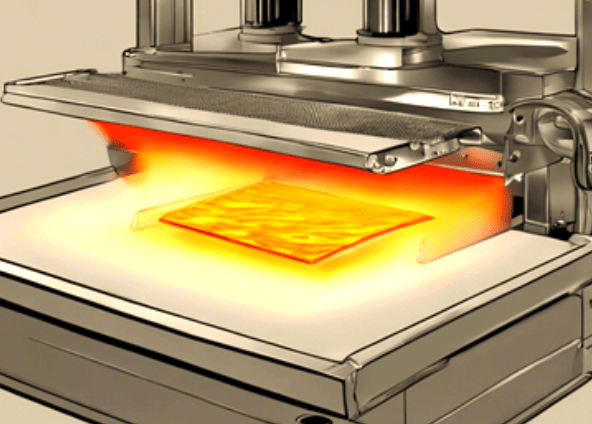
2. Hot Stamping
Hot stamping involves heating the metal to reduce hardness before stamping. It is especially good for the following:
- High-strength steel sheets or very thick plates that are difficult to form at room temperature.
- It reduces the risk of cracking or tearing during forming.
- Complex shapes can be achieved with less die stress and better material flow.
3. Progressive Stamping
Progressive stamping divides the forming process into a number of succeeding steps, and it is ideal for:
- Complex geometries of parts or thick materials.
- Maintaining tight tolerances and consistent part quality across production.
- Reduce the load on any single press stroke and therefore extend die life.
4. Multi-Step Stamping
The material is shaped with multiple steps of stamping or pre-forming; that is, multiple passes or staged operations:
- Especially helpful for deep-drawn parts, thick plates, or complicated shapes.
- Avoids excessive straining in one operation to reduce the chances of cracks or defects.
- Allows for precision control in material flow and thickness distribution throughout the part.
Additional Considerations:
The die design, lubrication and press tonnage must be carefully matched with the chosen technique.
Such combination of hot stamping with multi-step processes often yields the best results on very thick or high-strength materials.
Part 4. How to Choose the Right Metal Stamping Service?
When looking for quality production, smooth processing, and reasonable costs, how you choose your metal stamping service makes all the difference. To assist you, the following are some of the most important area to consider:
1. Equipment Capability
The thickness of the material and the precision required for the part will vary according to the kind and tonnage of the press. Light-duty presses are designed for soft and thin metal sheets, while thick and hard metals will need heavy-duty presses or hydraulic presses.
In your decision of a service provider, you need to ensure that the stamping equipment is compatible with the thickness and complexity of your parts to avoid inefficiencies in production and stamping quality.
2. Material Experience
Different metals have different forming characteristics. Experienced providers understand the hardness, ductility and limits of formability of any given material. This knowledge allows them to anticipate potential defects such as cracks, wrinkles or springback and take effective countermeasures before they occur, essential competencies for maintaining part quality while decreasing risks in production.
3. Capability in Design and Manufacturing Capabilities
Die quality can have a direct impact on the accuracy and consistency of stamped parts, which in turn depends on its design and creation. A reliable stamping service provider should be capable of designing and creating dies to accommodate complex parts; optimizing its structure based on geometry, thickness, process requirements, as well as durability requirements to meet large-lot production.
4. Technical Support and Process Optimization
The top-ranking providers offer full technical support and process optimization, apart from stamping services. It will include guidance in selecting materials, optimizing the parameters in stamping, and customization of solutions for complex or thick parts. This kind of support contributes to minimizing defects, improving precision in forming, and ensuring stable production results.
Due to the importance of choosing an experienced, well-equipped, and technically supported stamping service provider that ensures the forming accuracy, production efficiency, and quality of thick or complex parts, it is key to cost savings and competitiveness at your company.
Part 5. KENENG’s Capability in Stamping Thick Metal Materials
As the leading metal stamping parts manufacturer, KENENG has broad expertise in processing both thin and thick metal materials. We support a broad range of processing from a minimum of 0.05 mm to as high as 8.0 mm for materials such as stainless steel, aluminum, carbon steel, galvanized steel, copper, brass, titanium alloys, and more.
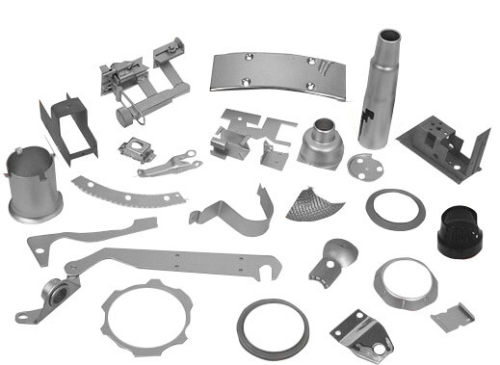
For thick materials, our engineering team optimizes tooling design based on hardness, yield strength, and ductility.
We use various advanced techniques, such as progressive stamping, multi-stage forming, stress-relief design, and reinforced punch structure, to ensure that thick metal parts are formed featuring:
- Cracking or tearing l
- NO tightening of the stitches
- Minimal springback.
- Stable dimensions and tight tolerances
The core competencies for thick metal stamping are:
- Maximum material thickness: 8.0 mm depending on structure and material
- Tolerance control up to ±0.01 mm
- Maximum part size: 800 × 1000 mm
- Tooling life exceeds 10 million strokes.
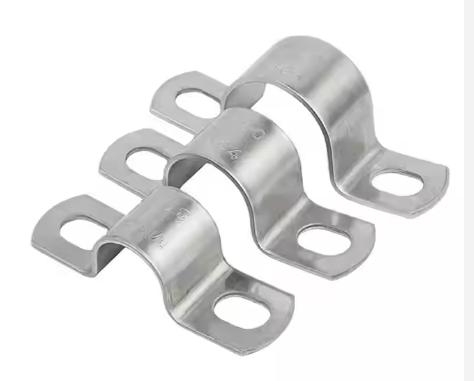
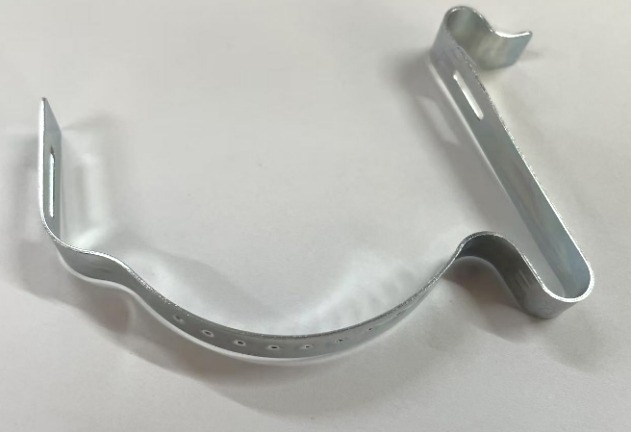
We have successfully produced thick-gauge components for automotive brackets, heavy-duty clamps, structural parts, and industrial hardware, ensuring high strength and long-term durability.
Additional Manufacturing Capabilities
In addition to thick-material stamping, KENENG provides:
- Precision thin-sheet stamping (from 0.05 mm)
- High-speed stamping up to 800 strokes/min l
- CNC and injection molding for integrated manufacturing
- Rapid prototyping via WEDM, slow-wire cutting, and EDM l
- Over 150 existing mold sizes to reduce development costs
With IATF 16949 and ISO 9001:2015 certifications, we have maintained a product qualification rate of 99.83%, with quality consistency in every single order.
Final Thoughts
The thickness of stamping depends on a variety of factors, including but not limited to material types, hardness, press tonnage, die design, and part complexity. It is necessary to choose a professional stamping service provider equipped with advanced equipment to guarantee part quality, production efficiency, and project smoothness.
With state-of-the-art stamping machines, extensive material experience, and a professional engineering team, KENENG can handle various material thicknesses and complex part requirements. Whether in precise electronic components, automotive parts, or the manufacture of components for medical devices, at KENENG, we provide you with reliable metal stamping solutions in high-quality production on demand.