How to Do Quality Testing for CNC Machined Parts?
In the field of precision manufacturing, CNC machining is renowned for its high accuracy, excellent consistency, and ability to produce complex structures. However, no matter how advanced the equipment may be, without a rigorous quality inspection system, the reliability of the final product cannot be guaranteed. Therefore, quality testing for CNC machined parts is a critical process to ensure stable performance, precise dimensions, and long-term reliability.
So, what aspects of quality inspection should be carefully considered? Read on, and let’s explore them together!
Why is Strict Quality Testing Essential for CNC Machined Parts?
In precision manufacturing, “machining completed” does not automatically mean “quality approved.” Only through systematic and rigorous quality testing can parts truly achieve stable, safe, and reliable performance in real-world applications. The following points clearly explain why quality inspection is so important.
1. Ensuring Dimensional Accuracy
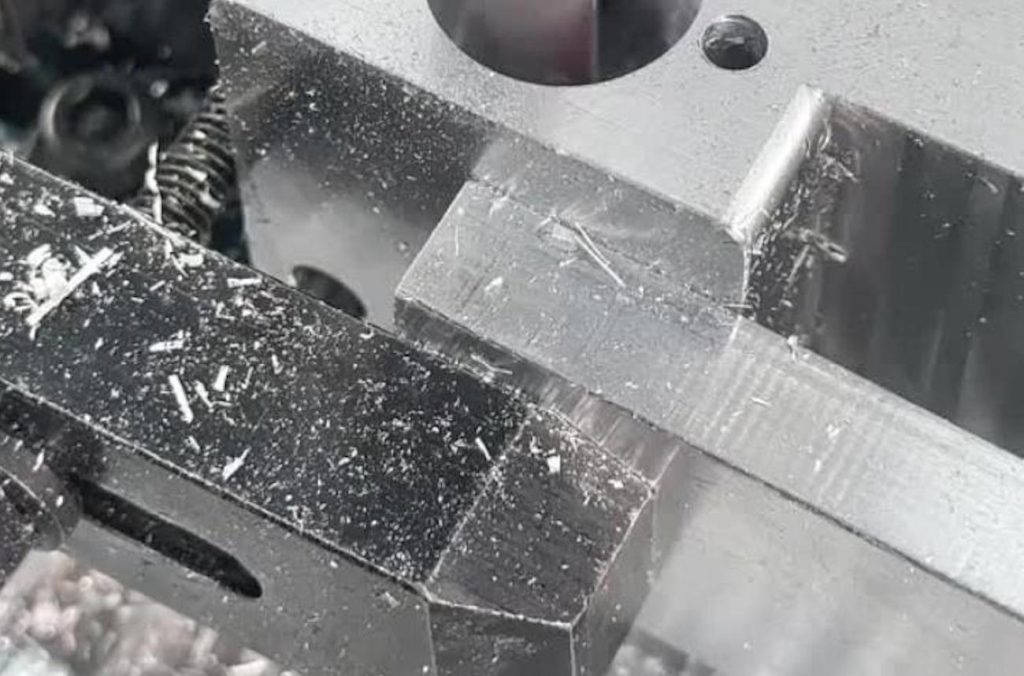
One of the greatest advantages of CNC machining is its high precision capability. Many industrial components require tolerances of ±0.01 mm or even tighter, especially in industries such as aerospace, automotive, and precision equipment manufacturing.
Even the smallest dimensional deviation can lead to assembly interference, preventing proper installation, seal failure, causing leakage risks, abnormal dynamic operation, resulting in vibration or noise and premature wear, shortening product lifespan
Through systematic dimensional inspection, whether full inspection of critical features or controlled sampling, manufacturers can ensure that all key dimensions strictly comply with engineering drawings. This not only guarantees smooth assembly but also ensures stable performance during operation.
2. Controlling Tolerance Compliance
In CNC machining, tolerance control is a direct factor in determining whether a component is acceptable. Being near the nominal value is not sufficient; the value must be within the tolerance limits.
By tolerance testing, manufacturers can determine if geometric tolerances (GD&T) are in compliance with specifications, if concentricity, parallelism, and perpendicularity are in tolerance, and if critical fit values are in functional tolerance.
Stringent tolerance testing is essential in avoiding dimensional drift in mass production. It is also a basic requirement in determining functional reliability.
3. Ensuring Surface Integrity
In many applications, surface quality directly affects part performance and service life. Different uses require specific surface roughness (Ra) values, for example:
Ra 0.8 μm for sealing surfaces and Ra 1.6 μm for general assembly components
If surface roughness does not meet the required standard, it may increase friction, reduce sealing effectiveness, and even lead to fatigue damage. By using surface roughness testers, manufacturers can confirm that the finished part meets design specifications, thereby improving overall operational stability and durability.
4. Verifying Material Integrity
Quality verification is more than just a dimensional check, it is also necessary to ensure that the material itself is within specifications. Even if the dimensions are correct, poor material properties may lead to deformation or breakage of the material under use.
Some of the checks that may be performed include material analysis to ensure that the material type is correct, hardness tests (Rockwell, Vickers) to ensure that the heat treatment process is successful, metallographic analysis to study the material’s internal structure
Material verification is important to ensure that risks associated with improper material substitution, supplier defects, or improper heat treatment are avoided.
5. Maintaining Batch Consistency
In large-scale production, consistency is even more important than single-piece compliance. Manufacturers must ensure that every batch meets the same quality standard, not just occasional acceptable results.
By process quality control (CNC machining quality control), such as first article inspection, in-process inspection, and final inspection, possible discrepancies can be detected in advance before they become serious problems. This helps to lower the defect rate and enhance customer confidence in the quality of the products.
Key Quality Testing Methods for CNC Machined Parts
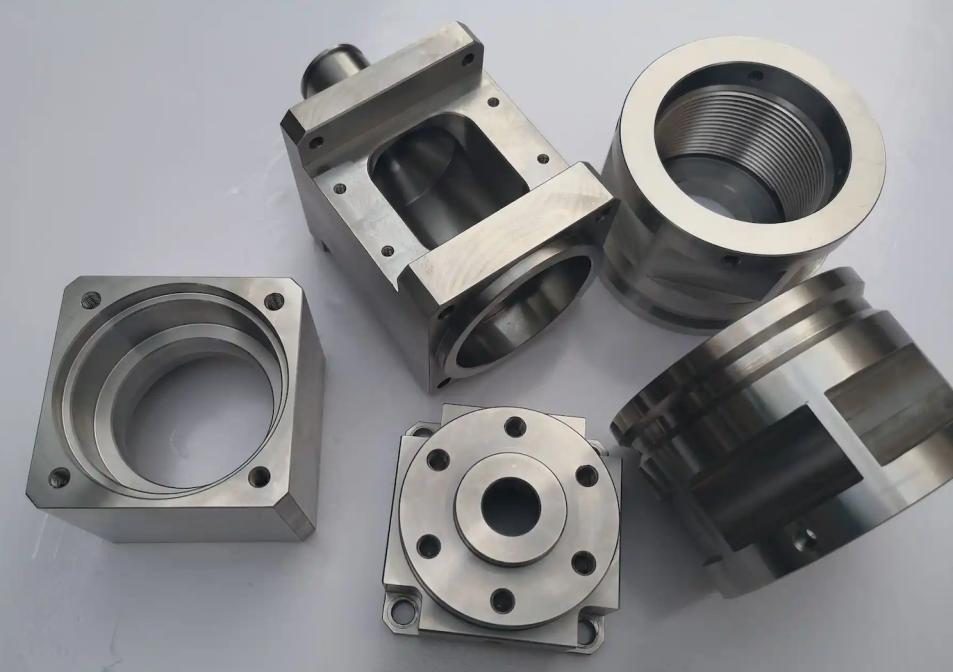
In order to guarantee CNC machined parts are qualified in terms of dimensions, structure, material, and actual performance, manufacturers usually adopt a number of professional testing methods for verification.
1. Dimensional Inspection
Dimensional inspection is the most fundamental and critical part of CNC machining quality control. The primary function is to ensure that the true machined dimensions of a component entirely meet the engineering drawing specifications. This is because even the slightest variation can influence assembly accuracy and performance.
The most commonly used devices are calipers, micrometers, height gauges, and coordinate measuring machines (CMM). Of these, CMMs have the ability to measure three-dimensional spatial locations, especially for complex and precision components. Through the acquisition and analysis of accurate data, manufacturers are able to evaluate the extent of dimensional variation and make quality assessments.
2. Tolerance and Geometric Accuracy Testing
While basic dimensions are important, tolerance and geometric inaccuracies are also factors that go into making a component acceptable. In precision assembly, even if the dimensions are acceptable, high geometric inaccuracies can cause problems in assembly or stability.
With the help of dedicated testing equipment or CMMs, manufacturers are able to test flatness, concentricity, circularity, positional accuracy, parallelism, and perpendicularity. When it comes to tolerance testing, manufacturers are able to ensure that the components are acceptable from a functional perspective. In high-end applications, a detailed report is also provided to improve traceability.
3. Surface Finish Inspection
The surface finish has a direct influence on the friction, sealing, and durability of the part. In most cases, the engineering drawing will include the surface roughness values, with the sealing or sliding surfaces requiring lower values.
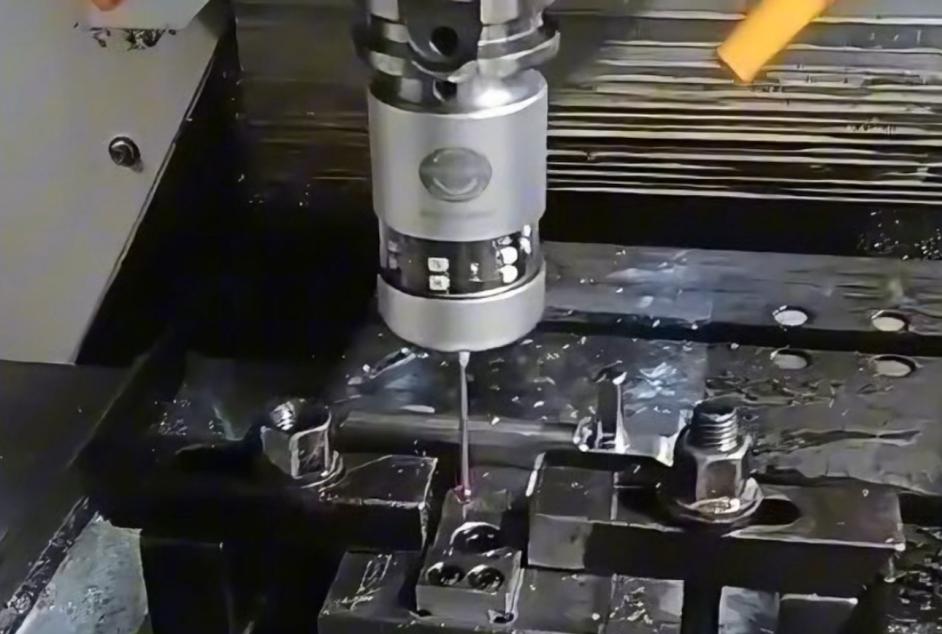
Using the surface roughness tester, the manufacturer can determine if the surface finish meets the design specifications and if there are any tool marks, ripples, or unusual textures on the surface. A good surface finish not only increases efficiency but also the life of the part.
4. Material and Hardness Testing
Quality inspection is not only conducted on the appearance and size of the material, but it is also necessary to ensure that the material itself is of technical quality. The properties of the material have a direct effect on the strength and durability of the material.
The usual techniques used for quality inspection include the analysis of material composition by spectrometers and hardness testing by the Rockwell or Vickers method. Material and hardness testing is particularly important for high-strength alloy or tool steel parts.
5. Functional Testing
For certain critical parts, dimensional and material inspections alone are insufficient. Functional testing is required to verify actual performance. The goal of functional testing is to simulate real operating conditions and confirm that the part performs reliably under working conditions.
Common functional tests include assembly testing, seal testing, pressure testing, and dynamic operation testing. These tests help identify potential issues early, reducing the risk of failures in the field. In industries requiring high reliability, functional verification is a key step in ensuring product quality.
Common Inspection Equipment in CNC Quality Control
To ensure overall quality of CNC parts, modern manufacturing companies usually endue themselves with various specialized inspection tools. These tools are used to ensure that all dimensions of a part, including geometric accuracy, surface finish, and material properties, are in accordance with design requirements. Below is a list of commonly used inspection tools and their applications.
1. Coordinate Measuring Machine (CMM)
The CMM is one of the most important inspection tools used in modern manufacturing. This tool is capable of performing three-dimensional measurements by gathering coordinate information using a probe. CMMs are used for both individual high-accuracy parts and production process control for the purpose of ensuring that all dimensional and geometric specifications are in accordance with design requirements.
2. Optical Comparator
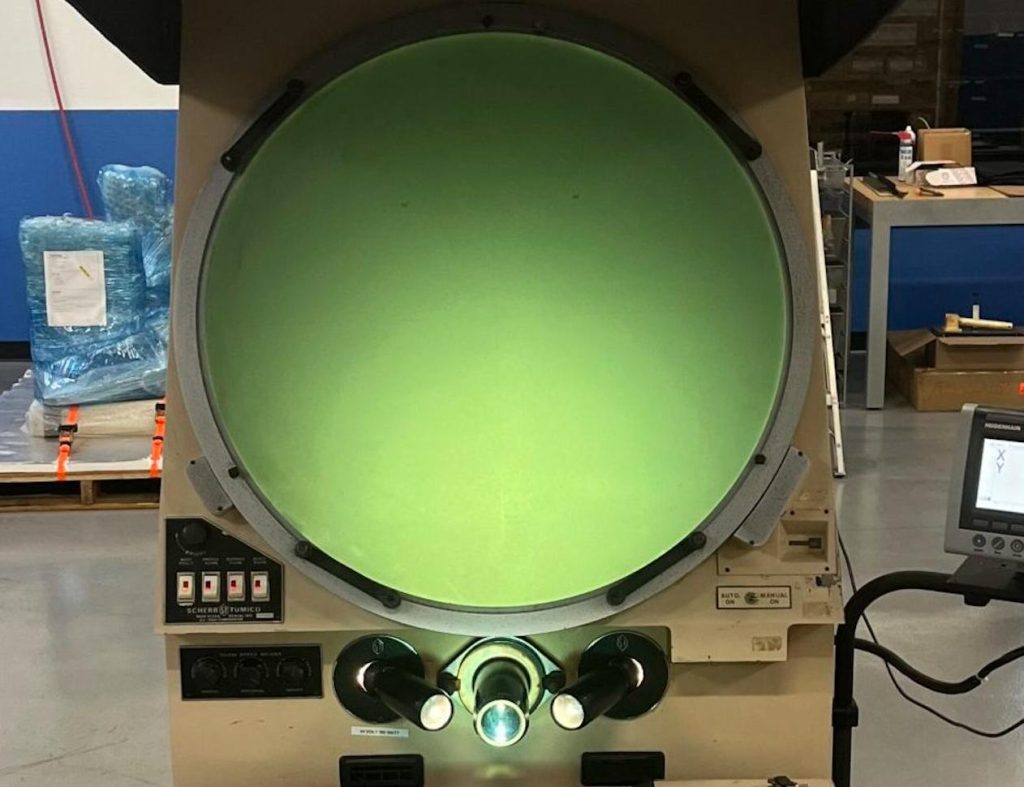
An optical comparator is a device that projects the profile of a part onto a screen using magnified optical imaging. It is very useful for quickly checking the dimensions and shapes of small, thin-walled, or complex parts. It is a non-contact measurement technique, so it does not have the potential for slight deformation as in contact measurement tools, ensuring high accuracy of measurement.
3. Surface Roughness Tester
Surface roughness testers measure Ra values or other surface finish parameters of parts. They can detect tool marks, irregular textures, or uneven surfaces to ensure that sliding surfaces, sealing surfaces, or other critical areas meet design standards. This equipment is especially important for seals, hydraulic components, and high-speed moving parts.
4. Vision Measurement System
Vision measurement systems use high-resolution cameras to capture images of parts and software to perform automated measurements. They are particularly effective for small, precision components with complex geometries, allowing fast and accurate analysis of dimensional and positional accuracy. Compared to traditional measurement tools, vision systems offer significant advantages in speed, efficiency, and repeatability.
5. Hardness Tester
The hardness testers are employed to measure the hardness of the material of the components, depending on the Rockwell or Vickers test. The hardness test is an important procedure to verify the effectiveness of heat treatment, strength, and wear resistance, and thus plays a pivotal role in ascertaining the safety of the structure.
Apart from these tools, many companies adhere to the ISO 9001 quality management system to implement systematic quality processes and standard operating procedures. For aerospace component manufacturers, adherence to the AS9100 standard is also mandatory, to ensure that the components conform to the highest standards of safety and reliability.
Common Quality Issues in CNC Machined Parts
In the course of inspecting CNC machined parts, there are a number of common quality issues that manufacturers are likely to encounter. Knowledge of these common problems is essential in setting up an effective quality control process that ensures issues are identified and addressed early on in the manufacturing process, thereby preventing widespread scrap and system failures. The following are some of the common quality issues and their possible effects.
1. Dimensional Out-of-Tolerance
Dimensional out-of-tolerance is one of the most frequent challenges encountered when performing CNC machining, often leading to assembly difficulties, interference or functional failure. Possible sources include worn tooling, improper machine calibration or program errors in machining program. Implementing regular in-process inspections with sampling key dimensions will detect deviations early and allow adjustments in parameters so as to ensure parts meet design specifications.
2. Burrs and Sharp Edges
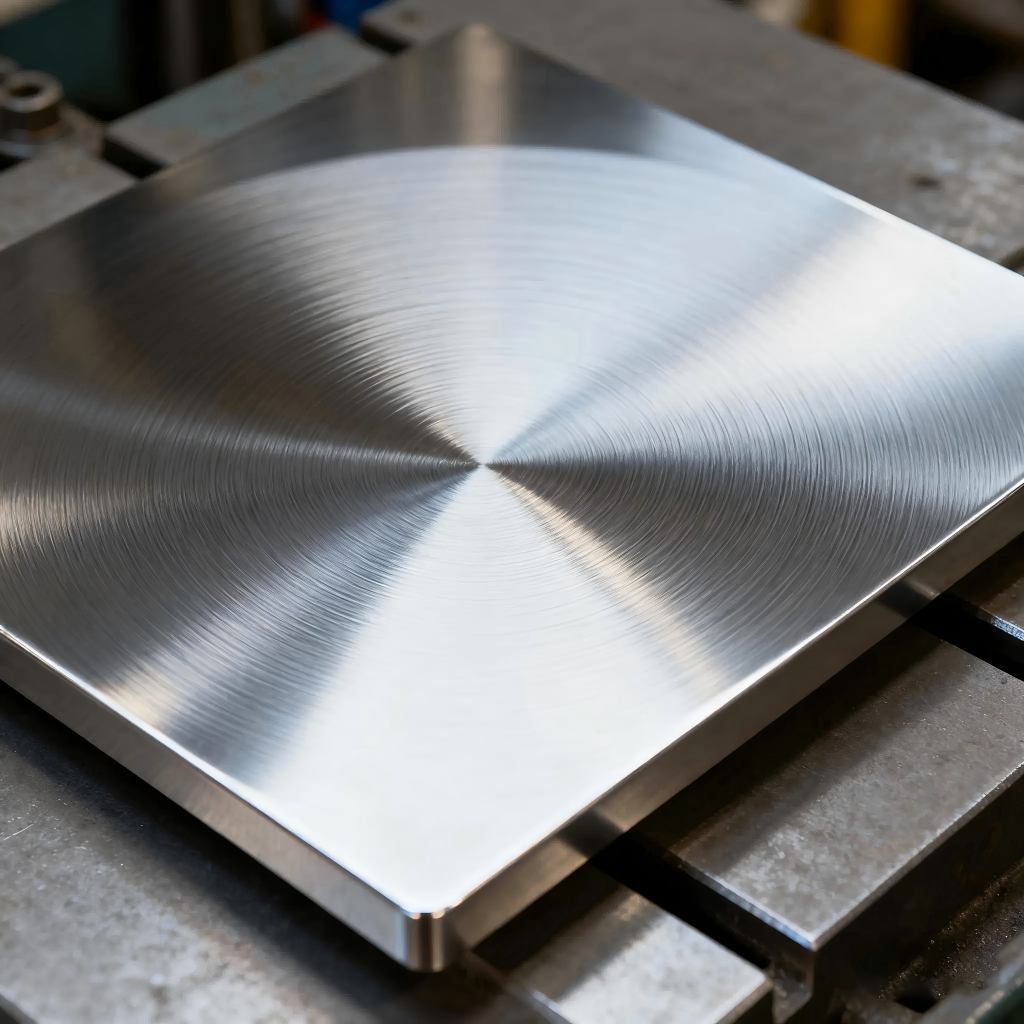
Burrs are small sharp edges generated during the cutting process that may obstruct part appearance, interfere with assembly or compromise sealing systems – and even pose safety risks during handling. Thankfully, deburring processes such as ultrasonic cleaning or polishing are available to effectively eliminate burrs to ensure safe surfaces on machined parts.
3. Surface Scratches
Surface scratches reduce a part’s friction performance and sealing ability and may serve as initiation points for fatigue cracks. Scratches are often caused by improper machining, handling, or fixturing. Surface roughness measurements and visual inspections help identify scratches early, allowing corrective polishing or re-machining to maintain surface quality standards.
4. Hole Misalignment
Hole misalignment may impact the accuracy of assembly, resulting in the non-engagement of bolt holes, locating holes, or shaft bores with their mating components. The reasons for hole misalignment are machine positioning errors, fixture misalignment, or problems with the machining program.
5. Out-of-Spec Concentricity
Concentricity is an important specification for cylindrical objects. When shafts, holes, or other circular features are not concentric within specifications, it may lead to unwanted vibrations, excessive wear, or unusual power transmission. Concentricity measurement using CMMs or other precision instruments enables early detection and prevents problems in the long run.
6. Incorrect Material
Incorrect material may lead to lack of strength, inadequate wear resistance, or inadequate heat treatment performance. The reasons may include supplier mistakes or improper material identification and handling. Material composition analysis, hardness testing, and heat treatment validation ensure that the material of the object corresponds to design specifications, thereby ensuring integrity and longevity.
Complete CNC Quality Control Process
In precision manufacturing, a full-fledged CNC quality control system should ideally span the entire process chain, from the raw material stage to the shipment of the final product, to ensure that all manufactured parts conform to design specifications. Below is a detailed description of the entire process chain.
1. Incoming Quality Control (IQC)
The incoming quality control process is the first stage of the quality control process chain in a quality management system. The main objective of this process is to ensure that the materials or semi-finished goods supplied by the supplier conform to design specifications.
- Check material certificates and specification parameters
- Conduct physical and chemical property verification, such as material composition analysis and hardness testing
- Perform sampling measurements on critical dimensions
Strict IQC helps prevent material-related defects before production, ensuring smooth downstream machining and reducing the risk of rework.
2. First Article Inspection (FAI)
FAI is conducted after the first part of a production run is completed. Its goal is to verify that production programs, machining processes, and equipment settings can consistently produce parts that meet the engineering drawings.
- Perform comprehensive measurements of critical dimensions, geometric tolerances, and features
- Inspect surface quality, burrs, and other machining defects
- Verify material properties and hardness compliance
FAI allows manufacturers to identify potential issues early and optimize machining parameters or processes, ensuring consistent quality in subsequent batch production.
3. In-Process Quality Control (IPQC)
IPQC involves sampling inspections during production to monitor process stability in real time and prevent defective parts from progressing to the next stage.
- Periodically measure key dimensions and tolerances
- Check surface finish and hole accuracy
- Record production data for traceability and continuous improvement
Through IPQC, deviations can be detected and corrected during production, reducing rework and scrap rates.
4. Outgoing Quality Control (OQC)
OQC is the final quality check before shipment, ensuring that the parts delivered to the customer fully meet requirements.
- Perform comprehensive inspection of critical dimensions, surface quality, and functional performance
- Verify material records and heat treatment documentation
- Check packaging and labeling to prevent damage during transportation
OQC not only verifies the production process but also protects customer satisfaction and company reputation.
5. Inspection Reports & Certificates
A complete quality control workflow also includes providing detailed inspection reports and certificates to customers, ensuring traceability of each part.
- Dimensional inspection reports
- Material analysis reports
- Certificates of Conformance (COC)
These documents serve as proof of quality and demonstrate the company’s responsibility and professionalism.
Integrating IQC, FAI, IPQC, OQC, and comprehensive inspection reporting, manufacturers can achieve a full-process quality management system. This ensures that every batch of CNC machined parts consistently meets dimensional, material, and performance requirements, enhancing product reliability and market competitiveness.
How Quality Testing Reduces CNC Project Costs?
Many companies assume that quality testing increases production costs. In reality, strict quality testing for CNC machined parts not only ensures part reliability but also effectively reduces overall project costs and enhances competitiveness. Here’s how it helps.
1. Reduce Rework
Through the early identification of problems related to dimension, tolerance, or material in the production stage by means of incoming and in-process inspections, defective products can be prevented from reaching the next stage of production or assembly. This will result in a savings in labor, equipment, and material costs.
2. Minimize Customer Complaints
Products that are carefully inspected have a higher likelihood of meeting specifications and customer requirements. This will result in a reduction in customer complaints, which in turn will save the company money in after-sales service expenses and will also help in maintaining a good reputation.
3. Prevent Mass Scrap
Undetected quality issues can result in entire batches being scrapped. Mass scrap not only causes direct material losses but also incurs additional costs for machining, transportation, and inventory management. A systematic testing process allows issues to be identified early, preventing large-scale losses.
4.Guarantee Stable Delivery
To maintain high part yield and meet production schedules on time, strict quality inspections play an essential role in maintaining predictable supply chain operations and minimizing delays, penalties or customer claims.
Quality testing may incur a small up-front inspection cost, but in the long run it can significantly lower rework, scrap, and after sales expenses while simultaneously improving delivery reliability and customer trust – ultimately increasing profit margins while realizing its principle that quality equals cost control.
How KENENG CNC Machining Service Ensures Quality?
At KENENG, we recognize that high-precision and reliable CNC parts are essential to the success of our customers’ projects. From pre-production to delivery, every process is carefully controlled to ensure that each part meets customer satisfaction and international standards. We do this by the following quality control measures:
Advanced Equipment and Precision Machining
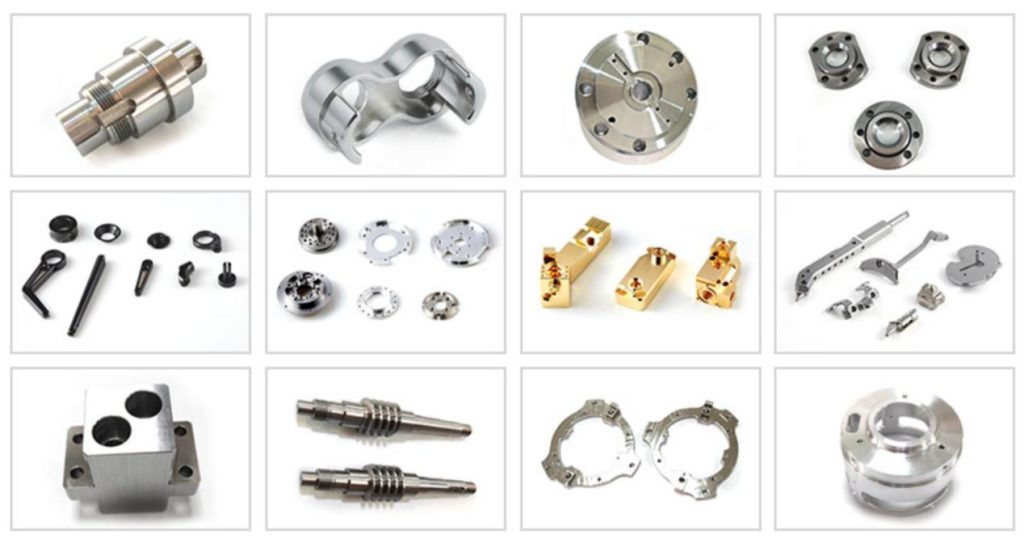
KENENG currently boasts 16 high-performance CNC machines, such as 3-axis, 4-axis and 5-axis machining centers, multi-axis lathes and Swiss-type screw machines, providing access to complex parts in just one setup. Combining milling, turning, drilling, threading EDM wire EDM each part can reach dimensions accuracy up to +0.001 inch with strict tolerance control.
Extensive Material Expertise
We work with over 200 metal and engineering plastic materials, such as aluminum alloys, titanium, stainless steel, inconel, PEEK and Ultem, as well as many specialty materials like PEEK and Ultem that meet strength, thermal, corrosion resistance and lightweight requirements. Through careful material selection and testing procedures, we ensure all parts meet strength, thermal requirements as well as corrosion resistance requirements.
Comprehensive Quality Inspection System
From first-article inspection (FAI) to in-process inspection (IPQC) and final outgoing inspection (OQC), every batch undergoes thorough quality checks. Our equipment includes coordinate measuring machines (CMM), optical comparators, and surface roughness testers to verify dimensions, tolerances, geometry, and surface finish, ensuring complete compliance with customer drawings.
Design for Manufacturability (DFM) Optimization
Our engineering team reviews customer designs before production, providing DFM recommendations to reduce machining complexity, shorten lead times, lower costs, and improve part performance and consistency.
Post-Processing and Surface Treatment Solutions
Deburring, chamfering, bead blasting, anodizing plating passivation powder coating and heat treatment services are offered to ensure parts are both durable and visually appealing.
Rapid Response and On-Time Delivery
KENENG’s efficient production workflows and management allow them to complete small-batch orders within three working days, making timely delivery possible for urgent customer requirements.
KENENG’s advanced equipment, stringent inspection processes, material knowledge expertise and professional engineering support ensure quality is embedded into every stage of production, creating CNC machined parts that consistently surpass customer expectations for precision, reliability and high-quality CNC machining services.
Final Thoughts
With today’s high-precision manufacturing techniques, quality testing of CNC machined parts is no longer simply a visual inspection, it has evolved into a systematic quality assurance framework that determines reliability, service life and overall performance as well as company market competitiveness.
KENENG has implemented an impeccable quality control system that is essential to project success and an important consideration when selecting a CNC machining partner for long-term collaboration and top-quality deliveries.