Design for CNC Machining: 10 Key Principles You Should Know

Design for CNC Machining: 10 Key Principles You Should Know

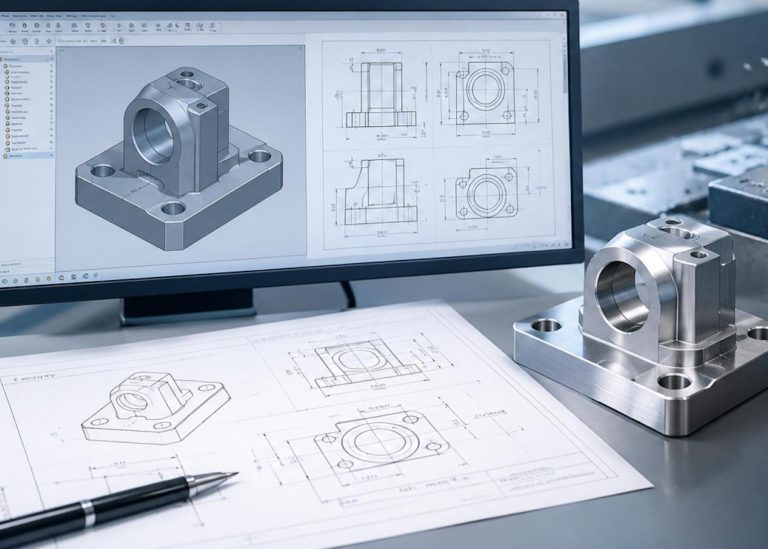
CNC machining is widely used in industrial equipment, automotive components, aerospace, medical devices, and precision machinery manufacturing. However, a well-designed part must do more than meet functional and assembly requirements. It should also be manufacturable with consistent quality, reasonable lead times, and controlled production costs. Proper design can reduce unnecessary machining operations, minimize tool wear…
OEM vs. Custom Manufacturing in CNC Parts: Which One to Choose?

OEM vs. Custom Manufacturing in CNC Parts: Which One to Choose?

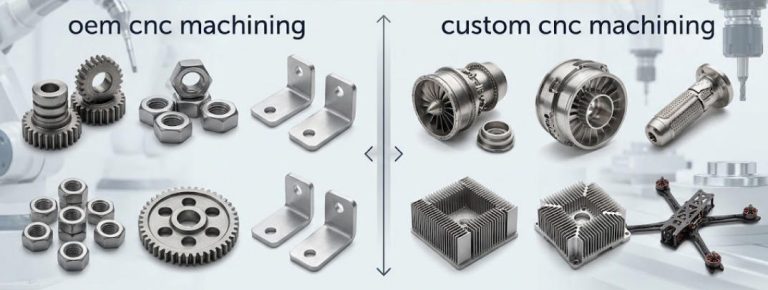
CNC machining is used to manufacture precision components for industries like cars, aircraft, medical products, electronics, and industrial equipment. When sourcing CNC parts, businesses usually compare OEM manufacturing with custom manufacturing. Both can produce accurate parts. But they differ in design responsibility, production flexibility, cost structure, and application requirements. Knowing how OEM and custom manufacturing…

Deburring Strategies for Precision CNC Machined Parts

Deburring Strategies for Precision CNC Machined Parts

Precision CNC machining is used to make parts that need tight tolerances, complex geometries, and smooth surfaces. However, machining processes like milling, drilling, turning, and grinding can leave burrs. Burrs are small bits of extra metal that show up near edges, holes, and machined surfaces. These burrs can affect dimensional accuracy, assembly performance, product safety and…

 CNC Machining Surface Roughness: Guide to Ra and Rz Parameters

 CNC Machining Surface Roughness: Guide to Ra and Rz Parameters

In CNC machining and precision manufacturing, surface roughness (surface finish) is one of the critical metrics used to evaluate the quality of machined parts. Whether for aerospace components, medical devices, or high-performance automotive transmission parts, a superior surface finish not only enhances visual aesthetics but also directly dictates wear resistance, sealing performance, fatigue strength, and fitting…

CNC Machining Lead Time: How Long Does It Take to Manufacture Custom Parts

CNC Machining Lead Time: How Long Does It Take to Manufacture Custom Parts

In precision manufacturing and hardware development, “time is market competitiveness.” Whether for new product R&D iterations, prototype validation, or urgent spare part replacements, the lead time of CNC machined parts directly determines project launch deadlines and market responsiveness. However, you might often face these frustrating questions: Why do different manufacturers quote drastically different lead times…

How to Overcome Challenges in Manufacturing Thin-Wall CNC Parts?

How to Overcome Challenges in Manufacturing Thin-Wall CNC Parts?

Thin-wall CNC parts are common where weight matters and details must stay accurate with efficient material utilization, such as aerospace, automotive, medical devices, electronics, and industrial machines. In these CNC machined parts, the walls are kept thin, but the dimensional accuracy and mechanical performance needed for the job are still maintained. However, manufacturing thin-wall CNC…

CNC Machined Parts for Construction Equipment: Why and How are They Used

CNC Machined Parts for Construction Equipment: Why and How are They Used

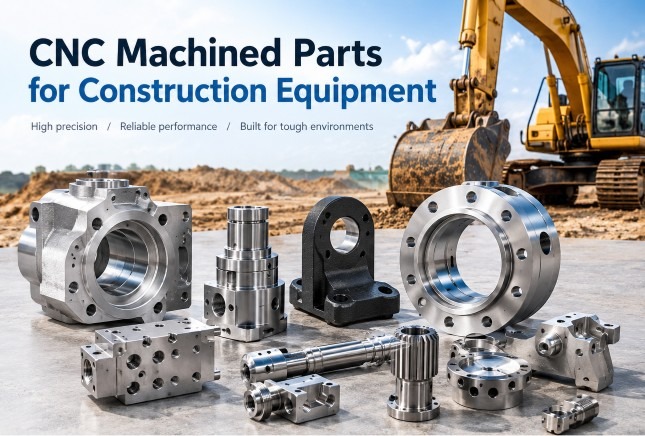
In extreme operating environments, the reliability of heavy machinery (such as excavators, loaders, bulldozers, and cranes) directly dictates construction efficiency and equipment uptime. Failures in hydraulic systems, bearing wear, or fractures in critical fasteners not only result in exorbitant downtime and repair costs, but can also trigger severe safety accidents. To ensure equipment operates stably…

How CNC Machining Supports the Optics Industry

How CNC Machining Supports the Optics Industry

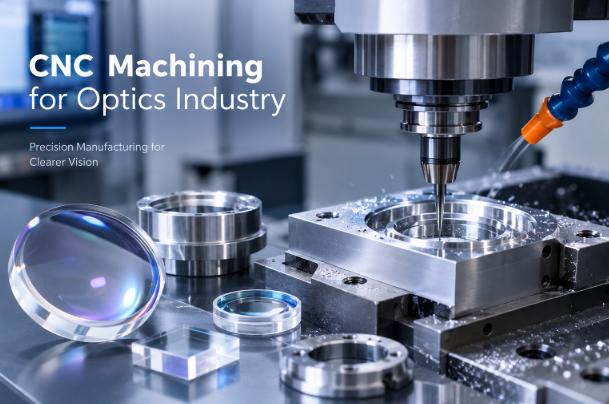
In the manufacturing of modern optoelectronic systems, laser equipment, and high-precision imaging instruments, a micrometer-level deviation in the optical path can lead to beam scattering, focal length displacement, or complete system failure. CNC Machining for Optics is not merely a traditional cutting process; it is a highly challenging engineering discipline that integrates ultra-precision manufacturing, thermal stability…

What Drives the Growing Demand for Custom CNC Parts?

What Drives the Growing Demand for Custom CNC Parts?

Modern manufacturing is changing pretty fast, as industries need higher precision, more adaptability, and faster output cycles. Standardized parts are no longer enough for many advanced uses, because companies keep pushing for elements engineered around particular performance needs, special assemblies, and those specialized operating surroundings. So yeah, the appetite for custom CNC parts has gone up…

How CNC Precision Machining Supports the Oil & Energy Industry

How CNC Precision Machining Supports the Oil & Energy Industry

n the oil, gas, and renewable energy industries, mechanical components often need to operate under extreme conditions, including high-pressure and high-temperature (HPHT) environments, highly corrosive media such as wet hydrogen sulfide (H₂S), and high-pressure subsea conditions. As a result, energy equipment requires extremely high standards for component strength, sealing performance, and dimensional tolerances. CNC precision…

End of content

End of content