How to Reduce Lead Time in CNC Part Production?
In the manufacturing sector, the need to reduce lead time in the production of CNC parts has attained an unprecedented focus in the contemporary era of production. Lead time, the period spanning from the moment an order is placed to the delivery of the finished part, is a major determinant of production efficiency, customer satisfaction and profitability. Given the increasing need for customized precision-engineered CNC machining parts, production schedule optimization becomes a priority for most manufacturers. This article discusses the common effective techniques and management strategies relevant to reduce lead time in CNC part production.
Table of Contents
Understanding Lead Time in CNC Production
The lead time in CNC production is made up of order processing and design, raw material procurement, CAD programming, machining and finishing, quality inspection, and delivery. These processes can be delayed due to ineffective workflows, weak communication, or even machine downtimes at any of the stages. Hence, any reduction in lead time CNC production must be the result of holistic optimization of the processes of production and the management of operations.
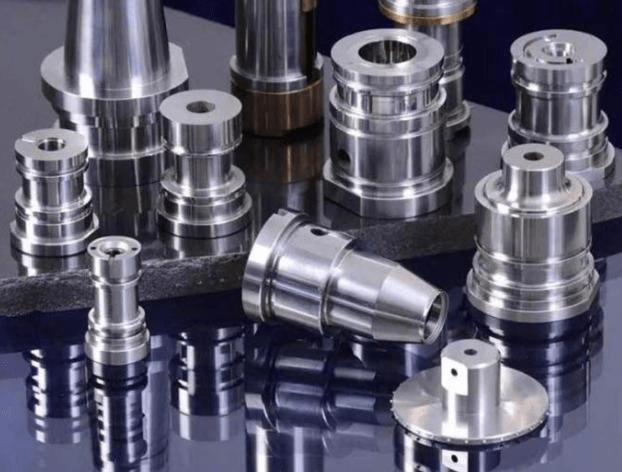
Key Strategies for Reducing Lead Time in CNC Part Production
The need to manage tight deadlines, low-cost bids, and optimized production schedules correlates with the extent to which manufacturers adopt production strategies for CNC machining parts that streamline processes and eliminate work inefficiencies at each stage of the CNC parts production system.
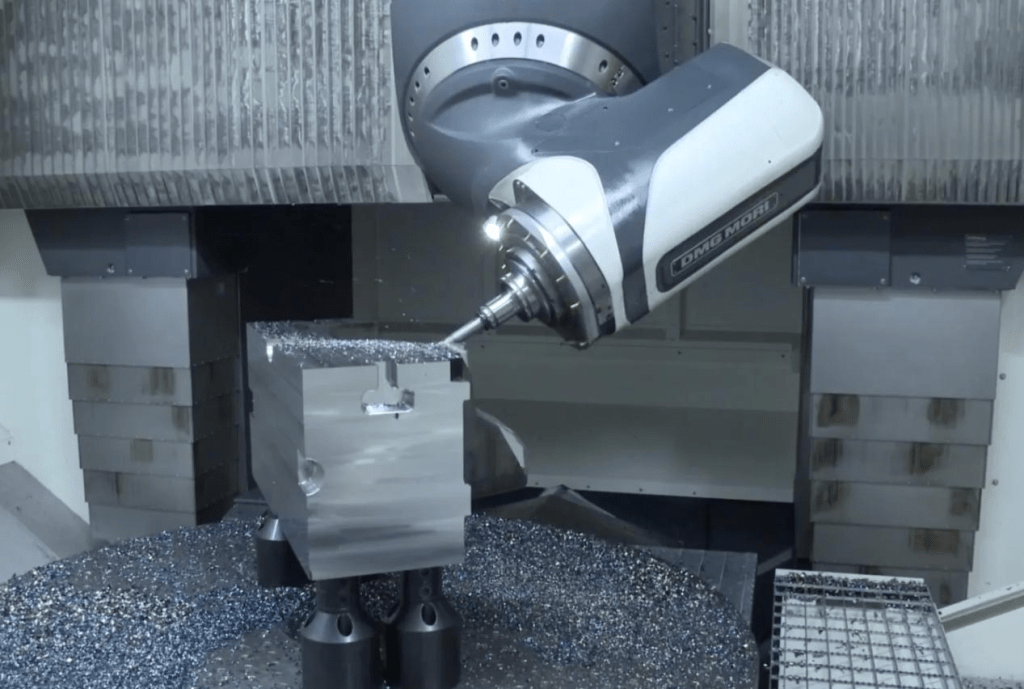
1. Streamlining Design and Programming
Minimizing the lead time during the design and programming phase has an effect on the overall time during production. In the CNC machining process, delays, often significance, occur during the design translation phase. Incorporating integrated CAD/CAM technology can mitigate such delays during the programming phase. This technology allows 3D design files to be converted into machine code, and thus programmed, with minimal human intervention, eliminating potential errors during programming and becoming more time efficient.
Pre-set tooling libraries and the use of standardized machining templates can reduce the time spent on programming, especially for repetitive part designs. Cutting down on time spent programming and machine setup delays can be achieved by automating repetitive tasks such as tool path generation.
2. Optimizing Material Procurement and Handling
Delays caused by the time taken to acquire and procure materials can lead to an increase in overall lead time. Manufacturers can assist in minimizing delays associated with the procurement of raw materials and reduce lead time by fostering relationships with material suppliers and obtaining trust with suppliers to keep commonly used materials in stock. A strategic inventory management system aids in eliminating time delays associated with material procurement by automating the process of real-time tracking and material stock reordering.
Equally important, automated systems for material handling can help minimize the time taken to load and unload materials, thus facilitating uninterrupted cycles of production. Again, the use of JIT inventory practices ensures that materials are stocked without overstocking, which can lead to high storage costs, inefficiency, and wastage.
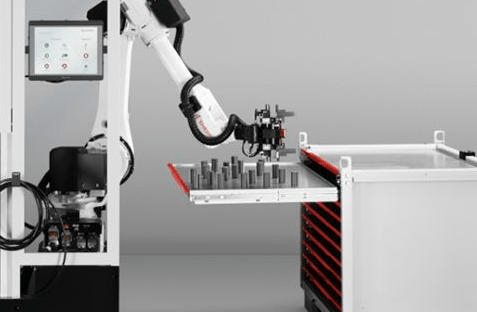
3. Using Advanced CNC Machining Technologies
Adopting advanced CNC machining technologies plays a crucial role in reducing lead time.
This clear and well-organized chart provides advanced technologies for reducing lead time in CNC part production
| Advanced Technology | Description | Impact on Lead Time Reduction |
| Automation and Robotics | Integration of robotic arms for tool loading, part handling, and inspection tasks. | Minimizes manual intervention, increases consistency, and enables 24/7 production. |
| AI-Powered Toolpath Optimization | Uses artificial intelligence to generate the most efficient cutting paths. | Reduces machining time and tool wear, improving productivity. |
| High-Speed Machining (HSM) | Utilizes advanced spindle speeds and feed rates for precision cutting. | Decreases machining cycles while maintaining high accuracy and surface quality. |
| Real-Time Machine Monitoring (IoT) | Employs sensors and data analytics to track equipment performance. | Enables predictive maintenance and reduces downtime due to unexpected failures. |
| Additive Manufacturing Integration | Combines 3D printing with CNC machining for hybrid manufacturing. | Speeds up prototyping and reduces material waste before full production. |
| Automated Tool Management Systems | Smart tool storage and identification systems to manage tool changes efficiently. | Reduces setup time and ensures tools are always ready for production. |
| Digital Twin Simulation | Virtual replication of CNC processes to simulate operations before machining. | Detects design and process issues early, minimizing rework and trial runs. |
| Collaborative CNC Platforms (Cloud-Based) | Cloud-based data sharing and scheduling across multiple machines or sites. | Improves coordination, enabling faster order processing and job allocation. |
| Advanced Cutting Tool Materials and Coatings | Use of nano-coated and carbide tools for longer tool life and higher cutting speeds. | Decreases tool change frequency, maintaining faster machining throughput. |
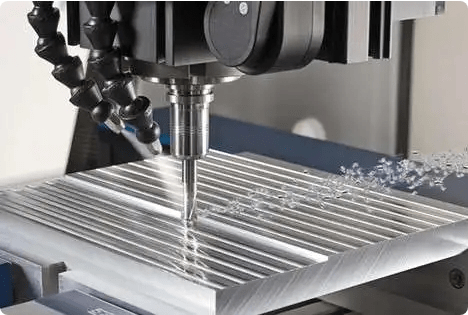
4. Implementing Automation and Robotics
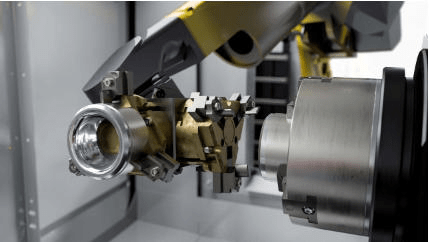
There are no doubts that automation and the use of robotics lead to considerable reductions in lead time. For instance, the use of robotic arms in material handling, tool changing, and part loading and unloading minimizes production downtime. With modern automation, production can continue uninterrupted even after working hours, which is desirable for lights-out machining. This is where the machines are left to run unattended for extended periods, which could be overnight or over the weekends. Automated pallet systems and robotic tool changers promote the efficient functioning of machines, thereby increasing the rate of production and minimizing the need of human intervention.
Automated systems that inspect the quality of parts and materials as they are being produced help in early identification and resolution of quality issues, which reduces the need for rework and scrap. Quality assurance delays which are caused by defective parts are allevi as defects are rectified before parts are delivered to customers.
5. Adopting Lean Manufacturing Principles
Lean manufacturing principles involve optimizing production processes and eliminating waste. By using lean principles, manufacturers can identify bottlenecks, mitigate unnecessary motion, and refine the flow of operations. Value Stream Mapping (VSM) helps manufacturers visualize pathways of materials and information, allowing the identification of stages within the production process that waste excess time and resources.
A core element of lean is continuous improvement (Kaizen) that empowers employees at every level to refine processes and eradicate inefficiencies. Auditing performance provides the basis for the standardization of work methods, thus, ensuring that operations do not stagnate and that new opportunities for improvement are constantly identified and pursued.
6. Real-Time Production Monitoring and Data Analytics
Manufacturers can monitor the performance of machines, the progress of production, and the wear of tools, thus, enabling the reduction of lead time through real-time production monitoring. IoT (Internet of Things) sensors and Manufacturing Execution Systems (MES) are sources of real-time information that allows operators to make quick adjustments to reduce downtime.
Manufacturers can do predictive maintenance by monitoring the life of tools and the condition of machines, thus, helping to schedule maintenance operations and repairs to avert breakdowns that lead to unplanned downtimes. Additionally, the analytical prediction of probable delays in production helps in optimizing cycle times, improving machine utilization, and averting major delays.
7. Improving Workforce Training and Skill Development
Efficient lead times in CNC production require CNC operators and CNC programmers to be fully proficient in the operation, programming, and troubleshooting of advanced CNC machines. Incorporating advanced CNC machines in production processes becomes a more efficient CNC production technique when CNC workforce training is performed at a sufficiently high level. Operators need to attend the CNC workforce training at regular intervals to embrace the technological advancements of CNC machines as training keeps operators proficient and reduces human error in production processes while expediting the resolution of problems on the shop CNC floor.
In addition, employees who are able to perform a number of duties, which in this case are the operation of a machine, the inspection and the programming, are able to enhance flexibility and decrease delays brought on by a lack of personnel or skill gaps. Such a team is able to adjust to shifts in production requirements, which is essential when lead times need to be controlled.
8. Integrating Quality Control into the Production Process
Maintaining high quality while reducing lead time requires an integrated approach to quality control.
This detailed chart provides integrating quality control into the CNC part production process.
| Quality Control Method | Description | Role in CNC Part Production | Impact on Efficiency and Lead Time |
| In-Process Inspection | Real-time monitoring of dimensions and tolerances during machining using sensors or probes. | Detects deviations early before the next operation. | Reduces rework and scrap rates, ensuring continuous workflow. |
| Coordinate Measuring Machines (CMM) | Precision measurement of finished components to verify geometric accuracy. | Ensures parts meet exact specifications. | Improves consistency and minimizes post-production inspection delays. |
| Statistical Process Control (SPC) | Uses statistical data to track process stability and variation. | Identifies process trends and potential quality issues. | Prevents defects and reduces downtime due to corrective actions. |
| Automated Optical Inspection (AOI) | Uses cameras and vision systems to inspect part surfaces and dimensions. | Detects surface defects and dimensional inconsistencies automatically. | Speeds up inspection while maintaining high accuracy. |
| Machine Tool Probing Systems | Integrated touch probes for tool and workpiece measurement directly on CNC machines. | Calibrates tool offsets and verifies part geometry in real-time. | Eliminates manual measurement time and ensures process precision. |
| Non-Destructive Testing (NDT) | Inspection using ultrasonic, magnetic, or X-ray techniques. | Checks internal or hidden defects without damaging parts. | Ensures high reliability for critical components without production delays. |
| Digital Quality Management Systems (QMS) | Centralized software to record, analyze, and trace inspection data. | Provides traceability and ensures compliance with standards. | Enhances workflow integration and reduces administrative delays. |
| Automated Feedback Loops | Connects quality data to CNC control systems for automatic parameter adjustments. | Enables adaptive machining and continuous process improvement. | Minimizes human error and optimizes machining in real-time. |
| First Article Inspection (FAI) | Comprehensive verification of the first manufactured part. | Confirms setup accuracy before mass production. | Prevents large-scale defects and ensures faster batch approval. |
| Training and Skill Development | Ongoing operator training in quality tools and inspection technologies. | Improves error detection and machine handling expertise. | Enhances overall process reliability and consistency. |
9. Enhancing Communication and Workflow Coordination
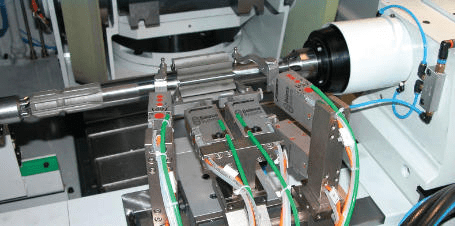
The lead time in system production can also be controlled by improving systems of communication in different departments and teams. Systems, which are parts of ERP and MES software, can be used to ensure that the design, production and quality control teams are integrated and directed along the same production control plan and maintained at the same level of priority.To prevent job scheduling, work orders, and material requisition automation from affecting communication within and between departments, and from receiving information in real-time, departments must be provided with real-time information, thereby reducing holdups from inadequate information and communication. Detailed documentation prevents bottleneck production flow from one procedure to another.
Technology Innovations Supporting Faster CNC Part Production
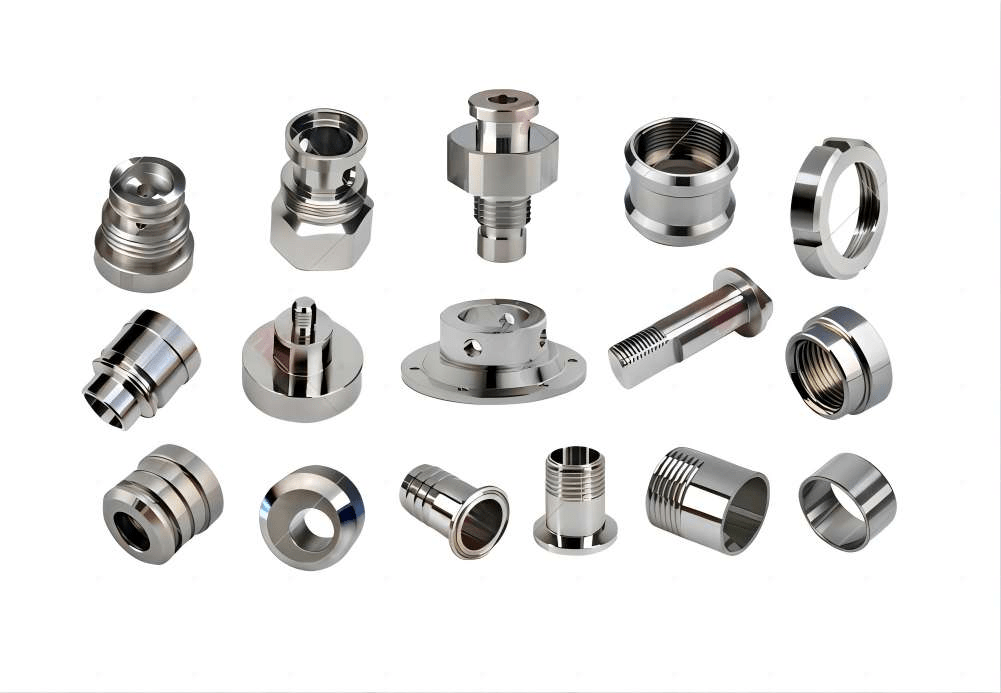
There have been many ongoing change and improvements in CNC machining with respect to speed, precision, and efficiency in the CNC part production.
- Multi-Axis CNC Machining
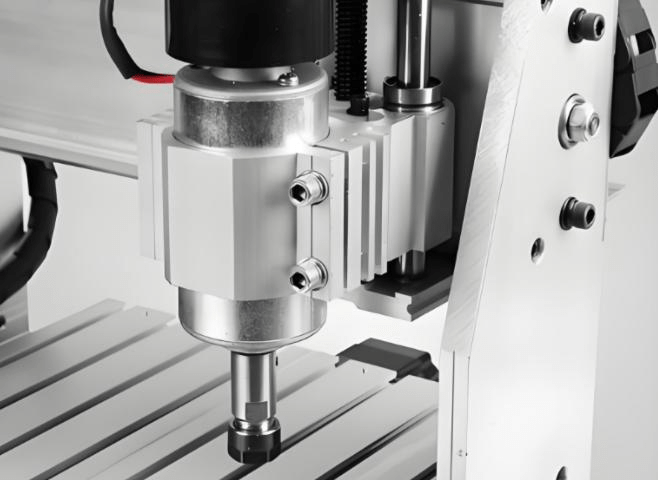
Part production has been greatly enhanced with the advent of multi-axis CNC machining since it greatly increases machining flexibility and greatly reduces setup times. Equipment enabling manufactures to process components with 4-axis and 5-axis CNC machines can be crafted from many angles all at once and there is no need for the workpiece to be repositioned during production.
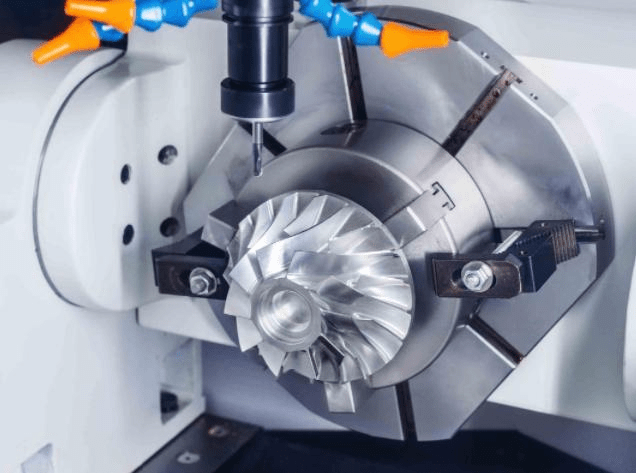
In the 3-axis CNC machining setup, production requires many machining prep and many tools to be changed during production. The use of multi-set machines greatly increases the speed and precision greatly in the production of turbine blades and up holds in aerospace components and other complex geometries in one operational setup.
- Smart CNC Machines with IoT Integration
Intelligent CNC machines with IoT sensors are changing the manufacturing industry by providing real-time analytics that help improve production efficiency. IoT enabled CNC machines can monitortemperature, vibration, spindle speed, and even tool wear, and send data for integrated system analysis.
Because of real-time monitoring, operators can help eliminate machine downtime by conducting predictive maintenance before mechanical failure. In addition, IoT data assists in refining machine settings, and maximizing operational efficiency. Optimized machine settings lead to minimized production delays, quicker part delivery times, and a more streamlined overall production process.
- Artificial Intelligence (AI) and Machine Learning(ML)
The developments of Artificial Intelligence (AI) and Machine Learning (ML) technologies are helping in the improvement of CNC machining operations. AI systems can analyze data produced by CNC machines to identify inefficiences in machining processes. AI systems can also determine optimal cutting conditions, predict tool wear, and recommend adjustments to machining processes.
Machine learning algorithms can refine adjustments of machining parameters which includes feed rates, cutting speeds, and tool paths based on historical data of the processes to enhance performance. It eliminates human errors, improves decision making, and speeds up the entire machining processes. AI also assists in the automation of repetitive tasks and machining strategy generation as well as in the quality control of produced parts.
- High-Precision Laser and Optical Inspection
Real time quality control through laser and optical systems has further reduced the lead time involved in the production of CNC machined parts. They are capable of measuring and validating the specification of the part and its features against the tolerances and specifications in record time thereby eliminating the need for time consuming manual inspections.
Automated inspections allow early detection of production cycle defects and quality issues thereby minimizing downtime due to rework and the associated delays. For parts that are high precision and demand close tolerances and tight tolerances, the final product depends on the precision maintained in the part for every millimeter.
- Advanced Software for Job Scheduling and Optimization
The integration of advanced job scheduling software and production optimization tools has greatly improved the planning and execution of operations in CNC machining. Manufacturers can use these software solutions to analyze and optimize production schedules based on order priority, machining time estimates, and machine availability.
Automating the scheduling system allows manufacturers to complete jobs in the most efficient sequence by minimizing machine capacity, tool availability, and the complex parts to be handled. This eliminates idle times and bottleneck delays, and it ensures that customer orders are processed in a timely manner.
Summary
Reducing lead time in CNC part production entails more than just speeding up machining; it involves every other step in the process, from design all the way to delivery. Implementing automation alongside lean principles framed within a digital and effective communication structure, manufacturers are capable of achieving precision and reliability within a lower turnaround time. As industries require faster and more individualized production and CNC machining continues to evolve, reduction of lead time will be a critical competency in CNC manufacturing.