Multi-axis Machining in Complex CNC Part Production
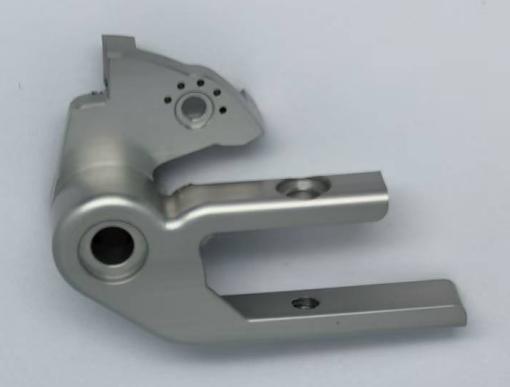
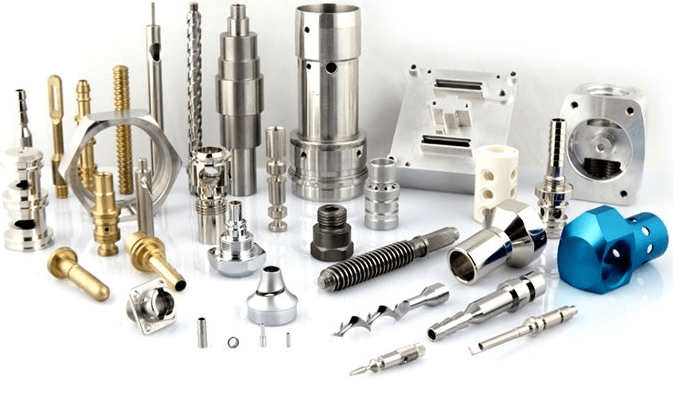
As industrial equipment gets more complex, the manufacturer often falls on the more advanced machining strategies to allow the manufacture to meet stringent design specs. When you want to make aerospace parts or medical equipment with complex shapes out of metals, the multi-axis machining enables the efficient fabrication of high precision CNC parts with complex geometries.
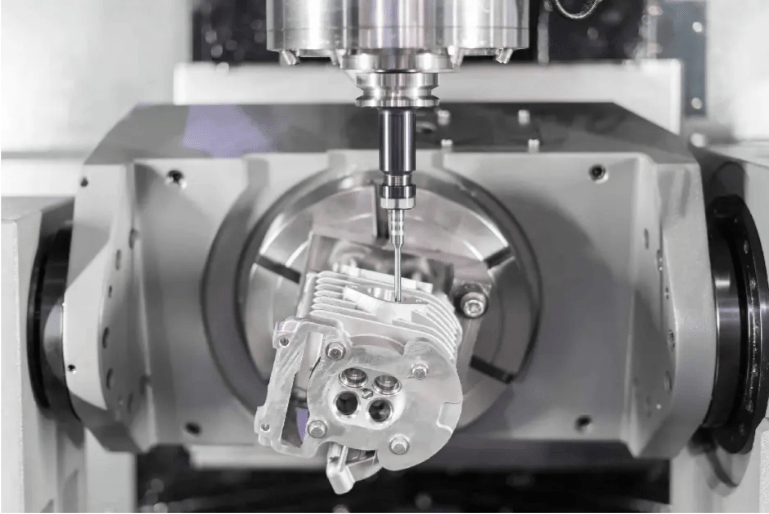
Table of Contents
Understanding the Basics of Multi-axis Machining
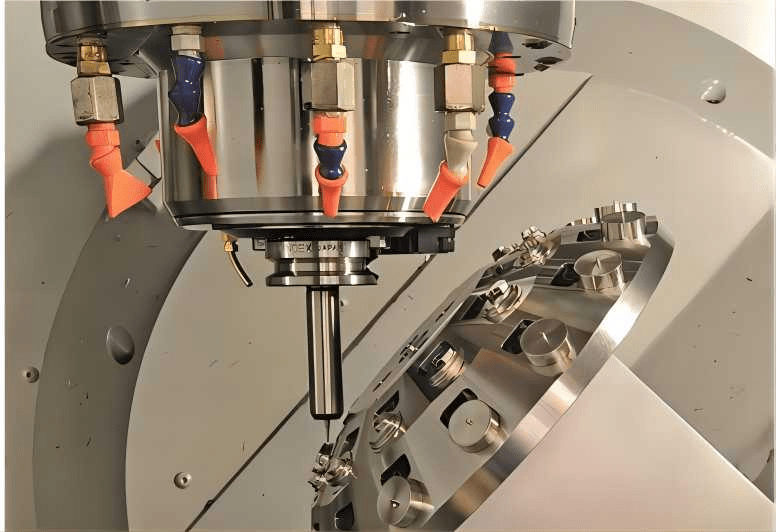
Multi-axis machining refers to CNC machines capable of moving a cutting tool or workpiece along multiple axes simultaneously. While traditional CNC machines operate on three axes (X, Y, and Z), multi-axis machines extend this capability by adding rotational movements, typically through A, B, or C axes.
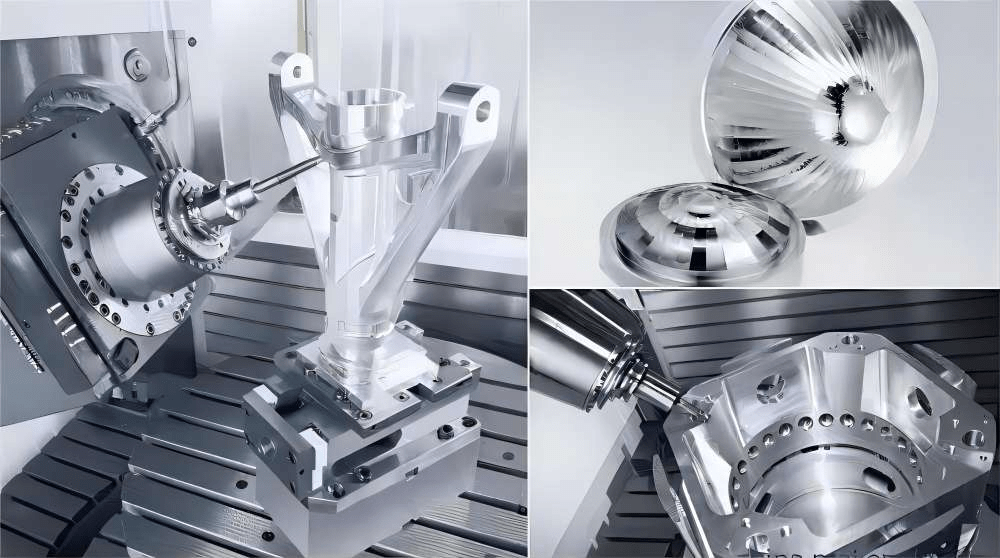
This additional motion merely allows the cutting tool to get the workpiece from almost any angle. This is ideal for tremendously maximizing the flexibility of a construction. Common setups include the 4-axis and 5-axis CNC machines, with 5-axis machining being perfectly approached for the manufacture of complex CNC machining parts.
Key Advantages of Using Multi-axis Machining in Complex CNC Part Production
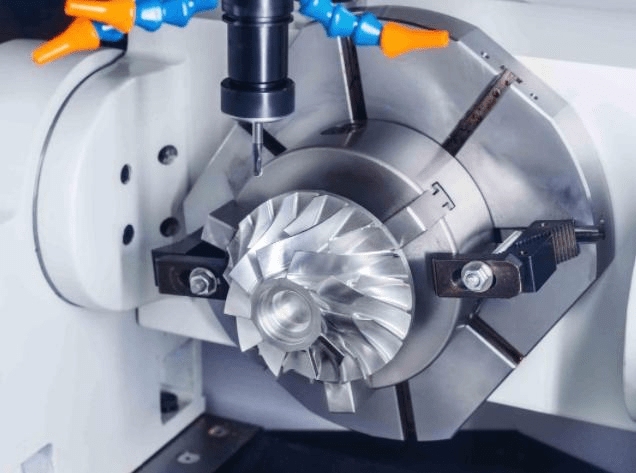
- Reduced Setup Time and Fewer Operations: Multi-axis machining allows machining on more than one side of the workpiece in one setup. This eliminates the need for repeated repositioning and re-clamping, thus aligning to boost setup time with respect to concomitant misalignment vanishances. With this, a faster, more consistent production is assured.
- Machine Complex Geometries: With a greater number of rotational axes, multi-axis machinery significantly undertakes paradoxical shapes, suitable for operations that involve curvature, deep cavities, and undercuts that cannot possibly be produced by machines featuring fewer axes. These production tasks are essential in the manufacture of intricate components in the aerospace, medical, electronics, and automotive industries.
- Improved Surface Finish and Accuracy: Tool movement in various mode enables cutting to be done at the correct orientations along very desired and smooth tool paths. The result is the super-finished surfaces that are exact down to tight tolerances and need little or no extra finishing work.
- Enhanced Production Efficiency: Thanks to multi-axis machines, many operations can be integrated into one job, thereby advancing the overall efficiency. Shorter cycle times and little hand tweaking help to increase the productivity and keep costs down.”
- Extended Tool Life: Multi-axis machining ensures optimal material engagement and work angle to allow even distribution of cutting forces, therefore extending tool life through decreased wear for longer periods of productivity, which in turn reduces tooling costs and the operatoin costs for tool changes.
- Greater Design Flexibility: Some Engineers and designers may now grab the opportunity to produce increasingl creative and sophisticated part geometry without any restrictions on machining. Multi-axis movement capabilities give way to production of dense and hard geometries that would never be considered feasible with any tradtional three-axis machining center.
- Reduced Risk of Human Error: Fewer setups and less workpiece handling involve lower risks of the human element causing setbacks. An automated, uninterrupted machining process maintains a consistent result, which is needed for more qualitative outputs.
- Better Material Utilization: Multi-axis machining affords precise production, which reduces waste and maximizes material usage. This is especially useful for working with costly materials such as titanium or specialized alloys.
Types of Multi-axis Machining in Complex CNC Part Production
| Type of Machining | Number of Axes | Motion Type | Key Characteristics | Typical Applications |
| 3-Axis Machining | 3 (X, Y, Z) | Linear only | Basic CNC machining; limited to simple geometries; requires multiple setups | Flat surfaces, simple parts, basic milling |
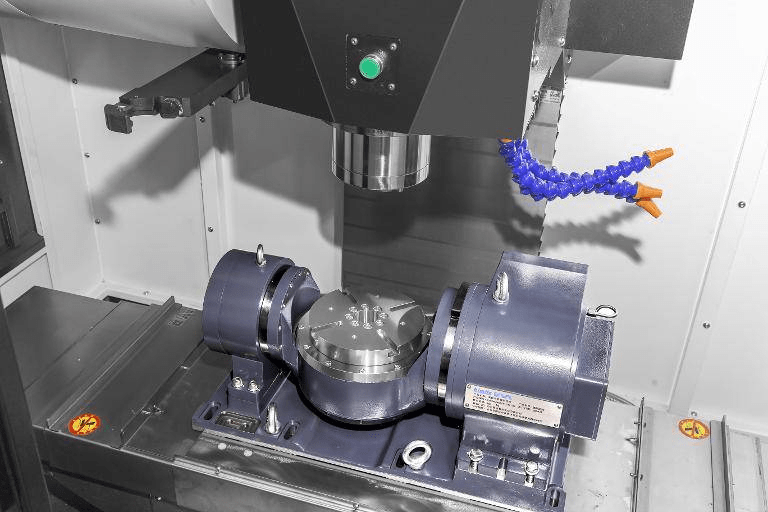
| 4-Axis Machining | 4 (X, Y, Z + 1 rotational) | Linear + rotational (usually A-axis) | Enables rotation of the workpiece; suitable for machining around cylindrical parts | Shafts, gears, cylindrical components |
| 3+2 Axis Machining (Positional 5-Axis) | 5 (but not simultaneous) | Indexed positioning + 3-axis cutting | Workpiece is rotated to a fixed angle, then machined; simpler programming than full 5-axis | Multi-face parts, molds, fixtures |
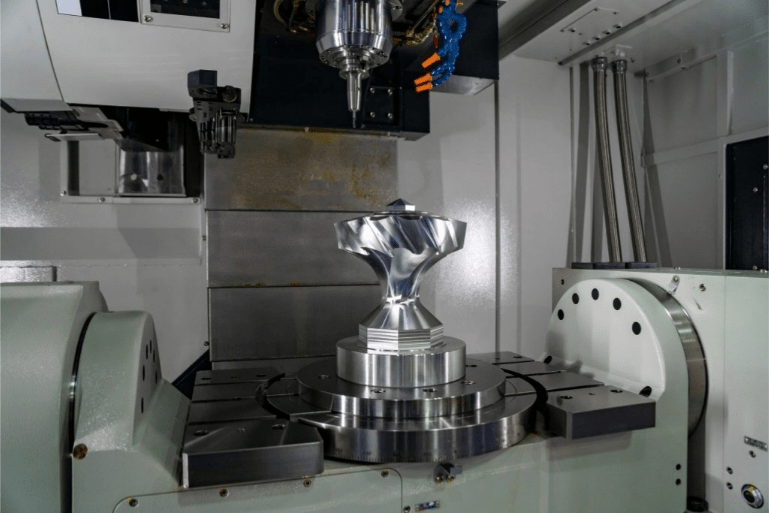
| Simultaneous 5-Axis Machining | 5 (X, Y, Z + 2 rotational) | Continuous simultaneous motion | All axes move at once; handles highly complex geometries with high precision | Turbine blades, impellers, aerospace parts |
| Mill-Turn Multi-axis Machining | 5+ axes | Combined milling and turning | Integrates turning and milling in one machine; reduces multiple setups | Complex rotational parts, medical implants |
| Swiss-type Multi-axis Machining | 5–9 axes | Sliding headstock + multi-directional tooling | High precision for small, intricate parts; continuous support of the workpiece | Micro components, medical devices, connectors |
Key Applications of Multi-axis Machining in CNC Part Production
1. Aerospace Industry
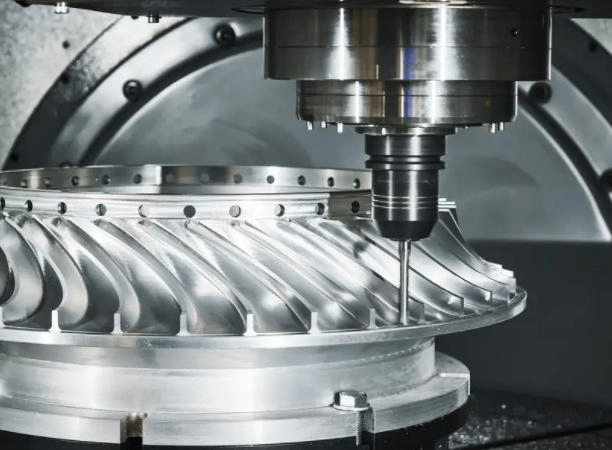
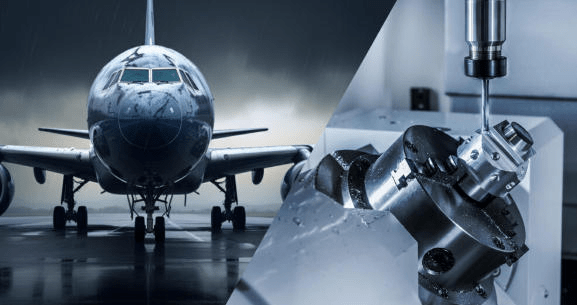
When it comes to manufacturing, especially for the aerospace sector, multi-axis CNC machining is a crucial norm for producing lightweight and substantial aerospace parts. The interest is often to create parts with curved surfaces and tight tolerance, leading to complicated pieces like turbine blades, impellers, engine housings, and structural brackets.
The multi-axis machining, then, offers the bonus of allowing multiple operations to be carried out on the part in one setup. This brings about superior precision, with less danger that the part might come out unaligned. Building consistency into part-making processes is of the paramount importance when being required to meat the stringent safety and performance regulations of space industries.
2. Medical Device Manufacturing
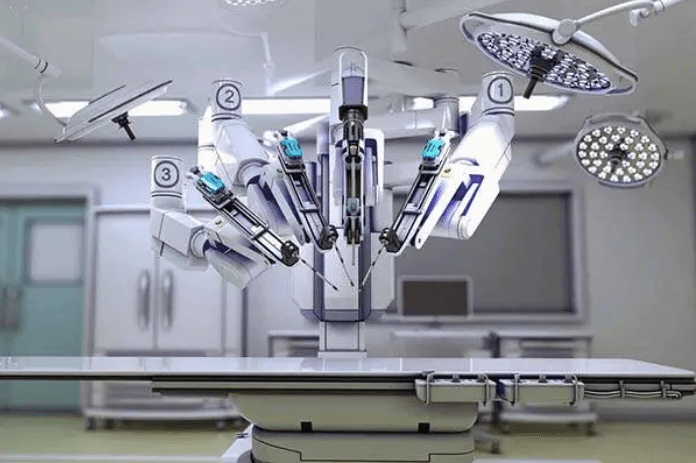
Another market in which the medical institution can efficiently use multi-axis machining is for the making of very individual and precise components. Sometimes these parts similarly have to present intricate shapes and polished-like finishes, e.g., orthopedic implants, dental prosthetics, and surgical instruments.
Such multi-axis machining capabilities have a huge significance to manufacturers. The choice of up to 5-axis CNC machining applies to the creation of precise geometries with high repeatability. Additionally, it allows for the machining of biocompatible materials like titanium and austenitic stainless steel that necessitate machining in very precise conditions.
3. Automotive and High-Performance Engineering
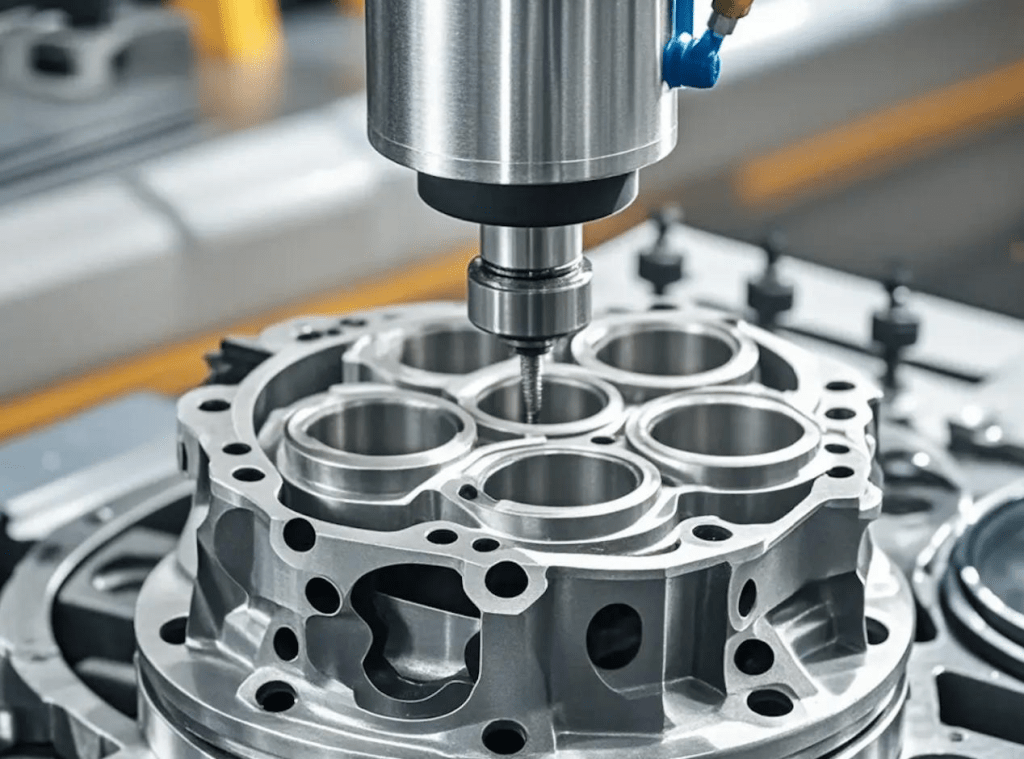
In the automotive parts industry, particularly high-performance and motor sports applications, multi-axis CNC machining techniques are employed to fabricate engine parts, transmission parts, molds, and dies.
The technology fosters the enhancement of machined parts with complex contours and lightest weight yet maximum strength available for improved performance and fuel efficiency. This machining option also supports rapid prototyping, which leads to faster product development timelines and innovation in automotive engineering.
4. Energy and Oil and Gas Sector
Multi-axis machining is often utilized in the energy sector including oil and gas, energy production, and renewable energy. These have valves, pump housings, turbine parts, and drilling equipment comprising complex in/external geometries.
Multi-axis machining can provide a high level of precision and flexibility that effectively meets the challenging environment’s demanding requirements, such as high pressure, temperature, and corrosion.
5. Mold and Die Making
A myriad of tasks are undertaken for multi-axis machining, one of which is the production of molds and dies. These are often items with highly detailed and complex cavity shapes and fine surface finishes.
Multi-axis machines vastly increase the output in molding; die casting processes and stamping tool manufacture. The ability to machine freeform surfaces and deep cavities will reduce manual finishing and improve overall mold quality.
6. Electronics and Precision Components
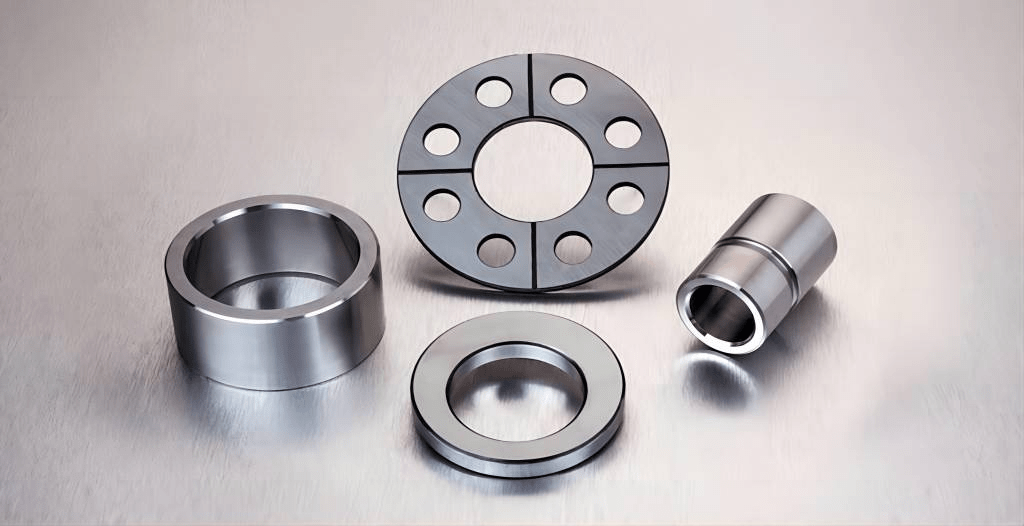
The electronics industry requires small, intricate components with accurate tolerances. Multi-axis machining is used in the production of connectors, chassis, heat sinks, and other high-precision CNC components.
It is capable of executing micro-crafting tasks, which is quite essential for ensuring that the electronic gadgets are highly accurate every time.
7. Marine and Shipbuilding Applications
In marine engineering, multi-axis machining is used to produce complex components such as propellers, pump systems, and specialized fittings. Oftentimes, these components will require very smooth hydrodynamic surfaces, while being endowed with precise geometries meant to ensure the best in performance.
The ability to machine large and complex CNC machining parts with minimal setups fully, remarkably increase overall efficiency; these shall shorten the amount of time needed for producing a product in shipbuilding and offshore applications.
8. Defense and Military Equipment
Defense application often involves highly precise and advanced components subjected to high performance and durability parameters. Multi-axis machining supports technology development in the building of advanced weapon systems, communication devices, and vehicle components.
Such multi-axis machines assure the right precision and repeatable quality so as to make critical components work seamlessly even at challenging levels of application and deployment.
9. Prototyping and Custom Manufacturing
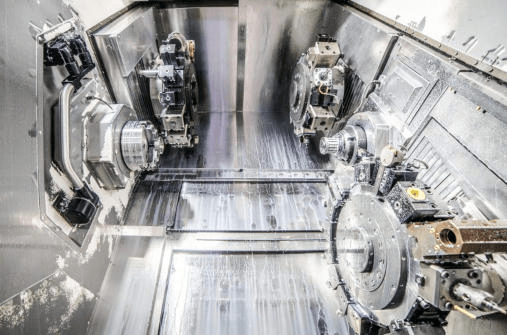
Such multi-axis machines are also employed in many cases for prototypes and custom jobs. The greatest utility of such machining should, in any case, be to manufacture quickly formed components. The technology assures that manufacturers can produce customized CNC machining parts without any preliminary set-up to make special tooling.
Such flexibility is without question a major advantage to the user, rendering great value to research and development, as it gives engineers the ability to test and refine their designs quickly before they can go for mass production.
Challenges in Multi-axis Machining for Complex CNC Part Production
| Challenge | Description | Impact on Production |
| Programming Complexity | Multi-axis toolpath generation requires advanced CAM software and expertise | Increased programming time and risk of errors |
| High Equipment Cost | Multi-axis machines are significantly more expensive than 3-axis systems | Higher initial investment and longer ROI period |
| Complex Setup and Calibration | Accurate alignment of multiple axes is critical | Potential for reduced precision and part inaccuracies |
| Risk of Tool Collision | Simultaneous movement increases the chance of tool, fixture, or part collision | Machine damage, downtime, and scrap parts |
| Skilled Labor Requirement | Requires experienced operators and programmers | Training costs and dependency on skilled workforce |
| Tool Accessibility Issues | Difficulties in reaching deep or narrow features | Incomplete machining or need for special tooling |
| Longer Programming and Setup Time | Initial setup and programming can be time-consuming | Delays in production start |
| Maintenance and Downtime | More complex machines require frequent and precise maintenance | Increased downtime and operational costs |
| Thermal and Vibration Effects | High-speed multi-axis movements can generate heat and vibrations | Reduced accuracy and surface quality |
| Post-processing Complexity | Requires accurate post-processors for specific machine configurations | Errors in machine execution and part defects |
Best Practices for the Implementation of Multi-axis Machining in CNC Part Production
| Best Practice | Description | Benefit to Production | Implementation Tips |
| Invest in Advanced CAM Software | Use high-end CAM systems capable of multi-axis toolpath generation | Improved accuracy and optimized machining strategies | Select software with simulation and collision detection |
| Provide Skilled Training | Train operators and programmers in multi-axis machining techniques | Reduced errors and improved efficiency | Conduct regular training and certification programs |
| Optimize Tooling Selection | Use tools designed for multi-directional cutting and complex geometries | Better surface finish and extended tool life | Choose high-quality materials and coatings |
| Implement Simulation and Verification | Simulate machining processes before actual production | Prevention of collisions and costly mistakes | Use virtual machining and digital twin technologies |
| Ensure Proper Machine Calibration | Regularly calibrate all machine axes | Maintains precision and consistency | Schedule routine inspections and alignment checks |
| Standardize Setup Procedures | Develop consistent setup and fixturing methods | Reduced setup time and improved repeatability | Use modular fixtures and documented workflows |
| Use High-quality Fixtures | Secure workpieces with precise and stable fixtures | Minimizes vibration and improves machining accuracy | Design fixtures specifically for multi-axis operations |
| Monitor Cutting Conditions | Control speed, feed rate, and cutting forces | Prevents tool wear and improves machining performance | Use sensors and real-time monitoring systems |
| Implement Preventive Maintenance | Maintain machines regularly to avoid unexpected failures | Reduces downtime and extends machine lifespan | Follow manufacturer maintenance schedules |
| Integrate with Digital Manufacturing | Connect machines with IoT and data systems | Enhances productivity and enables smart manufacturing | Adopt Industry 4.0 solutions and data analytics tools |
Future Trends in Multi-axis Machining for CNC Part Production
Driven by digital technology, materials science, and automation, the future of multi-axis machining in CNC part production is headed toward interconnectedness and intelligence.
1. Integration with Smart Manufacturing and Industry 4.0
One of the strongest tendencies in the multi-axis world is its integration with smart manufacturing. This approach encompases sensors being attached to machines whereby they are then connected to the Industrial Internet of Things (IIoT), enabling real-time monitoring of machine performance, tool wear, and production status.
Interconnectivity to optimize the machining processes; predictive maintenance to prevent an escalating construct of downtime; and institutionalizing overall equipment effectiveness chairt among the mainstreamers. Data-driven decision-making is thereafter becoming the new standard by which it is establishing productivity and consistency.
2. Advancements in CAM Software and Automation
CAM software is being developed very advanced to reduce complexity in multi-axis programming. Toolpath creation, collision checks, and machine physics simulations are managing most of the manual tasks.
Another important tool for machine-learning systems and CAM integration is automatic optimization of cutting strategies, based on the type of material, geometry, and machining conditions. This greatly improves efficiency and reduces the dependency on highly specialized programming skills.
3. Hybrid Manufacturing Technologies
Hybrid manufacturing is the combination of additive manufacturing (3D printing) and subtractive manufacturing coming of age in multi-axis environments. Today, multi-axis machines are being developed to support both processes in a single platform. Thus, by helping in the creation of versatile, near-net-shaped parts through the additive process, which are given precision finish via multi-axis machining, the integration of these cutting-edge technologies sheds off the trends relating to high material wastage, prolonged lead times, and less design space.
4. Increased Use of Robotics and Automation
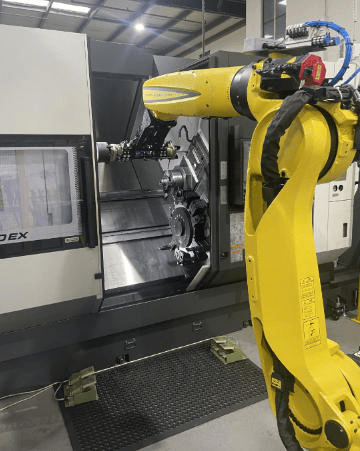
In multi-axis machining, automation is really catching on. In this respect, robotic arms are introduced to illustrious CNC machines with specifications that can handle tasks, including part-loading and -unloading, changing tools, and sometimes even carrying out follow-up operations.
On one hand, personal dependency is minimized with the use of such modern tools. On the other hand, production rate is accelerated, and product quality is assured. Lights-out operation, free from human intervention, is thus on the increase.
5. Development of High-performance Machine Tools
The trend is obviously towards a further advance of such multi-axis systems by the machine-tool industry. The machines are the more solid, with greater rigidity, faster spindle speeds and enhanced thermal stability-of course. The improvements allow the machining of harder materials and more complex geometries with very high levels of precision. Multi-axis technology thus has become more within reach of small and medium businesses, thanks to compact and modular machine designs.x
6. Enhanced Simulation and Digital Twin Technology
The applications of digital twin technology have deepened their essential nature in multi-axis machining; it has been considered pertinent to replicate the machine and the process virtually. This way, manufacturers will figure out for themselves what might go wrong-collisions, inefficiencies, or toolpath errors. This makes sure that the probability of any possible issues that may affect real-world operations is known before actual production occurs. With such simulation capabilities improved, the set-up duration is reduced and object recognition enhanced with better-accurate product costing.
7. Focus on Sustainability and Energy Efficiency
CNC part production is a prime focus of sustainability these days. Future multi-axis manufacturing machines are being planned with the objective of consuming less and wasting less. Advanced cooling systems, optimized cutting strategies, and eco-friendly lubricants are paving the way for more environment-friendly manufacturing. Sputtering-induced environmental support, notably while working with expensive alloys, epitomizes the goal of sustainability.
8. Expansion into New Materials and Applications
Demand for highly developed materials has caused a rapid development in the multi-axis machining of composites, the high-temperature alloys fossil harder to machine. This evolution is discernible in sectors including aerospace, medical, and energy, where the performance bar is high. The dimensionless precision and flexibility provided by multi-axis machining are essential for controlling these difficult materials.
Summary
Multi-axis machining has come to hold significant importance in the machining of intricately detailed CNC parts. Its fast adaptation to complex geometries, considerably improved precision, and hence efficiency make the technology a vital asset for various industries. Yet, the obstacles of its high cost and occasional complex programming notwithstanding, these factors, combined with technological advancements and best practices, drive the adoption of multi-axis machining.