Post-processing Innovations for CNC Parts
The advent of CNC machining brought about new opportunities for fast and precise manufacturing of technologically advanced components. However, machining is merely one step in the entire manufacturing process. The subsequent finishing steps after the CNC operation, post-processing, are critical in influencing the quality, functionality, and durability of the CNC parts. Innovations in technology have positively impacted CNC post-processing, allowing the solidification of value-added product features, cost-effective production, and overall savings in manufacturing time.
Table of Contents
Why Post-processing Techniques are Necessary for CNC Parts
- Ensuring Surface Quality and Aesthetics
One of the most important objectives of post-processing is surface finishing. Although CNC machining offers accuracy in dimensions, surface quality is still of concern. The surfaces of the components may still have tool marks, rough textures, or other imperfections. Parts may require further finishing procedures to realize the desired optical and technical surfaces. The electronic, automotive, and medical industries integrate stunning technical surfaces into the components of their products to reflect their value and quality to consumers and other stakeholders.
- Removing Burrs and Sharp Edges
Burrs can be defined as unwanted and small protrusions left on the edges and holes of components which have been machined. Burrs can reject assembly and pose a safety risk which can negatively impact the functional performance of a part. The irregularities can be removed by a range of post-processing techniques which include deburring, tumbling, and thermal and electrochemical methods. The removal of burrs optimizes part fitting, minimizes the risk of injuries during handling, and reduces the likelihood of premature wear on moving assemblies.
- Enhancing Mechanical Properties
The introduction of residual stresses in machined components can negatively affect the metal with respect to CNC machining in a way that results in warping or cracking and a diminished fatigue life. The post-processing techniques which have been designed to improve mechanical properties include heat treatment, cryogenic processing, and laser-based stress relief. The processes which relieve internal and external stresses as well as the treatments which modify surface hardness contribute to the mechanical durability, wear resistance, and overall structural integrity of the metal, thereby making it suitable for high-performance applications in the aerospace, automotive, and heavy machinery industries.
- Improving Corrosion Resistance and Longevity
Steel and Aluminum parts made on CNC machines are likely to corrode and oxidize over time. Coating, anodizing, and other treatments and techniques used in post-processing create barriers against environmental factors. Enhancements made in post-processing techniques help in lifespan extensio, lowered maintenance costs, and sustenance of operational performance during extreme conditions such as high moisture content, outdoor exposure, and chemical contact.
- Enabling Precision Assembly
Enhanced post-processing of high-precision CNC parts ensures that assemblies made from them retain tight tolerances as necessary in larger assemblies. Finishing techniques that include grinding, lapping, and surface polishing help achieve and maintain flatness within a dimensional envelope and uniform cross-section. Enhancements made through post-processing ensure seamless assembly in which operational alignment, vibration, and failure instruments are prevented as the parts fit properly and are less likely to separate from other engineering assemblies.
- Meeting Industry Standards and Compliance
Post-processing in machining becomes essential for the high-quality customized CNC parts used in the medical, aerospace, and electronics industries in adhering to the prescribed quality and safety standards. Standards dictate accuracy of dimensions, stability, and smoothness of the surfaces and material properties of the parts, which post-processing techniques ensure. Finely machined parts lacking post-processing will fail in meeting regulatory requirements and passing inspections, regardless of how accurately the parts have been made.
Traditional Post-Processing Techniques for CNC Parts
| Technique | Purpose/Function | Typical Application | Limitations |
| Sanding and Polishing | Smooths surfaces and improves appearance | Cosmetic finishing, general surface refinement | Labor-intensive, time-consuming, inconsistent results |
| Manual Deburring | Removes burrs from edges and holes | Small-batch production, intricate components | High labor cost, difficult to scale, inconsistent precision |
| Heat Treatment | Relieves internal stresses and improves material properties | Steel and metal parts for hardness and strength | Energy-intensive, may cause warping if not controlled |
| Chemical Etching or Pickling | Removes oxide layers, improves surface cleanliness | Steel and stainless steel parts | Uses hazardous chemicals, requires careful handling |
| Mechanical Grinding | Improves flatness, removes high spots | Flat surfaces, molds, dies | Requires skilled operators, slow for complex geometries |
| Tumbling or Vibratory Finishing | Polishes multiple parts simultaneously | Small to medium batch parts | Limited precision, may not reach tight corners |
Key Areas of Innovation in Post-Processing for CNC Parts
1. Advanced Surface Finishing Technologies
Surface quality remains one of the most important considerations in CNC post-processing.
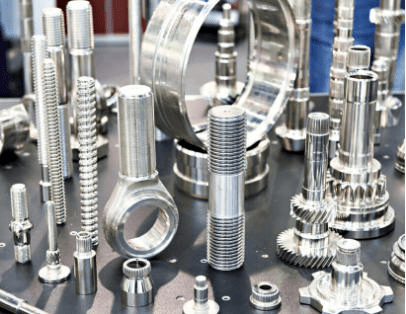
This chart provides advanced surface finishing technologies in Post-processing for CNC machining parts.
| Technology | Function | Applications | Benefits |
| Electropolishing | Smooths and brightens metal surfaces at microscopic level | Stainless steel, medical devices, aerospace | Removes tool marks, enhances corrosion resistance, improves surface uniformity |
| Vibratory Finishing | Uses controlled media and motion to polish multiple parts | Small to medium batch components | Efficient, uniform surface finish, reduces manual labor |
| Laser Surface Texturing | Adds precise micro- or nano-scale textures to surfaces | Automotive, aerospace, lubrication-sensitive components | Improves adhesion, reduces friction, customizable aesthetics |
| Mechanical Polishing / Grinding | Refines surface flatness and removes minor irregularities | Flat surfaces, molds, dies | High precision, smooth finish, prepares parts for coating or assembly |
| Chemical or Electrochemical Finishing | Removes roughness, oxide layers, and minor imperfections | Metal parts requiring corrosion resistance or clean surfaces | Improves surface smoothness, enhances material performance |
2. Automated Deburring and Edge Treatment
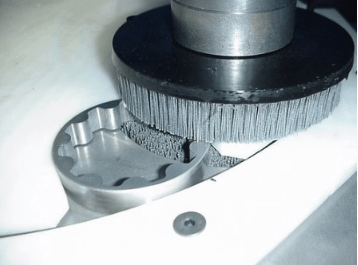
The presence of burrs and sharp edges has been a CNC manufacturing post processing issue for a long time and can affect assembly of parts, pose safety risks, and alter mechanical performance. There have been significant advancements in automating the post processing of deburring. Robotic systems, powered by artificial intelligence, can autonomously detect and discard burrs, while thermal and electrochemical methods of deburring can also perform non-contact processing on parts geometries that are complex. These systems non-automated deburring systems reduce labor costs while increasing the precision needed for safety in the manufacturing assembly process.
3. Coating and Surface Modification
Modern post-processing increasingly focuses on adding value through surface modification.
Here’s a chart summarizing coating and surface modification in CNC post-processing
| Technique | Purpose | Applications | Key Advantages |
| Physical Vapor Deposition (PVD) | Deposits thin hard films on surfaces | Cutting tools, aerospace, automotive | Enhances wear resistance, improves hardness, decorative finishes |
| Chemical Vapor Deposition (CVD) | Forms protective or functional coatings at high temperature | Aerospace, electronics, high-performance machinery | High uniformity, excellent adhesion, corrosion resistance |
| Nano-Coatings | Applies ultra-thin functional layers at the nanoscale | Electronics, medical devices, automotive | Reduces friction, improves hydrophobicity, enhances oxidation resistance |
| Thermal Spray Coating | Deposits molten or semi-molten materials onto surfaces | Turbine blades, industrial machinery | Extends component life, improves wear and corrosion resistance |
| Anodizing | Electrochemical process forming oxide layers on metals | Aluminum parts, structural components | Improves corrosion resistance, enhances surface hardness, allows color customization |
4. Heat Treatment and Stress Relief Innovations
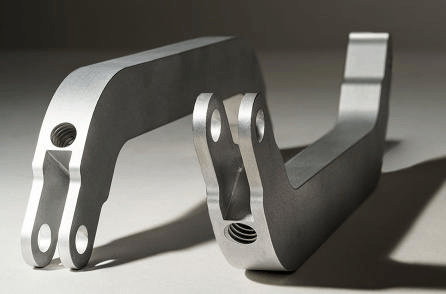
CNC machining introduces residual stress that adversely affects a part’s structural integrity and dimensional stability. The ability to modernize heat treatment and the stress relief has worked wonders in managing the impact of these elements. In stress relief, even the patterned laser methods that have been newly developed, are game changers. The stress relief paradox of complex CNC geometries can be resolved in a technically advanced manner. Attention to warped distorting planes enables them to maintain their accuracy, reliability, and stability over time.
5. Digital Integration and Smart Post-Processing
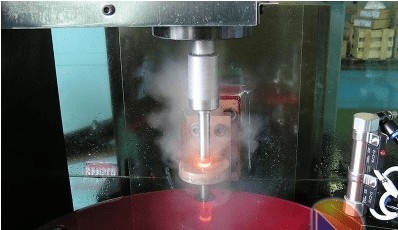
Incorporating digital technologies into post-processing has turned the practice into a highly efficient and data-driven practice. Robotic finishing cells are increasingly paired with CNC machines for the seamless automation of polishing, deburring, and coating. Artificial intelligence and machine learning frameworks evaluate production data to refine post-processing parameters, optimizing quality and minimizing waste. Adaptive control of post-processing parameters to avoid scrapped workpieces becomes possible with sensor systems that monitor surfaces for quality and for temperature and vibration in real-time. These systems increase throughput, lower costs, and consistently high quality output.
6. Sustainable and Eco-Friendly Techniques
Sustainability has become a central focus in CNC post-processing innovation.
This chart offers Eco-friendly techniques in post-processing for CNC Parts
| Technique | Function | Applications | Benefits |
| Water-Based Coatings | Replaces solvent-based coatings with water-based alternatives | Automotive, electronics, consumer products | Reduces VOC emissions, safer for workers, environmentally friendly |
| Biodegradable or Recyclable Media | Polishing or vibratory finishing using eco-friendly media | Small to medium batch parts | Minimizes environmental impact, reduces disposal issues |
| Energy-Efficient Heat Treatment | Uses induction or localized heating to treat metals | Aerospace, automotive, industrial components | Lowers energy consumption, reduces carbon footprint |
| Non-Toxic Polishing Compounds | Uses chemicals that are safe for environment and operators | Metal finishing, decorative parts | Safer handling, reduces chemical waste, eco-friendly |
| Closed-Loop Lubrication and Coolant Systems | Recycles fluids used in post-processing | CNC machining, grinding, coating operations | Minimizes fluid waste, reduces environmental contamination |
The Impact of CNC Post-processing Innovations on Key Industries
| Industry | Post-Processing Innovations | Impact |
| Aerospace | Advanced surface finishing, PVD/CVD coatings, laser stress relief | Improves component durability, reduces weight, enhances corrosion and wear resistance |
| Automotive | Electropolishing, nano-coatings, automated deburring | Enhances part longevity, improves aesthetic quality, ensures precision assembly |
| Medical Devices | Electropolishing, nano-coatings, cryogenic treatment | Provides smooth surfaces for hygiene, increases wear resistance, maintains strict tolerances |
| Electronics | Nano-coatings, water-based coatings, precision polishing | Protects sensitive components, reduces friction, improves thermal and electrical performance |
| Industrial Machinery | Thermal spray coatings, vibratory finishing, automated deburring | Extends component life, reduces maintenance costs, ensures consistent quality |
| Consumer Products | Electropolishing, anodizing, sustainable finishing methods | Improves aesthetics, ensures safety, supports eco-friendly manufacturing |
| Energy and Power Generation | Thermal coatings, stress relief, advanced finishing | Enhances efficiency, protects against high-temperature wear and corrosion |
Summary
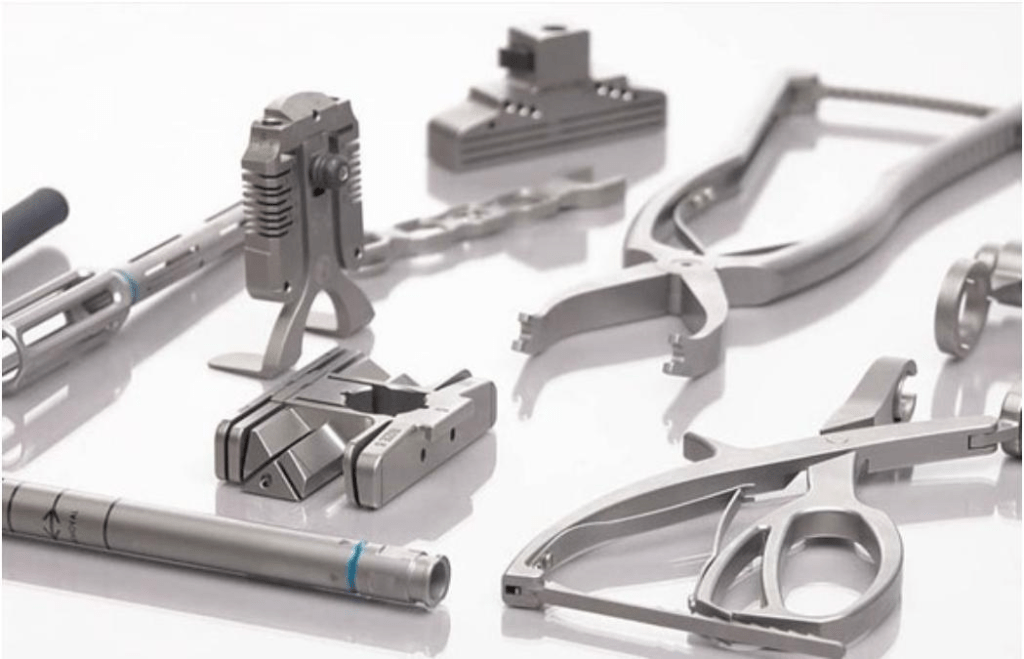
Post-processing is no longer a secondary step in manufacturing CNC parts, it has become an essential element in the delivery of quality, functionality, and operational performance. Digital technologies and machine learning innovations in surface finishing, deburring, coating, heat treatment, and the wider crafting of post-processing CNC parts and components are extended with greater range and precision. While the performance and complexity of components demanded by industry will continue to sharpen, the unsolved and evolving challenges of post-processing will most certainly determine the scope and character of CNC manufacturing for years to come.