Blow Molding vs Injection Molding: 10 Key Differences
In modern plastic manufacturing, there are several production processes within the industry, among which the most popular include blow molding and injection molding. Though both can transform raw plastic materials into forms that meet specific shapes, their structures differ in terms of complexity, accuracy, and applicability.
Companies looking to produce extremely accurate, intricate, or industrial-grade plastic parts tend to find injection molding more productive and cost-effective than its alternatives. This article compares blow molding vs injection molding in depth to help you choose the optimal plastic forming method for your application.
Table of Contents
Part 1. What is Blow Molding?
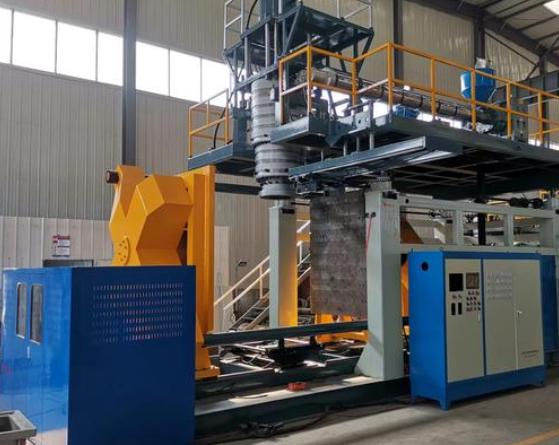
Blow molding is a manufacturing process whereby air pressure inflates a heated plastic preform called a parison against the inner walls of a mold, forming a hollow plastic product.
Common uses include bottles, containers, tanks, toys, and other hollow plastic parts. The basic principle follows that of blowing up a balloon, with air pressure forcing softened plastic to take shape inside a mold cavity, cooling, and solidifying into its final shape.
1. Overview of the Process
An approximation of the outline of a general blow moulding process would be as under:
Melting: It consists of heating plastic pellets like PE, PP, or PET until they reach a viscous, flowable state, and then cooling them slowly until viscous flow becomes apparent.
Extrusion of Parison: The molten plastic is forced through a die and extruded through it for the formation of the tubular preform or parison, which represents an initial shape for the product.
Blow Molding: In blow molding, an object is clamped into a mold, and air is then used to expand the object against its cavity till it fits tightly against it.
Cooling and Setting: It cools and sets in the mold, where plastic solidifies into an intricate hollow form featuring detailed contours.
Demolding: When the mold is opened and taken out from, the finished product can be taken out and subjected to final trims or post-processing until it becomes the finished merchandise.
2. Main Types of Blow Molding
Depending on the forming method, blow molding can be divided into the following three main types:
Extrusion Blow Molding (EBM):
The hot plastic is extruded directly into a tubular parison and then blown into shape. This is a rather simple process and very versatile for making bottles, drums, and fuel tanks.
Injection Blow Molding (IBM):
A preform is first created using an injection molding machine, then reheated and inflated to its final shape. The high dimensional accuracy provided makes it very suitable for small, precision containers in pharmaceutical and cosmetic packaging.
Stretch Blow Molding (SBM):
In the blowing process, the preform is axially and radially stretched to align polymer molecules and provide greater transparency and strength. This technique is generally used to make PET bottles for beverages and water.
3. Advantages and Disadvantages
Advantages:
- Low mold cost and simple structure;
- Ideal for the mass production of lightweight, hollow products;
- One-step forming does not require assembly or welding.
- Compatible with a wide variety of thermoplastics.
Disadvantages:
- Difficult to achieve uniform wall thickness;
- Limited dimensional accuracy;
- Not suitable for complex or high-tolerance parts;
- Material utilization rate is lower compared to injection molding–more scrap is generated.
Overall, blow molding is best suited for producing hollow, lightweight, and relatively simple containers.
For a higher degree of precision, strength, or complicated designs in a product, users often prefer Injection Molding as an alternative, as it is more accurate and effective; we will introduce it in the following part.
Part 2. What is Injection Molding?
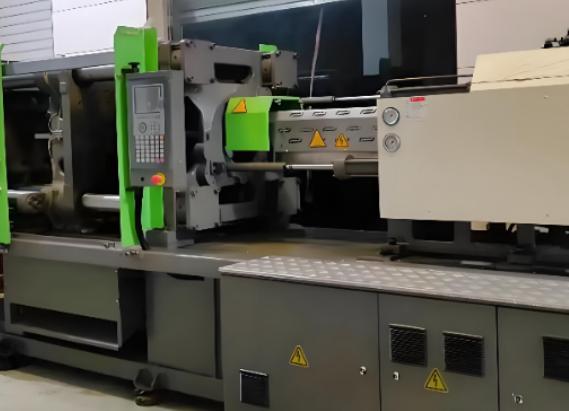
Injection molding is a form of manufacturing in which liquid plastic is forced under high pressure into a metal mold before cooling and solidifying to form its desired form. It has become one of the most used and automated practices within modern plastics production.
Process offers cost-effective manufacturing of anything from micro-precision parts to large industrial components quickly, making this an invaluable solution in industries such as automotive, electronics, medicine and packaging.
1. Overview of the Process
The injection molding process generally includes the following steps:
Melting: Plastic pellets, such as ABS, PC, PP, or PA, are fed into a heated barrel where they are melted by the heaters and rotating screw into a homogeneous molten material.
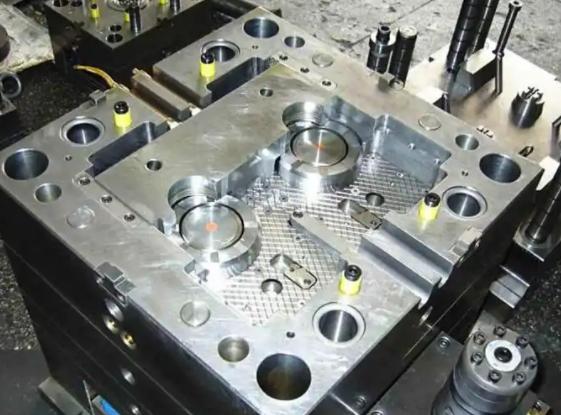
Injection: Molten plastic under high pressure is injected into a closed metal mold cavity until it fills the space and acquires the desired shape.
Cooling: The molten plastic cools and solidifies inside the mold, maintaining its dimensional accuracy and surface finish. The cooling phase often accounts for the majority of the molding cycle.
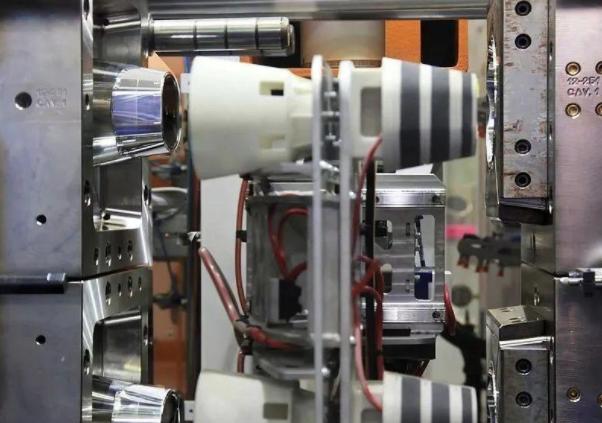
Demolding: Once the part has solidified, the mold opens, and ejector pins or robotic arms remove the finished product. After trimming or minor finishing, the molded part is ready for use.
2. Advantages and Disadvantages
Advantages:
- High Precision and Repeatability: Guarantees outstanding dimensional accuracy and consistency in large production runs, suitable for industrial components that have tight tolerances.
- Ability to Mold Complex Shapes: Complex details include clips, threads, and ribs that support more versatile and functional designs.
- Excellent Surface Finish: Produces smooth, refined surfaces suitable for decorative or direct-use applications.
- High Efficiency and Automation: Short cycle times and automated production permit large lot production with minimum labor costs.
Disadvantages:
- High Mold Cost: Injection molds are complicated and highly precise, involving high investment in the initial stage.
- Longer Development Cycle: Design, prototyping, and validation take several iterative cycles before mass production.
- Not Suitable for Large Hollow Parts: Blow molding or rotational molding is generally better for large or uneven-walled hollow products.
injection molding
As a professional injection molding manufacturer, KENENG injection molding manufacturer has several years of experience with a complete equipment system. We provide one-stop services covering mold design, prototype development, and mass production, helping customers achieve high-efficiency and stable-quality plastic component manufacturing.
Part 3. Blow Molding vs Injection Molding: Core Key Differences
1. Product Structure and Complexity
Blow Molding: The blow molding process is best suited for hollow, lightweight items such as bottles, drums, fuel tanks, and toys with relatively simple geometries having less detail or complexity. Intricate details or highly complex geometries may prove more difficult.
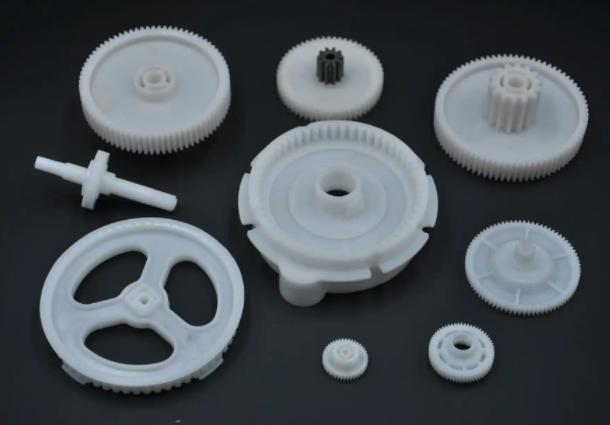
Injection Molding: This is an advanced manufacturing technique that has the capability to produce complicated parts with fine detail, such as gears, clips, electronic housings, and structural parts. It offers great design freedom.
2. Dimensional Accuracy and Surface Finish
Blow Molding: Wall thickness may be uneven, which restricts the dimensional precision. The surface finish is generally moderate, apt for functional parts rather than for decorative applications.
Injection Molding: Excellent dimensional accuracy with very good repeatability. The finished surface is smooth and of good appearance, suitable for both functional and cosmetic parts.
3. Mold and Production Costs
Blow Molding: The mold design is simpler and inexpensive and, hence, can suit low- to medium-volume production. Initial tooling costs are relatively low.
Injection Molding: Requires complicated, high-precision molds, hence developing it initially with a lot of investment. But once large-scale production starts, it becomes cheap because of automation and efficiency.
4. Production Efficiency and Output
Blow Molding: Relatively short cycle time; can make hollow containers in one operation. However, overall production rate may be limited by the speed at which the parison cools.
Injection Molding: Fast cycle times and automation enable high-volume production, with consistent quality, that’s perfect for mass manufacturing.
5. Material Compatibility
Blow Molding: Suitable for various thermoplastics, especially PE, PP, and PET, commonly used for hollow containers and packaging.
Injection Molding: Injection molding materials compatible with a wider range of plastics, including ABS, PC, PA, PP, and PE, which can be selected based on the needs of strength, rigidity, or surface finish.
6. Product Strength and Durability
Blow Molding: Irregular wall thickness may provide sites for weakness. It will be applicable to those products that do not require structural strength.
Injection Molding: Flow is precisely controlled along with cooling to achieve uniform wall thickness that produces tougher and durable parts for every demanding usage.
7. Post-Processing and Secondary Operations
Blow Molding: Most of the finished parts require trimming, hole cutting, or welding. This fact increases post-processing labor.
Injection Molding: Most components are ready for use immediately after molding, reducing the need for secondary operations and associated costs.
8. Product Size Range
Blow Molding: It is more appropriate for medium to large hollow products. Single part weight can range from tens of grams up to tens of kilograms.
Injection Molding: Most commonly used for small to medium parts. Large components are constrained due to mold size and injection machine tonnage.
9. Design Flexibility
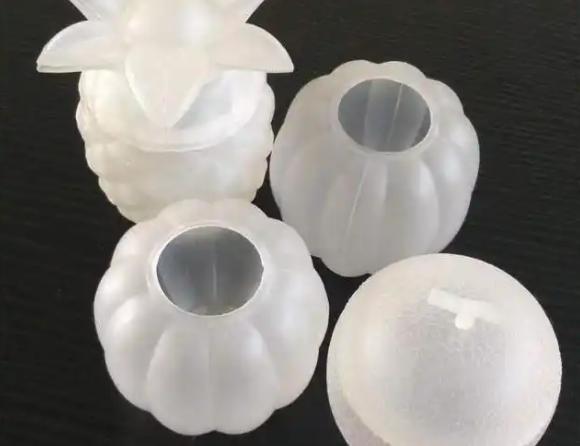
Blow Molding: Best for symmetrical or simple hollow shapes. Limited flexibility in adding functional features like threads, clips, or ribs.
Injection Molding: Virtually unlimited design freedom, with the ability to create thin walls, protrusions, threads, snaps, and a host of other functional features within one mold.
10. Suitable Production Volume
Blow Molding: Suitable for low- and medium-volume runs, mainly for the making of hollow containers and packaging.
Injection Molding: Most economical in high volume production, as increases in quantity greatly reduce the unit cost resulting from automation and process efficiency.
Comparison Table of Blow Molded vs Injection Molded
After looking at the differences in detail between blow molding and injection molding, we’ve taken the important points and given them in the table below, to enable you to quickly grasp the core distinction between the two processes.
| Comparison Aspect | Blow Molding | Injection Molding |
| Product Structure & Complexity | Hollow, simple shapes; limited detail | Complex, detailed parts; high design flexibility |
| Dimensional Accuracy & Surface Finish | Moderate precision; average surface | High precision; smooth, refined surface |
| Mold & Production Costs | Simple molds; lower initial cost | Complex molds; higher upfront cost, cost-effective for large scale |
| Production Efficiency & Output | Short cycle; output limited by cooling | Fast, automated cycles; suitable for mass production |
| Material Compatibility | PE, PP, PET, mainly hollow product plastics | ABS, PC, PA, PP, PE; wide material choice for strength & finish |
| Product Strength & Durability | Irregular wall thickness; suitable for light-duty parts | Uniform walls; strong and durable components |
| Post-Processing | May require trimming, cutting, welding | Usually ready to use with minimal secondary operations |
| Product Size Range | Medium to large hollow items | Small to medium parts; large parts limited by mold/machine |
| Design Flexibility | Basic hollow shapes; few features | Practically unlimited; can include threads, snaps, ribs, etc. |
| Suitable Production Volume | Low- to medium-volume runs | High-volume production; unit cost decreases with quantity |
Part 4. How to Choose Between Injection vs Blow Molding?
Once the key differences between blow molding and injection molding are identified, it is time to determine which of these processes will better suit your specific product and production needs. Consider the following:
1. Product Development and Structuring
Hollow and light products: When your product requires large internal cavities, such as bottles, drums, or tanks, to perform its function efficiently and cost-effectively, then the process of blow molding may be an economical and efficient solution.
Complex or intricate parts: Injection molding can be viewed as the best method of producing parts featuring geometrically complicated shape elements, thin-wall parts, or precision functional elements like threads, snaps, or clips.
2. Meet Precision and Surface Requirements
Moderate precision: Blow molding can handle functional products where minor variations in wall thickness or surface finish are accepted as acceptable variances.
High Precision and Aesthetics: Injection molding provides superior dimensional accuracy and smooth surfaces for consumer products, electronics, and automotive components.
3. Production Volume and Cost Considerations
Low-to-medium volume production: Since blow molding molds are less complex and lower in cost, smaller batch lots can be economically produced.
High-volume production: Although the mold costs are higher upfront with injection molding, the unit cost can be lower when used in automated, high-volume applications.
4. Material Selection
Blow molding: It is used most frequently to produce hollow items made of thermoplastic materials like PE, PP, and PET.
Injection molding: Compatible with a range of materials, including ABS, PC, PA, and other engineering plastics for producing stronger, more durable, or heat-resistant parts.
5. Post-Processing and Assembly
Blow molding: Trimming, hole cutting, or welding may be necessary in the final assembly of blow molds.
Injection molding: Most injection molded parts can be ready for immediate use with minimal secondary operations, and labor costs associated with their production are at a minimum.
6. Automation and Scalability
Blow molding: It can be done semi-automatically; for the larger production lines, more machines will probably be needed.
Injection molding: It is a greatly automated, cost-effective way to mass-produce items and easily integrates with robotic handling for maximum efficiency.
Summary
Both blow molding and injection molding have their own applications and advantages, with their primary differences lying in their intended uses:
Blow model is Ideal for hollow containers and lightweight packaging products, while injection molding offers greater precision with strength requirements for complex structures.
In today’s manufacturing environment, where efficiency and quality are equally important, injection molding not only represents the direction of precision manufacturing but also serves as a key process for enhancing product competitiveness.
If you are looking for a reliable injection molding partner, feel free to contact KENENG. Our professional team can provide one-stop plastic injection solutions to help your products succeed from concept to production.