Stamped Parts vs. Casted Parts: Which Type is Better?
Two common methods for producing metal components are stamping and casting. Each of the method is dedicated to create tough components. However, both processes are employed to create durable parts, they are suited to different applications. Each manufacturing method have its benefits and weaknesses. Understanding the key differences between stamped parts and casted parts is important in deciding the appropriate manufacturing process for specific needs.
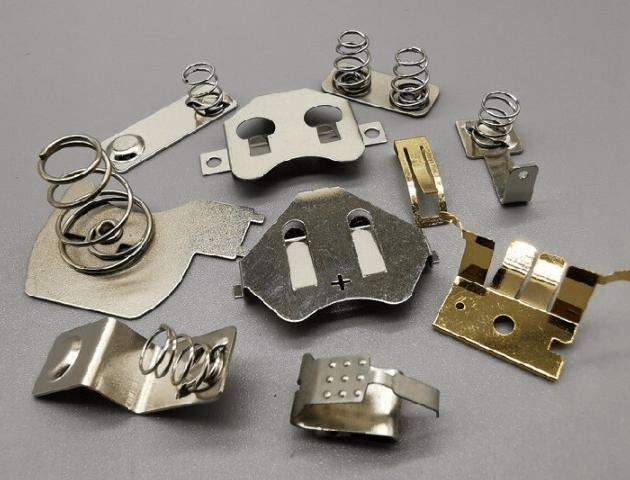
Table of Contents
Understanding Stamped Parts
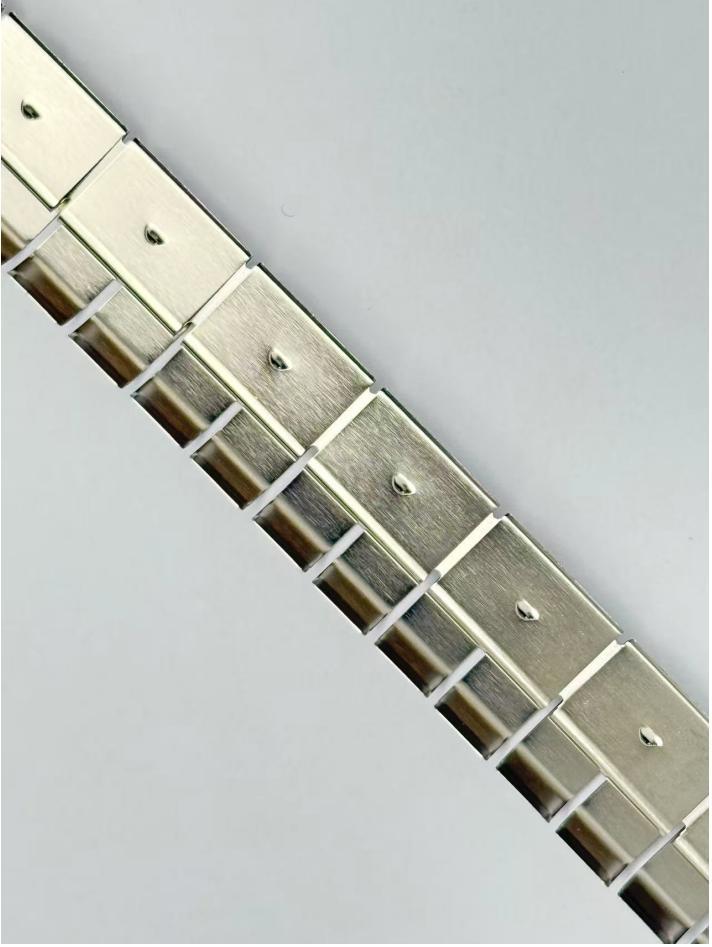
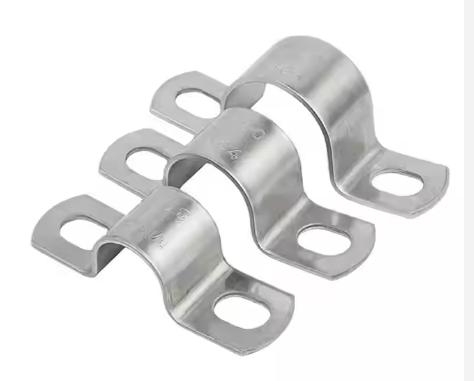
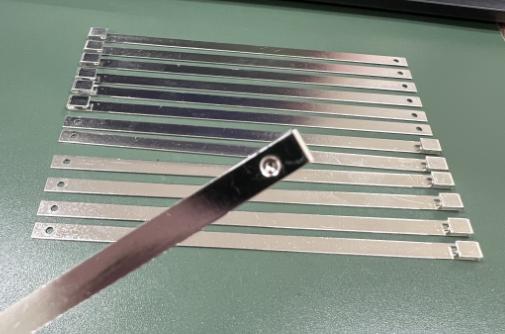
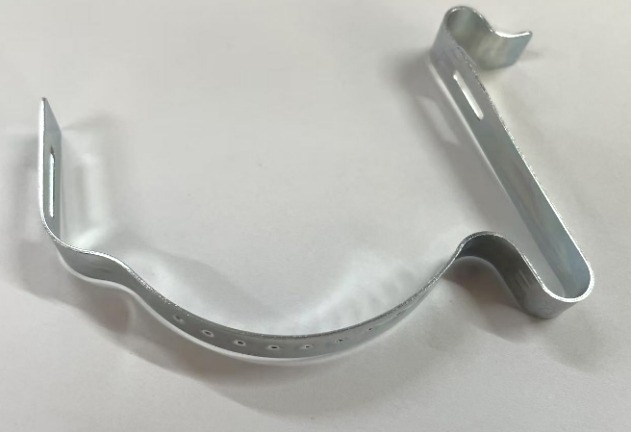
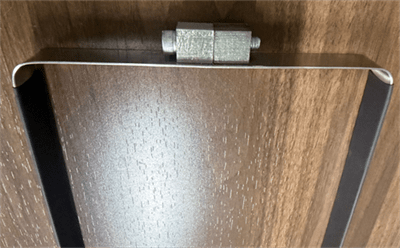
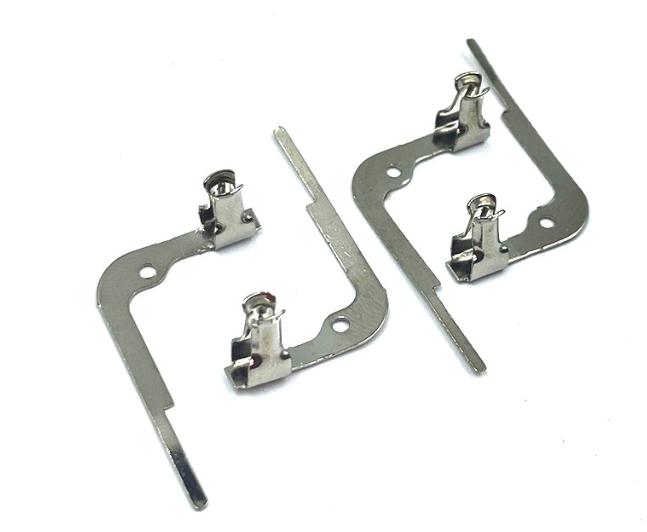
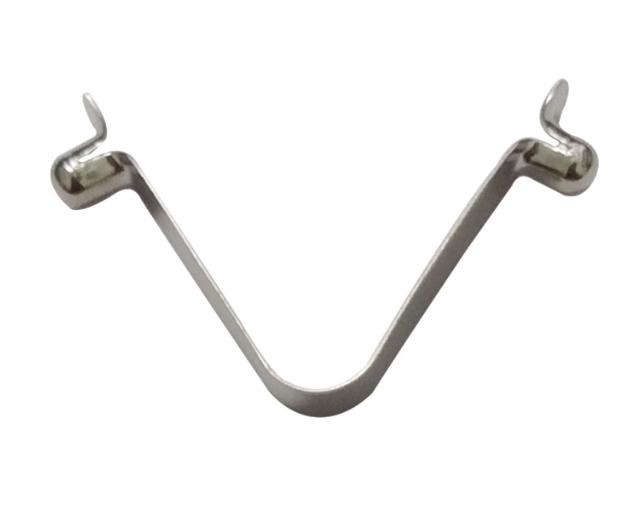
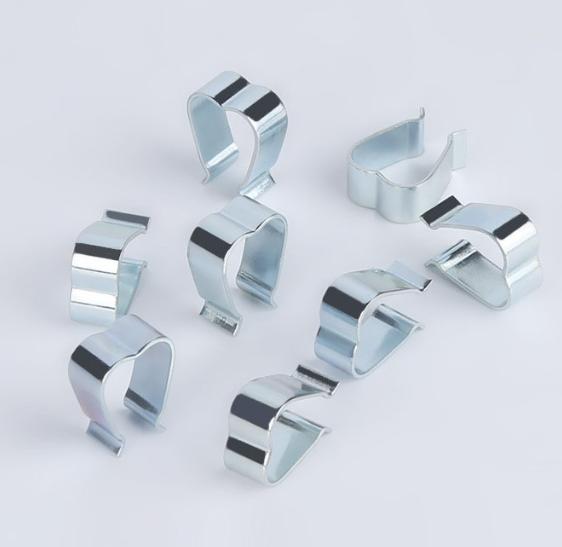
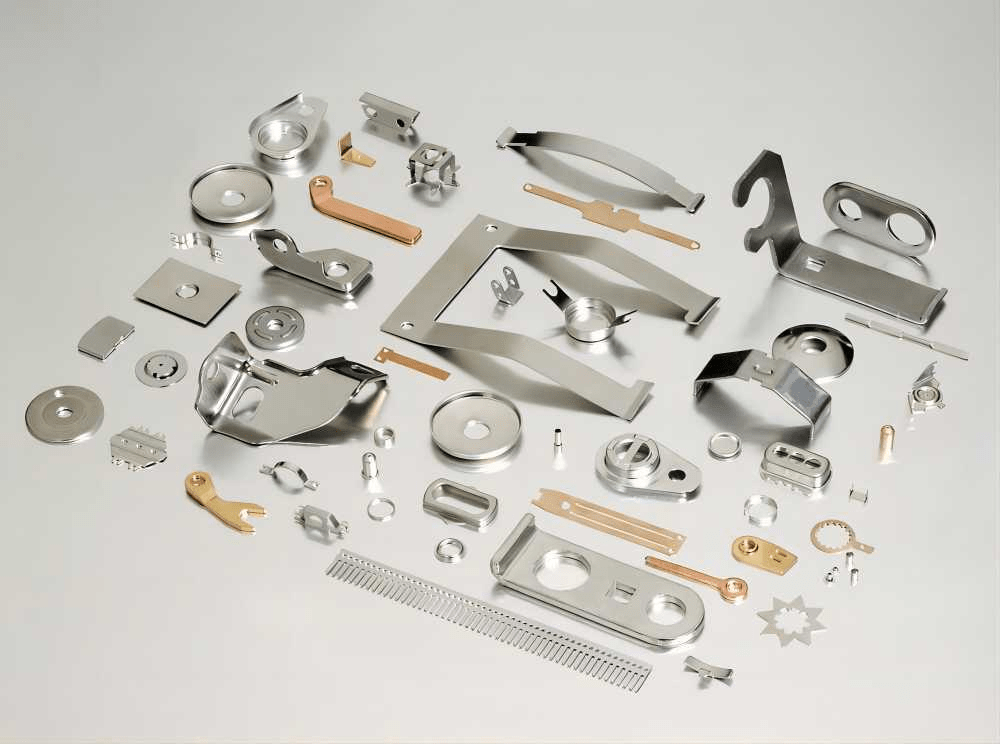
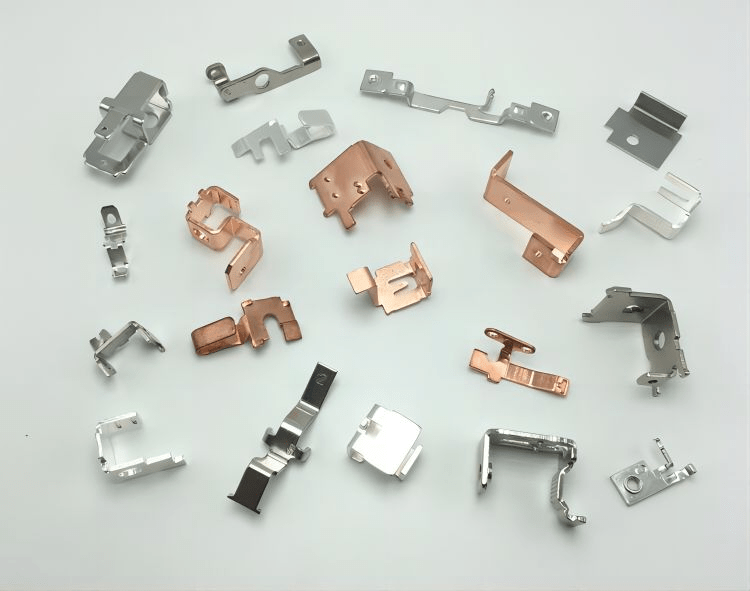
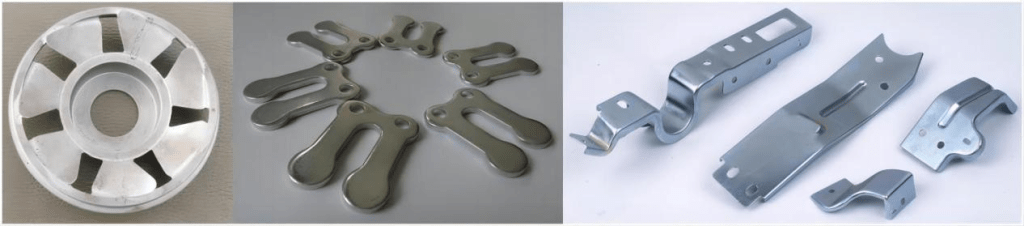
Stamped parts are components made through working with metal and using a machine called a stamping press or die. Within the gate, the metal sheet is placed and then shaped and cut with a die. This process gains a lot of use from the industry because of effectiveness and precision. Although stamping does have benefits, there is complexity when trying to make certain parts.
Advantages
- Precision and Consistency
A large benefit to stamping is the precision and consistency with which components are made. This is important with certain components, like automotive parts and electronics, to a higher standard, having parts made in certain tolerances and consistency allows for higher.
- High-Speed Production
High-speed stamping is perfect for making a lot of products. After setting the dies, a stamping machine can make thousands of pieces every hour, which lowers the lead time for delivery. This makes stamping very affordable for mass production, where making pieces quickly is the most important.
- Material Efficiency
Compared to other manufacturing methods like casting, stamping is more material-efficient. The process uses flat metal sheets, and the parts are cut or formed from the material, resulting in minimal scrap. This can help reduce material waste and contribute to lower overall production costs, especially in high-volume applications.
- Lower Cost for High Volumes
Industries that require mass production financially benefit the most because the cost of producing stamped parts is very low after the initial cost of making the tooling dies. This cost structure is especially advantageous for the automotive industry since it requires thousands to millions of parts.
- Versatility in Materials
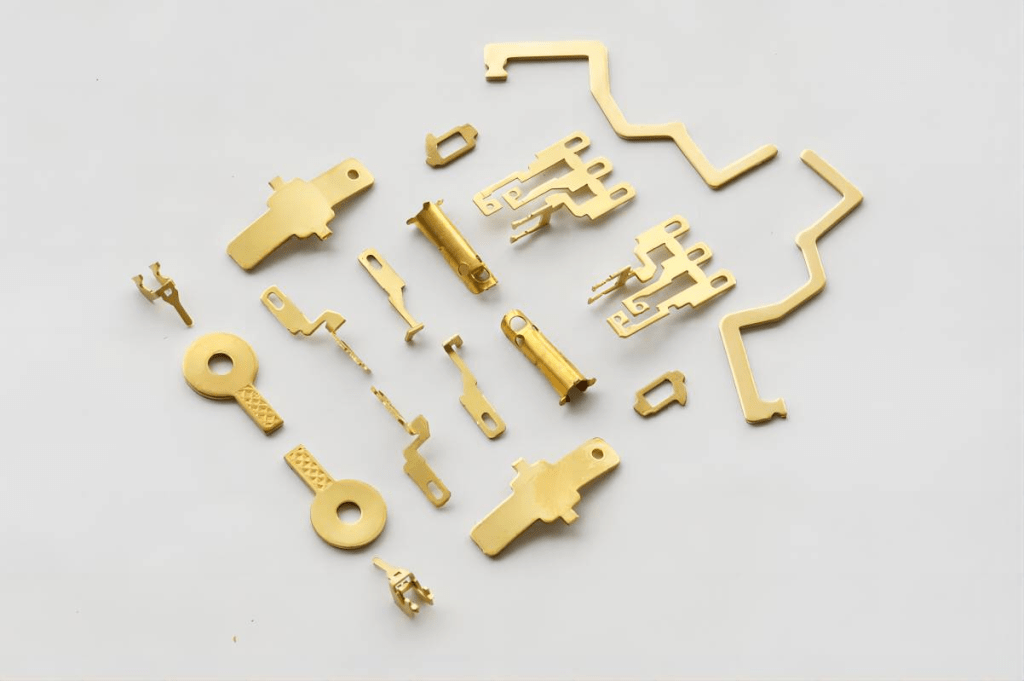
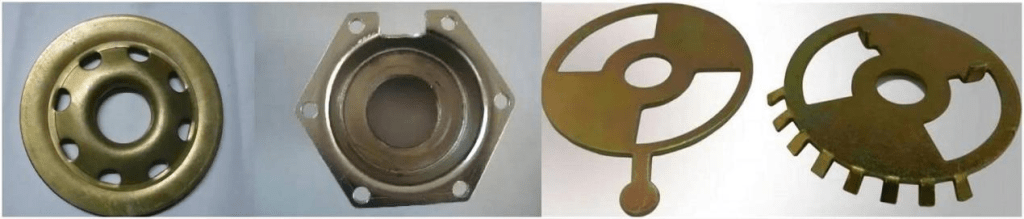
Stamping works with a variety of metals, such as steel, aluminum, brass, and copper, and it can be used for different purposes. This variety of materials makes it possible for manufacturers to produce customized metal stamping parts to meet the specific needs of the final product in regard to weight, strength, and resistance to different types of corrosion.
Limitations
- Limited Complexity of Designs
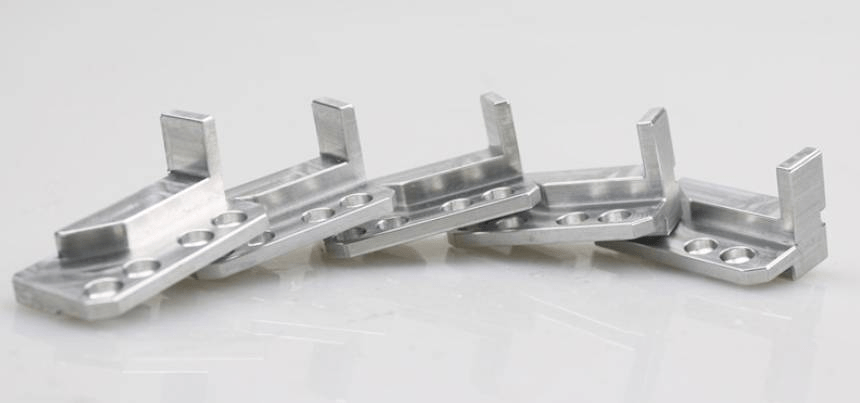
Stamping works best for simple shapes. It can produce shallow parts, but it struggles with highly complex shapes. The design of the tools, or dies, often restricts the types of shapes that can be stamped. Getting features like deep draws or hollow shapes is a challenge. In these situations, manufacturers may choose different processes like casting or machining.
- Tooling Costs
Although the cost per unit is low once the tooling is established, the initial cost of designing and producing the dies required for stamping can be significant. This makes stamping less cost-effective for low-volume production runs. For small batch production, the initial investment in dies may not justify the overall costs unless production volumes are high.
- Material Thickness Limitations
Stamping works best for moderate thickness. When material thickness increases, it becomes increasingly difficult to stamp. Heavy clients materials may exceed the capabilities of the tooling. When dealing with thick-walled parts, it may be best to use casting.
- Risk of Tool Wear and Maintenance
The stamping process involves the continuous use of dies and tools, which can wear out over time. This necessitates regular maintenance and replacement of tools, which can add to operational costs, especially if parts are produced in very high volumes. If tools wear down too quickly, it can affect part quality and lead to increased downtime in production.
Common Applications
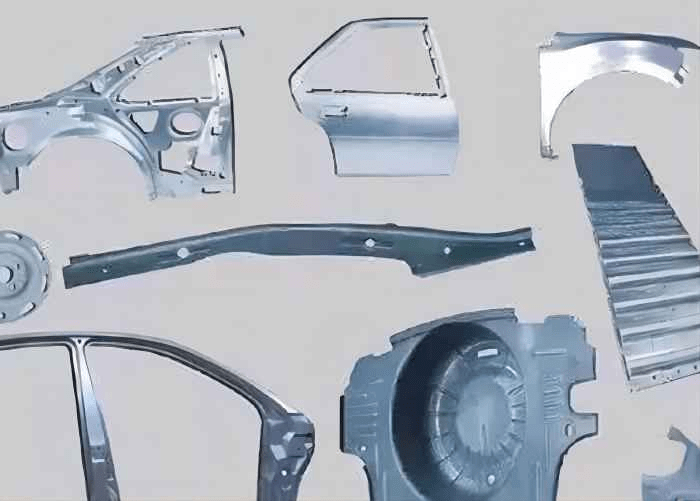
- Automotive Industry: Stamping is used in the automotive industry for body panels, and for making structural components, brackets, and reinforcements. Manufacturers use stamping for high-volume production of durable, precision automotive parts.
- Electronics: Stamped parts in the electronics industry include connectors, housings, and brackets. Stamping is well-suited for electronics due to the precision it offers and the ability to produce small, intricate parts.
- Appliances: Stamped metal components are also structural and functional parts of appliances. Stamped parts are used in the panels of refrigerators, brackets of washing machines, and components of air conditioners. Stamping metal parts is the fastest and most cost efficient way to achieve the precision required for mass production.
- Construction and Heavy Machinery: Stamped parts are also heavily utilized in the construction and machinery industries. Stamped metal is used to create beams, frames, and supports that form the large structural parts of a construction site. Stamped metal construction parts are ideal for construction because they are able to meet the stringent requirements of durability and strength.
- Consumer Goods: Stamped metal parts are also used in other consumer goods like furniture and sports equipment. Stamped metal parts are economical, and for mass production of everyday items, they are consistent, making them ideal for manufacturers.
Understanding Casted Parts
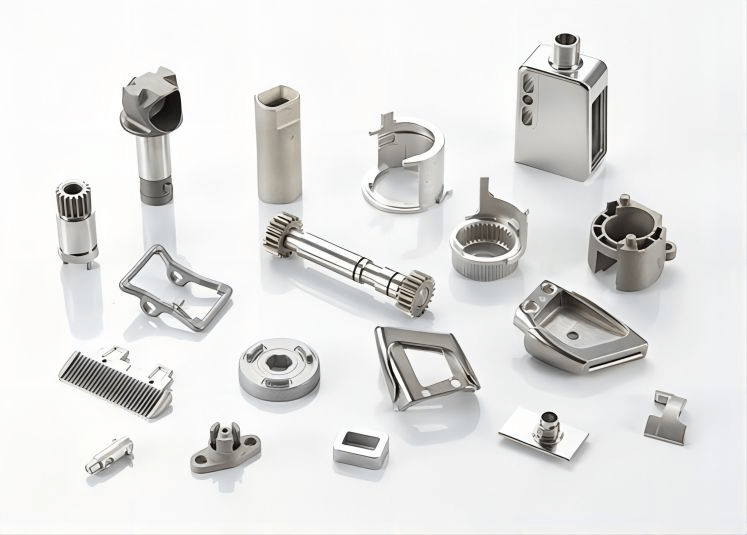
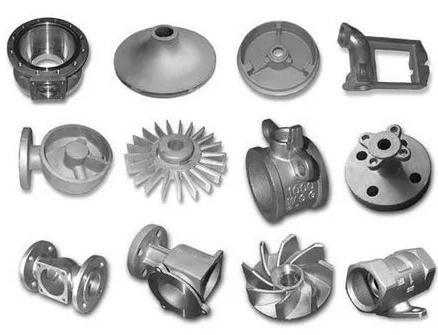
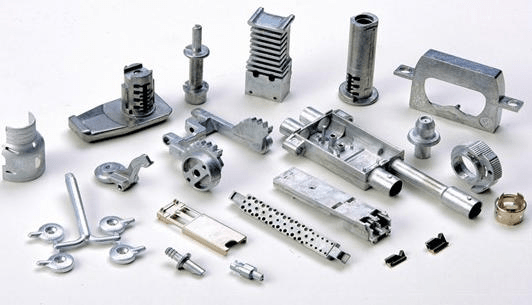
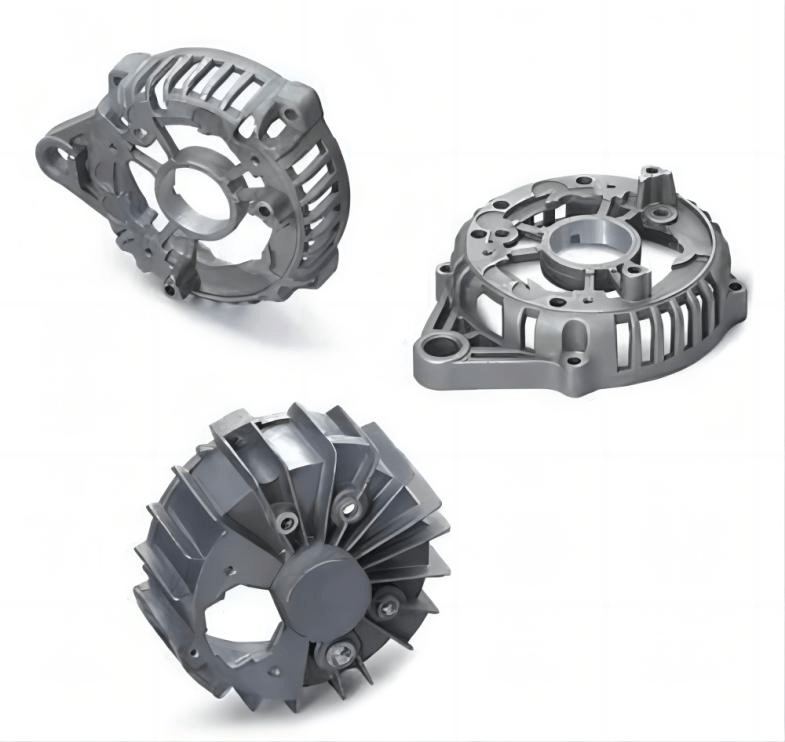
To create casted parts, metal is shaped by pouring molten metal into a cast and allowing it to cool and form a desired shape. This technique makes it possible to create complex and large geometrical shapes that would be hard to create by other techniques. Casting is also one of the oldest techniques in manufacturing and is still used today.
Advantages
- Ability to Produce Complex Shapes
Casting is particularly advantageous for creating complex, intricate parts that would be challenging or too costly to produce using other methods like stamping or machining. Since the part is formed by pouring molten metal into a mold, the mold can be designed to create virtually any shape, including those with deep cavities, intricate internal passages, or complex contours. This capability makes casting ideal for parts with detailed features.
- Material Flexibility
Each casting can be made with a different type of metal, alloy, or combination, be it aluminum, steel, copper, or cast iron. For example, high corrosion resistant alloys, high temperature alloys, or even high wear resistant alloys can be designed. Materials with such differentiating factors can be used in many industries.
- Large and Heavy Parts
Casting is often the preferred method for producing large or heavy parts that cannot be easily manufactured through other methods. For example, large engine blocks, turbine blades, and heavy industrial components are typically made using casting processes. The ability to create massive parts with relatively low material waste is a key advantage of casting over other methods like stamping or machining.
- Reduced Material Waste
Casting yields better material efficiency than machining. In machining, a part gets cut from a solid block, most of which goes to waste. When machining metals, the waste gets significant. In contrast, the waste in casting gets reduced. Only the material that fills the mold gets used, and while scrap material may get produced, casting does far better than machining in producing intricate pieces.
- Cost-Effective for Low to Medium Production Volumes
Costing becomes reasonable in casting after the first few molds have been made, and given the intricacy of a piece, costs in stamping and machining shoot up rather than casting. Stamping intricacy in tooling and dies becomes expensive unlike casting that allows for complex designs and costs way less. Costing becomes reasonable in casting after the first few molds have been made, and given the intricacy of a piece, costs in stamping and machining shoot up rather than casting.

Limitations
- Lower Precision
Among all the reasons, casting does not provide the same level of precision that processes such as stamping or machining provide. A cast part’s dimensions may be larger or smaller than required because of variations in the mold, or due to the molten metal cooling at different rates. Although casting can attain decent precision, the part will likely need additional machining, grinding, or polishing to meet the tolerance level required. Hence, this will increase the cost and time required to produce the part.
- Porosity and Defects
Defects, porosity, and air pockets in a part remain one of the most challenging aspects of casting. These defects can lead to a part being weak and not durable enough to be cast into safety-critical or high-stress applications. Defects such as porosity come from trapped gases or air bubbles that form during the process. While tricky to spot, these bubbles can lead to major issues. Although advanced techniques such as pressure casting or vacuum casting can minimize porosity, the risk remains a major challenge in many cast parts.
- Longer Wait Times
Casting involves a series of steps. These steps include designing and making molds, pouring molten metal, cooling, and the finishing process. Compared to stamping, which becomes faster and more automated after the tooling is set up, this means more time is needed. When quick turnarounds are needed, the time to produce molds and set up the entire casting process can be a disadvantage for small and medium runs of components.
- Tooling Costs
Although casting is cost-effective for low to medium production volumes, initial tooling costs, which include mold-making, can be on the higher side. This is especially true for parts with complex geometries and for high-performance materials. Because the cost of molds can be very high, this becomes a problem for very small production runs. This is because the cost of the mold and the overall production volume may not balance out.
- Material Limitations
Although casting can use many different metals and alloys, some materials can be hard to cast especially those with low melting points or are very reactive. Moreover, casting might be unsuitable for materials that can crack or degrade with high temperatures. Occasionally specific materials might need more specialized casting techniques.
Common Applications
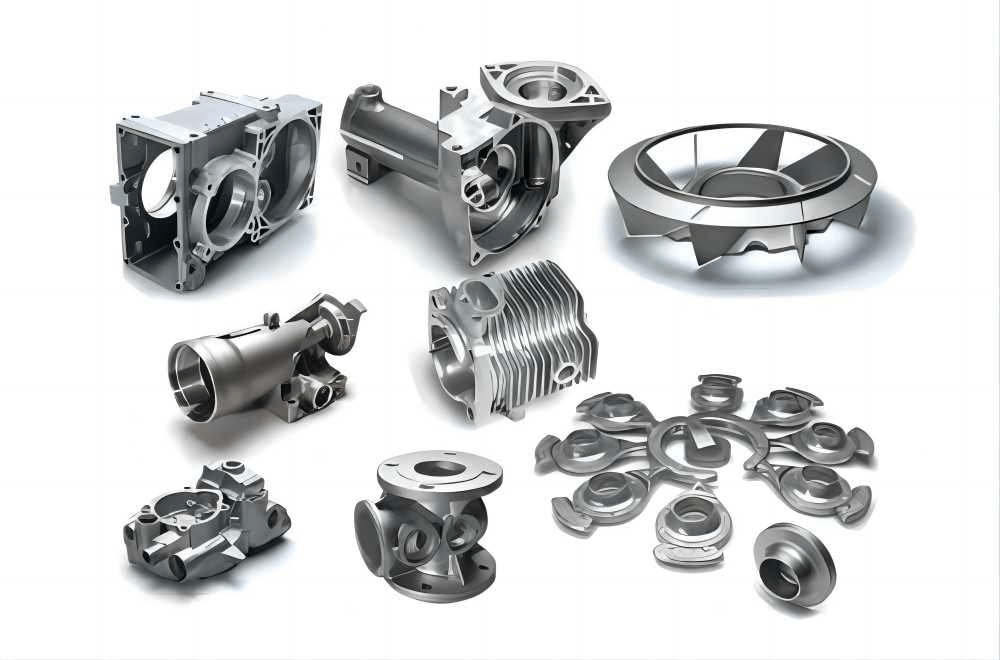
- Automotive Industry: Casting is very important in the automotive industry where it is used in making key parts like engine blocks, cylinder heads, and transmission housings, among other heavy-duty components. These parts require having intricate internal structures and the ability to withstand very high temperatures and pressures. Automotive parts can be made of casted aluminum or cast iron which are strong and lightweight.
- Aerospace Industry: Casting produces parts like turbine blades, landing gear parts, and cast structural components. These parts endure high stress, temperature extremes, and corrosive conditions. Aerospace grade components also use advanced casting techniques, like investment casting (or “lost wax” casting). This type of casting works with high-performance alloys like titanium and superalloys.
- Industrial Equipment: For structural and functional parts of heavy machinery and industrial equipment, cast components are essential. These include pumps, valves, gears, and housing units. Casting techniques enable the production of robust components capable of withstanding the stresses and harsh conditions typical in industrial environments.
- Energy Sector: Casting is fundamental in making parts for power generation and the oil and gas industry because of the parts’ size and complexity. Frequently cast components like turbine casings, pressure vessels, and drilling equipment are essential for enduring extreme pressures and temperatures as well as hostile environments.
- Marine Industry: Offshore structures and marine vessels also require substantial amounts of cast sections, especially for large, load-bearing components such as hull structures, rudders, and propellers. Marine vehicles must perform and remain safe in rugged conditions and thus require large and robust components, which can be produced effectively with castings.
Comparative Analysis of Stamped Parts and Casted Parts
| Aspect | Stamped Parts | Casted Parts |
| Manufacturing Process | Cold forming of metal sheets under high pressure. | Pouring molten metal into a mold and allowing it to solidify. |
| Precision | High precision with tight tolerances. | Lower precision; may require post-casting operations for tight tolerances. |
| Complexity | Best for simple to moderately complex shapes. | Ideal for complex, intricate geometries and large parts. |
| Material Variety | Limited to sheet metals like steel, aluminum, etc. | Can accommodate a wide range of metals and alloys, including high-performance materials. |
| Cost for Low-Volume Production | High initial tooling costs; less cost-effective for low volumes. | Higher initial tooling costs but can be cost-effective for low to medium volumes. |
| Cost for High-Volume Production | Very low per-unit cost due to speed and efficiency. | Relatively higher per-unit cost compared to stamping, but may be economical for large, complex parts. |
| Material Waste | Low material waste due to the efficient use of metal sheets. | Minimal material waste, but still more than stamping due to the need for excess mold material. |
| Lead Time | Short lead time for setup and production. | Longer lead times due to mold creation and cooling time. |
| Weight Limitations | Generally suited for lightweight parts. | Suitable for both lightweight and heavy parts. |
| Strength | Generally strong, but dependent on the material. | Can produce strong parts, especially for heavy-duty applications using suitable alloys. |
| Common Applications | Automotive panels, electronics housings, appliance parts. | Engine blocks, turbine blades, large machine components. |
| Tooling Requirements | Requires custom stamping dies, which can be costly for small runs. | Requires molds, which can be costly but flexible for complex parts. |
| Post-Processing Needs | Minimal post-processing if design is simple. | Often requires additional machining or finishing for better precision or surface quality. |
| Durability | Good for medium-strength applications. | Excellent for high-strength, heavy-duty applications. |

Key Factors to Consider for Choosing Between Stamped Parts and Casted Parts
When deciding between stamped parts and casted parts for a manufacturing project, several key factors must be carefully evaluated to ensure the chosen parts aligns with the specific requirements and production process.
- Part Complexity
A part’s complexity will influence a decision on stamping vs. casting. Stamping is ideal for simpler and more uniform shapes, primarily because the need for precision and consistency is the highest in the production of flat, shallow parts, such as electrical housings, panels, and brackets. But when a part’s design includes advanced features, like internal channels, complex geometry, and deep cavities, it is necessary to select casting for that part. Stamping can easily frustrate and fail when design includes varied shapes and complexity, especially intricate ones.
- Material Considerations
The material used for the part is also important. Stamping is limited to sheet metals-steel, aluminum, copper, or brass. It is appropriate for malleable materials that can withstand the pressure of the stamping process. Unlike stamping, for casting there is a wider variety of materials, such as iron, aluminum, and custom alloys for casting that have certain mechanical properties like strength, heat or corrosion resistance. Depending on the part, casting can also offer material choice for high temperature, wear resistance, and other properties that are a disadvantage with stamping.
- Production Volume
When selecting between stamping and casting, one of the most important factors is the required production volume. Stamping is the best option when there is a need to produce parts in large quantities. After a die has been created, stamping can produce thousands to millions of identical parts very quickly and at very low cost to produce each individual part. This is most advantageous in mass production situations like automotive manufacturing of body panels and housings of consumer electronics. In the case of low to medium production volumes, especially for complex parts, casting can still be more economical despite the higher setup costs. This is because stamping would require expensive dies and tooling. In the case smaller volumes of parts, especially those with complex designs and intricate detailing, casting would be the most economical because of the flexibility it offers in tooling costs.
- Precision and Tolerances
For high precision work, stamping is almost always the better option. Stamping is best at making parts with tight tolerances and little variation in dimensions. This makes it valuable when parts need to fit into each other and must be made to high specifications. Unlike stamping, casting can provide a greater variety of designs, but it will always require some machining to achieve the necessary precision. In casting, the cooling of the part will always leave some low precision, and, to achieve exactly tolerance parts, casting will need additional machining.
- Cost Considerations
For any method, how cost-effective it is would really depend on volume, choice of materials, and also how complicated the part is. Stamping tends to cost very little for each unit after the initial investment into the tooling so it is great for large volume production, but the first die and tooling cost can be very high. Conversely, the initial high cost of casting tooling (molds) also becomes cost-effective for producing complex parts in low to medium volume. Stamping and high volume runs also have the problem of casting generating more material waste. This can have an impact on the cost efficiency of high volume runs.
- Lead Time
Next, the projected lead time for production is also very important. Stamping is usually the fastest after the die is made as the process is quick and very efficient. This is important in rapid prototyping or when production is to be increased quickly. In contrast, casting usually takes more time as the creation of molds, cooling of molten metal, post machining also takes time to achieve the desired metal properties and surface finish. Thus, for projects with the most pressing timelines, stamping would be the more favorable approach.
- Part Size and Weight
The dimensions and mass of a component are crucial to establishing the most appropriate manufacturing approach. Stamping works best for lightweight parts that are relatively small to medium size. Conversely, for parts that are larger or heavier, the manufacturing approach is likely to be casting, since it has the capability to accommodate large and heavy components. There are certain large and complex components such as engine blocks and turbine housings that would pose a challenge when manufactured using stamping, but can be manufactured easily using casting. One of the major benefits of casting is the ability to produce large parts without the need for intricate assembly, which is common with other methods of manufacturing.
- Post-Processing Needs
The choice of manufacturing method tends to influence post-processing needs. Parts produced with stamping typically need very little post-processing, especially if the stamping was done to achieve the near-net shape. Usually, the parts just need a little bit of cleaning or adjustment. On the other hand, for parts produced with casting, additional processing steps are often required, which include machining, polishing, or applying surface treatment, to achieve required tolerances and surface finish. These additional processing steps represent increased time and cost for production.
- Tooling and Setup Costs
When it comes to low-volume production runs, tooling and setup costs must be included in the calculation. Stamping requires costly dies, and the creation of the necessary tooling can be a large initial outlay, which makes small batch production less viable. In contrast, while casting also involves the creation of molds, the flexibility of the tooling is a great advantage. A single mold can be reused many times for casting. This makes casting economically viable for low to medium-volume production runs, particularly when the complexity of the part is high. The initial setup costs for casting also depend on part size and complexity; however, once the mold is made and the part is of a size and complexity that permits easy production, it can be produced in large amounts with little change made to the setup.
Summary
- Stamped parts are ideal for high-volume production of relatively simple and precise parts, especially where cost efficiency and speed are critical.
- Casted parts can be used in applications that have more complex shapes, and in materials that are more challenging to work with through stamping, or parts that are designed to withstand high stress and wear.
Final Thoughts
To choose between stamped parts and cast parts, you need to consider the design, materials, volume of production, the precision needed, and so on. Knowing the pros and cons of each type of part enables manufacturers to find the most suitable production process to meet their needs, reducing costs and lead time, optimizing the part performance.