How to Customize Small-batch Production for Stamping Parts?
The need for flexibility and rapid response is an essential requirement in the contemporary manufacturing environment. While large-scale industries continue to rely on mass production, customized small-batch production for stamping parts is more relevant to businesses focusing on tailored, quick turnaround and precision components. Adjustable small-batch production systems allow metal stamping part manufactures to cater to tailor client needs while avoiding the high cost of excessive full production runs.
Table of Contents
What Drives the Need for Customized Small-batch Production for Stamping Parts
Tailored small-scale production means the controlled customized metal stamping pieces and the ability to modify their design, materials, and techniques to suit particular customer requirements. In contrast to mass production, where large order quantities determine the cost and pricing structure, small-batch production is driven by the need for custom and quick turnaround orders. Stamping parts for small production runs benefits sectors like automotive prototyping, aerospace, medical devices, various electronics, and niche consumer electronics.
The Need for Flexibility in Manufacturing
Flexibility is an emerging focus for customized small-batch stamping. Clients often request different designs, varied materials, or specific finishes that are incompatible with a mass production methodology.
Here, small-batch production offers the ability to shift focus and make the needed design adjustments without large-scale changes to the production timetable. Such flexibility affords the opportunity to more readily incorporate new and untested market components and respond to changes in demand with more ease.
Rapid Prototyping and Product Development
The need for customized small-batch production has grown rapidly in response to the focus on rapid prototyping. There is increasing attention across industries on the need to shorten the overall product development cycle.
With small-batch stamping, manufacturers are more able to develop functional prototypes in the time allotted for testing and evaluation, thereby shortening the cycle for a full-scale production run. This facilitates more product iterations faster, reduces time-to-market, and enhances the overall quality of components that are ready for the market.
High Precision and Quality Requirements
There are some industries where precision and quality are of the utmost importance. These can include aerospace, medical devices and automotive components. The ability to manufacture small-batch productions will afford the ability to control quality and precision for every component part.
Smaller production runs allow control to be tight enough to provide assurance that inspections and tests are complete, reducing the chances that parts will be non-conforming and control compliance to the standards. The importance of this level of control increases proportionally to the complexity of the components and the tolerance precision that needs to be complied to.
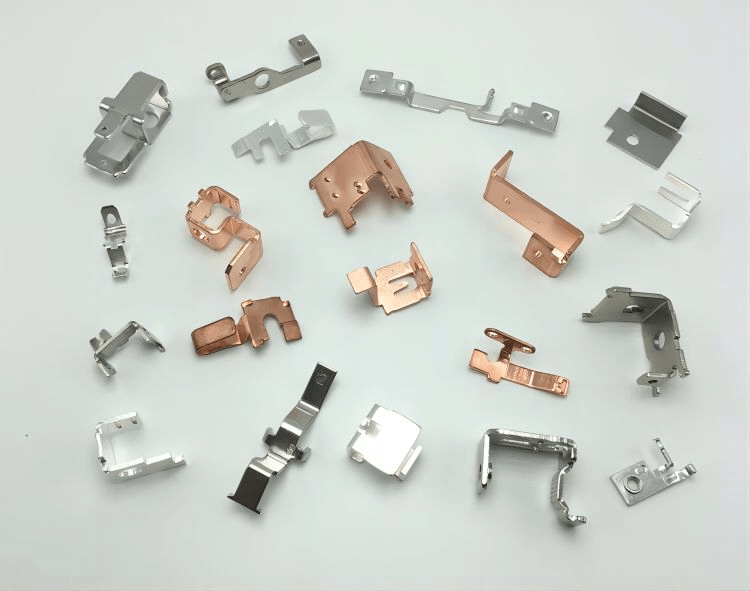
Cost Efficiency for Limited Production Needs
Although small-batch production will always be more expensive due to the loss of economies of scale, it will always be cheaper to manufacture small high value specialized components when compared to mass production.
This is due to the large hidden costs that are associated with large scale production such as excess inventory, unused tools and other ancillary equipment. With small-batch Customized stamping, it is easier for companies to ascertain that the costs will cover the quality needed. This will allow companies to meet specific production needs.
Meeting Industry-specific Demands
Different industries have distinct needs which are often the reason for the requirement for tailored small-batch production. In the case of the automotive industry, small-batch production is used for prototyping brackets, connectors, and body panels. In electronics manufacturing, specialized casings and heat sinks require small-batch production.
Medical equipment suppliers require precision metal parts for instruments and devices, and the aerospace industry requires high strength, low weight parts with intricate shapes. For all of these applications, the production of small quantities is tailored to precise specifications.
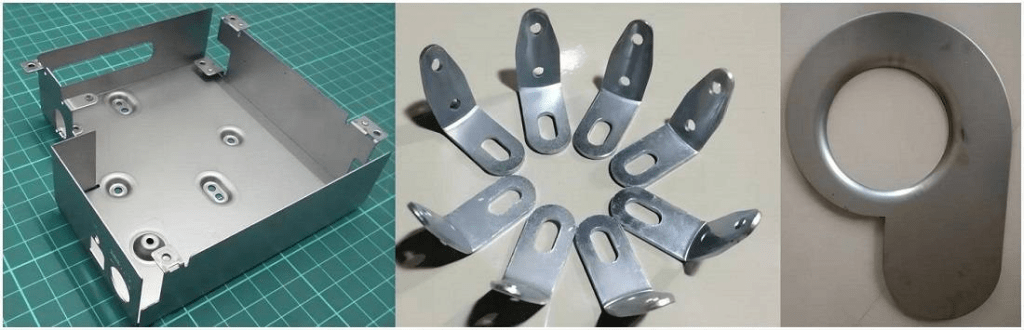
Key Strategies for Customized Small-batch Stamping Part Production
It is essential that manufacturers adopt strategic approaches with respect to design, tooling, processes, and quality control in order to facilitate customized small-batch stamping part production.
1. Adapt to Design Optimization
For small-batch stamping, one of the most critical strategies involves the design optimization of stamping dies. The manufacturer must ensure that the part design is compatible with the stamping process while fulfilling all functional requirements.
The use of CAD/CAM software allows engineers to simulate the stamping process, predict potential problems, and carry out design refinements prior to production. Appropriate design optimization will maximize waste minimization, control tool wear, and ensure the final part meets the quality and performance specifications.

2. Selecting Appropriate Materials
In small-batch customized stamping, strategically choosing materials is vital. The type of metal used, be it steel, aluminum, copper, or specialty alloys, has implications for the stamping technique, the longevity of the part, and the cost.
Knowing the specific characteristics of the materials, like strength, ductility, and corrosion potential, helps manufacturers determine the most effective stamping approach. Ensuring the material aligns with the application guarantees that the parts will perform under the specific operational conditions and for the intended functionality with reliability.
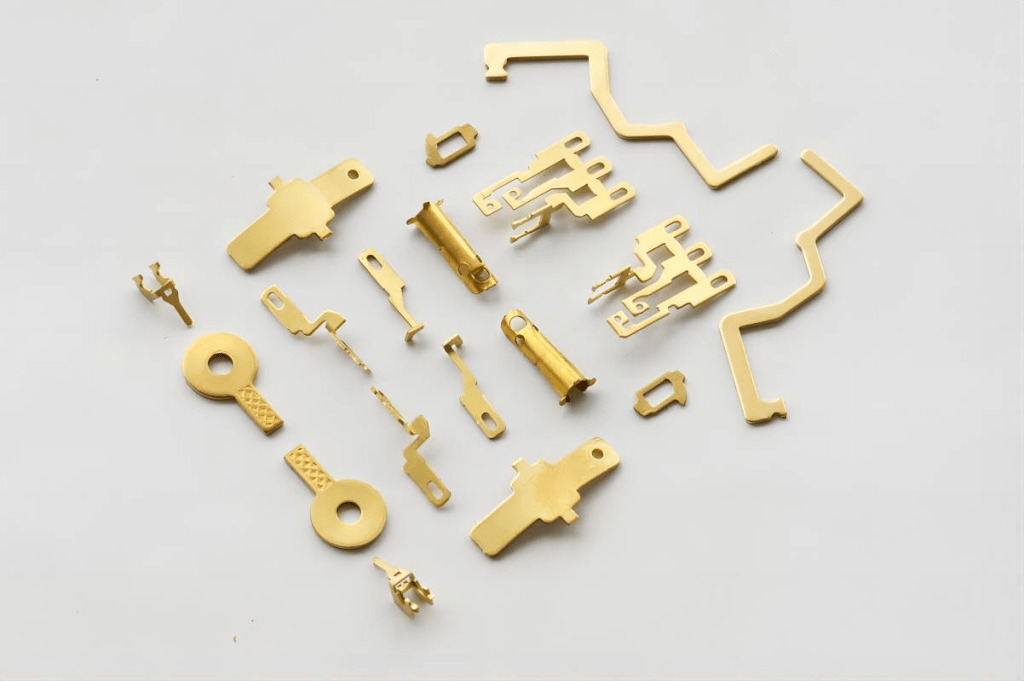
3. Custom Tooling and Die Management
Custom tooling is crucial for small-batch production. It requires the precise design of dies and punches to accommodate specific geometries and tolerances for each part. The use of modular or adjustable tooling also helps to improve efficiency by cutting down on setup time and allowing quick alterations for different runs of production. Tools should be regularly maintained and inspected to minimize defects, ensure even quality across the entire batch, and reduce downtime.
4. Process Control and Optimization
Control of processes within small-batch stamping is to be executed with the utmost care. The selection of stamping processes, progressive stamping, blanking, or bending, must fit the complexity of the part as well as the expected production volume.
Parameter optimization of press speed, force, and lubrication aids in waste minimization and the consistency of results. The use of digital monitoring systems can also help in the control of processes by identifying out-of-balance elements and adjusting.
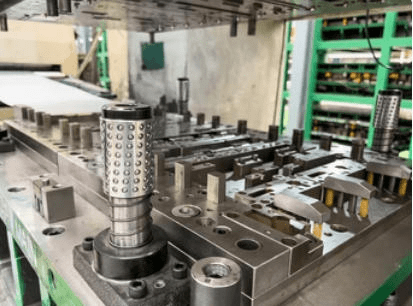
5. Quality Assurance and Inspection
Quality assurance is essential for customized small-batch stamping part production. The small scale means that detailed inspections are feasible, including dimensional measurements, surface finish, and tolerance assessments. Inspection can also be automated by advanced tools like vision systems and coordinate measuring machines (CMM), ensuring adherence to specifications. Equally important, the reputation and goodwill of clients are garnered through quality standards that are consistently maintained.
6. Flexible Production Planning
Another of the essential strategies is effective production planning. The small-batch stamping workflow frequently entails the management of numerous orders with different designs and specifications. To avoid delays, manufacturers should implement flexible scheduling systems that can adapt to changing priorities.
The amalgamation of lean manufacturing and digital planning tools fosters rapid resource distribution, improved turnaround times, and heightened response capabilities to urgent client requests.
7. Leveraging Technology and Innovation
Advances in technology enhance the efficiency of small-batch stamping. For example, digital twins create virtual models that can be tested to optimize stamping processes, predictive maintenance to prolong the life of stamping tools, and automation for speed and consistent production.
The convergence of these technologies allows manufacturers to optimize and eliminate errors in small-batch production, thereby increasing competitiveness.
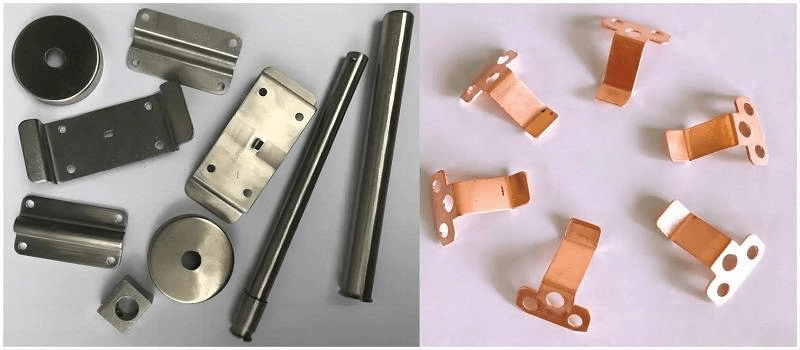
Applications of Customized Small-batch Stamping Part Production
| Industry | Typical Applications | Benefits of Small-batch Production |
| Automotive | Prototyping brackets, connectors, body panels | Quick iterations, reduced tooling costs, flexibility for unique designs |
| Aerospace | Lightweight structural components, brackets, specialized connectors | High precision, ability to meet strict tolerance requirements, limited production runs for specialized parts |
| Electronics | Metal casings, heat sinks, connectors | Customization for device-specific requirements, rapid prototyping, high-quality finishes |
| Medical Equipment | Surgical instruments, device components | Precision and quality control, compliance with industry standards, small quantities for specialized applications |
| Consumer Goods | Appliance parts, tools, decorative metal components | Fast response to market trends, ability to produce limited editions, cost-efficient small runs |
| Industrial Machinery | Gears, housings, support brackets | Flexibility in design changes, high durability for specialized machinery, cost savings for low-volume production |
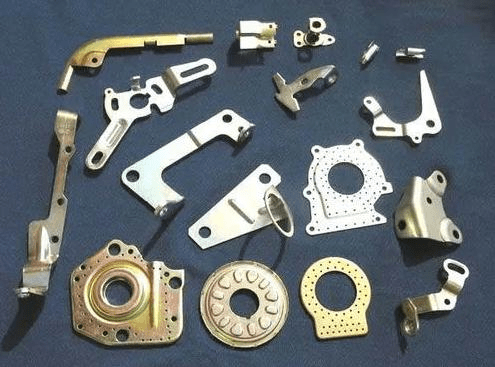
Steps to Successfully Implement Customized Small-batch Stamping Part Production
| Step | Description |
| 1. Requirement Analysis | Understand the client’s specifications, production volume, material requirements, and intended application of the parts. |
| 2. Design Optimization | Use CAD/CAM tools to refine part designs for stamping, ensuring manufacturability, minimal material waste, and precise tolerances. |
| 3. Material Selection | Choose appropriate metals (steel, aluminum, copper, alloys) based on part functionality, strength, and durability requirements. |
| 4. Tooling Design and Preparation | Develop custom dies, punches, or modular tooling to match the part design, while ensuring efficiency and ease of adjustment for small batches. |
| 5. Process Planning and Optimization | Select suitable stamping techniques (blanking, bending, progressive stamping) and optimize parameters like press speed, force, and lubrication. |
| 6. Production Execution | Conduct the small-batch production with careful monitoring of machine settings, process parameters, and tooling performance. |
| 7. Quality Assurance and Inspection | Implement dimensional checks, surface finish inspections, and tolerance verification to ensure each part meets client specifications. |
| 8. Delivery and Feedback | Deliver finished parts to the client, gather feedback, and adjust designs or processes for future batches as needed. |
Challenges and Solutions in Custom Small-batch Production of Stamping Parts
| Challenge | Description | Solution |
| Higher Per-unit Costs | Small production runs often result in higher costs compared to mass production. | Optimize material usage, improve process efficiency, and use modular tooling to reduce setup and changeover costs. |
| Tooling Wear and Maintenance | Frequent changes in small-batch production can lead to faster wear of dies and punches. | Use durable materials for tooling, implement regular maintenance schedules, and adopt modular or adjustable tooling designs. |
| Lead Time Management | Small orders with variable designs can disrupt production schedules and cause delays. | Employ flexible production planning, predictive scheduling, and prioritize small-batch runs efficiently within the production workflow. |
| Quality Consistency | Maintaining high precision and consistency across limited batches can be challenging. | Implement automated inspection systems, AI-driven quality checks, and strict quality control protocols for each batch. |
| Material Waste | Frequent changes and small quantities can result in inefficient material usage. | Optimize part layouts, use advanced nesting software, and carefully plan batch production to minimize scrap. |
| Adaptation to Design Changes | Clients may request rapid design changes during small-batch production. | Use CAD/CAM software for quick design revisions, modular tooling, and maintain flexible manufacturing processes. |
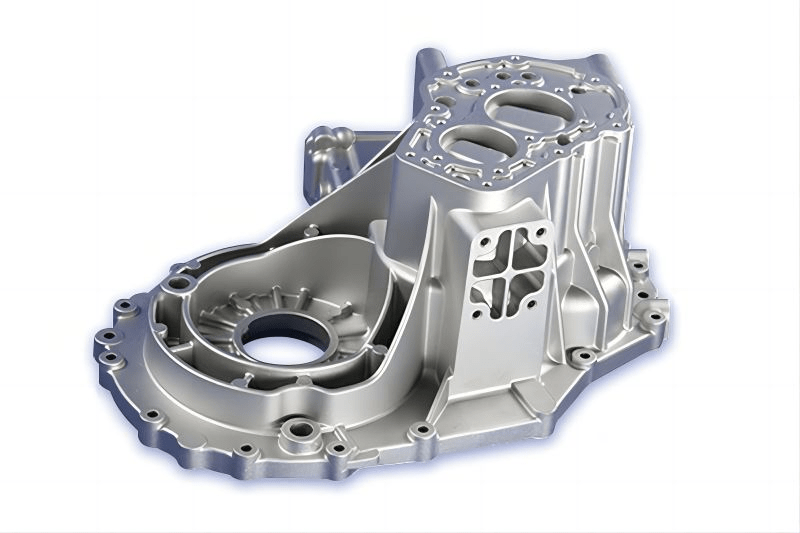
Future Trends in Customizing Small-batch Production for Stamping Parts
Several trends will influence how manufacturers manage small-batch stamping. The focus will be on delivering high-value, eco-friendly, and efficient custom metal stamping parts.
- Digitalization and Smart Manufacturing
Integrating digital technologies in small-batch stamping operations meets the demands of intelligent and automated stamping. Intelligent automated systems that integrate sensors, interconnected machines, and real-time monitoring of the production process work towards optimizing machine efficiency and error reduction.
Data-driven digital twin technologies that generate virtual stamping simulations enable engineers to refine and modify designs in virtual environments. This iterative process reduces the loss of materials during production and the inefficient customization cycles.
- Additive Manufacturing Integration
The combination of traditional stamping and additive manufacturing processes is becoming more commonplace. Stamping die production techniques that incorporate 3D printed elements allow for the rapid modification of designs and expedite small-batch production cycles. This is particularly important for the rapid production of small-batch parts that incorporate advanced customization features in response to shifting demands.
- Automation and AI-driven Quality Control
There has been an increasing role of automation in small-batch production particularly in quality assurance. Systems of advanced vision and AI-driven inspection technologies monitor and evaluate small details in real-time and ensure that each part adheres precisely to specific criteria.
Through automating inspection and monitoring processes, manufacturers achieve high levels of precision control in small-sized production runs and consistency level sustained over larger runs, all while decreasing the need for manual labor and the human error involvement.
- Sustainable and Eco-friendly Practices
Environmental factors have been becoming more and more integrated into manufacturing philosophy and the manufacturing strategies being adopted currently. Especially in small-batch production stamping, it becomes easy to minimize material waste and use resources more efficiently compared to the large-scale production.
The use of recycled metals, stamping presses that are powered by more energy-efficient processes, and the use of eco-friendly lubricants are expected to be the industry worthy. Companies take small-batch production methods to align with their sustainability goals by minimizing waste and reprocessing excess material.
- Flexible and Modular Tooling
Being able to quickly adapt to new designs is imperative, particularly in small-batch production. Manufacturers are more frequently able to accomplish this dual requirement through the integration of modular tooling systems, of which the major advantage is the capacity to modify stamping dies and punches with minimal interruption and without the requirement of expensive replacement.
This promotes rapid production of custom-engineered components and permits manufacturers to efficiently manage numerous small-batch orders in tandem, even when customer expectations are ever-varying.
- Data-driven Process Optimization
The next step in small-batch stamping production is facilitated by data analytics focused on process improvement. By studying data on how machines are operated, how materials behave during processing, and how the production outcomes are generated, it is possible to optimize the press parameters, minimize production losses, and improve overall production performance. Tools are kept operational and production continuities are guaranteed through data-driven predictive maintenance.
- Collaboration and Client-driven Customization
The increasing trend towards collaborative manufacturing is also affecting small-batch production. Clients partake actively in the design and prototyping processes, offering insights that help shape the tooling, choice of materials, and how the production processes are controlled. This collaborative design framework enhances the value of small-batch stamped parts by ensuring that they satisfy precisely the functional expectations of the clients.
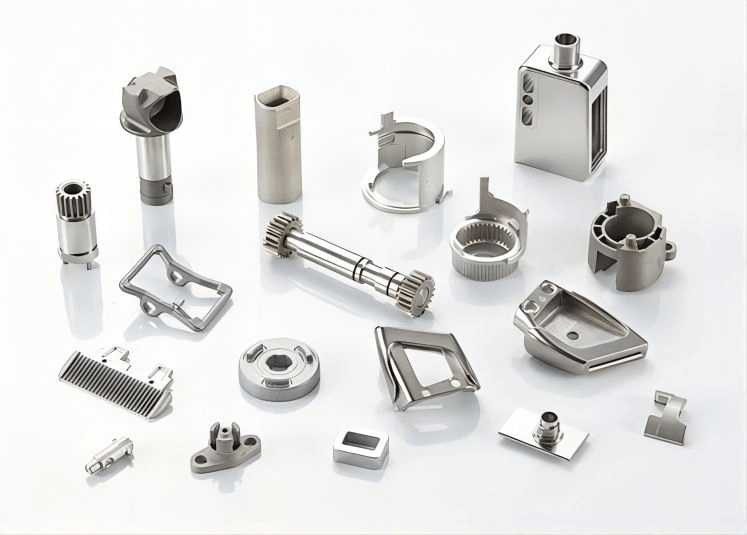
Summary
Customizing small-batch production for stamping parts is aimed at offering businesses the flexibility, speed, and quality they need to remain competitive on the market. Manufacturers can efficiently respond to specific client needs through thoughtful material selection, tooling design, process optimization, and control measures. The prospects for highly customized stamping parts are increasing, particularly as advances in digital technology and automation are implemented. This will provide businesses with flexibility and a strong competitive position in the market.